

Pull to refresh
Logo
New proof of four-color theorem runs in near-linear time

New proof of four-color theorem runs in near-linear time

New Capabilities

Mathematicians cut planar graph coloring from quadratic to near-linear steps and expose new graph structure

2 days ago: Quanta Magazine reports on the new proof

Overview

Updated Yesterday

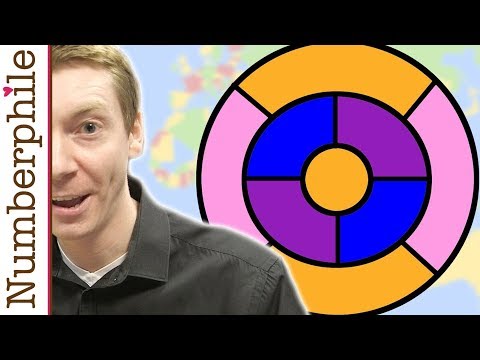
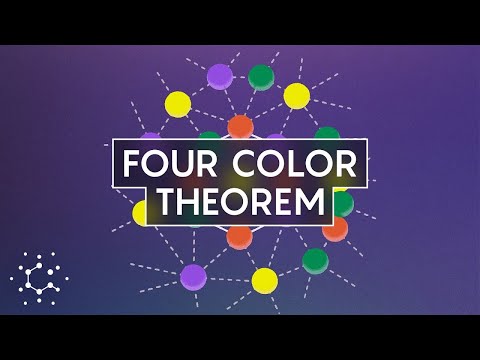
The four-color theorem says any map can be colored with four colors so no neighboring regions match. A team of six mathematicians posted a new proof in March 2026 that colors any planar graph in near-linear time, down from quadratic in the previous accepted proof.

The proof, scheduled for presentation in November at the Foundations of Computer Science conference, also reveals structural properties of planar graphs that may unlock other long-stubborn problems in graph theory.

Why it matters

The new proof colors planar graphs in near-linear time and exposes structural patterns that may crack other open problems in graph theory.

Questions about this story

Free account needed to ask — your question is kept and asked for you right after sign-up. Answers are public.

No questions yet — be the first to ask.

Key Indicators

8,202
Configurations in new unavoidable set
The new proof's unavoidable set, larger than prior sets but reducible in parallel.
633
Configurations in 1997 Robertson et al. proof
The previously accepted proof's smaller unavoidable set, reduced one configuration at a time.
n log n
Algorithm complexity, new vs. old proof
Near-linear coloring steps for an n-vertex graph, compared with n-squared in the 1997 proof.
1,936
Appel-Haken 1976 configurations, initial count
The original computer-assisted proof's configuration set, later cut to 1,482.

Voices

Curated perspectives — historical figures and your fellow readers.

Ever wondered what historical figures would say about today's headlines?

Sign up to generate historical perspectives on this story.

People Involved

Organizations Involved

Timeline

October 1852 November 2026

7 events Latest: 2 days ago
Tap a bar to jump to that date
  1. Proof scheduled for FOCS presentation

    Upcoming Conference

    The team will present the result at the annual Foundations of Computer Science conference, the first formal public review.

  2. Quanta Magazine reports on the new proof

    Latest Media coverage

    Quanta publishes a detailed account of the proof's history, method, and implications, including reactions from other mathematicians.

  3. New near-linear proof posted to arXiv

    Proof

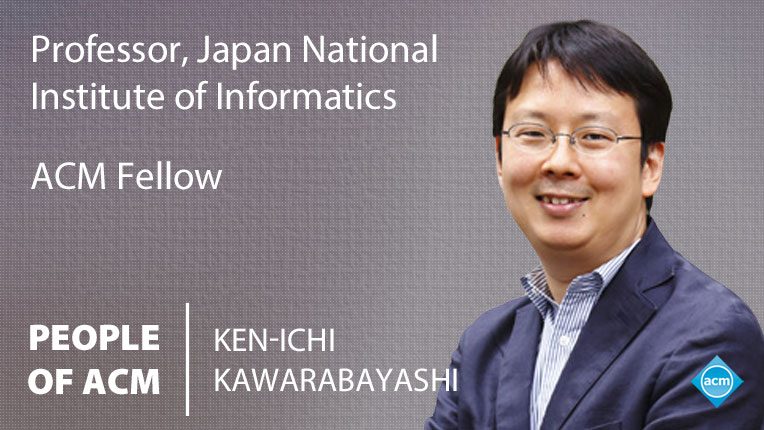
    Kawarabayashi, Thorup, Thomassen, Mohar, Inoue, and Miyashita post a proof with 8,202 configurations and an n-log-n coloring algorithm.

  4. Robertson, Sanders, Seymour, Thomas simplify the proof

    Proof

    The four mathematicians reduce the configuration set to 633 and give a quadratic-time coloring algorithm; the community accepts it immediately.

  5. Appel and Haken complete first computer proof

    Proof

    Kenneth Appel and Wolfgang Haken use supercomputers at the University of Illinois to verify 1,482 configurations, sparking debate over computer-assisted proof.

  6. Kempe publishes a proof with a hidden flaw

    Proof attempt

    Alfred Kempe's proof stands for a decade until Percy Heawood finds a fatal gap in 1890. The attempt inspires the unavoidable-set approach.

  7. Francis Guthrie poses the four-color question

    Conjecture

    Guthrie asks whether four colors always suffice for a map; the question spreads through London mathematical circles.

Scenarios

1

FOCS presentation cements acceptance of the new proof

Likely Resolves by End of 2026

Discussed by: Quanta Magazine, the research community

The proof is presented at the November 2026 FOCS conference and survives scrutiny from the graph theory and theoretical computer science communities. Acceptance would firm up the near-linear coloring algorithm and the structural results about flat regions. The 1997 proof won immediate acceptance; this one faces the same public review at a flagship venue.

2

Techniques extend to coloring on other surfaces

Possible Resolves by End of 2028

Discussed by: Carsten Thomassen, Quanta Magazine

The team applies its methods to graph coloring on non-planar surfaces like the torus. Thomassen said the flat-region insights carry over to such surfaces, and the group is already working on it. A publication would mark the first major payoff beyond the four-color theorem itself.

3

Formal verification of the near-linear proof follows

Uncertain Resolves by End of 2029

Discussed by: Georges Gonthier, Inria

Following the precedent of Gonthier's 2005 machine-checked verification of the four-color theorem in Coq, a formal version of the new proof could appear. Given the proof's heavy computational component, such verification would take years but would eliminate any lingering doubts about correctness.

Historical Context

3 moments from history that rhyme with this story — and how they unfolded.

July 1879 – 1890

Kempe's false proof (1879)

Alfred Kempe published a proof of the four-color theorem using an 'unavoidable set' of configurations he claimed were all reducible. Heawood found a flaw in 1890: one configuration resisted reduction. The approach was right, but the configuration set was wrong.

Then

The proof collapsed a decade after publication, and the theorem stayed open for another 86 years.

Now

Kempe's unavoidable-set framework became the backbone of every later proof, including the new one.

Why this matters now

The new proof uses the same framework Kempe introduced, refined by a far larger configuration set and modern computation.

June 1976

Appel-Haken computer proof (1976)

Kenneth Appel and Wolfgang Haken spent years and used supercomputers at the University of Illinois to verify 1,482 configurations, publishing the first major computer-assisted proof in mathematics. The result was accepted but sparked a philosophical fight over whether computation counts as proof.

Then

Mathematicians argued for years about the status of the proof; some refused to accept it.

Now

The controversy normalized computer-assisted proof, and formal verification later became standard practice.

Why this matters now

The new proof is the third major computer-assisted proof of the theorem, continuing the tradition the Appel-Haken result started.

January 1997

Robertson-Sanders-Seymour-Thomas proof (1997)

Four mathematicians simplified Appel and Haken's proof, cutting the configuration set to 633 and using only 32 discharging rules. Their quadratic-time algorithm improved on Appel and Haken's quartic one, and the community accepted it immediately.

Then

The proof became the standard reference for the four-color theorem and the basis for practical graph coloring.

Now

Its quadratic algorithm stood as the best known for 29 years, until the new proof's near-linear result.

Why this matters now

The new proof's n-log-n algorithm directly supersedes the 1997 quadratic bound and was designed to address its inefficiency.

Sources

(6)