
Pull to refresh
Logo
Quantum operations run 1,000 times faster with new error-cutting method

Quantum operations run 1,000 times faster with new error-cutting method

New Capabilities

Chalmers researchers collapse thousands of control cycles into one, reducing the window for errors in bosonic quantum codes.

Yesterday: Speedup announced publicly

Overview

Updated Yesterday

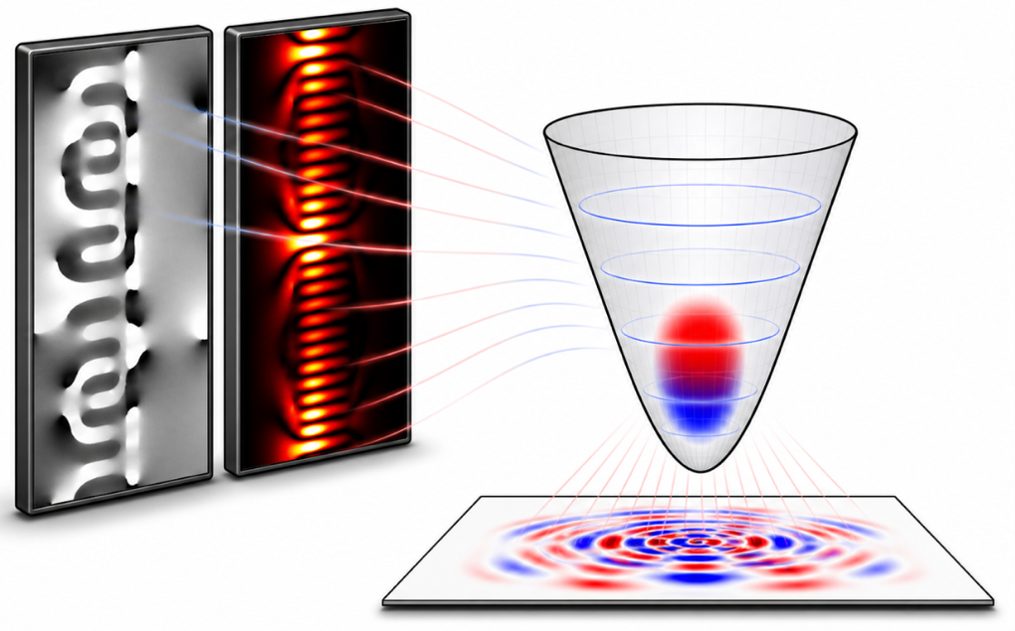
Quantum computers leak information: the longer an operation runs, the more time stray electrical noise, heat, or cosmic radiation have to corrupt fragile qubits. Researchers at Chalmers University of Technology in Sweden have found a way to run a broad range of operations more than 1,000 times faster, cutting thousands of repeated control steps down to a single cycle.

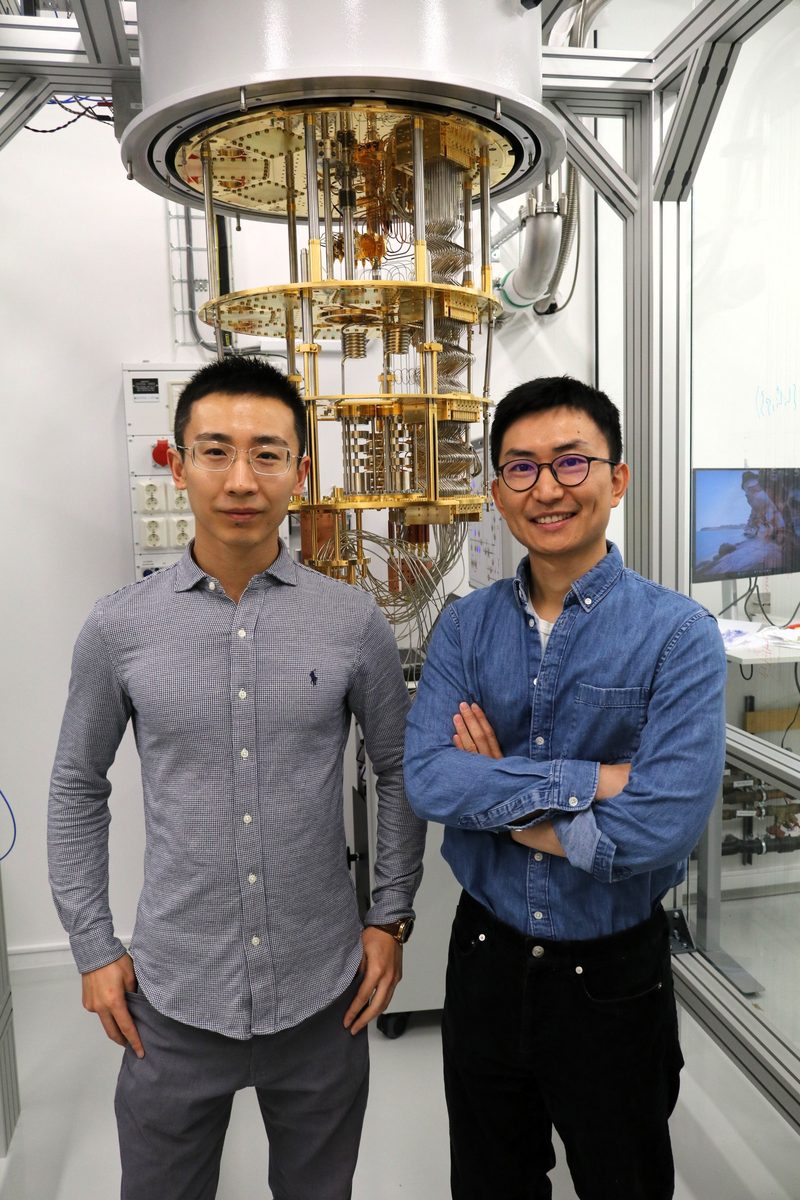
The method, published in Physical Review Letters, uses 'quantum lattice gates' to manipulate bosonic quantum codes in a single driving period. That shrinks the window in which errors can accumulate, a central obstacle to fault-tolerant machines. Chalmers is building a 100-qubit superconducting computer and says the technique works on existing hardware.

Why it matters

If the speedup holds in hardware, quantum computers move closer to fixing their own errors and running real workloads instead of small demonstrations.

Questions about this story

Free account needed to ask — your question is kept and asked for you right after sign-up. Answers are public.

No questions yet — be the first to ask.

Key Indicators

1,000×
Speedup in quantum operations
Reported improvement from thousands of driving cycles to one for bosonic code operations.
1
Driving cycles now needed
Single-period Floquet control replaces the several thousand cycles previously required.
100
Qubits in Chalmers' planned computer
The superconducting machine under development at the university.

Voices

Curated perspectives — historical figures and your fellow readers.

Ever wondered what historical figures would say about today's headlines?

Sign up to generate historical perspectives on this story.

People Involved

Organizations Involved

Timeline

January 2026 September 2026

3 events Latest: Yesterday
  1. Speedup announced publicly

    Latest Research

    Chalmers announces that quantum operations on bosonic codes can run more than 1,000 times faster using single-period control with quantum lattice gates.

  2. Paper accepted after revisions

    Publication

    Physical Review Letters accepts the study following an April revision.

  3. Study submitted to Physical Review Letters

    Publication

    The team's paper on single-period Floquet control is received by the journal.

Scenarios

1

Chalmers demonstrates the technique on real qubits

Likely Resolves by End of 2027

Discussed by: The Chalmers researchers, who say they are discussing experimental implementations with colleagues at the university

The team reports experimental results on superconducting circuits showing single-period quantum lattice gate operations matching the theoretical predictions. Chalmers is developing a 100-qubit machine, and the method is designed for existing superconducting hardware, lowering the barrier to a test.

2

Independent labs adopt the method

Possible Resolves by End of 2028

Discussed by: Quantum Computing Report, which notes the technique suits superconducting platforms

Research groups outside Chalmers begin using single-period Floquet control for bosonic codes, turning the speedup into standard practice across the field. Adoption would signal the approach survived independent scrutiny beyond its authors.

3

Experimental validation stalls

Possible Resolves by End of 2027

Discussed by: Quantum Computing Report, which distinguishes the theoretical advance from a demonstrated hardware speedup

The predicted performance proves difficult to reproduce on real hardware, and the method remains a theoretical proposal. No public demonstration appears within the next year, echoing earlier quantum control techniques that worked on paper but not in practice.

Historical Context

3 moments from history that rhyme with this story — and how they unfolded.

1994–2001

Shor's algorithm (1994–2001)

Mathematician Peter Shor proved a quantum computer could factor large numbers exponentially faster than classical machines. The algorithm existed only on paper for seven years, until IBM ran it on a 7-qubit machine in 2001 to factor the number 15.

Then

Showed quantum advantage was mathematically possible but physically unproven.

Now

Became the template for a quantum algorithm awaiting hardware maturity.

Why this matters now

Like the Chalmers result, Shor's work was a theoretical proposal whose real-world value depended on later experimental confirmation.

1999–2007

First superconducting qubits (1999–2007)

Scientists at Yale and NEC built the first superconducting qubits, using the same circuit technology now applied to error correction. It took years of materials and control improvements to make them workable.

Then

Established superconducting circuits as a workable qubit platform.

Now

The platform now hosts most fault-tolerance research, including Chalmers' 100-qubit project.

Why this matters now

Chalmers' new method is designed specifically for this platform, showing superconducting hardware remains the center of gravity for quantum error correction.

December 2024

Google's Willow chip (December 2024)

Google announced Willow, a superconducting chip that for the first time pushed quantum error correction below threshold: adding qubits made errors drop instead of rise.

Then

Demonstrated below-threshold error correction on superconducting hardware.

Now

Reinforced superconducting circuits as a leading path to fault-tolerant machines.

Why this matters now

Willow attacked error rates; the Chalmers method attacks operation speed, a separate bottleneck on the same road to fault tolerance.

Sources

(6)