
Pull to refresh
Logo
St. Thomas football noise decision splits Saint Paul neighbors and university

St. Thomas football noise decision splits Saint Paul neighbors and university

Rule Changes Saint Paul, MN local

City council weighs a sound variance for a Division I game in a residential stadium

August 27th, 2026: Scheduled game against Winona State

Overview

Updated Aug 27

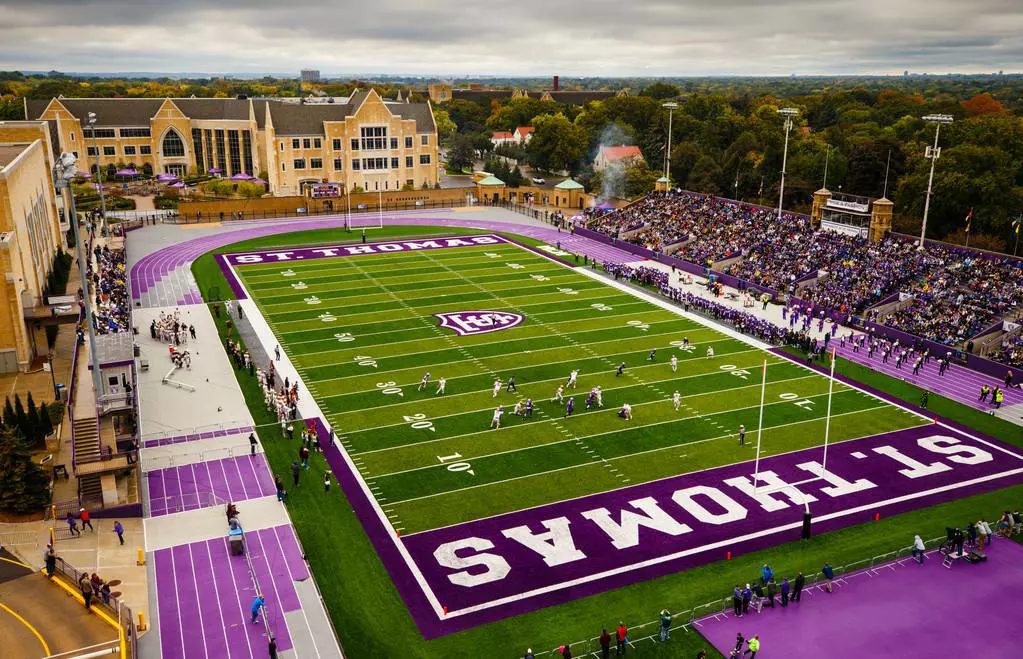
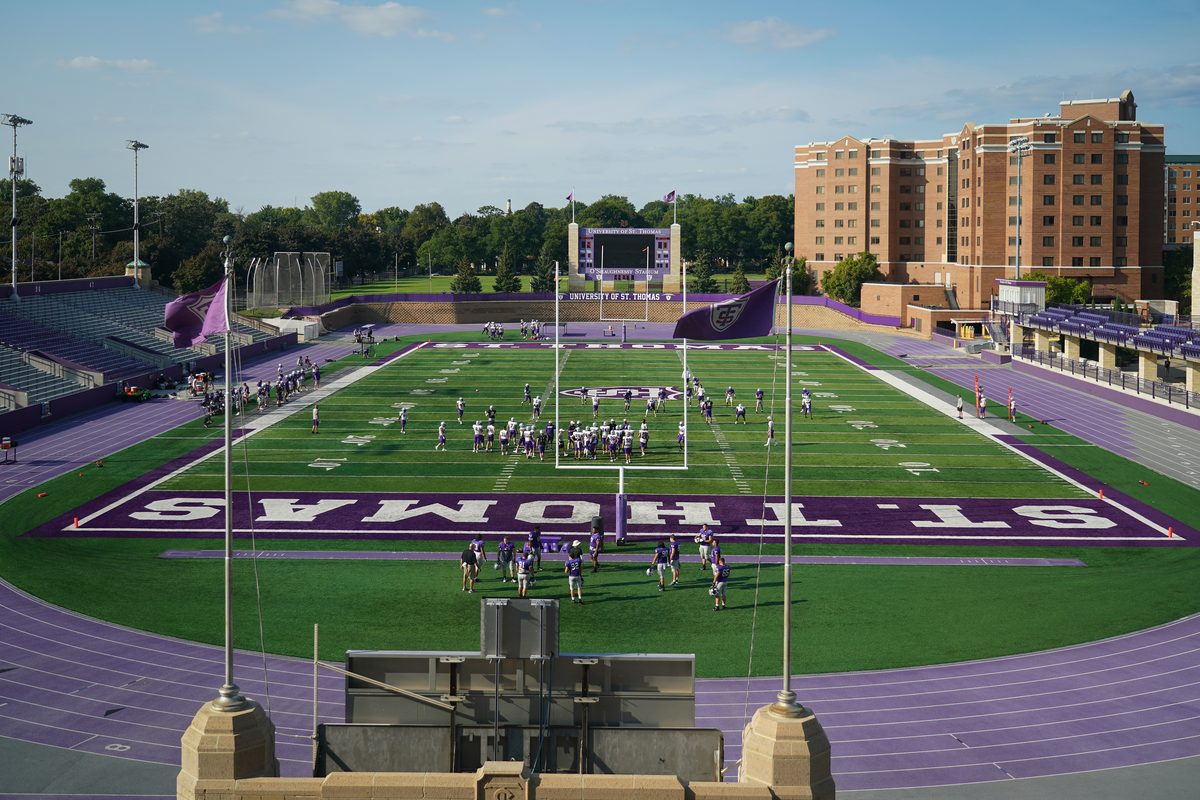
A University of St. Thomas football game could push noise at O'Shaughnessy Stadium to 90 decibels, a level one neighbor says vibrates her windows. The Saint Paul City Council heard that complaint Wednesday during a public hearing on a sound variance request for the August 27 game against Winona State.

The decision will set the permitted noise for the game. City staff recommended allowing 90 decibels at 50 feet during the event and 80 during the pre-game sound check. The council can approve, deny, modify, or revoke the variance.

Why it matters

If approved, this variance lets a Division I football game run at 90 dBA next to homes—setting a precedent for future UST games in a residential stadium.

Questions about this story

Free account needed to ask — your question is kept and asked for you right after sign-up. Answers are public.

No questions yet — be the first to ask.

Key Indicators

90 dBA
Proposed noise limit at 50 feet during game
City staff recommendation, well above the residential limit of 55 dBA in the daytime.
80 dBA
Proposed noise limit during pre-game sound check
Also far above the default residential threshold.
55 dBA
Normal residential daytime limit
The cap under Saint Paul's Chapter 293 unless a variance is granted.

Voices

Curated perspectives — historical figures and your fellow readers.

Ever wondered what historical figures would say about today's headlines?

Sign up to generate historical perspectives on this story.

People Involved

Organizations Involved

Timeline

May 2026 August 2026

4 events Latest: August 27th, 2026 · 2 weeks ago
Tap a bar to jump to that date
  1. Scheduled game against Winona State

    Latest Event

    The game would proceed under the variance terms if the council approves them.

  2. City council public hearing

    Hearing

    Council hears the variance request; DSI recommends 90 dBA; neighbor Laura Mudrak objects in writing.

  3. Variance application filed

    Application

    University of St. Thomas applies for a sound variance for the August 27 opener against Winona State.

  4. St. Thomas moves to Division I football

    Transition

    The university completes its transition to NCAA Division I, raising the profile and scale of home games.

Scenarios

1

Council approves variance as recommended

Likely Resolves by Aug 28, 2026

Discussed by: City staff recommendation

The council grants the variance for 90 dBA during the game and 80 dBA for the sound check, with conditions on hours. The game proceeds as planned. Future UST home games may receive similar treatment, normalizing higher noise in a residential area.

2

Council modifies or denies the variance

Possible Resolves by Aug 28, 2026

Discussed by: Neighbor objection; council discretion under Chapter 293

The council tightens the limits, caps the hours, or denies the variance entirely, forcing the university to comply with the default 55 dBA residential limit. The game would either run quieter or the university would need to adjust its sound plan.

3

Appeal or legal challenge

Unlikely Resolves by End of 2026

Discussed by: Minnesota courts; precedent in noise variance disputes

If the council approves and a neighbor challenges the decision in court, the variance could be stayed or overturned. This would delay the noise exemption and create a legal precedent for future sound variances in the city.

Historical Context

3 moments from history that rhyme with this story — and how they unfolded.

1988

Wrigley Field night game restrictions (Chicago, 1988)

Wrigley Field was the last MLB park without lights. The city council allowed limited night games only after the Cubs agreed to strict limits on start times and amplified sound to protect neighbors.

Then

The Cubs got night games but with binding restrictions.

Now

Became a model for stadium-neighbor accords, including noise caps and curfews.

Why this matters now

Shows that variances often come with conditions—councils can protect residents while allowing events.

2018

NFL Raiders preseason game noise variance (Oakland, 2018)

The Oakland Coliseum requested a noise variance for a preseason game. Neighbors objected to the volume, and the city imposed a 90-minute limit on amplified sound after kickoff.

Then

The game went on with restricted sound.

Now

Demonstrated that nearby residents can win concessions even for major events.

Why this matters now

Provides a direct parallel: a professional team getting a variance but facing limits due to residential proximity.

2000s

AT&T Park (Oracle Park) noise complaints (San Francisco, 2000s)

After the Giants moved into a ballpark surrounded by residential neighborhoods, amplified sound and crowd noise drew repeated complaints. The city negotiated limits on concert sound and game-day announcements.

Then

The ballpark adopted stricter sound protocols and limited concert volume.

Now

Set a precedent that stadiums in residential areas must balance fan experience against neighbors' rights.

Why this matters now

Illustrates how cities handle noise conflicts when a stadium sits next to homes—what St. Paul faces now.

Sources

(4)