

Pull to refresh
Logo
Grand Rapids residents challenge Acrisure Amphitheater's noise exemption

Grand Rapids residents challenge Acrisure Amphitheater's noise exemption

Rule Changes Grand Rapids, MI local

Judge orders Acrisure Amphitheater to comply with Grand Rapids' noise ordinance after resident lawsuit

August 27th, 2026: Judge orders amphitheater to comply with noise ordinance

Overview

Updated 3 days ago

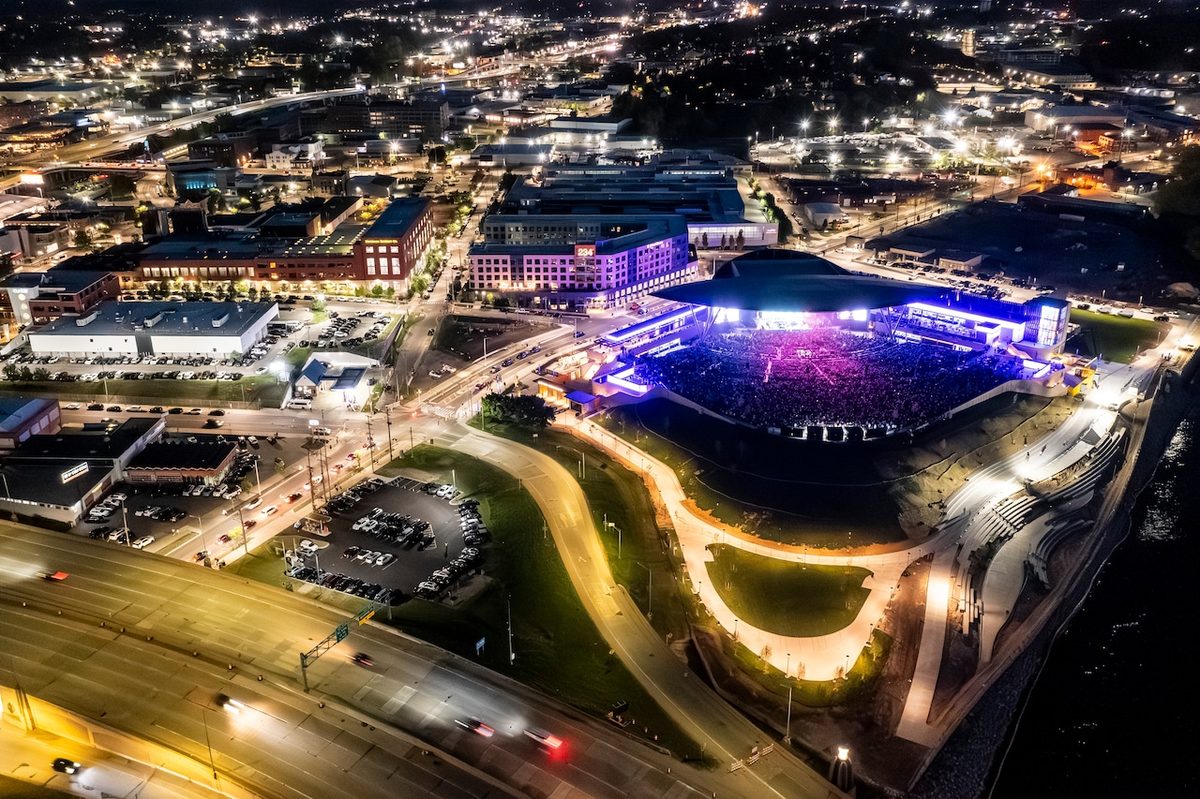
Concert bass from Grand Rapids' riverfront amphitheater has drifted through west-side windows since May. In late August, a Kent County judge ordered the venue to comply with the city's noise ordinance, siding with four residents whose sound expert measured levels 40 decibels above the limit.

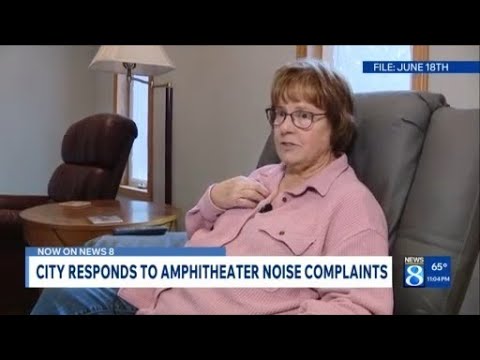
The ruling followed formal complaints two residents filed in June. The city was dismissed from the lawsuit. Lead plaintiff Hal Froot worries the commission will rewrite the noise code to accommodate the venue.

Why it matters

If the city rewrites its noise code to accommodate the venue, residents lose the court victory they just won.

Questions about this story

Free account needed to ask — your question is kept and asked for you right after sign-up. Answers are public.

No questions yet — be the first to ask.

Key Indicators

40 dB
Sound above allowed limit
Residents' sound expert measured levels 40 decibels (16x) above the city's noise ordinance limit.
4
Residents who sued
Hal Froot and three other residents filed the lawsuit that led to the court ruling.
4 km
Distance where bass remains audible
A resident 2.5 miles from the venue reports hearing bass and lyrics through windows.

Voices

Curated perspectives — historical figures and your fellow readers.

Ever wondered what historical figures would say about today's headlines?

Sign up to generate historical perspectives on this story.

People Involved

Organizations Involved

Timeline

May 2026 August 2026

5 events Latest: August 27th, 2026 · 2 weeks ago
Tap a bar to jump to that date
  1. Commissioner acknowledges issue

    Statement

    First Ward Commissioner AliciaMarie Belchak says the city will monitor and address the amphitheater's noise impact.

  2. Concert runs past 11 PM curfew

    Violation

    A recent show extends beyond the 11 PM curfew under a city-allowed performance delay exception.

  3. Resident notices concert noise through windows

    Complaint Origin

    Laure Turmell, living 2-3 miles from the amphitheater, first hears bass and lyrics from concerts through her windows at night.

Scenarios

1

City sets decibel limits for the amphitheater

Possible Resolves by End of 2026

Discussed by: Complaining residents Laure Turmell and Michael Yoder, who explicitly requested enforceable decibel limits and independent sound monitoring in their filings.

The City Commission reviews the noise exemption, amends the ordinance to set decibel limits, and arranges independent sound monitoring. This is the outcome residents asked for and would require a formal commission vote on the code.

2

Amphitheater adds voluntary sound mitigation

Possible Resolves by Q3 2026

Discussed by: City spokesperson, who said staff is working with operators to 'monitor sound levels, evaluate future options, and support a positive experience for both nearby residents and visitors.'

Rather than wait for regulatory action, venue operators add sound barriers, adjust speaker angles, or impose bass cutoffs. This reduces audible noise without an ordinance change and could satisfy residents enough to drop further complaints.

3

Residents escalate to legal action over noise

Unlikely Resolves by Q2 2027

Discussed by: Turmell's expectation of more complaints if nothing changes; a standard escalation path when municipalities decline to act on nuisance claims.

If the commission declines to set limits, residents could sue the city over the exemption or pursue a private nuisance claim against the venue operator. Legal action would prolong the dispute and could cost the city in defense fees or damages.

4

City rewrites noise ordinance to accommodate amphitheater

Possible Resolves by End of 2026

Discussed by: Hal Froot, lead plaintiff, who told WGVU he worries the city will change the ordinance

After the court ordered the venue to comply with the noise ordinance, the City Commission could amend the code to relax limits for the amphitheater. This would bring the venue into compliance without reducing sound. Residents would lose the court victory.

Historical Context

3 moments from history that rhyme with this story — and how they unfolded.

1984-present

Riverbend Music Center (Cincinnati, Ohio)

Riverbend opened on the Ohio River in 1984, across the water from Anderson Township. Residents immediately complained about concert noise drifting over the river, and the township and venue operator have argued over sound limits and curfews for decades.

Then

The venue adopted curfews and sound controls, but complaints resurface each season.

Now

The dispute is a permanent feature of Riverbend operations—a pattern that recurs when venues sit near residential areas.

Why this matters now

Suggests Grand Rapids' noise conflict may become an annual ritual rather than a one-time issue.

2013-2017

Forest Hills Stadium reopening (Queens, New York City)

When the historic Forest Hills Stadium in Queens reopened for concerts in 2013, residents of the adjoining Forest Hills Gardens neighborhood immediately complained about loud bass. The venue initially claimed an exemption from city noise rules, then faced community pressure to change.

Then

The venue hired a sound engineer, adjusted speaker placement, and agreed to earlier weeknight endings.

Now

The stadium now operates under a community agreement with the neighborhood, a model for voluntary mitigation.

Why this matters now

Demonstrates the voluntary mitigation path: a venue can reduce noise complaints without formal regulation if neighbors have leverage.

1990s-2000s

Red Rocks Amphitheatre noise disputes (Morrison, Colorado)

Residents of Morrison, Colorado, about a mile from the iconic Red Rocks Amphitheatre, lodged hundreds of noise complaints as concert volume rose through the 1990s. The town council passed curfews and decibel restrictions, and Denver, which owns the venue, sued over local jurisdiction.

Then

Courts forced the two governments to negotiate a formal sound limits agreement.

Now

Red Rocks now operates under strict measured decibel limits, with an on-site sound engineer and fines for violations.

Why this matters now

Shows that even an iconic, city-owned venue can be forced to accept enforceable sound limits—though it can take years of conflict.

Sources

(6)