
Pull to refresh
Logo
EU prosecutors open fraud inquiry into Spain's Madrid-Seville rail upgrades

EU prosecutors open fraud inquiry into Spain's Madrid-Seville rail upgrades

Built World

Two crashes nine months apart killed 115 people on the same high-speed line. EU prosecutors and Spain's audit court are now examining the contracts meant to make it safer.

Overview

Updated 2 days ago

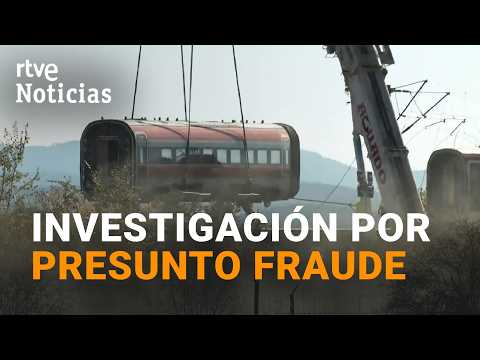
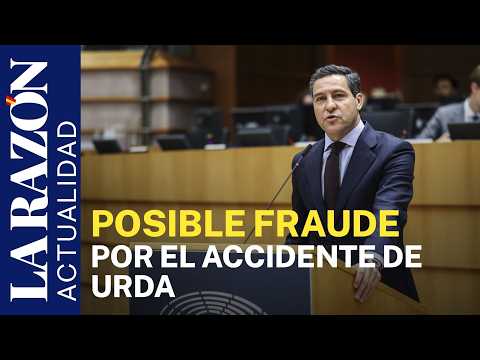
At 8:31 on 28 October, the signalling system that keeps trains apart on Spain's Madrid-Seville high-speed line failed, stopping seven trains across more than 63 kilometres. Eighty-two minutes later, a Renfe train cleared to resume normal speed hit a stationary Iryo train near Urda, killing 69 people.

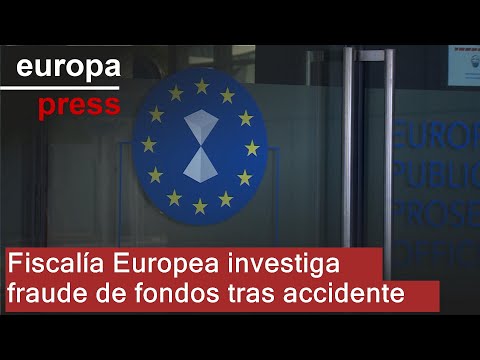
On 6 November, European Union prosecutors searched the offices of Spain's rail infrastructure manager, its rail safety agency and the Court of Auditors over whether money meant to modernise the line's signalling was misused. It is the second such inquiry this year, after 46 people died at Adamuz in January. On 9 November the Court of Auditors opened its own proceedings to recover public money from allegedly rigged ADIF contracts, citing a December 2025 audit that questioned who had authority to sign the €93m Thales signalling deal.

Why it matters

The contracts under scrutiny were meant to replace the signalling that failed. Prosecutors are asking whether that EU money was spent as promised.

Questions about this story

Free account needed to ask — your question is kept and asked for you right after sign-up. Answers are public.

No questions yet — be the first to ask.

Key Indicators

69
Deaths in the Urda crash
Renfe and Iryo trains collided near Urda, in Toledo province, on 28 October 2026.
46
Deaths in the Adamuz crash
A separate collision on the same line on 18 January 2026.
115
Combined death toll on the line
The two crashes are the worst on Spain's high-speed network in 35 years.
€136.4m
Value of three tenders examined
Signalling, switch and track-circuit contracts, according to Antena 3; ABC separately reports €86m of EU money under review.
€86m
EU funds the prosecutor is tracing
European money spent on the Madrid-Seville line that the EU prosecutor is checking, according to ABC.
170
LZB failures in 2026 before the crash
The count given by then transport minister Óscar Puente after the Urda collision.
63
Track affected by the 28 October signalling failure
Seven trains were stopped on this stretch when the LZB system went down.

Voices

Curated perspectives — historical figures and your fellow readers.

Sign up to generate historical perspectives on this story.

People Involved

Organizations Involved

European Public Prosecutor's Office
EU prosecution body
Opened two investigations into the Madrid-Seville line in 2026

The European Union's independent prosecution office, based in Luxembourg, which investigates crimes against the EU budget.

AD
Administrador de Infraestructuras Ferroviarias (ADIF)
State rail infrastructure manager
Subject of document seizures on 6 November 2026 and a recovery instruction on 9 November

Spain's state-owned rail infrastructure manager, which awarded the signalling and switch contracts now under review.

AE
Agencia Estatal de Seguridad Ferroviaria (AESF)
State rail safety agency
Searched on 6 November 2026

Spain's state rail safety regulator, visited by EU prosecutors investigating the line's safety contracts.

Thales España
Thales España
Rail signalling contractor
Held the main signalling contract under review until July 2024

The Spanish arm of French defence and transport group Thales, which won the €93.83m contract to install ERTMS signalling on the Madrid-Seville line.

Hitachi Rail
Hitachi Rail
Rail signalling and rolling stock manufacturer
Took over the Madrid-Seville signalling contract in July 2024

The Japanese rail manufacturer that took over the Madrid-Seville signalling contract from Thales España.

Renfe Operadora
Renfe Operadora
State-owned train operator
Operated the train that struck the stationary Iryo service

Spain's state-owned passenger rail operator, whose train hit a stationary Iryo service near Urda.

Iryo
Iryo
Private high-speed rail operator
Operated the stationary train struck at Urda

A private Spanish high-speed operator whose train was stopped on the line when the Renfe service hit it.

Tribunal de Cuentas
Tribunal de Cuentas
Public spending watchdog
Opened recovery proceedings over ADIF contracts on 9 November 2026

Spain's public audit body, whose offices were searched for records on the rail contracts.

Timeline

October 2021 November 2026

8 events Latest: 2 days ago
Tap a bar to jump to that date
  1. Signalling fails, then trains collide near Urda

    Accident

    The LZB system goes down, stopping seven trains on more than 63km of track. At 9:53 a Renfe train cleared to run at normal speed hits a stationary Iryo train; 69 people die.

  2. Trains collide at Adamuz, killing 46

    Accident

    Two trains crash on the same Madrid-Seville line in Córdoba province. Forty-six people die.

  3. Court of Auditors flags gaps in ADIF contract signatures

    Audit

    Spain's Court of Auditors approves a report on ADIF contracts funded by the EU recovery plan. It names six files, including the €93m Thales signalling contract, where the authority of the people who signed was not sufficiently documented.

  4. Signalling contract moves to Hitachi Rail

    Contract

    The Madrid-Seville signalling contract is transferred from Thales España to Hitachi Rail.

  5. Adif awards signalling contract to Thales España

    Contract

    Adif picks Thales España for a €93.83m job to install ERTMS signalling alongside the older LZB system on the Madrid-Seville line. The bid was 28.45% below budget and initially flagged as abnormally low.

Scenarios

1

EPPO charges a contractor or official over the rail contracts

Possible Resolves by Q2 2028

Discussed by: El País and El Confidencial, which frame the inquiry around the Thales signalling contract and the switch-renewal tender

Prosecutors use the seized tender files to build a case that EU co-financing was obtained or spent on work that was not delivered as specified. That would require evidence beyond an unusually low bid, which ADIF accepted at the time. A formal indictment would name a company or an individual and move the story from procurement review to criminal proceedings.

2

Both EU fraud inquiries close without charges

Possible Resolves by End of 2028

Discussed by: El Confidencial, which notes that an abnormally low bid is not by itself an irregularity

The inquiries find documentation gaps or procurement weaknesses but no evidence that EU money was diverted. The Thales bid was justified on the record by the company's long history on the line, and ADIF accepted that explanation. Closing the files would leave the crash investigations as the only route to accountability.

3

Orgaz court pins the Urda collision on the signalling failure

Likely Resolves by End of 2027

Discussed by: El Independiente, citing the preliminary report on the LZB outage and the chain of instructions that followed

The technical investigation at the Juzgado de Instrucción número 2 de Orgaz examines why a train was cleared to resume normal speed while another remained stopped ahead. A finding that the LZB failure and the clearance decision caused the collision would shift attention to operating procedures and equipment maintenance, separate from the EU funding question.

4

Court of Auditors orders contractors to repay ADIF money

Possible Resolves by End of 2027

Discussed by: El Mundo, reporting the instruction opened by the Tribunal de Cuentas

The Tribunal de Cuentas works out the damage to the state from allegedly rigged ADIF awards and seeks repayment from the companies involved. This is a financial recovery track, separate from the EU prosecutor's criminal inquiry.

Historical Context

3 moments from history that rhyme with this story — and how they unfolded.

October 2000

Hatfield rail crash (2000)

A GNER express derailed at Hatfield in England after rails cracked under a maintenance regime that had deferred repairs. Four people died and more than 70 were injured. The crash exposed how inspection and contractor incentives had drifted.

Then

Railtrack, the private track owner, went into administration in 2001 and was replaced by the state-backed Network Rail.

Now

Balfour Beatty, the maintenance contractor, was fined £10m in 2005 for health and safety breaches. Rail maintenance and inspection rules were overhauled.

Why this matters now

Hatfield shows how a fatal crash can turn a maintenance contract into a question of corporate and institutional liability, which is the direction the EU inquiry is pointing.

June 1998

Eschede train disaster (1998)

A German ICE high-speed train derailed near Eschede after a wheel tyre failed, killing 101 people. The failure traced back to a wheel design and the maintenance regime built around it.

Then

Germany's high-speed fleet was taken out of service while wheels were redesigned and replaced.

Now

The crash changed how high-speed wheelsets are inspected and certified across Europe.

Why this matters now

Eschede is the reference case for how a single component failure on a high-speed line becomes a system-wide safety and procurement problem.

July 2013

Santiago de Compostela derailment (2013)

A high-speed train took a curve at more than twice the speed limit outside Santiago de Compostela and derailed, killing 79 people and injuring about 140. The driver was charged with negligent homicide.

Then

The investigation centred on the driver's actions and the absence of automatic braking at that curve.

Now

The case took nearly a decade to reach trial, and the debate over whether to blame individuals or systems persisted.

Why this matters now

Spain's last major rail disaster focused on one driver. The Urda and Adamuz inquiries are aimed at the infrastructure and the money behind it, a different target.

Sources

(14)