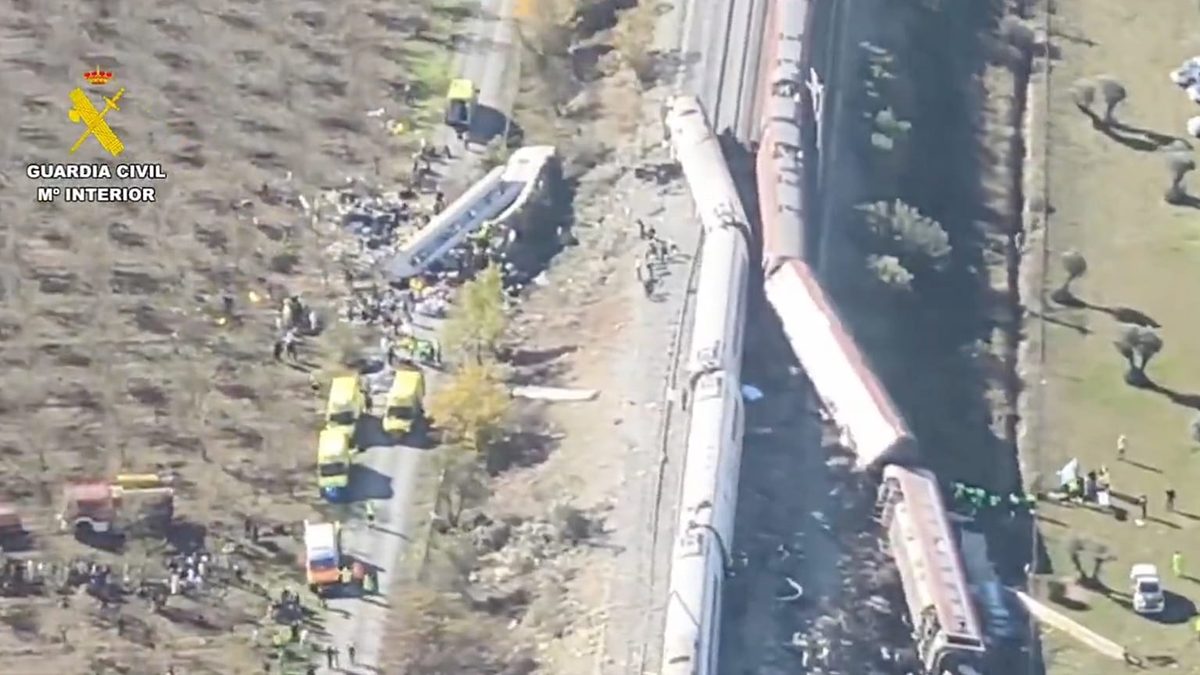
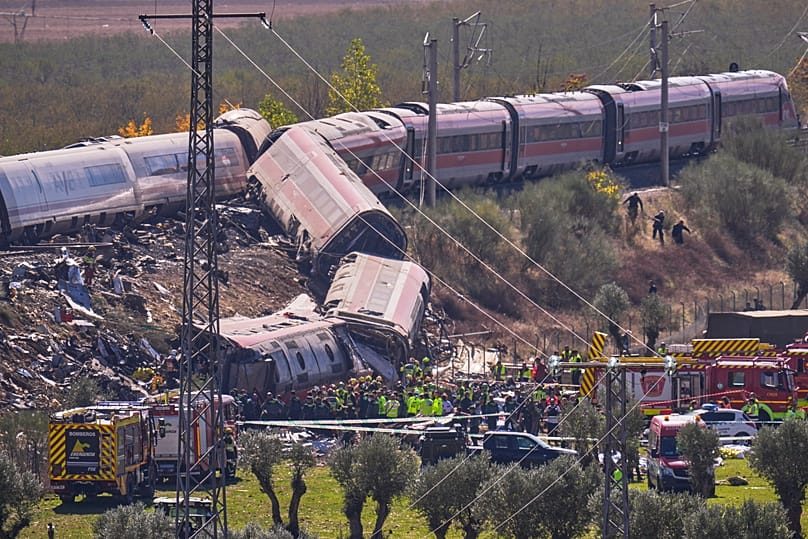
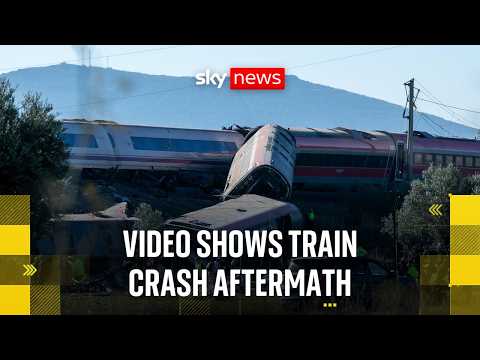
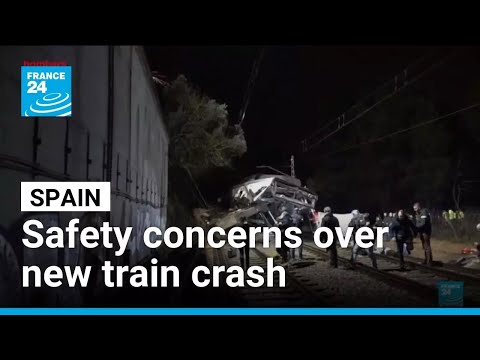
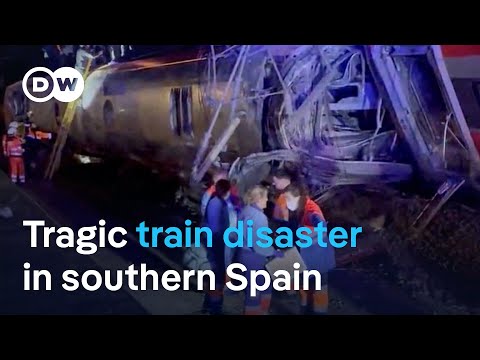
At least 69 people were killed and 179 injured when a Renfe AVE train hit a stationary Iryo train near Urda, in Toledo province, on October 28. Transport Minister Óscar Puente said on October 31 that the AVE was cleared to resume normal speed at 8:36 a.m., eight minutes after the LZB signaling system failed, while the Iryo train reported it could not move at 8:48 a.m. and the control center took no action. The AVE traveled about 25 kilometers and exceeded 160 km/h before the 8:53 a.m. collision.
An internal Adif report shows a cascade of failures began at 8:30 a.m., including LZB transmission problems, GSM-R communication difficulties, track circuit information losses, and a voltage drop. The technical investigation is now led by AITAT, which replaced the CIAF in July, while a court in Orgaz leads a parallel criminal inquiry under seal. Forensic teams have completed all 69 autopsies and identified 36 victims.
Spain's high-speed rail system promises that automated signals make collisions impossible. That promise is now on trial.
Minute by minute
The last 23 minutes before the Urda crash
Press Next to step through it at your own pace. Each line says whose account it is. The inquiry is open, so these times are not final.
8:30Oct. 28, Spanish time
Moment 1 of 723 minutes before the 8:53 collision
← MadridSeville →
Urda entry signalAVEIryo
Iryo on the line near Urda; the exact spot is not recorded. Position estimated.
SignallingFailures begin
Adif's internal log, per El Pais: the first failures come at about 8:30.
AVE stopped about 25 km short of the crash site, same track, same direction. Position estimated.
Iryo stops near Urda; the time it reached the signal is unclear. Position estimated.
SignallingLZB safety system down
The minister's chronology: LZB fails on 63 km of the line, all trains stop, a backup system takes over and Adif's control center at Atocha directs traffic.
AVE stopped about 25 km short of the crash site, same track, same direction. Position estimated.
Iryo stops near Urda; the time it reached the signal is unclear. Position estimated.
SignallingRepair crew sent
El Pais: an Adif crew goes to the area at about 8:35 to restore the system. Two of the three computers stay locked until the crash.
AVE told to go on, about 25 km short of the crash site. Position estimated.
Iryo stops near Urda; the time it reached the signal is unclear. Position estimated.
AVE trainAVE told to go on
The driver has reported a transmission failure. The order, read back on the recording: "Con marcha normal" (at normal running), and control confirms it.
Control centerMinister: far above allowed speed
The minister's chronology: this cleared the AVE far above the speed allowed in these conditions. Running on sight is limited to 40 km/h.
AVE moving. Position estimated.
Iryo stopped at the Urda entry signal.
Iryo trainIryo stopped at a signal
The driver, on the recording: "estoy detenida en la señal de entrada de Urda" (I am stopped at the Urda entry signal).
Control centerMinister: Iryo cleared to go
The minister's chronology: control authorizes the Iryo to resume, but it cannot start and stays stopped.
Iryo trainIryo disputes that
On Oct. 28, Iryo said the order to resume never reached its cab.
Control centerWhat the audio shows
The published transcript has the order read to train 6076: "reanude marcha al amparo del BSL con marcha normal" (resume at normal running on the backup system), and an answer: "Vale, perfecto."
AVE still moving. Position estimated.
Iryo stopped at the Urda entry signal.
Iryo trainIryo calls again
The driver, on the recording: "estoy todavía detenida ante la señal de entrada" (I am still stopped at the entry signal).
Control centerMinister: no action taken
The chronology as reported by EFE: the center received the message and took no action.
Control centerWhat the audio shows
Published extracts show an acknowledgment and an internal discussion, and no warning to the AVE. It is not known whether other calls exist.
AVE reaches the Iryo after about 25 km.
Iryo still stopped when it is hit from behind.
AVE trainCollision
The minister's chronology: after about 25 km and above 160 km/h, the AVE hits the stopped Iryo. Reports on Oct. 31 put the dead at 69.
AVE trainSpeed at impact
A first technical report estimates 160 to 200 km/h.
The last 23 minutes before the Urda crash (Oct. 28, Spanish time)
Time
Who
What
Source
8:30
Signalling
Failures begin. Adif's internal log, per El Pais: the first failures come at about 8:30.
LZB safety system down. The minister's chronology: LZB fails on 63 km of the line, all trains stop, a backup system takes over and Adif's control center at Atocha directs traffic.
AVE told to go on. The driver has reported a transmission failure. The order, read back on the recording: "Con marcha normal" (at normal running), and control confirms it.
Minister: far above allowed speed. The minister's chronology: this cleared the AVE far above the speed allowed in these conditions. Running on sight is limited to 40 km/h.
What the audio shows. The published transcript has the order read to train 6076: "reanude marcha al amparo del BSL con marcha normal" (resume at normal running on the backup system), and an answer: "Vale, perfecto."
What the audio shows. Published extracts show an acknowledgment and an internal discussion, and no warning to the AVE. It is not known whether other calls exist.
18 events
Latest: October 31st, 2026 · 1 week ago
Showing 8 of 18
JK to step
Tap a bar to jump to that date
October 2026
Railway union files complaint over leaked audio
LatestLegal
The Sindicato de Circulación Ferroviario filed a complaint with the court in Orgaz over the leak of control-center audio, arguing it exposes workers and invites premature conclusions.
Puente details minute-by-minute timeline of crash
Investigation
Transport Minister Óscar Puente says LZB failed at 8:31 a.m., the AVE was cleared to resume normal speed at 8:36 a.m., the Iryo reported it could not move at 8:48 a.m., and the control center took no action before the 8:53 a.m. collision.
Internal Adif report reveals cascade of failures
Investigation
A report seen by El País shows failures began at 8:30 a.m., including LZB transmission problems, GSM-R communication difficulties, track circuit information losses, and a voltage drop.
Forensic teams identify 36 victims
Casualties
The Institute of Legal Medicine has completed all 69 autopsies and identified 36 victims; 27 families have been notified.
Sánchez says trust in high-speed rail broken
Government
Prime Minister Pedro Sánchez says trust in high-speed rail has been broken after the crash, which may have killed people of 27 nationalities.
Preliminary report estimates impact speed
Investigation
An initial report by the independent rail accident authority estimates the AVE was travelling at 160-200 km/h when it hit the Iryo.
Adif controller refuses to testify
Investigation
The Adif control-center operator who cleared the AVE past the red signal invoked the right to silence and was removed from service, Adif said.
Forensic teams complete 69 autopsies
Casualties
The Institute of Legal Medicine in Toledo and Ciudad Real finished all 69 autopsies. Twenty-five victims had been identified, and 72 missing-person reports remained, with five people found alive.
Puente floats closing lines during works
Government
Transport Minister Óscar Puente said the government is considering the German model of fully closing high-speed sections under renovation, starting next year.
Death toll lowered to 69
Casualties
Officials revised the death toll down from 74 to 69 after completing autopsies and identification work.
Black boxes handed to the Guardia Civil
Investigation
Investigators recovered the black boxes from both trains late on October 29 and gave them to the Civil Guard for analysis.
LZB system failure halts six trains
Incident
Continuous safety monitoring drops on a stretch of more than 60 km; six trains stop on the line. The control center takes over their movements.
Control center clears AVE past red signal
Decision
Operator reportedly orders 'normal march' instead of 'march at sight' after the LZB outage.
AVE rear-ends stationary Iryo at Urda
Incident
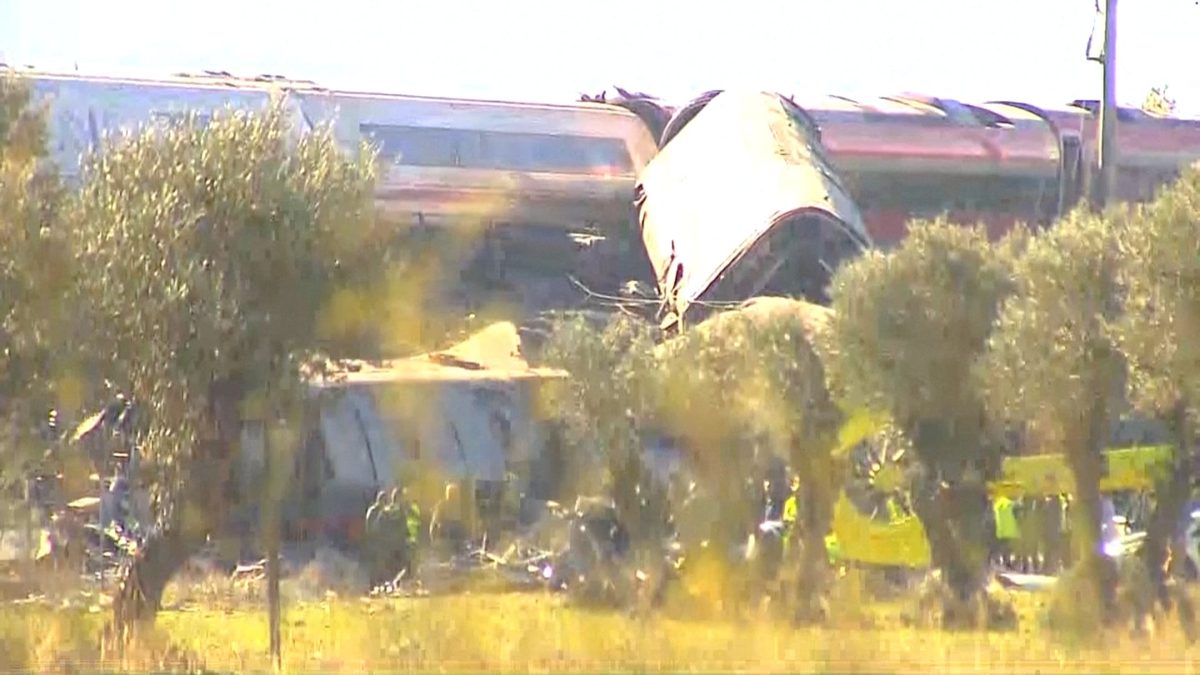
Impact kills dozens and derails carriages; two Iryo cars and one AVE car fall down an embankment.
Death toll reaches 64 as investigation opens
Investigation
Castilla-La Mancha confirms 64 dead; the regional government later raises the toll to 68.
Death toll rises to 68
Casualties
Castilla-La Mancha's regional government raises the confirmed toll from 64; 15 of the injured are in serious or critical condition.
Sánchez says Spain is in mourning
Government
Prime Minister Pedro Sánchez promises the government will get to the bottom of the crash and address potential failures with 'utmost firmness.'
Guardia Civil questions control-center operator
Investigation
Civil Guard officers and CIAF technicians interview the Adif operator who regulated traffic on the Madrid-Seville line; investigators get access to audio and text recordings from the Atocha control center.
Scenarios
1
Adif operator indicted for negligent homicide
Possible
Resolves by Q2 2027
Discussed by: Spanish press and legal analysts, citing the transport ministry's preliminary account; El País reports the investigation points to a possible human error
Spain's judiciary opens a formal investigation into the crash. If the probe confirms that an Adif control-center operator cleared the AVE past a red signal at ordinary speed instead of 'march at sight,' the operator could face charges of negligent homicide. The ministry's own account — that the control center authorized resuming traffic in 'incomprehensible' conditions — gives prosecutors a documented trail.
2
Spain accelerates ERTMS rollout and revises red-signal rules
Likely
Resolves by End of 2027
Discussed by: Railway engineering analysts, including José María Goicolea, and the operators Renfe and Iryo
The crash becomes a catalyst for replacing the aging LZB system with the European-standard ERTMS Level 2 across affected lines. Adif could also issue new rules requiring 'march at sight' whenever a train is cleared past a red signal after a system failure. Both moves respond to the finding that the AVE proceeded at ordinary speed with no automatic protection.
3
Investigation blames systemic failure, not individuals
Possible
Resolves by Q3 2027
Discussed by: Rail safety investigators and rail workers' unions defending the control-center operator
The official investigation concludes the collision stemmed from a cascade: an unanticipated LZB outage, ambiguous rules for resuming traffic after a failure, and no automatic protection when the AVE was cleared past the red signal. No single operator is charged; instead, Adif and the regulator face recommendations for systemic reform. This outcome would follow Spain's pattern of focusing institutional responsibility in infrastructure failures.
4
Spain closes high-speed lines during renovation works
Possible
Resolves by End of 2027
Discussed by: Transport Minister Óscar Puente and the Spanish government
Puente said the government is considering the German model of fully closing high-speed sections while renovation work is carried out, starting next year. The change would affect routes including Madrid-Barcelona between Madrid and Calatayud. Puente said the decision is not driven by safety alone and would face social pushback.
Historical Context
2 moments from history that rhyme with this story — and how they unfolded.
1 of 2
July 2013
Santiago de Compostela derailment (2013)
An Alvia train derailed on a sharp curve at 179 km/h, more than double the posted 80 km/h limit, near the Galician city. The crash killed 80 people and injured more than 140.
Then
The driver was arrested days later on suspicion of recklessness; Spain tightened speed controls on the affected route.
Now
The driver was convicted of negligent homicide and sentenced to prison in 2024. The stretch lacked ERTMS automatic braking, so speed enforcement relied on the driver.
Why this matters now
Both crashes hinge on what happens when a human takes over from automated systems — in Santiago, speed enforcement; in Toledo, red-signal passage after a control-system failure.
2 of 2
June 1998
Eschede train disaster (1998)
A German ICE high-speed train derailed at 200 km/h near Eschede after a wheel rim failed, killing 101 people and injuring 88. It remains the world's deadliest high-speed rail crash.
Then
Deutsche Bahn overhauled wheel design and inspection schedules; the crash became a case study in cascading single-point failures.
Now
Eschede shaped European safety mandates, including the ERTMS standard now replacing Spain's LZB system.
Why this matters now
Both accidents show how one component failure can escalate into catastrophe when protective systems fail in sequence — a wheel in Eschede, a signaling outage in Toledo.