
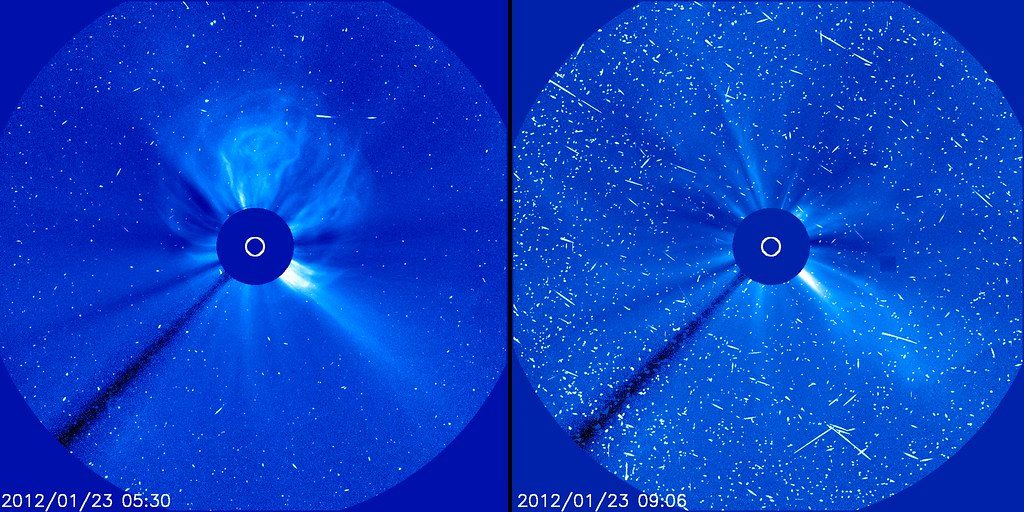
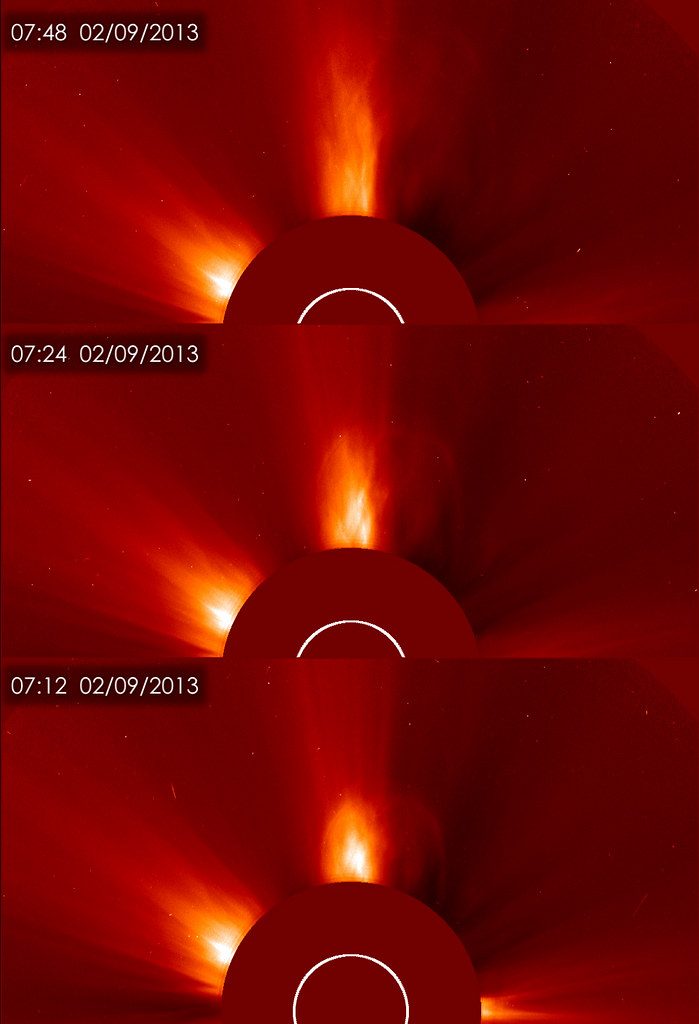
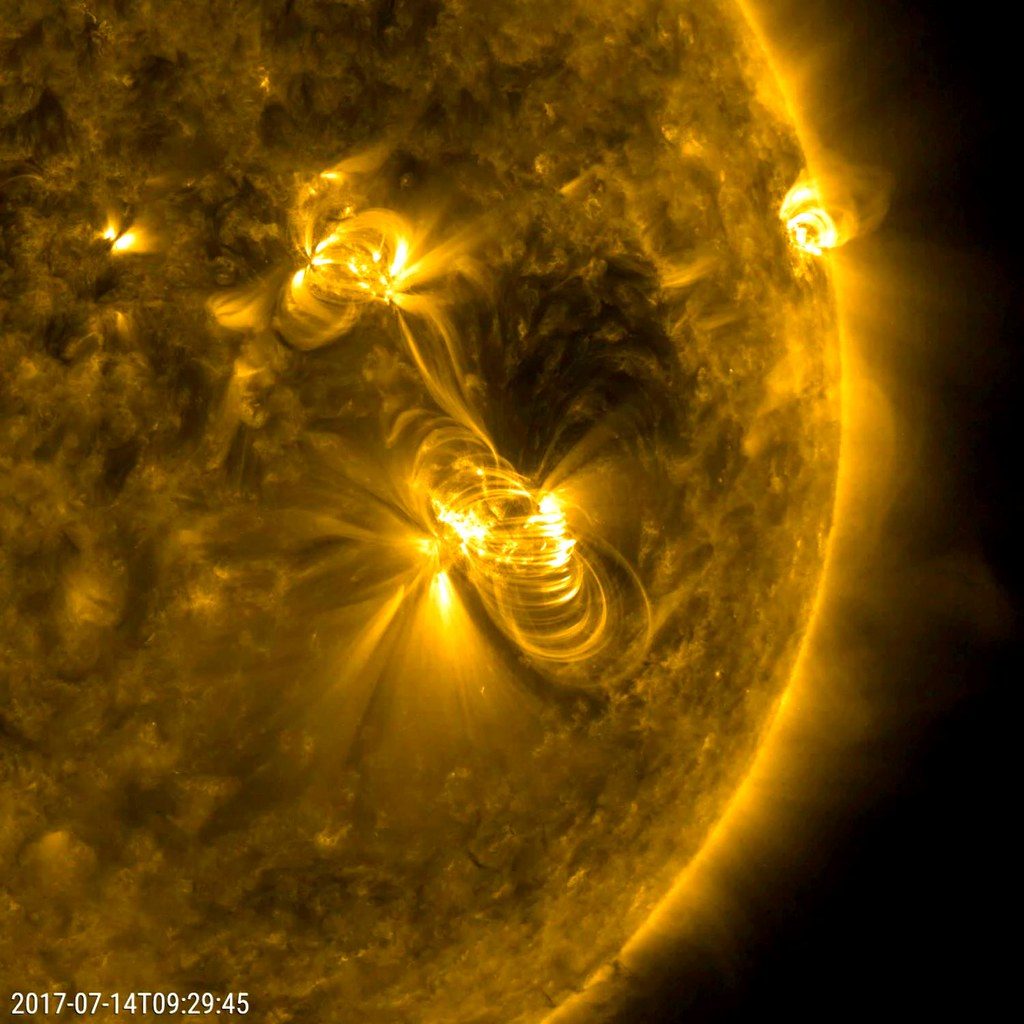
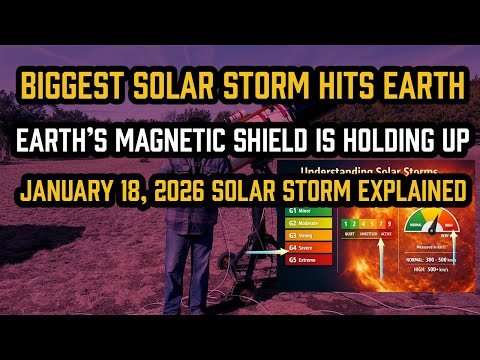
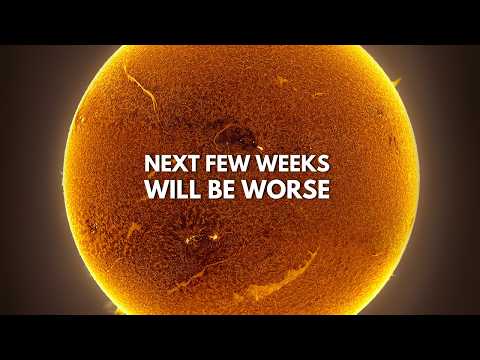
On January 18, 2026, the Sun fired the most intense radiation storm in over 20 years directly at Earth. An X1.9-class flare launched a coronal mass ejection traveling at 1,700 kilometers per second—plasma moving fast enough to cross the Sun-Earth distance in just 25 hours. The resulting geomagnetic storm reached G4 (Severe) levels, placing it at the top of warning scales and triggering auroras visible from Texas to Italy. Three weeks later, the Sun has not quieted. On February 2, a massive sunspot region designated AR4366—nearly 10 times wider than Earth—erupted with an X8.1 flare, the strongest since the January event. Two days later, on February 4, another X4.2 flare followed, with additional M-class flares crackling almost continuously from the same region.
The storm tested every system space weather experts worry about: satellites, power grids, aviation, and GPS navigation. For now, infrastructure held. Airlines rerouted polar flights, satellite operators activated safe modes, and grid operators reduced loads. But the Sun remains near its maximum activity phase through 2026, and the February eruptions confirm this may be a sustained period of extreme activity rather than a single event. NOAA forecasters expect continued X-class flare potential through mid-February as AR4366 transits the visible solar disk, with another surge likely in late February as the region rotates back into view. Lloyd's of London estimates a worst-case solar storm could cost the global economy $9.1 trillion over five years. Meanwhile, NASA's Artemis II lunar mission—scheduled for March 2026—will test deep-space radiation protocols with its four-person crew facing exposure levels 50 to 100 times higher than ground-level radiation as they pass through Earth's Van Allen belts and venture beyond the planet's protective magnetic field.