

Pull to refresh
Logo
South Africa's HPV vaccination drive cuts cancer-causing infections by 83%

South Africa's HPV vaccination drive cuts cancer-causing infections by 83%

New Capabilities

A decade of school-based vaccination shows sharp declines in HPV 16 and 18, including among girls living with HIV

Overview

Updated Nov 2

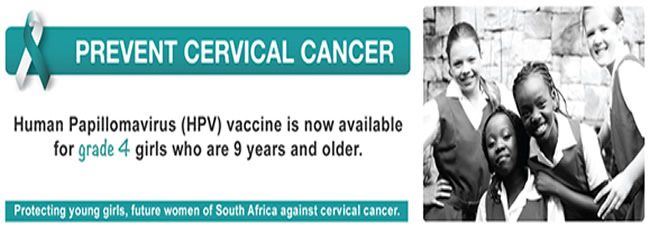
In 2014, South Africa began giving HPV vaccines to Grade 4 girls in public schools. A decade later, infections with HPV 16 and 18, the types behind most cervical cancers, have fallen by 83% among the generations eligible for the shots.

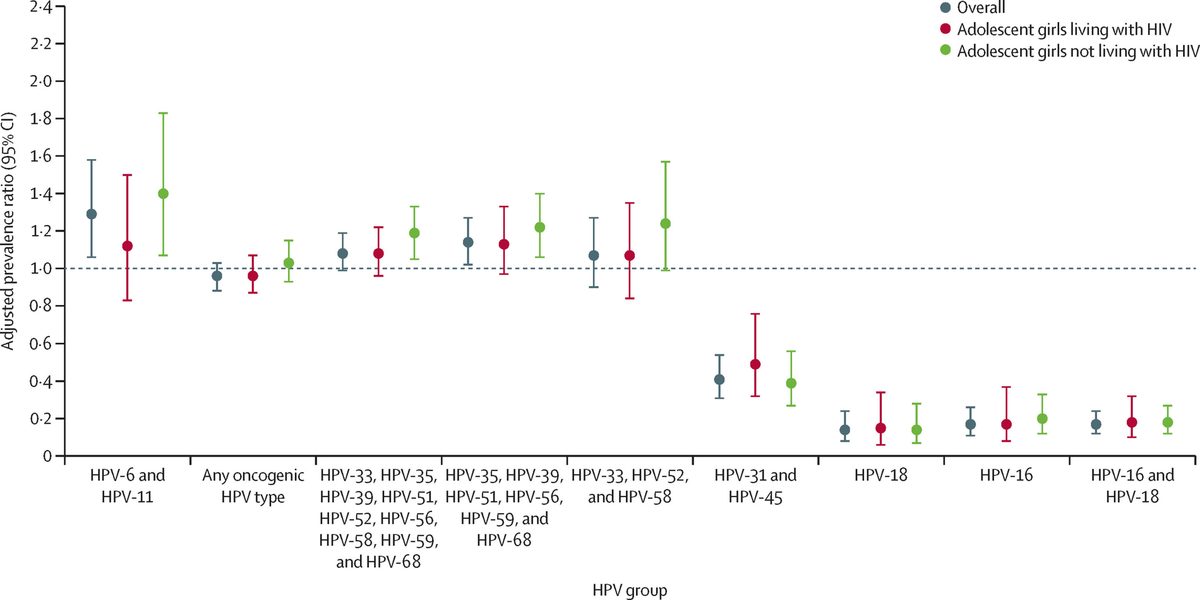
The decline held among girls living with HIV, from 29% to 4%. South Africa has about 7.9 million people living with HIV, 12.3% of its population. In 2026, the health department reported that 90.6% of that year's target group had received one dose.

Why it matters

If the decline holds, South Africa can cut cervical cancer cases in a generation of women, including those at highest risk from HIV.

Questions about this story

Free account needed to ask — your question is kept and asked for you right after sign-up. Answers are public.

No questions yet — be the first to ask.

Key Indicators

83%
Fall in HPV 16/18 prevalence
Drop among girls aged 17-18 eligible for vaccination, comparing 2019 and 2023 surveys.
About 3%
Post-vaccine HPV 16/18 prevalence
About three in every 100 vaccinated-eligible girls carried HPV 16 or 18.
About 20%
Pre-vaccine HPV 16/18 prevalence
About one in five girls carried HPV 16 or 18 before the programme reached them.
82%
Fall among girls living with HIV
HPV 16/18 prevalence dropped from 29% to 4% in this group.
90.6%
2026 one-dose coverage
428,395 girls in the 2026 target cohort had received one dose by 1 June 2026, per a reply to a parliamentary question.
7.9 million
People living with HIV in South Africa
Estimated mid-2025, about 12.3% of the population.

Voices

Curated perspectives — historical figures and your fellow readers.

Sign up to generate historical perspectives on this story.

People Involved

Organizations Involved

Timeline

2014 November 2026

9 events Latest: November 2nd, 2026 · 1 week ago
Tap a bar to jump to that date
  1. Study authors publish public analysis of results

    Latest Publication

    The Conversation and Daily Maverick carry the authors' account: HPV 16/18 prevalence fell from about one in five girls to about three in 100.

  2. Western Cape reports 36,841 Grade 5 girls vaccinated

    Vaccination

    The provincial health department said it had vaccinated 36,841 Grade 5 girls in public and special schools in the first half of 2026, ahead of school visits from 3 August to 23 September.

  3. National campaign reports 90.6% one-dose coverage

    Vaccination

    A reply to parliamentary question 3779, published in the internal question paper, said 428,395 girls in the 2026 target cohort had received one dose as at 1 June 2026.

  4. HOPE study published in The Lancet Global Health

    Research

    The study reports an 83% drop in HPV 16/18 prevalence, with similar results among girls living with HIV.

  5. Private schools added to vaccination programme

    Policy

    Girls in private schools gain access to the school-based programme.

  6. South Africa switches to single-dose schedule

    Policy

    The country adopts a one-dose HPV vaccine regimen after WHO endorsement.

  7. Post-vaccine HPV survey begins

    Research

    A repeat survey measures HPV prevalence in girls of the same age who were eligible for vaccination.

  8. Baseline HPV survey begins

    Research

    Researchers recruit girls aged 17-18 at 15 clinics in four provinces to measure pre-vaccine HPV prevalence.

  9. South Africa launches school-based HPV vaccination

    Policy

    Grade 4 girls in public schools, aged nine and older, are offered a two-dose vaccine against HPV 16 and 18.

Scenarios

1

Single-dose switch holds HPV 16/18 below 5% in adolescent girls

Likely Resolves by End of 2029

Discussed by: Wits RHI researchers and The Lancet Global Health commentary

South Africa moved to a single dose in October 2024. If a follow-up survey of girls vaccinated under that schedule shows HPV 16/18 prevalence under 5%, the simplified regimen is working as well as the two-dose programme. A weaker result would raise questions about durability and dosing.

2

Cervical cancer cases fall in vaccinated cohorts

Possible Resolves by End of 2035

Discussed by: Public health researchers tracking WHO elimination targets

HPV infections take decades to become cancer, so the first measurable drop in cervical cancer incidence among vaccinated women will not appear until the 2030s. A decline would confirm the vaccine's population-level benefit; a flat trend would point to gaps in screening or treatment.

3

South Africa builds a national HPV vaccination register

Uncertain Resolves by End of 2029

Discussed by: The Lancet Global Health commentary

South Africa has no electronic national HPV vaccination register and no unique patient identifier linking vaccination to cancer screening records. Without one, researchers cannot reliably track who was vaccinated, how many doses they received, or how their health outcomes compare. Building the register would make long-term evaluation possible.

Historical Context

3 moments from history that rhyme with this story — and how they unfolded.

2007 onwards

Australia's HPV vaccination programme (2007)

Australia began a school-based HPV vaccination programme for girls in 2007, later extending it to boys. Coverage was high, and diagnoses of genital warts fell sharply among young people within a few years.

Then

Genital wart diagnoses dropped by roughly 90% in young women within five years.

Now

Australia became a reference case for national HPV programmes and later moved toward cervical cancer elimination targets.

Why this matters now

Australia showed that high-coverage school delivery could cut HPV infections at the population level. South Africa's results test whether the same holds in a high-HIV setting.

2008 onwards

Scotland's HPV vaccination programme (2008)

Scotland vaccinated girls aged 12-13 against HPV from 2008. A 2019 study in the BMJ found no cases of cervical cancer among women who received the vaccine at that age.

Then

Cervical pre-cancer lesions fell sharply in vaccinated cohorts.

Now

The findings supported calls for single-dose schedules and gender-neutral vaccination.

Why this matters now

Scotland's results showed that routine vaccination could nearly eliminate cervical cancer in a cohort. South Africa's 83% drop in HPV infections is an earlier signal on the same path.

2011 onwards

Rwanda's national HPV vaccination programme (2011)

Rwanda became the first African country to launch a national HPV vaccination programme, delivering shots through schools with high coverage.

Then

Rwanda reached high coverage among target girls within a few years.

Now

It became a model for school-based delivery in low-income settings.

Why this matters now

Rwanda showed that school-based HPV vaccination could work at scale in Africa. South Africa's study adds evidence on health impact, not just delivery.

Sources

(10)