Anchor

SEC weighs Texas Stock Exchange's mandatory broker voting rule
Rule ChangesProposal would require brokers to vote uninstructed shares in line with received instructions
Yesterday: SEC institutes proceedingsNew here? Follow stories to track developments over time. Create a free account to get updates when stories you care about change.
Overview
Updated 18 hours agoThe Securities and Exchange Commission (SEC) opened formal proceedings on September 11 to decide whether Texas Stock Exchange (TXSE), a challenger to NYSE and Nasdaq, may require brokers to vote shares when clients give no instructions. The rule would allocate those uninstructed shares proportionally, matching how other investors voted on each proposal. If no one sends instructions on a matter, the shares would be cast as abstentions.
Three commenters told the commission the rule would distort corporate election results, sidestep majority-voting requirements, and weaken investor protections. The SEC is reviewing whether the proposal fits the Exchange Act's mandate for fair rules that protect investors.
Why it matters
If approved, this rule would let one exchange force brokers to vote uninstructed shares in ways no major US exchange currently allows, changing corporate election outcomes.
Questions about this story
Free account needed to ask — your question is kept and asked for you right after sign-up. Answers are public.
No questions yet — be the first to ask.
Key Indicators
106 days
Time from TXSE filing to SEC proceedings
TXSE filed the rule on May 28, 2026; the SEC instituted proceedings September 11, 2026.
3
Commenters opposing the proposal
Commenters cited distorted voting results, circumvented majority-vote requirements, and weakened investor protections.
2
Exchange Act sections under review
The SEC is weighing the rule against Sections 6(b)(5) and 6(b)(10) on fair dealing and investor protection.
Related Media

A National Securities Exchange Headquartered in Texas | Texas Stock Exchange
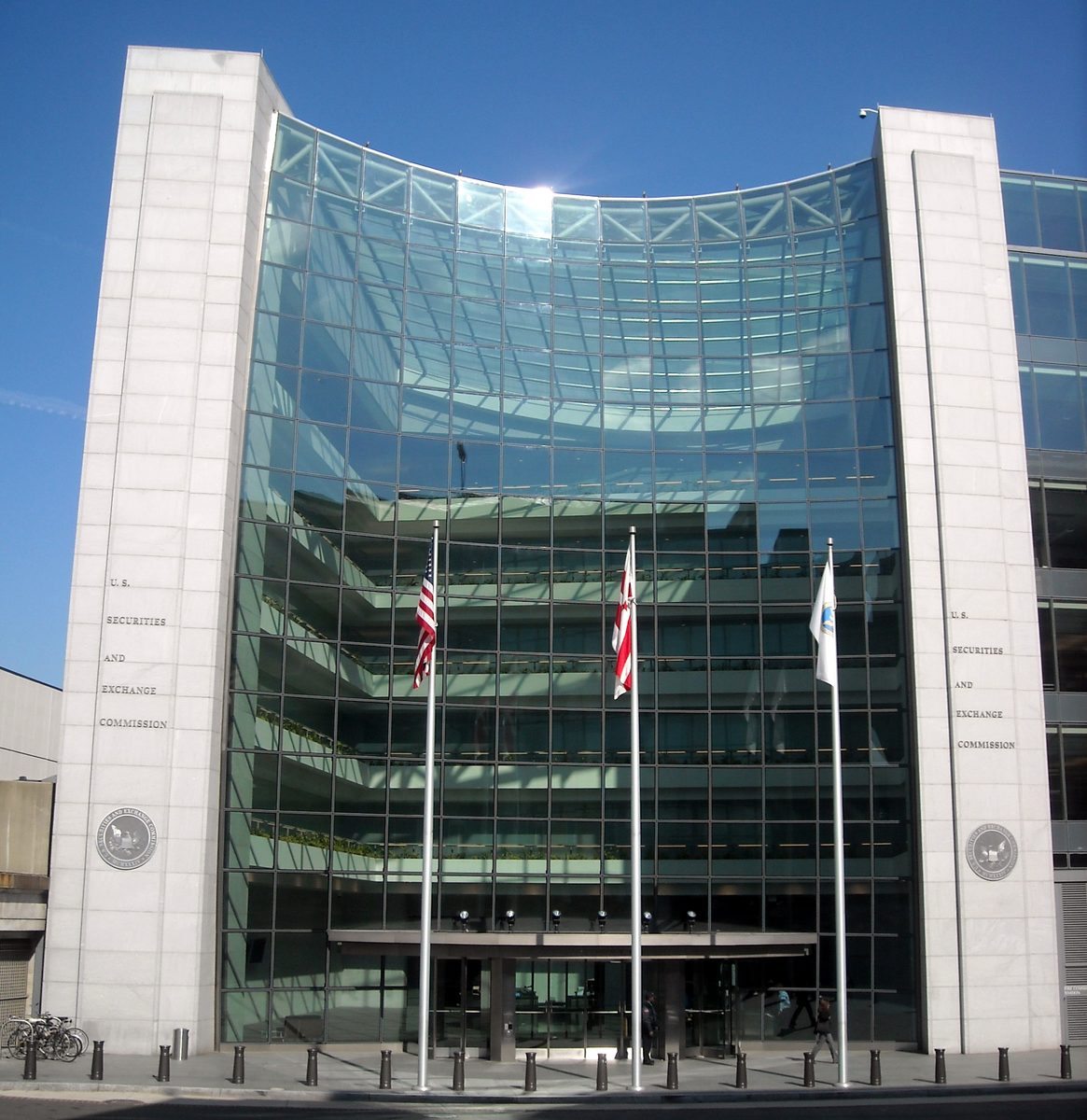
File:U.S. Securities and Exchange Commission headquarters.JPG - Wikimedia Commons

756 views
0:18
Texas Stock Exchange gets SEC approval, aims to rival NYSE ...
CBS TEXAS

87 views
7:21
SEC Issues No-Action Letter for Automatic Voting
Gesmer Updegrove LLP

14.5K views
3:01
What is Proxy Voting? | Office Hours with Gary Gensler
U.S. Securities and Exchange Commission
Images from Openverse under Creative Commons licenses. Videos from YouTube.
Voices
Curated perspectives — historical figures and your fellow readers.
Play
Exploring all sides of a story is often best achieved with Play.
Most of these play right now — no account needed. Sign up to save scores, keep a streak, and unlock Debate and Predict.
Log in
Sign Up
Higher or Lower
A number from this story, against one from elsewhere in the news — guess which is bigger, then keep the chain going. 5 rounds, 3 strikes; a miss costs a strike and resets your streak.
Example
Anchor
EU tariff revenue
$52B
Big for this kind of number
Mystery
Pentagon AI contract
?
Round 1
Streak: 0
Mystery
?
Keyboard: ↓/L lower · ↑/H higher
0 pts
Best streak: 0 · Rounds: 0
0 points — sign up to put that on the leaderboard.
Now try on this story
Connections
Sixteen names from the news. Find the four hidden groups of four. Four mistakes max.
Loading today's puzzle…
0/4 groups
Mistakes
Sign up to keep a daily streak — a new puzzle lands every day.
Now try on this story
Exit debate?
Your progress in this debate will be lost.
How it works
- 1 Two AI personas square off on this story.
- 2 You predict who'll win each round — correct picks earn XP.
- 3 One crossfire question is yours to fire. Pick it carefully.
Couldn't generate a topic
Select Your Champions
Choose one persona for each side of the debate
DEBATE TOPIC
Choose personas with different perspectives for a more dynamic debate.
SIDE A (PRO)
Select debater for this side:
No debate personas available right now.
SIDE B (CON)
Select debater for this side:
No debate personas available right now.
VS
Get ready to make your prediction...
Round of
Claim
Evidence
Stakes
Crossfire Answer
Closing Statement
Claim
Evidence
Stakes
Crossfire Answer
Closing Statement
Your Crossfire Question
Generating arguments...
Who's Got This Round?
Make your prediction before the referee scores
The referee scores both sides on
Correct predictions earn +20 XP
· Press 1 or 2 to pick
Evidence
40%
Logic
30%
Detail
20%
Style
10%
Round Results
Your Pick
Not this time
(%)
Overall Score
/10
Your Pick
Not this time
(%)
Overall Score
/10
Set the Crossfire
Pick the question both personas must answer in the final round
Crafting crossfire questions...
Choosing a question earns +10 XP crossfire bonus
🏆
Total XP Earned
Cred Change
Predictions
Debate Oracle! You called every round!
Sharp Instincts! You know your debaters!
The Coin Flip Strategist! Perfectly balanced!
The Contrarian! Bold predictions!
Inverse Genius! Try betting the opposite next time!
XP Breakdown
Base completion
+20 XP
Rounds played ( rounds x 5 XP)
+ XP
Correct predictions ( correct x 20 XP)
+ XP
Crossfire bonus
+10 XP
Accuracy
%
Prediction History
Round
You picked:
✓
✗
Now try on this story
Keep debating to level up your credibility and unlock achievements
People Involved
Organizations Involved
U.S. Securities and Exchange Commission
Federal regulatory agency
Reviewing whether to approve or disapprove SR-TXSE-2026-008
The agency that oversees US securities exchanges and rule changes they propose.
Texas Stock Exchange LLC
National securities exchange
Proposed rule under SEC review
A new US exchange competing with NYSE and Nasdaq, headquartered in Dallas.
Timeline
May 2026 September 2026
4 events
Latest: Yesterday
Tap a bar to jump to that date
-
SEC institutes proceedings
Latest RegulatoryCommission opens formal proceedings to decide whether to approve or disapprove the proposed rule.
-
SEC extends review window
ProceduralCommission pushes the decision deadline from July 26 to September 9, 2026.
-
Proposal published for comment
PublicationSEC publishes the proposed rule in the Federal Register, opening a public comment period.
-
TXSE files proxy voting rule
FilingTexas Stock Exchange submits SR-TXSE-2026-008, requiring brokers to vote uninstructed shares proportionally.
Scenarios
1
SEC approves TXSE proportional proxy voting rule
Possible
Resolves by Feb 28, 2027
Discussed by: SEC Division of Trading and Markets; the proposal's own design as a uniform allocation method
The commission could find the rule consistent with Section 6(b)(5), viewing it as a transparent, mechanical means to boost representation of broker-held shares. Approval would let TXSE implement proportional voting on all proposals, including non-routine matters where other exchanges restrict broker discretion.
2
SEC disapproves TXSE proxy voting rule
Possible
Resolves by Feb 28, 2027
Discussed by: Commenters opposing the proposal; SEC proceedings notice flagging investor-protection concerns
The commission could conclude the rule distorts shareholder votes, circumvents majority-voting requirements, and conflicts with investor-protection standards under Section 6(b)(5). Disapproval would bar TXSE from implementing the rule and could lead the exchange to revise or abandon it.
3
TXSE withdraws and revises the proposal
Possible
Resolves by Q1 2027
Discussed by: Standard practice where exchanges amend rules in response to SEC or commenter concerns
Facing opposition and a lengthy review, TXSE could withdraw SR-TXSE-2026-008 and file a revised version addressing concerns about vote distortion and majority requirements. A revised rule might narrow the scope, add exclusions, or change how uninstructed shares are allocated.
Historical Context
3 moments from history that rhyme with this story — and how they unfolded.
2006–2010
NYSE Rule 452 broker-vote reform (2006–2010)
For decades, NYSE Rule 452 let brokers vote uninstructed shares on routine matters. After the 2008 financial crisis, the SEC narrowed that discretion, barring broker votes on executive pay and director elections.
Then
Brokers stopped voting uninstructed shares on the most contested corporate matters.
Now
The default became abstention on non-routine proposals across US exchanges, a norm TXSE's rule would now reverse.
Why this matters now
TXSE's proposal directly challenges the post-2010 consensus that brokers should not cast uninstructed votes on contested matters.
2010–2011
Business Roundtable v. SEC, proxy access vacated (2010–2011)
The SEC adopted Rule 14a-11 allowing shareholders to nominate directors. The D.C. Circuit vacated it, ruling the SEC failed to adequately assess the rule's costs and effects.
Then
The proxy access requirement was struck down.
Now
Courts signaled that proxy rules must be backed by rigorous economic analysis.
Why this matters now
The SEC's current review of TXSE's rule faces the same demand to weigh costs and distortions against any participation benefits.
2021–2022
Universal proxy rule (2021–2022)
The SEC required that proxy cards in contested elections list both the company's and the dissident's nominees, letting shareholders mix their choices.
Then
Proxy contests became easier to win for challengers.
Now
The rule shifted the mechanics of corporate elections and drew legal challenges from opponents.
Why this matters now
It shows how one SEC rule change can alter the balance of power in corporate elections, much as TXSE's proportional voting rule would.
Sources
(7)Related Stories
SEC proposes first transfer agent rule overhaul in 40 years
Rule Changes
Updated Sep 3
SEC approves Cboe's combined VIX options and futures orders
Rule Changes
Updated Sep 4
SEC draws a hard line on ultra–leveraged stock and crypto ETFs
Rule Changes
Updated May 10
Options market fee wars
Rule Changes
Updated May 19
The SEC's crypto U-turn
Rule Changes
Updated May 19
Supreme Court bars private lawsuits under the 1940 mutual fund law
Rule Changes
Updated Jun 11