
Pull to refresh
Logo
Tuberculosis cases linked to Market Street strip club prompt contact tracing

Tuberculosis cases linked to Market Street strip club prompt contact tracing

Rule Changes San Francisco, CA local

Two active cases are tied to the Crazy Horse on Market Street, and health officials say the public risk is low as tracing continues

Overview

Updated Oct 25

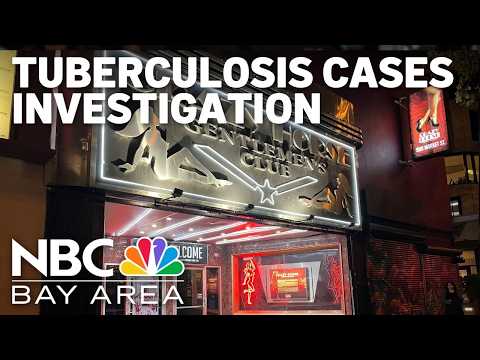
San Francisco's health department has linked two active tuberculosis cases to the Crazy Horse, a strip club at 980 Market Street, and is still contacting people who may have been exposed there. Officials learned of the first case in early October.

The agency says the risk to the public is low. TB bacteria grow slowly, so a test taken soon after exposure can come back negative and turn positive weeks later. Federal guidance calls for retesting eight to ten weeks after the last exposure.

Why it matters

People who visited the club in recent months may need testing, and slow-growing TB means a first negative result can flip positive weeks later.

Last Monday's email for San Francisco, CA

Sent Nov 9. It carried:

Get next Monday's: one short email a week. Free. Unsubscribe in one click.

Questions about this story

Free account needed to ask — your question is kept and asked for you right after sign-up. Answers are public.

No questions yet — be the first to ask.

Key Indicators

2
Active TB cases linked to the club
The health department confirmed both on October 22 and is tracing contacts.
68
TB cases reported citywide in 2025
San Francisco typically records 60 to 90 active cases per year.
9.3
SF TB rate per 100,000 in 2025
The statewide rate that year was 5.4 per 100,000, according to Sing Tao.
60-90
Typical annual range of SF TB cases
The city's baseline caseload, mostly among residents born outside the US.
32
Years the Crazy Horse has operated at 980 Market
The venue opened in 1994 next to the Warfield Theater.

Voices

Curated perspectives — historical figures and your fellow readers.

Sign up to generate historical perspectives on this story.

People Involved

Organizations Involved

Timeline

3 events Latest: October 23rd, 2026 · 3 weeks ago
  1. Club stays closed at opening time as calls go unanswered

    Latest Public Health

    KCBS reported the Crazy Horse did not open at 4 p.m. as scheduled and had not responded to requests for comment. The health department has not said whether the two people diagnosed were patrons or employees.

  2. Health department confirms second case, both linked to club

    Public Health

    SFDPH confirmed two active TB cases associated with the Crazy Horse and said contact tracing is ongoing. Public risk was assessed as low.

  3. First TB case reported to health officials

    Public Health

    The San Francisco Department of Public Health was notified of a confirmed active TB case tied to the Crazy Horse.

Scenarios

1

Additional cases surface as contact tracing returns results

Possible Resolves by Feb 1, 2027

Discussed by: UCSF's Peter Chin-Hong told NBC Bay Area that tests will be repeated over weeks because TB grows slowly.

If contact tracing identifies exposed people who convert to active TB, the health department would report more cases tied to the club. That would signal ongoing transmission in a crowded, late-night venue and widen the testing net.

2

Cluster stays at two cases; investigation closes

Likely Resolves by Feb 1, 2027

Discussed by: SFDPH said the risk to the public is low, and Chin-Hong cautioned against assuming an outbreak.

If contact tracing finds no new active or latent infections, SFDPH would close the investigation with the two cases as an isolated pair. This is the common pattern for TB clusters in settings where exposure is prolonged but not universal.

3

Cases ruled to have been contracted elsewhere

Possible Resolves by Feb 1, 2027

Discussed by: Chin-Hong noted the two cases might not have been acquired at the club at all.

If testing and interviews show both people were infected in other settings, the health department would drop the club association. The cases would be recorded as separate infections rather than a cluster.

4

Tracing finds latent infections, not new active cases

Likely Resolves by End of 2026

Discussed by: KCBS reported that specialists expect the follow-up may turn up more latent cases

Contact testing identifies people carrying TB without symptoms or active illness. Those people would be offered antibiotics to stop the infection from becoming active, and the club's active case count would stay at two.

Historical Context

2 moments from history that rhyme with this story — and how they unfolded.

1900-1945

Tuberculosis in America before antibiotics (1900-1945)

Tuberculosis was the leading cause of death in the United States at the start of the 20th century. Sanatoriums isolated patients, and the disease only receded after antibiotics arrived in the 1940s.

Then

Antibiotics and systematic screening programs brought cases down sharply over the following decades.

Now

TB became a rare, reportable disease in the US, but clusters still appear in congregate settings and each one triggers a public health response.

Why this matters now

In a city that now records only 60 to 90 TB cases a year, a pair of linked cases still prompts full contact tracing — a reminder that the response rests on slow, careful testing.

March 2020

COVID-19 indoor superspreader events (2020)

Early in the pandemic, clusters traced to crowded indoor venues showed how efficiently airborne disease spreads in poorly ventilated spaces with close contact.

Then

Contact tracing and ventilation upgrades became standard public health tools.

Now

Public attention to indoor air quality and airborne transmission persisted after the pandemic.

Why this matters now

The same logic sits behind the TB investigation: a club open until 4 a.m. with close contact is exactly the setting where airborne bacteria travel furthest.

Sources

(7)