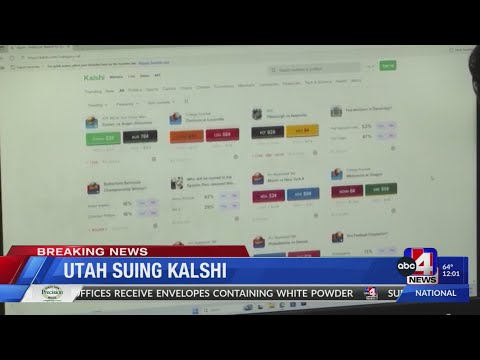
Utah summoned Kalshi's co-founders to answer 14 criminal counts on Dec. 4, while a federal judge set a Nov. 20 hearing on the CFTC's bid to pause the state's cases
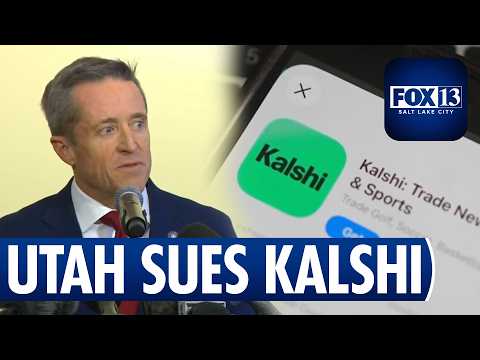
Utah's criminal case against Kalshi now has a courtroom date. A state court summoned chief executive Tarek Mansour and chief operating officer Luana Lopes Lara to answer 14 criminal counts in Salt Lake City on Dec. 4. The charges, filed Oct. 28, rest on 12 sports wagers a state investigator placed from a Utah address between Sept. 13 and Sept. 26.
In federal court, Judge Robert Shelby held a status conference Nov. 6 and scheduled a Nov. 20 hearing on the Commodity Futures Trading Commission's request to pause Utah's cases. Five prediction-market platforms have stopped offering sports and political contracts in Utah: DraftKings, FanDuel, Fanatics, Robinhood and PrizePicks. Arkansas Attorney General Tim Griffin also sued Kalshi on Nov. 4, calling its products illegal gambling.
Why it matters
If a state can jail prediction-market founders for offering sports contracts, every federally regulated exchange faces a state-by-state patchwork.
Get next Monday's: one short email a week. Free. Unsubscribe in one click.
Questions about this story
Free account needed to ask — your question is kept and asked for you right after sign-up. Answers are public.
No questions yet — be the first to ask.
Key Indicators
$30.6M-$61.2M
Kalshi fees from Utah accounts, state estimate
Utah's complaint estimates Kalshi's fees from Utah accounts at $30.6 million to $61.2 million, on more than 3.06 billion wagers.
32,940
Utah accounts on Kalshi
Accounts with a Utah address that had completed Kalshi's sign-up as of Feb. 25, 2026, according to the state's complaint.
3.06B
Wagers from Utah accounts, state estimate
Utah derives the figure by applying Utah's roughly 1.11% share of open positions to Kalshi's lifetime volume.
14
Criminal counts against Kalshi
Twelve third-degree felonies for promoting online gambling, one second-degree felony for a pattern of unlawful activity and one class A misdemeanor, filed Oct. 28. Arraignment set for Dec. 4.
5
Operators pulling Utah contracts
DraftKings, FanDuel, Fanatics, Robinhood and PrizePicks all moved to stop offering sports, political or novelty event contracts in Utah after the criminal charges. Robinhood restricted new positions Nov. 2; Fanatics halted all trading Nov. 4.
20 events
Latest: 5 days ago
Showing 8 of 20
JK to step
Tap a bar to jump to that date
Jump to
November 2026
Judge sets Nov. 20 hearing on CFTC request to pause Utah cases
LatestLegal
At a status conference, U.S. District Judge Robert Shelby scheduled a Nov. 20 hearing on the CFTC and the federal government's motion for a temporary restraining order and preliminary injunction against Utah. Briefing deadlines were set; the court did not rule on the request.
Utah court summons Kalshi co-founders for Dec. 4 arraignment
Legal
Kalshi and its co-founders, Tarek Mansour and Luana Lopes Lara, were summoned to appear in Salt Lake City's Third District Court on Dec. 4 to answer the 14 criminal counts filed in late October.
Arkansas sues Kalshi for illegal gambling
Legal
Attorney General Tim Griffin sued KalshiEX and Kalshi Inc. in state court under the Arkansas Deceptive Trade Practices Act, seeking restitution, penalties, taxes and an injunction. He said wagering on outcomes like football games is gambling regardless of the platform's label.
Fanatics halts all Utah trading as attorney general warns gamblers
Regulatory
Fanatics stopped all trade placement on its Fanatics Markets platform in Utah, the broadest pullback among platforms that had offered event contracts there. The Salt Lake Tribune reported the retreat alongside a warning from Attorney General Derek Brown to gamblers.
Robinhood blocks new Utah event-contract positions
Regulatory
Robinhood stopped Utah customers from opening new positions on sports, culture, elections and politics, while leaving finance and economics markets open. The company said it did not believe the contracts violated state law.
October 2026
DraftKings, FanDuel, Fanatics and PrizePicks retreat from Utah
Regulatory
DraftKings and FanDuel stopped offering sports, political and novelty event contracts to customers in Utah, keeping financial contracts. Fanatics said it would stop trade placement on Nov. 4, and PrizePicks turned off its sports and culture prediction markets. Robinhood later restricted new positions on Nov. 2, and Fanatics halted all trading on Nov. 4.
Federal government seeks order halting Utah's Kalshi cases
Legal
The CFTC and the U.S. filed for a temporary restraining order and preliminary injunction that would bar Utah from pursuing criminal or civil enforcement over event contracts on federally regulated exchanges. Judge Robert Shelby set an in-person conference on the motion for Nov. 6 and ordered service by Nov. 3.
Utah files 14 criminal counts against Kalshi and its co-founders
Legal
State prosecutors charged KalshiEX LLC, CEO Tarek Mansour and COO Luana Lopes Lara with 12 third-degree felonies for promoting online gambling, one second-degree felony for a pattern of unlawful activity and one class A misdemeanor. The counts are based on 12 sports wagers a state investigator placed from Utah between Sept. 13 and Sept. 26; the executives received summonses rather than arrest warrants.
CFTC and U.S. sue Utah over its Kalshi enforcement
Legal
The Commodity Futures Trading Commission and the federal government sued Utah and Attorney General Derek Brown in U.S. District Court for the District of Utah, arguing federal commodities law preempts the state's gambling laws for event contracts on CFTC-regulated exchanges.
Utah sues Kalshi and Susquehanna entities in state court
Legal
Attorney General Derek Brown files suit in Third District Court against Kalshi, related Kalshi entities and two Susquehanna firms, seeking to stop Utah bets, recover profits and bring public nuisance and civil conspiracy claims.
Kalshi says Utah suit won't affect federal appeal
Statement
Kalshi calls itself a federally regulated financial exchange and says no single state should have a veto over it.
Ohio orders licensees to cut off unlicensed event-contract operators
Regulatory
The Ohio Casino Control Commission told sports gaming and fantasy licensees, suppliers and testing labs to stop supporting unlicensed event-contract operators, with written confirmation due Oct. 30.
September 2026
Sixth Circuit rules sports event contracts are not swaps
Legal
In KalshiEX LLC v. Schuler, the Sixth Circuit held that sports event contracts fall outside the CFTC's exclusive jurisdiction as swaps. Ohio's casino regulator cited the ruling when it moved against event-contract operators.
Tenth Circuit refuses to pause Utah's gambling enforcement
Legal
The U.S. Court of Appeals for the Tenth Circuit denied Kalshi's request to block Utah from enforcing its gambling laws while the company appeals the August summary judgment. The appeal remains pending.
August 2026
Federal judge grants Utah summary judgment against Kalshi
Legal
Judge Robert Shelby rules Utah's gambling laws apply to Kalshi's sports betting contracts, rejecting federal preemption.
July 2026
New York sues Kalshi, estimating damages and costs at $36 billion
Legal
Letitia James calls Kalshi an illegal, unlicensed gambling operation and seeks forfeiture and triple damages.
May 2026
Utah AG moves to dismiss or for summary judgment
Legal
Derek Brown's office argues Kalshi's federal registration does not shield it from state gambling law.
April 2026
Kalshi files motion for preliminary injunction
Legal
Company seeks to block Utah from enforcing its gambling laws while the case proceeds.
February 2026
CFTC chairman declares federal jurisdiction over prediction markets
Statement
Mike Selig announces the commission will defend prediction markets from state actions.
Kalshi sues Utah over gambling enforcement
Legal
Kalshi argues federal commodities law preempts Utah's anti-gambling laws.
Scenarios
1
Kalshi wins on appeal at 10th Circuit
Possible
Resolves by End of 2027
Discussed by: Kalshi's legal team, which argues multiple courts have recognized federal jurisdiction over prediction markets
Kalshi appeals the summary judgment to the 10th Circuit Court of Appeals. The company argues the Commodity Exchange Act and Dodd-Frank Act give the CFTC exclusive jurisdiction, and that the district court misread the law. If the 10th Circuit reverses, states would lose a key tool to regulate prediction markets.
2
Appeals court upholds ruling, states gain momentum
Likely
Resolves by End of 2027
Discussed by: Utah Attorney General's Office and state regulators who have filed similar actions
The 10th Circuit affirms the district court's ruling, giving states a clear legal basis to enforce gambling laws against prediction markets. Other states, including New York, Washington, and Nevada, would likely cite the ruling in their own cases. The decision could push the industry toward state-by-state licensing or bans.
3
Supreme Court resolves the case
Possible
Resolves by End of 2028
Discussed by: Legal analysts watching for a circuit split on federal preemption of state gambling laws
If other federal courts reach different conclusions on whether the Commodity Exchange Act preempts state gambling laws, a circuit split could emerge. The Supreme Court would then be likely to grant certiorari to resolve the question. A ruling could settle the scope of CFTC jurisdiction over prediction markets nationwide.
4
Kalshi moves Utah's lawsuit to federal court
Possible
Resolves by End of 2026
Discussed by: Wallach, quoted by Deadspin
Kalshi is expected to remove the state case to federal court, a move that could delay proceedings while its appeal of the August ruling continues in the Tenth Circuit.
5
Supreme Court agrees to hear a prediction-market case
Possible
Resolves by Q2 2027
Discussed by: Trade reports cited by Spinner, after New Jersey asked the justices to take its case
New Jersey petitioned the Supreme Court after the Third Circuit sided with Kalshi. Kalshi's response is due Nov. 9. If the justices grant review, they would settle whether federal commodities law lets states ban or regulate event contracts.
6
Federal judge pauses Utah's criminal and civil cases against Kalshi
Possible
Resolves by End of 2026
Discussed by: The CFTC and the U.S. Justice Department, in their Oct. 29 motion for a temporary restraining order
Judge Robert Shelby is weighing a request to bar Utah from prosecuting Kalshi and its executives while the preemption question is litigated. The federal government argues it is likely to win on preemption and would suffer irreparable harm otherwise. A ruling for the feds would freeze the criminal case, not dismiss it.
7
Kalshi executives stand trial in Utah criminal court
Unlikely
Resolves by End of 2027
Discussed by: Utah Attorney General Derek Brown, whose office filed the Oct. 28 criminal informations
Mansour and Lopes Lara would answer 14 counts in Utah's Third District Court in Salt Lake County if the prosecution survives the federal challenge. Each count carries potential felony exposure. Any conviction would likely be appealed on the same preemption grounds Kalshi is already raising.
8
Arkansas case adds to Kalshi's state-court docket
Likely
Resolves by End of 2027
Discussed by: Arkansas Attorney General Tim Griffin, who filed the suit Nov. 4
Arkansas sued Kalshi under its Deceptive Trade Practices Act, seeking restitution, penalties, taxes and an injunction rather than criminal charges. The case proceeds alongside actions in Utah, New York and other states that argue prediction-market contracts are unlicensed gambling.
Historical Context
2 moments from history that rhyme with this story — and how they unfolded.
1 of 2
May 2018
Murphy v. NCAA (2018)
The Supreme Court struck down the Professional and Amateur Sports Protection Act, which had banned sports betting in most states since 1992. The case began when New Jersey challenged the federal law to legalize sports betting in the state.
Then
States gained authority to legalize sports betting. New Jersey and other states quickly moved to legalize.
Now
Sports betting expanded to dozens of states, creating a multi-billion-dollar industry.
Why this matters now
Shows the Supreme Court's role in resolving federal-state disputes over gambling, and the historical pattern of states regulating gambling within their borders.
2 of 2
July 2010
Dodd-Frank Act (2010)
Congress passed the Dodd-Frank Wall Street Reform and Consumer Protection Act in response to the 2008 financial crisis. The law expanded the Commodity Exchange Act's authority over derivatives and swaps.
Then
The CFTC gained new authority over the derivatives market.
Now
Kalshi has cited Dodd-Frank to argue that federal commodities law preempts state gambling laws.
Why this matters now
The judge rejected Kalshi's argument, saying it's implausible Congress would silently reverse state gambling authority in a financial crisis law.