
1931-1939
American Dust Bowl recovery (1930s)
Drought and over-plowing turned the U.S. southern plains into dust storms that buried farms and drove families off the land. Millions of acres lost their topsoil. The federal government responded with soil conservation and tree-planting programs.
Then
New farming rules and windbreak tree belts slowed the erosion within a few years.
Now
The plains largely recovered, showing that land management, not just weather, decided the outcome.
Why this matters now
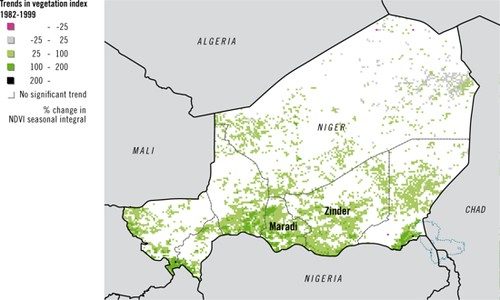
Like the Sahel, the Dust Bowl showed that how people treat the soil can turn a disaster zone back into farmland.