
Pull to refresh
Logo
Upper Colorado River Basin loses groundwater faster than drier Lower Basin

Upper Colorado River Basin loses groundwater faster than drier Lower Basin

Built World

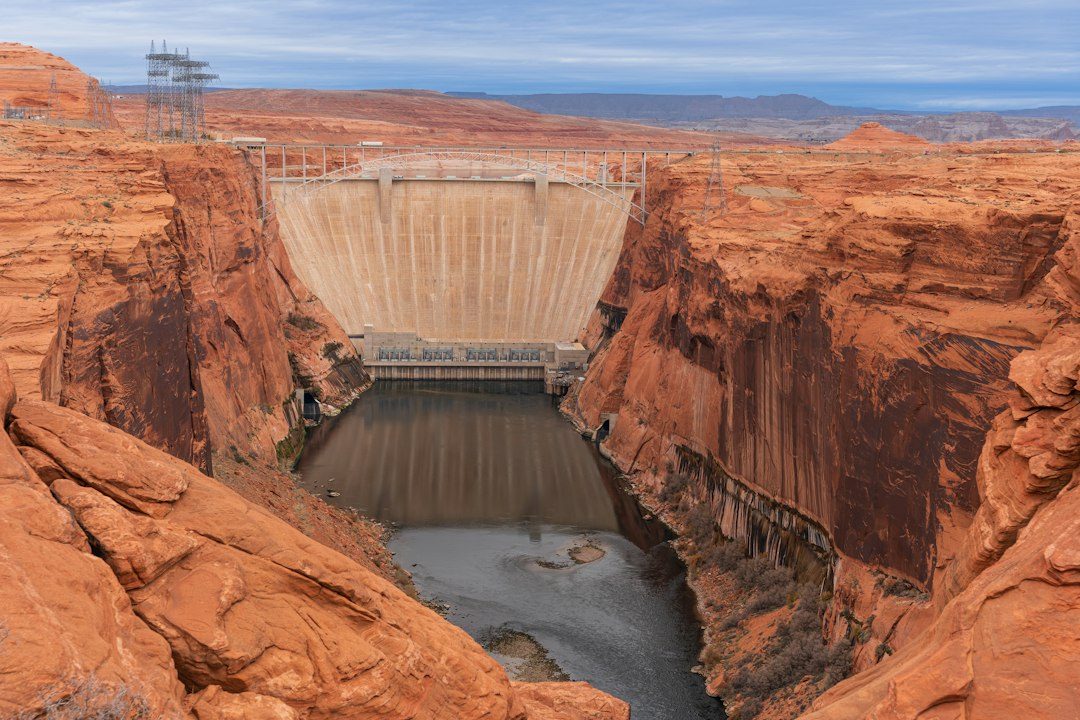
Satellite data shows 4.6 trillion gallons lost during 2020-2022 drought — enough to half-fill Lake Powell

Overview

Updated Oct 22

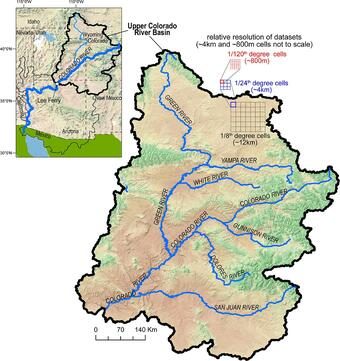
The Upper Colorado River Basin lost 4.6 trillion gallons of groundwater during the 2020-2022 drought, nearly twice the loss in the drier Lower Basin. Over the full study period from 2004 to 2023, the basin lost about 14 cubic miles of groundwater, the Virginia Tech team reported in Water Resources Research.

Federal water managers said on Oct. 21 they will wait for this winter's snowpack data before deciding how much water to release from lakes Powell and Mead. Arizona also joined Nevada's lawsuit over the Lower Basin's share of the coming cuts. Groundwater gets no line in the river's rules, even though data published by Arizona State University shows it accounts for more than half the water the basin has lost since 2003.

Why it matters

Groundwater is the Colorado River's hidden buffer — if it keeps draining, 40 million people lose a backup supply that rivers and reservoirs can't replace.

Questions about this story

Free account needed to ask — your question is kept and asked for you right after sign-up. Answers are public.

No questions yet — be the first to ask.

Key Indicators

4.6 trillion gallons
Upper Basin groundwater loss (2020-2022)
Enough to half-fill Lake Powell, nearly double the Lower Basin's loss.
2.5 trillion gallons
Lower Basin groundwater loss (2020-2022)
The drier Lower Basin lost less than the Upper Basin during the same period.
14 cubic miles
Basin groundwater loss (2004-2023)
About 58 cubic kilometers, or roughly 25 million Olympic swimming pools of water.
More than half
Groundwater share of basin water loss since 2003
Based on Arizona State University data, groundwater is the largest single part of the basin's decline.
40 million
People who depend on Colorado River water
The basin supplies farms, cities, and ecosystems across seven US states and Mexico.

Voices

Curated perspectives — historical figures and your fellow readers.

Sign up to generate historical perspectives on this story.

People Involved

Organizations Involved

Timeline

March 2002 October 2026

6 events Latest: October 21st, 2026 · 3 weeks ago
Tap a bar to jump to that date
  1. Federal government will weigh snowpack before setting 2027 releases

    Latest Policy

    Federal water authorities said they will assess winter snowpack and other hydrologic data before deciding how much water to release from lakes Powell and Mead in April 2027. Upper Basin states were reporting severe drought conditions at the same time.

  2. Study published in Water Resources Research

    Publication

    Virginia Tech team reports Upper Basin lost 4.6 trillion gallons of groundwater from 2020 to 2022.

  3. Severe drought begins

    Climate

    Triple-dip La Niña reduces winter precipitation across the Southwest, deepening the drought.

  4. Groundwater losses begin accelerating

    Research

    Satellite data shows basin-wide groundwater depletion speeding up after 2019.

  5. GRACE satellite launches

    Launch

    NASA's GRACE satellite begins measuring Earth's water storage from orbit.

Scenarios

1

Colorado River managers fold groundwater into drought plans

Possible Resolves by End of 2028

Discussed by: Virginia Tech researchers and water policy analysts

The study's finding that groundwater and surface water are tightly coupled in the Upper Basin pushes federal and state water managers to treat underground reserves as part of the river's budget. The Bureau of Reclamation or basin states would formally incorporate groundwater measurements into shortage determinations.

2

Groundwater depletion accelerates despite easing drought

Likely Resolves by Oct 1, 2028

Discussed by: NASA researchers and hydrologists

Even if the drought eases, continued agricultural pumping and rising temperatures keep draining aquifers. A follow-up GRACE-based assessment shows basin-wide groundwater storage continuing to decline after 2023.

3

Upper Basin states enact groundwater limits

Possible Resolves by End of 2028

Discussed by: State water agencies and Colorado River negotiators

The finding that the Upper Basin lost more groundwater than the Lower Basin pressures Colorado, Utah, Wyoming, and New Mexico to tighten groundwater regulation, which has historically been weaker than in the Lower Basin. At least one state enacts new statutory limits on extraction.

Historical Context

2 moments from history that rhyme with this story — and how they unfolded.

September 2014

California's Sustainable Groundwater Management Act (2014)

After a severe drought from 2012 to 2016 exposed unchecked groundwater pumping, California passed the Sustainable Groundwater Management Act. The law required local agencies to form groundwater sustainability agencies and draft plans to bring aquifers into balance by 2040.

Then

The law was the first in California history to regulate groundwater extraction.

Now

It became a model for other western states facing similar depletion.

Why this matters now

Shows how drought-driven groundwater loss can force states to regulate underground supplies — a path Upper Basin states may now face.

1940s-present

Ogallala Aquifer depletion (1940s-present)

Irrigation pumping across the High Plains has drawn down the Ogallala Aquifer for eight decades. In parts of Kansas and Texas, water levels have dropped by more than 100 feet.

Then

Farmers in the hardest-hit areas have shifted to dryland farming or sold land.

Now

The aquifer's depletion has become a permanent constraint on agriculture in the region.

Why this matters now

Shows what happens when groundwater is treated as an unlimited buffer — depletion compounds over decades and becomes hard to reverse.

Sources

(13)