


Pull to refresh
Logo
FDA approves Roche's Enspryng as first at-home thyroid eye disease treatment

FDA approves Roche's Enspryng as first at-home thyroid eye disease treatment

New Capabilities

The IL-6 receptor inhibitor joins Tepezza and Lumvoa with a delivery advantage rivals are racing to match

Overview

Updated Oct 17

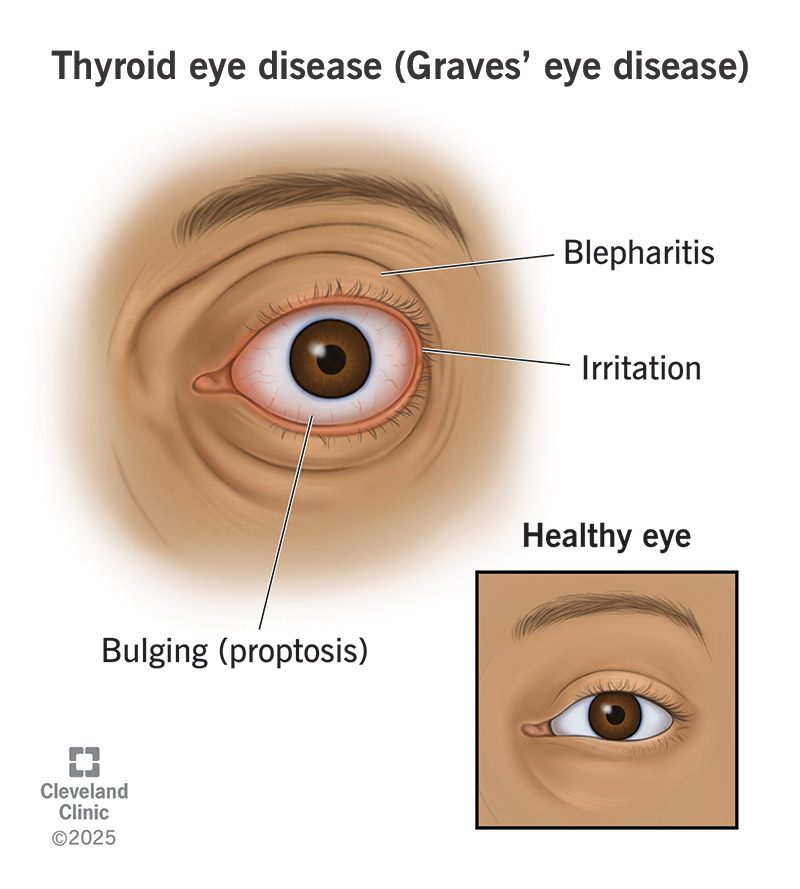
The FDA approved Roche's Enspryng for thyroid eye disease on October 15, the first and only at-home subcutaneous treatment for the condition. Patients or caregivers inject the drug with a prefilled syringe or pen after a healthcare provider's training, with no infusion clinic visits.

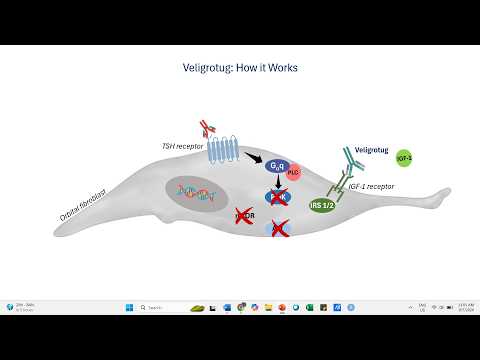
Enspryng blocks the IL-6 receptor, a new mechanism in a field where Amgen's Tepezza and Viridian's Lumvoa both target IGF-1 receptor signaling. pivotal data showing significant improvement in eye bulging and double vision, regardless of how active or long-standing the disease is.

Why it matters

TED patients now have an at-home treatment that skips infusion clinics, and physicians gain a second mechanism beyond Tepezza and Lumvoa.

Questions about this story

Free account needed to ask — your question is kept and asked for you right after sign-up. Answers are public.

No questions yet — be the first to ask.

Key Indicators

76.7%
Subcutaneous Tepezza phase 3 proptosis response
Amgen's on-body injector version of Tepezza hit a 76.7% proptosis response in phase 3, versus 19.6% for placebo. Reported by trialfriend.com.
$237M
Enspryng first-half 2026 sales
Total Enspryng sales across all indications in the first half of 2026, according to pharmaphorum.

Voices

Curated perspectives — historical figures and your fellow readers.

Sign up to generate historical perspectives on this story.

People Involved

Organizations Involved

Timeline

2020 October 2026

7 events Latest: October 16th, 2026 · 4 weeks ago
Tap a bar to jump to that date
  1. Roche announces Enspryng approval for TED

    Latest Statement

    Roche and Chugai issue media releases announcing the approval and positioning home dosing as a key advantage.

  2. FDA approves Enspryng for thyroid eye disease

    Regulatory Approval

    First at-home subcutaneous treatment approved for TED, based on SatraGO-1 and -2 results.

  3. FDA grants priority review to Enspryng for MOGAD

    Regulatory

    The agency accepted Roche's supplemental application for myelin oligodendrocyte glycoprotein antibody-associated disease, with a decision expected in January 2027.

  4. FDA grants priority review for TED application

    Regulatory

    Accepted Enspryng's supplemental approval application, setting an October 15, 2026 decision date.

  5. Viridian's Lumvoa wins FDA approval

    Competitive Event

    Second IGF-1 receptor inhibitor cleared for TED, approved for both active and chronic disease with shorter infusions.

  6. SatraGO results presented at ASOPRS

    Clinical Data

    Full results from SatraGO-1 and SatraGO-2 shared at the American Society of Ophthalmic Plastic and Reconstructive Surgery symposium.

  7. FDA approves Enspryng for NMOSD

    Regulatory Approval

    First approval for satralizumab, in neuromyelitis optica spectrum disorder, establishing its safety profile.

Scenarios

1

Enspryng overtakes Tepezza as leading TED therapy

Possible Resolves by Oct 15, 2028

Discussed by: Fierce Pharma, which flagged Enspryng's convenience edge over both infusion-based rivals

At-home dosing plus a distinct mechanism could drive rapid adoption, especially among patients with chronic TED who face repeated infusions. If Roche prices competitively and payers cover the drug without heavy prior-authorization hurdles, Enspryng could take meaningful share within two years.

2

Rival subcutaneous treatments erode Enspryng's convenience edge

Likely Resolves by End of 2027

Discussed by: pharmaphorum, which reported both competitors' home-dosing development programs

Amgen has phase 3 results for a subcutaneous Tepezza formulation delivered by on-body injector. Viridian plans to file elegrobart, its subcutaneous candidate, in the US in early 2027. Either approval would end Enspryng's status as the only at-home option and force a competition on price and efficacy.

3

Enspryng sales stay modest despite the convenience advantage

Unlikely Resolves by Feb 15, 2028

Discussed by: Industry observers tracking rare-disease launch trajectories

TED is a niche disease, and Tepezza's $1.9 billion franchise reflects years of established physician and payer relationships. If payers impose prior-authorization requirements or steer patients to familiar infusions, Enspryng's launch could disappoint despite its at-home delivery.

4

Enspryng's safety profile and mechanism matter once rivals match its home dosing

Likely Resolves by End of 2027

Discussed by: trialfriend.com, which tracked both rivals' phase 3 results

Amgen's subcutaneous Tepezza posted a 76.7% proptosis response versus 19.6% in phase 3. Viridian's elegrobart scored 54-63% responders against 18% in active disease, with a US filing set for early 2027. If either reaches market, Enspryng loses its at-home monopoly. What stays Enspryng's alone is the IL-6 mechanism and the lack of a hearing warning that Tepezza carries.

Historical Context

2 moments from history that rhyme with this story — and how they unfolded.

January 2020

Tepezza's 2020 launch — the first TED therapy

The FDA approved Amgen's teprotumumab (Tepezza), the first drug ever cleared for thyroid eye disease. Before 2020, TED patients had only steroids to control swelling and surgery as a last resort.

Then

Tepezza became the standard of care and generated $1.9 billion in 2025 sales, despite requiring eight intravenous infusions.

Now

The launch proved a single mechanism could transform a disease with no prior drug treatment — and established the market Enspryng now enters.

Why this matters now

Tepezza's trajectory shows how quickly a new TED therapy can become dominant, which is the pattern Roche hopes to repeat with a different mechanism and at-home delivery.

June 2026

Viridian's Lumvoa approval (June 2026)

The FDA approved Viridian's veligrotug (Lumvoa), a second IGF-1 receptor inhibitor. Viridian positioned it as the first drug cleared for both active and chronic TED and shortened infusion times versus Tepezza.

Then

Lumvoa gave TED patients a second option and challenged Tepezza's dominance within the same mechanism class.

Now

The approval signaled that differentiated convenience — shorter infusions, broader disease coverage — would drive competition as the market expanded.

Why this matters now

Lumvoa's launch, months before Enspryng's approval, set the pattern for a market where delivery convenience is a headline battleground.

Sources

(11)