

Pull to refresh
Logo
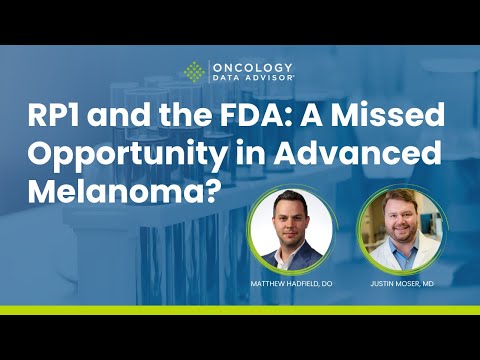
FDA weighs Replimune's melanoma immunotherapy RP1

FDA weighs Replimune's melanoma immunotherapy RP1

Rule Changes

The FDA granted accelerated approval on August 6, four days after its deadline, following a 10-3 advisory panel vote backing the trial data

August 6th, 2026: Replimune prices Tudriqev at $450,000, plans launch within 60 days

Overview

Updated Aug 8

The FDA granted accelerated approval on August 6 to Replimune's tumor-injected virus therapy, now sold as Tudriqev, after rejecting it twice. An advisory panel had voted 10-3 on July 30 that the trial data were reliable enough to support approval, despite FDA staff's earlier doubts.

About a quarter of patients responded to Tudriqev plus nivolumab, with responses lasting a median of 14.1 months. Replimune priced a full course at $450,000 and plans to launch within about 60 days, but the approval stays conditional on a confirmatory trial due to report in 2030.

Why it matters

Patients with treatment-resistant melanoma gain a new $450,000 option, but its future depends on a 2030 trial readout.

Questions about this story

Free account needed to ask — your question is kept and asked for you right after sign-up. Answers are public.

No questions yet — be the first to ask.

Key Indicators

24.2%
Tumor response rate (ORR)
Share of efficacy-evaluable IGNYTE trial patients whose tumors shrank on Tudriqev plus nivolumab, per the FDA-approved label.
14.1 months
Median duration of response
How long tumor shrinkage lasted, on average, for patients who responded, per the FDA label.
$450,000
List price per treatment course
Replimune's list price for a full course of Tudriqev, based on the median dose given in its pivotal trial.
Aug 6, 2026
FDA accelerated approval date
The date the FDA cleared Tudriqev plus nivolumab, four days after its original decision deadline.

Voices

Curated perspectives — historical figures and your fellow readers.

Ever wondered what historical figures would say about today's headlines?

Sign up to generate historical perspectives on this story.

People Involved

Organizations Involved

Timeline

January 2025 August 2026

7 events Latest: August 6th, 2026 · 1 month ago
Tap a bar to jump to that date
  1. Replimune prices Tudriqev at $450,000, plans launch within 60 days

    Latest Business

    Shares jumped and analysts including Wedbush and BMO Capital raised price targets after approval. Replimune set a list price near $450,000 per course and said it expects to launch within about 60 days.

  2. Advisory panel votes on RP1's evidence

    Advisory Vote

    The FDA's Cellular, Tissue, and Gene Therapies Advisory Committee meets to vote on whether the data reliably support approval of RP1 plus nivolumab. The vote is advice, not a final ruling.

  3. FDA briefing documents call the data uninterpretable

    Statement

    FDA staff publish concerns that the trial cannot separate RP1's effect from nivolumab's or from patient differences. Replimune shares fall about 30% in a day.

  4. FDA accepts a third resubmission

    Regulatory

    The agency takes up the application again and sets a fresh decision date of August 2, 2026, and signals an advisory committee meeting.

  5. FDA accepts a resubmission

    Regulatory

    Replimune refiles and the FDA sets a new decision date of April 10, 2026, under a standard resubmission timeline.

  6. FDA accepts RP1 filing with priority review

    Regulatory

    The FDA takes up Replimune's application for RP1 plus nivolumab and sets a decision date of July 22, 2025. The drug carries breakthrough therapy designation.

Scenarios

1

FDA approves RP1 for pretreated melanoma

Possible Resolves by Aug 9, 2026

Discussed by: OncLive, CancerNetwork, and biotech analysts tracking the August 2 date

The panel gives enough support, or the FDA overrides its own reviewers, and the agency clears RP1 plus nivolumab for patients whose melanoma progressed after anti-PD-1 therapy. Approval would likely come as accelerated approval, tied to the ongoing IGNYTE-3 trial confirming benefit. Durable responses and a clean safety record carry the day for a group with few options.

2

FDA rejects RP1 a second time

Possible Resolves by Aug 9, 2026

Discussed by: BioSpace, STAT, and FDA reviewers in the July briefing documents

The panel sides with FDA staff who called the single-arm data uninterpretable, and the agency issues another Complete Response Letter. Regulators repeat that they warned Replimune to run a randomized trial and that the objective response data are not strong enough to overcome the missing control group. Approval waits for IGNYTE-3 results, likely years out.

3

Advisory panel votes against RP1's data

Uncertain Resolves by Jul 31, 2026

Discussed by: Medical Daily, OncLive, and analysts previewing the July 30 meeting

On the day itself, the committee votes that the evidence is not reliable enough to support approval. A negative vote does not bind the FDA, but it rarely precedes a green light. This tracks whether the panel's headline vote goes against the drug, separate from the final FDA ruling three days later.

4

IGNYTE-3 trial confirms Tudriqev's benefit, or the accelerated approval comes under threat

Uncertain Resolves by End of 2030

Discussed by: STAT and BioPharma Dive coverage of the August 6 approval

Tudriqev's approval is conditional on IGNYTE-3, a roughly 400-patient Phase 3 trial testing RP1 plus nivolumab against other treatments, with overall survival as the primary endpoint. The trial has enrolled about a third of its target and isn't expected to read out until 2030. A clear survival benefit would make the approval permanent. A failed or inconclusive result would put continued marketing at risk, echoing the FDA's 2023 withdrawal of Makena after its confirmatory trial failed.

Historical Context

3 moments from history that rhyme with this story — and how they unfolded.

March 2007 to April 2010

Provenge (sipuleucel-T) advisory fight (2007-2010)

An FDA panel backed Dendreon's prostate cancer immunotherapy, but the agency demanded more data and delayed approval. Provenge finally cleared in 2010 after a survival trial.

Then

Patients and investors endured a three-year limbo while the company ran more trials.

Now

The drug reached market but struggled commercially, and Dendreon later went bankrupt.

Why this matters now

It shows how a novel immunotherapy can survive FDA doubts yet face a long, costly path, a plausible outcome for RP1 if approval slips to the confirmatory trial.

October 2015

T-VEC (Imlygic) approval (2015)

The FDA approved talimogene laherparepvec, the first oncolytic virus therapy, for melanoma lesions in the skin and lymph nodes. Robert Coffin, who later founded Replimune, developed it. An advisory panel had backed it 22-1.

Then

Doctors gained a virus injected directly into melanoma tumors, though its effect on survival was modest.

Now

It proved oncolytic viruses could reach market and set the scientific template Replimune built RP1 on.

Why this matters now

RP1 is the next-generation version of the same idea, from the same scientist. It shows the approach can win approval, but also that the FDA scrutinizes how much the virus itself adds.

April 2023

Covis Therapeutics' Makena withdrawal (2023)

The FDA pulled the preterm-birth drug Makena after a confirmatory trial failed to show benefit. It had reached market through accelerated approval based on weaker early data years earlier.

Then

The drug came off the market and patients lost access.

Now

The case hardened FDA insistence that accelerated approvals rest on trials that can actually confirm benefit.

Why this matters now

It explains why FDA reviewers press Replimune on the missing control arm. The agency has been burned when single-arm data did not hold up.

Sources

(13)