Dorothy Parker
Fictional AI pastiche — not real quote.
"Eleven candidates to ensure no one gets what they want—democracy has always been the art of making certain everyone goes home disappointed. The Portuguese have simply made it mathematical."
Seguro Crushes Ventura in February Runoff After Storm Delay, Securing Largest Presidential Mandate in History
February 15th, 2026: Runoff Finalized: Seguro Wins LandslideNew here? Follow stories to track developments over time. Create a free account to get updates when stories you care about change.
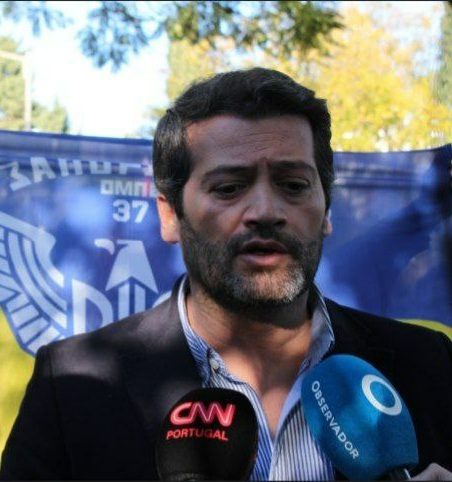
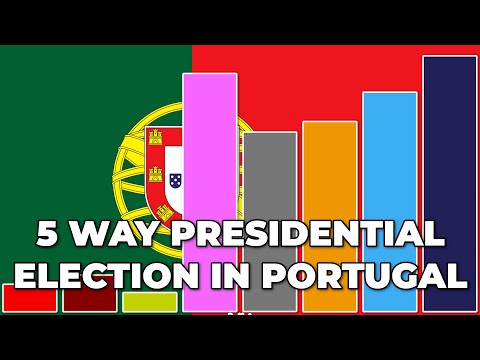
António José Seguro won Portugal's first-round presidential vote with 31.2% on January 18, 2026, while far-right Chega leader André Ventura captured 23.3%—forcing the country's first runoff in 40 years amid record 11-candidate fragmentation and 61.5% turnout, the highest since 2006. Liberal João Cotrim de Figueiredo took third at 16%, Admiral Henrique Gouveia e Melo fourth at 15.7%, and PSD's Luís Marques Mendes fifth at 13.7%. Storm Kristin disrupted the February 8 runoff, postponing voting in flood-hit areas like Alcácer do Sal and Leiria until February 15 for 36,852 voters.
Seguro then won decisively with 66.7% to Ventura's 33.3%—the largest presidential margin ever, surpassing Mário Soares' 1991 record—after most eliminated candidates endorsed him against perceived extremism. Prime Minister Luís Montenegro's PSD stayed neutral, but anti-Ventura consolidation echoed 1986 patterns. As president-elect, Seguro pledged institutional cooperation and Storm aid oversight ahead of his March 9 inauguration, while Ventura positioned Chega as Portugal's leading right-wing force despite defeat.

Exploring all sides of a story is often best achieved with Play.
Fictional AI pastiche — not real quote.
"Eleven candidates to ensure no one gets what they want—democracy has always been the art of making certain everyone goes home disappointed. The Portuguese have simply made it mathematical."
Your progress in this debate will be lost.
Choose one persona for each side of the debate
Select debater for this side:
No debate personas available right now.
Select debater for this side:
No debate personas available right now.
Make your prediction before the referee scores
Pick the question both personas must answer in the final round
Debate Oracle! You called every round!
Sharp Instincts! You know your debaters!
The Coin Flip Strategist! Perfectly balanced!
The Contrarian! Bold predictions!
Inverse Genius! Try betting the opposite next time!
Can you match the quotes to the right people?
— Who said this?
Tip: press 1– to answer.
National-conservative populist party that grew from one parliamentary seat in 2019 to 60 seats and official opposition status by 2025.
Centre-left party that governed Portugal from 2015-2024 before losing ground to both the centre-right AD coalition and Chega.
Storm-delayed voting concluded; Seguro defeats Ventura 66.7%-33.3%, securing presidency with record mandate. Most eliminated candidates had endorsed Seguro.
With 98% counted, Seguro leads with 31.2% to Ventura's 23.3%. Turnout reaches 61.5%, highest since 2006. No candidate reaches 50% threshold.
Prime Minister Luís Montenegro announces center-right PSD will support neither Seguro nor Ventura in February 8 runoff, dealing blow to anti-Ventura consolidation hopes.
Hungarian Prime Minister Viktor Orbán praises Ventura's second-place finish: "Patriots across Europe are on the rise."
11 million eligible voters cast ballots in most fragmented presidential race in Portuguese history. Results expected overnight.
Lisbon court rules Chega campaign billboards targeting Roma community are discriminatory, orders removal within 24 hours.
PS officially backs its former leader—a rare formal presidential endorsement for the party.
Liberal Initiative's former leader and current MEP announces candidacy, running on liberal reform platform.
Former PS leader announces presidential bid in Caldas da Rainha, calling for "change and hope."
The former COVID vaccine coordinator announces independent candidacy, initially leading polls at 36%.
With 22.8% and 60 seats, Chega overtakes Socialists for first time, reshaping Portugal's political landscape.
Former PSD president declares presidential bid, positioning himself as centre-right standard-bearer.
AD coalition defeats Socialists after PM Costa's resignation. Chega quadruples seats to 50.
Incumbent wins second term with 60.7%. Ventura finishes third with 11.9%, behind anti-corruption candidate Ana Gomes.
With 1.3% of the vote, Chega elects Ventura to parliament—the first far-right MP since 1974.
André Ventura founds Chega, the first significant far-right party in Portugal since the end of dictatorship in 1974.
Predict which scenario wins. Contrarian picks score more — points lock in when the scenario resolves.
Pre-election polls consistently showed Ventura winning the first round but losing any second-round matchup. This scenario follows the 1986 pattern: fragmented moderate vote consolidates behind whoever faces the candidate perceived as outside mainstream consensus. Ventura would claim momentum and vindication; opponents would frame the runoff as a defense of democratic norms.
If Seguro edges other moderates for the second runoff slot, polling suggests he'd attract PSD voters uncomfortable with Ventura. Internal PSD divisions—with Passos Coelho supporters already backing Seguro over Marques Mendes—could accelerate this crossover. A Seguro presidency would restore centre-left influence after years of electoral setbacks.
Given margins of 1-2 percentage points separating five candidates, either the PSD-backed Marques Mendes or liberal Cotrim de Figueiredo could qualify for the runoff instead of Seguro. This would create a centre-right vs. populist-right dynamic, potentially splitting the right-of-centre electorate rather than unifying it against Ventura.
The lowest-probability but highest-impact scenario. Polling consistently shows Ventura losing second rounds by significant margins. But if turnout dynamics diverge sharply from polls, or if opposition fails to consolidate, Ventura would become the first far-right head of state in Portugal since the 1974 revolution—with constitutional powers to veto legislation and dissolve parliament.
Socialist Mário Soares trailed conservative Diogo Freitas do Amaral 25% to 46% in the first round—his party had just suffered a devastating legislative defeat. But the Communist Party threw its support behind him as the "lesser evil," and left-wing voters consolidated. Soares won the runoff 51% to 49%, becoming Portugal's first elected civilian president in 60 years.
Soares became president despite his party's weakness, demonstrating the consolidation dynamic that still shapes Portuguese runoffs.
Soares served two terms (1986-1996), establishing the modern template for a president above partisan fray. No runoff occurred again until 2026.
The 1986 pattern—fragmented first round followed by ideological consolidation—is exactly what pollsters predict for 2026 if Ventura leads round one.
Herbert Kickl's Freedom Party won Austria's parliamentary election with 29%—the first far-right victory in an Austrian federal election since World War II. Despite winning, Kickl failed to form a government when coalition talks collapsed. President Alexander Van der Bellen, a former Green, ultimately had to task him with forming government anyway.
Coalition negotiations dragged on for months; FPÖ remained unable to govern despite winning the election.
Demonstrated that winning an election and forming a government are separate challenges for populist parties facing a cordon sanitaire.
Shows how populist parties can win pluralities without governing—relevant because Portugal's presidency is largely ceremonial but holds constitutional levers a governing coalition cannot easily ignore.
Military officers overthrew the Estado Novo dictatorship that had ruled Portugal for 48 years. The peaceful revolution—soldiers placed carnations in their rifle barrels—ended Europe's longest-running authoritarian regime and began Portugal's transition to democracy, producing the 1976 constitution still in force today.
Portugal rapidly decolonized, held free elections, and established its current semi-presidential system.
The memory of dictatorship inoculated Portugal against far-right politics for decades; Chega's rise represents the first significant challenge to that consensus.
Portugal's 50-year resistance to far-right politics traces directly to 1974. Chega's emergence ends that exceptionalism, making this election a test of how deeply democratic norms took root.