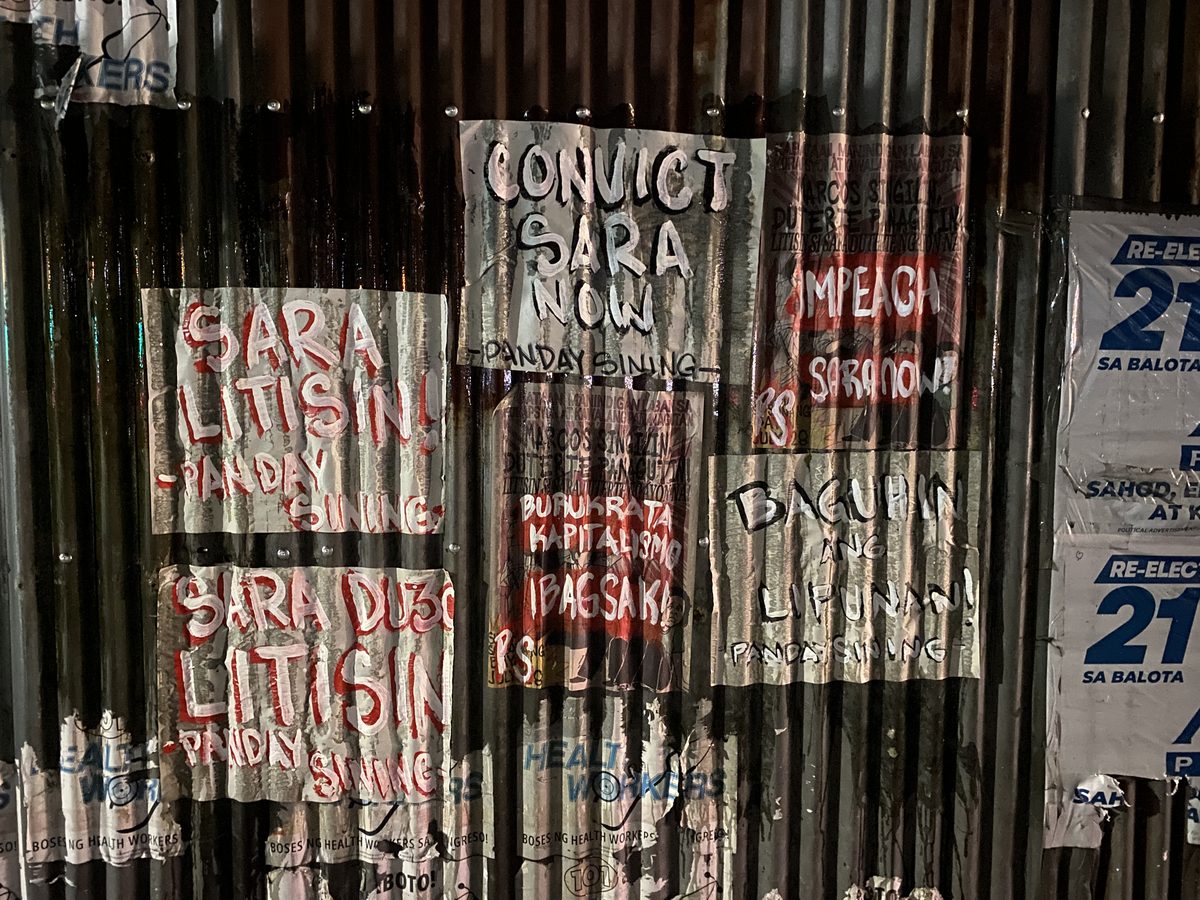
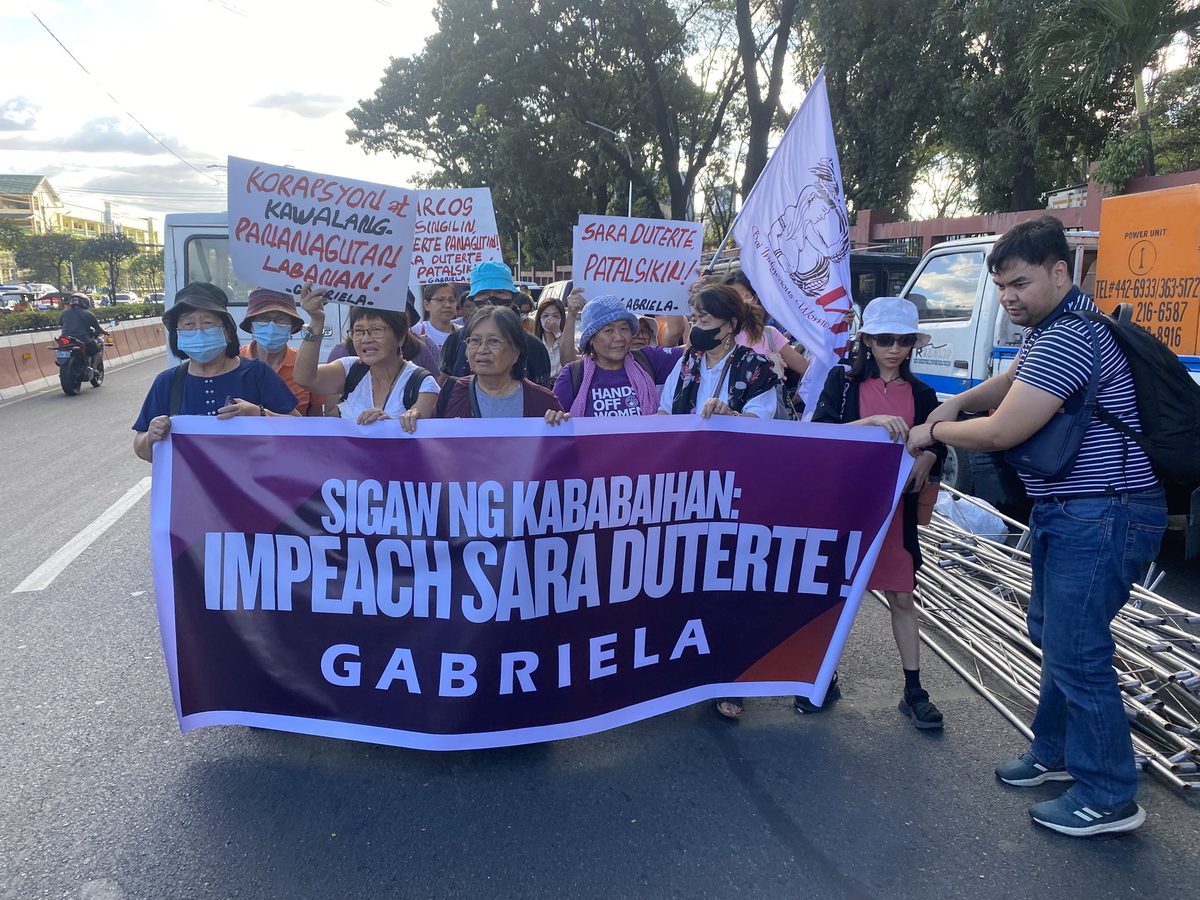
Prosecutors dropped three of four impeachment charges against Vice President Sara Duterte on October 13, leaving only the allegation that she hid unexplained wealth. The Senate, sitting as an impeachment court, had already lowered the votes needed to convict from 16 to 14.
Duterte's lawyers opened their defense on November 9. Davao City assessor Jaime Adalin and city accountant Vingelin Bajan testified, and senator-judges pressed both when they said they could not recall details or signatures. Lead prosecutor Gerville Luistro told Reuters the prosecution is "all in" on the wealth charge and wants the trial finished in 2026.
Why it matters
A conviction ends the Duterte dynasty's path back to the presidency in a US treaty ally hosting nine American military sites.
Questions about this story
Free account needed to ask — your question is kept and asked for you right after sign-up. Answers are public.
No questions yet — be the first to ask.
Key Indicators
14
Senate votes needed to convict
A September 23, 2026 ruling counts only senator-judges able to take part toward the two-thirds threshold, down from 16.
₱1.5B
Peak wealth figure alleged
Forensic analyst Alexander Cabrera told the court the unexplained wealth could reach P1.5 billion. A separate estimate of 817 million pesos was reported by Reuters on November 11, 2026. The defense disputes the figures.
1 of 4
Articles still standing
Prosecutors withdrew Articles 1, 3 and 4 on October 13. Only Article 2, on unexplained wealth and asset disclosures, remains.
42
Trial days so far
November 11, 2026 was the 42nd day of the trial. The defense began presenting evidence on November 9.
2028
Presidential bid at risk
A conviction ends her expected run to succeed Marcos when his single six-year term expires.
25
Trial days set aside for defense
The court allotted 25 trial days for Duterte's side, starting November 9, 2026. Escudero says he hopes the trial ends before Christmas.
19 events
Latest: Today
Showing 8 of 19
JK to step
Tap a bar to jump to that date
Jump to
November 2026
Corporate counsel admits error in GenCorp declaration
TodayLegal
On the trial's 42nd day, lawyer Suzette Balucanag-Punay admitted a mistake in declaring the beneficial owner of GenCorp Industries. The defense continued presenting witnesses.
City accountant says she cannot recall signing records
Legal
Davao City accountant Vingelin Bajan told the court she did not remember documents put to her, drawing complaints from senator-judges. The defense also accused private prosecutors of violating the sub judice rule over comments at a press conference; the prosecution said Duterte herself had attacked the court.
Prosecution says it is 'all in' on unexplained wealth
Statement
Lead prosecutor Gerville Luistro told Reuters the panel dropped the other charges because the wealth case is strongest and to finish before attention turns to the 2028 election. She said the evidence is mostly documentary, including Duterte's own asset declarations.
Defense opens its case
Legal
Duterte's lawyers began presenting evidence on the trial's 41st day. Former University of St. La Salle law dean Ralph Sarmiento withdrew as the first witness, and Davao City assessor Jaime Adalin was questioned about a foreign trip and a property the prosecution says was left off her asset declarations.
Court admits bank, tax and property records
Legal
The impeachment court admitted bank, tax, corporate and property records relevant to the unexplained-wealth article, and excluded evidence tied to the withdrawn charges. Escudero issued an order the next day on how the exhibits could be accessed.
October 2026
Defense says it will take the 14-vote rule to the Supreme Court
Legal
Defense spokesman Michael Poa said the team will file a petition arguing that 16 votes, two-thirds of all 24 senators, are needed to convict, possibly within two weeks.
Prosecutors drop three of four articles
Legal
After 38 days of trial, the court let prosecutors withdraw Articles 1, 3 and 4. Articles 1 and 4 were withdrawn with prejudice, barring refiling, and Article 3 cannot be revived in this trial. Article 2, on unexplained wealth, is the only charge left.
September 2026
Conviction threshold cut from 16 votes to 14
Rule Change
The impeachment court ruled that only senator-judges able to take part count toward the two-thirds threshold, lowering the votes needed to convict to 14. Thirteen senators backed the change, one opposed it and six abstained.
July 2026
Court subpoenas Duterte's bank and tax records
Legal
The court granted subpoenas for Duterte's bank, tax and Anti-Money Laundering Council records, rejecting defense claims of a fishing expedition and invoking bank-secrecy and tax-confidentiality laws.
Prosecution opens its case
Legal
The trial opened with the allegation that Duterte had contracted someone to kill President Marcos, the first lady and then-Speaker Martin Romualdez.
May 2026
Senate convenes as impeachment court
Legal
Senators are sworn in as judges, Duterte is given 10 days to answer, and the prosecution gets five more after that. The trial timeline is now set.
Gunfire in the Senate as dela Rosa evades ICC arrest
Security Incident
Armed men try to enter the Senate's second floor. The sergeant-at-arms fires a warning shot. Dela Rosa slips out of the building. The House transmits the articles the same day.
House impeaches Duterte for the second time
Vote
Lawmakers vote 257-25, with nine abstentions, on four articles covering confidential funds, unexplained wealth, bribery, and the murder plot.
Pro-Duterte senators replace Senate president
Power Shift
Thirteen senators oust Tito Sotto and install Alan Peter Cayetano. Senator dela Rosa returns from months in hiding to provide a vote.
January 2026
Supreme Court denies reconsideration with finality
Court Ruling
The en banc court rejects the House appeal, clearing the legal path for a fresh complaint after February 6.
July 2025
Supreme Court voids first impeachment
Court Ruling
The court rules the complaint violated the constitutional one-year bar, blocking any new case until February 2026.
June 2025
Senate remands articles to the House
Legal
Senators send the articles back, citing constitutional concerns and ducking a politically risky trial in an election year.
February 2025
House files first impeachment complaint
Legal
More than a third of House members sign the fourth complaint of the cycle, sending it directly to the Senate without committee review.
November 2024
Duterte makes assassination threat on livestream
Statement
On a late-night online broadcast, Duterte says she has hired someone to kill Marcos, the first lady, and the House speaker if she is killed first.
Scenarios
1
Senate acquits Duterte, 2028 path stays open
Likely
Resolves by End of 2026
Discussed by: South China Morning Post, Asia News Network, Philippine Daily Inquirer columnists
Cayetano's bloc holds enough senators in the no column. The prosecution fails to reach 14 votes. Duterte is acquitted on the remaining unexplained-wealth article and walks out as the front-runner for 2028. Polls already show her lead has narrowed, so an acquittal becomes both a legal and political reset.
2
Senate convicts, Duterte barred from office
Unlikely
Resolves by End of 2026
Discussed by: Reuters, Al Jazeera, Washington Post analyses
Senators aligned with Marcos reach the 14 votes needed on the remaining article. Duterte is removed and disqualified for life. Her 2028 bid ends. The Duterte family loses its main national platform while Rodrigo Duterte remains in ICC custody at The Hague.
3
Supreme Court halts the trial on procedural grounds
Deadline passed (Q3 2026)
Discussed by: Rappler legal columnists, Philippine constitutional law scholars
Duterte's lawyers ask the Supreme Court to enjoin the trial, citing the same one-year bar or other procedural defects that killed the first case. The court issues a temporary restraining order, freezing proceedings before a vote.
4
Senate drops the case without a vote
Possible
Resolves by End of 2026
Discussed by: Philippine Star, Inquirer political reporters
The trial bogs down on motions and pre-trial fights. Cayetano's bloc votes to dismiss for failure of the prosecution to make a case, or for lack of jurisdiction, ending the trial before a verdict on the articles. Echoes the 2001 Estrada walkout that ended his trial.
5
Supreme Court restores the 16-vote threshold before a verdict
Possible
Resolves by End of 2026
Discussed by: Defense spokesman Michael Poa; Philippine constitutional law scholars cited by Philstar and the Inquirer
Duterte's lawyers ask the Supreme Court to rule that the Constitution's two-thirds requirement means 16 of all 24 senators, not 14 of those able to sit. Poa said the petition would come 'sooner rather than later.' A favorable ruling would raise the number of votes prosecutors need before the court votes on the remaining article.
Historical Context
3 moments from history that rhyme with this story — and how they unfolded.
1 of 3
November 2000 - January 2001
Joseph Estrada impeachment (2000-2001)
The House impeached President Joseph Estrada on charges of taking bribes from illegal gambling and stashing money under a fake name. The Senate trial collapsed on January 16, 2001, when 11 pro-Estrada senators voted to keep a sealed envelope of bank records out of evidence.
Then
The prosecution panel walked out. Days later, the EDSA II protests pushed Estrada from office and Vice President Gloria Macapagal Arroyo was sworn in.
Now
Estrada was later convicted of plunder in 2007 and pardoned by Arroyo. The case set the modern template for impeachment fights in Manila, including the chamber-counting and procedural votes now shaping the Duterte trial.
Why this matters now
Estrada shows how a Philippine impeachment can end without a verdict on the merits. Cayetano's bloc could replicate the 2001 procedural exit and spare Duterte a vote on the articles.
2 of 3
December 2011 - May 2012
Renato Corona impeachment (2011-2012)
The House impeached Supreme Court Chief Justice Renato Corona on charges of hiding millions of dollars in undeclared assets. The Senate trial ran for five months and produced televised testimony about his dollar accounts and properties.
Then
On May 29, 2012, the Senate convicted Corona 20-3 on the unexplained-wealth article. He was removed and barred from public office.
Now
Corona is the only Philippine official ever convicted in a Senate impeachment trial. The case showed that hidden-wealth charges, with documentary proof, can clear the two-thirds bar.
Why this matters now
Corona is the prosecution's blueprint. The second article against Duterte targets unexplained wealth in her SALN filings, the same legal theory that beat Corona.
3 of 3
December 2016 - March 2017
Park Geun-hye impeachment (2016-2017)
South Korea's National Assembly impeached President Park Geun-hye over a corruption and influence-peddling scandal involving her confidante Choi Soon-sil. The Constitutional Court upheld the impeachment unanimously on March 10, 2017.
Then
Park was removed from office and arrested weeks later. A new election brought Moon Jae-in to power.
Now
Park was convicted of bribery and abuse of power, sentenced to more than 20 years, and pardoned in 2021. The case redrew the South Korean political map and ended her party's grip on the presidency.
Why this matters now
Park shows how an East Asian democracy can use impeachment to remove a dynastic political figure mid-term and reshape the next election cycle. The 2028 stakes for Duterte mirror that dynamic.