
Pull to refresh
Logo
Perplexity and Nvidia launch Portable Computer, a fully local AI agent

Perplexity and Nvidia launch Portable Computer, a fully local AI agent

New Capabilities

Agentic workloads run on the user's own GPU; local steps cost no tokens, and cloud escalation happens only on approval

August 25th, 2026: Perplexity and Nvidia launch Portable Computer

Overview

Updated Aug 27

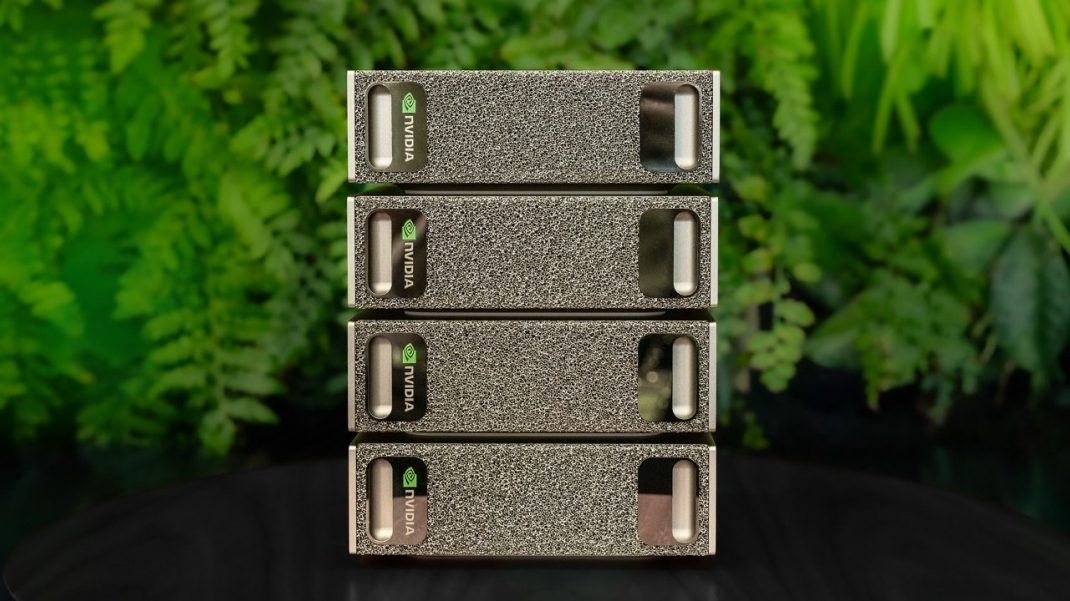
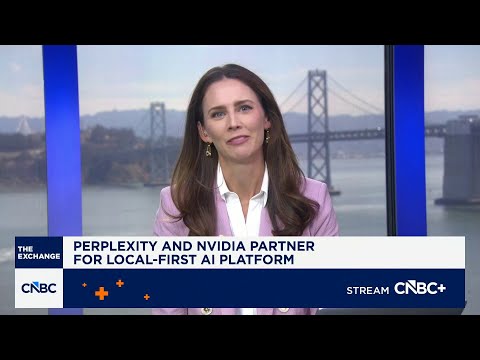
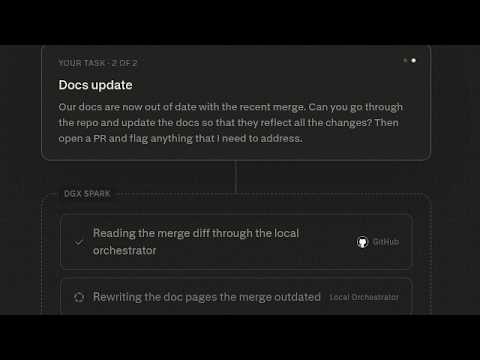
Perplexity launched Portable Computer on Tuesday, a version of its agentic Computer platform that runs entirely on a user's own hardware. Local work costs no tokens, and nothing leaves the machine unless the user approves a specific cloud step.

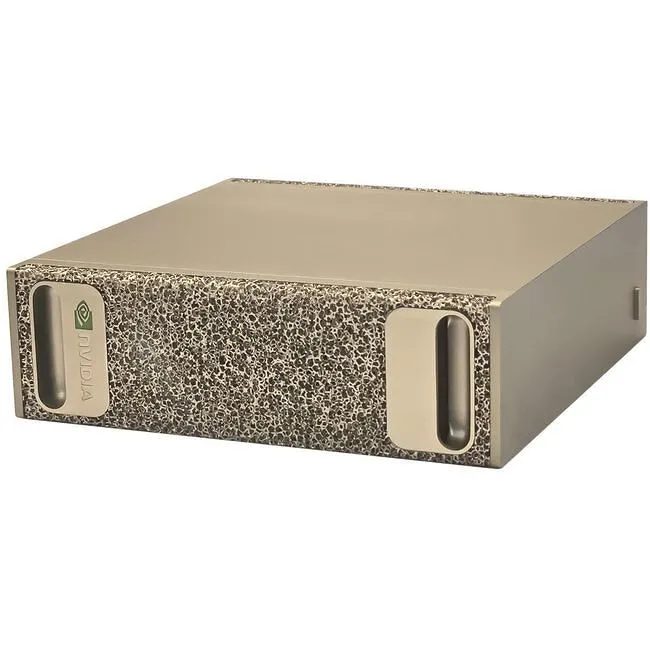
Built with Nvidia, it runs on the DGX Spark desktop supercomputer and Linux machines with RTX GPUs of at least 24GB of memory; Windows support lands in September. First-run benchmarks show the local model scoring 59.6% on coding tasks for near-zero cost, with per-step cloud escalation lifting that to 73.0% at about $0.41 per task.

Why it matters

Enterprises can run AI agents on their own hardware, keeping data local and eliminating per-token charges for local work.

Questions about this story

Free account needed to ask — your question is kept and asked for you right after sign-up. Answers are public.

No questions yet — be the first to ask.

Key Indicators

24 GB
Minimum GPU VRAM required
Any Nvidia RTX GPU with at least 24GB of memory, roughly an RTX 3090 or newer, can run Portable Computer.
$0
Token cost for work handled locally
Local processing consumes no billing credits; cloud escalation costs only when the user approves a specific step.
27B
Parameters in the local model
Runs Qwen 3.8 27B or PPLX 27B, Perplexity's post-trained Qwen variant; Nvidia's Nemotron 3.5 Lightning (30B) arrives soon.
$20
Monthly cost of Perplexity Pro
Required to download and run Portable Computer; the Max tier costs $200 per month.
15+
Cloud frontier models available for escalation
Users can approve escalation to one of 15+ frontier models for advanced reasoning, web access, or connected apps.
59.6%
Local model score on Terminal Bench 2.1
The on-device Qwen 27B scored 59.6% on this coding benchmark at near-zero cost; routing hard steps to a cloud advisor lifted it to 73.0% at about $0.41 per task.

Voices

Curated perspectives — historical figures and your fellow readers.

Ever wondered what historical figures would say about today's headlines?

Sign up to generate historical perspectives on this story.

People Involved

Organizations Involved

Timeline

1 event Latest: August 25th, 2026 · 3 weeks ago
  1. Perplexity and Nvidia launch Portable Computer

    Latest Product launch

    Local-first AI agent runs on Nvidia DGX Spark and Linux machines with 24GB+ RTX GPUs. Zero token cost for local work; cloud escalation requires per-step approval.

Scenarios

1

Enterprises adopt Portable Computer for sensitive-data workflows

Possible Resolves by Q1 2027

Discussed by: Computerworld; Flavio Villanustre, CISO at LexisNexis Risk Solutions

Regulated industries like legal, finance, and healthcare run agent workloads on local hardware to keep confidential documents in-house. The per-action cloud escalation lets them fetch current market data or web research only for specific steps. Perplexity's enterprise tiers include the feature, and app connectors to Google Drive, Gmail, Slack, and GitHub let agents triage and summarize across tools without sending documents to the cloud.

2

Hardware costs keep Portable Computer in a niche

Possible Resolves by End of 2026

Discussed by: Flavio Villanustre (via Computerworld); Jon Peddie Research

The DGX Spark is a premium product, and the 24GB VRAM minimum excludes most consumer GPUs. Users also need a paid Perplexity subscription starting at $20 per month on top of the hardware, and free users get no access. Villanustre called the hardware demands 'quite steep' given current GPU and RAM costs. If the addressable market stays small, Portable Computer becomes a showcase for Nvidia hardware rather than a mass-market agent platform.

3

Rivals launch competing local agent platforms

Likely Resolves by Q2 2027

Discussed by: VentureBeat; MarkTechPost

If local agents prove viable, other AI companies will ship local-first offerings. OpenAI, Anthropic, and smaller labs all have the model technology; the question is whether they follow Perplexity's hybrid model of on-device defaults with per-step cloud escalation. Widespread adoption would erode the per-token pricing model for agentic workloads and push the industry toward hardware ownership plus selective cloud use.

4

One-click consent creates a cloud-escalation loophole

Possible Resolves by End of 2026

Discussed by: Justin Greis (Acceligence) and Mahapatra, quoted in Computerworld

Security analysts doubt the per-step approval model. Greis says local-first is not local-only: users routinely approve prompts they don't fully understand, and enterprises need policy-level blocks, not a pop-up. Mahapatra argues the gate is 'consent, not control,' relying on a probabilistic model classifying sensitive content and on a user judging a request they cannot fully inspect. Perplexity counters that escalation needs an app-level toggle plus per-action approval, that a PII classifier screens outgoing context, and that escalation is allowed only once per task.

Historical Context

2 moments from history that rhyme with this story — and how they unfolded.

August 1981

IBM PC 5150 (1981)

IBM released the 5150, bringing computing to offices and homes. For two decades, computing had run on centralized mainframes operated by specialists in climate-controlled rooms. The PC put that power on individual desks for roughly $1,565.

Then

PC clones flooded the market within a few years, and personal computing became the dominant paradigm.

Now

The shift from centralized to local computing created the software economy built around Microsoft and Intel, reshaping the entire industry.

Why this matters now

Portable Computer moves AI agents from cloud data centers to local hardware, a similar architectural reversal. Where the PC made computing local, this makes AI agent execution local, with the cloud reserved for hard cases.

February 2023

Meta releases Llama (2023)

Meta released Llama, an open-weight large language model that researchers could run on their own hardware. Before Llama, frontier models ran almost exclusively in cloud data centers with per-token API pricing.

Then

Open-weight models created an ecosystem of local inference, privacy-focused deployments, and cheap fine-tuning.

Now

The open-model movement established that useful models could run without cloud infrastructure, enabling the hardware requirements market Portable Computer now targets.

Why this matters now

Portable Computer builds directly on this foundation, using Qwen 3.8 27B and Perplexity's post-trained PPLX variant. Without open-weight models, local agent execution at this scale would not exist.

Sources

(10)