
Pull to refresh
Logo
Perfect Corp. founder moves to take the company private

Perfect Corp. founder moves to take the company private

Money Moves

Alice Chang closes her $2.00-a-share buyout and takes the beauty-tech firm off the New York Stock Exchange

Overview

Updated Oct 23

Perfect Corp. stopped trading on the New York Stock Exchange on October 23, 2026, closing founder Alice Chang's $2.00-a-share buyout. Public holders get $2.00 in cash for each share; Chang and CyberLink kept their stock and now own the private company.

Shareholders approved the deal on October 19, with about 99.99% of votes cast in favor and 87.4% of the company's voting power represented. Perfect Corp. asked the NYSE to suspend trading before the open and plans to file a Form 15 to end its reporting duties with the Securities and Exchange Commission.

Why it matters

Public holders were paid $2.00 a share for a company valued at $1.02 billion when it listed in 2022.

Questions about this story

Free account needed to ask — your question is kept and asked for you right after sign-up. Answers are public.

No questions yet — be the first to ask.

Key Indicators

$2.00
Cash paid per share
What each public shareholder received when the merger closed on October 23, 2026.
99.99%
Votes cast in favor
Share of votes cast at the October 19, 2026 meeting that backed the merger.
87.4%
Voting power represented
Share of all votes entitled to be cast that were present in person or by proxy at the meeting.
Nov 23, 2026
End of reduced warrant price
Warrant holders can exercise at a temporarily cut price of $1.999647 through this date.
$1.02B
2022 SPAC merger valuation
The value placed on Perfect Corp. when it went public four years ago.

Voices

Curated perspectives — historical figures and your fellow readers.

Sign up to generate historical perspectives on this story.

People Involved

Organizations Involved

Timeline

October 2022 October 2026

6 events Latest: October 23rd, 2026 · 3 weeks ago
Tap a bar to jump to that date
  1. Merger closes and NYSE trading stops

    Latest Deal

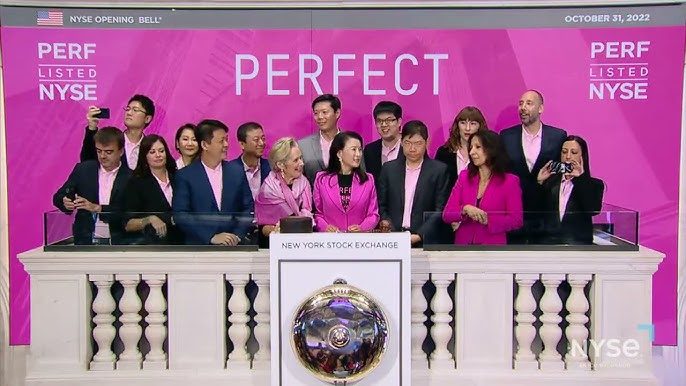
    The merger took effect at 7:00 a.m. Cayman Islands time, paying $2.00 a share in cash. Perfect Corp. asked the NYSE to suspend trading before the open and said it would file a Form 15 to end its SEC reporting.

  2. Shareholders approve the buyout

    Vote

    At an extraordinary general meeting, shares carrying 87.4% of the company's voting power were represented, and about 99.99% of votes cast backed the merger with ProjectNY.

  3. Definitive merger agreement signed at $2.00 a share

    Deal

    Perfect Corp. agrees to be taken private by ProjectNY, an entity Chang controls, for $2.00 a share in cash. The deal is expected to close in the last quarter of 2026.

  4. Special committee hires advisers

    Process

    The committee retains Kroll, LLC as financial adviser and DLA Piper as legal counsel to evaluate and negotiate the offer.

  5. Founder proposes a buyout at $1.95 a share

    Proposal

    A group led by Alice Chang and CyberLink offers to take Perfect Corp. private. The board forms an independent special committee to review it.

  6. Perfect Corp. goes public on the NYSE

    Market Debut

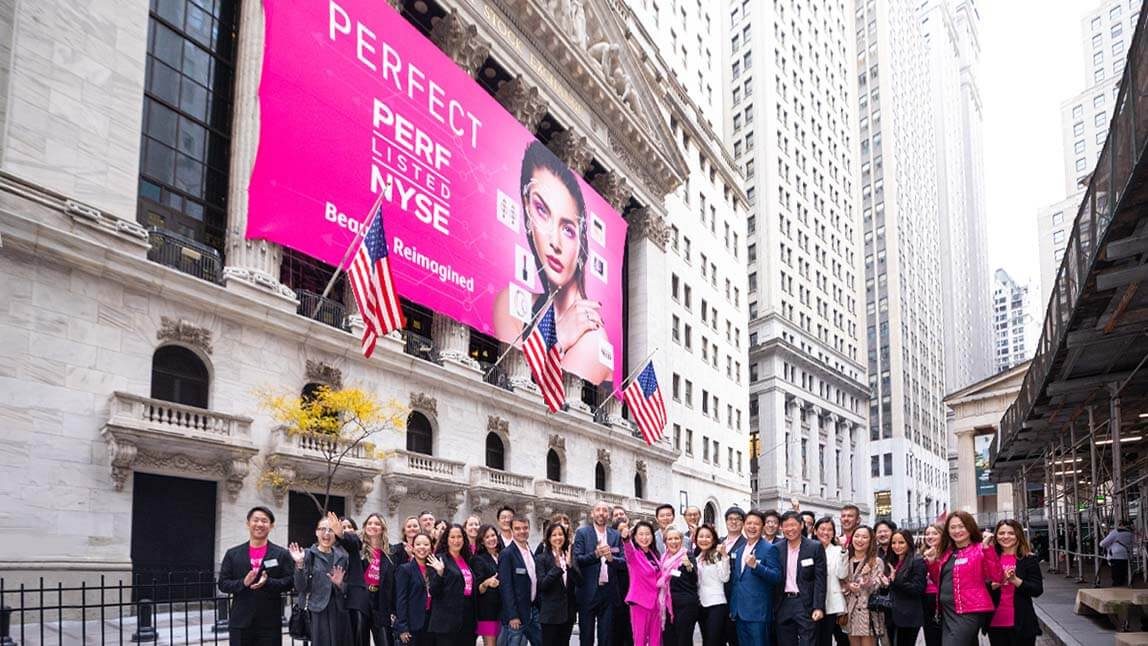
    The company completes a merger with blank-check firm Provident Acquisition Corp., valuing it near $1.02 billion, and starts trading under the ticker PERF.

Scenarios

1

Deal closes, Perfect Corp. delists from the NYSE

Likely Resolves by Jan 31, 2027

Discussed by: Seeking Alpha, WWD/Sourcing Journal, StockTitan

With 81% of the vote already committed, the merger clears the two-thirds threshold at the shareholder meeting and closes on schedule. Public holders receive $2.00 a share in cash, and the stock stops trading on the New York Stock Exchange. This is the base case that most deal coverage assumes.

2

Minority shareholders challenge the price and delay the close

Possible Resolves by End of 2026

Discussed by: Deal-litigation firms that routinely review insider buyouts

Some public investors argue $2.00 undervalues the company given its 2022 debut price and press for a higher payout or file suit. In controlling-shareholder buyouts, such challenges can force added disclosure or push the timeline past the target close. The insiders' voting majority still makes rejection unlikely, but a delay past year-end is plausible.

3

Merger is terminated before closing

Unlikely Resolves by Q1 2027

Discussed by: Standard risk disclosures in the merger agreement

A regulatory hurdle, financing problem, or failure of a closing condition causes one side to walk away. Because the deal is funded from the company's own cash and the buyer controls the vote, the usual failure points are largely removed. Termination would be a surprise.

4

Warrant holders exercise before the reduced price expires

Likely Resolves by Nov 23, 2026

Discussed by: Perfect Corp.'s merger-completion announcement

Each outstanding warrant became exercisable for $2.00 in cash, with the exercise price temporarily cut to $1.999647 for 30 days after the October 23, 2026 disclosure. That window closes on November 23, 2026.

Historical Context

3 moments from history that rhyme with this story — and how they unfolded.

February–October 2013

Dell goes private (2013)

Founder Michael Dell teamed with investment firm Silver Lake to buy Dell for about $24.9 billion and take it off the market. Activist investor Carl Icahn fought the price as too low, and some holders demanded a court appraisal.

Then

Dell raised its offer slightly and won a shareholder vote after a bruising fight.

Now

A Delaware court later ruled the deal had undervalued the company, awarding dissenting holders more per share.

Why this matters now

It shows how a founder buying back his own company draws scrutiny over whether public holders got a fair price.

December 2015–July 2016

Qihoo 360 take-private (2015–2016)

A group led by Qihoo 360's chairman bought the Chinese internet firm off the New York Stock Exchange for about $9.3 billion, one of the largest of dozens of such deals. Backers argued U.S. markets undervalued Chinese companies.

Then

The company delisted from New York at a premium to its depressed U.S. price.

Now

It later pursued a much higher valuation on a Chinese exchange.

Why this matters now

Perfect Corp. fits the pattern of an Asia-based, U.S.-listed firm that its founder buys back after the shares languish.

2013–2015

Focus Media relists after U.S. exit (2013–2015)

Chinese advertising firm Focus Media was taken private from Nasdaq by its founder and buyout partners for about $3.7 billion. Two years later it returned to a Chinese exchange at a valuation several times higher.

Then

U.S. shareholders were cashed out at the buyout price and lost future upside.

Now

The founder captured much of the value once the company relisted at home.

Why this matters now

It shows the payoff a founder can capture by buying out public holders cheaply, then unlocking value elsewhere.

Sources

(11)