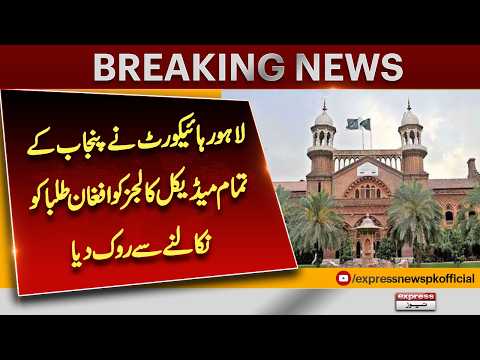
Pakistan's medical regulator ordered Afghan students in medical and dental programs to leave in late July. Courts in Lahore, Sindh, Islamabad, Peshawar and Balochistan have blocked or paused the order, and the prime minister's office says students on government-sponsored programs with valid visas can stay.
Bannu's Medical Teaching Institution ended house jobs for Afghan MBBS graduates on October 9, and Quaid-i-Azam Medical College in Bahawalpur began expelling 20 Afghan residents and students on October 16. On November 8, the Balochistan High Court let 16 students at Bolan University return to classes and hostels until a November 24 hearing. More than 1,000 Afghan students, including more than 300 women, remain enrolled.
Why it matters
If the expulsion order stands, Afghan medical students lose years of training, and women lose their only route to a degree.
Questions about this story
Free account needed to ask — your question is kept and asked for you right after sign-up. Answers are public.
No questions yet — be the first to ask.
Key Indicators
5
High courts that have blocked or paused the PMDC order
The Lahore, Sindh, Islamabad, Peshawar and Balochistan High Courts have granted protections or stays against the regulator's orders.
100+
Afghan medical students covered by the Lahore High Court stay
The extended stay protects students across Punjab institutions from expulsion until the next hearing.
59
Karachi students shielded by the Sindh High Court
The Sindh High Court extended protection to 59 students on September 29, allowing them to continue classes and stay in hostels.
86
Students protected by the Peshawar High Court
The Peshawar High Court stayed the deportation of 86 Afghan medical students in Khyber Pakhtunkhwa; a hearing was set for October 12, and no outcome has been reported.
1,000+
Afghan students in Pakistani medical colleges
More than 1,000 Afghan students, including more than 300 women, are enrolled in medical and dental programs across Pakistan.
20
KEMU students told to vacate within 24 hours
King Edward Medical University was among the first colleges to act on the directive; seven of the students were in their final year.
20
Afghan residents and students QAMC moved to expel
Quaid-i-Azam Medical College in Bahawalpur began processing expulsions of 12 postgraduate residents and eight students in October, telling them to clear dues and obtain no-objection certificates.
16
Balochistan students allowed back by court
The Balochistan High Court allowed 16 Afghan medical students at Bolan University in Quetta to return to classes and hostels until a November 24 hearing.
20 events
Latest: 3 days ago
Showing 8 of 20
JK to step
Tap a bar to jump to that date
Jump to
November 2026
Balochistan High Court lets 16 Afghan medical students return to classes
LatestLegal
The interim order allows the students at Bolan University of Medical and Health Sciences in Quetta to resume studies and stay in hostels until a November 24 hearing. It does not resolve their visa status.
October 2026
Hearing on Afghan doctors' petition put off to November 10
Legal
A court hearing a petition by 70 Afghan doctors against the deportation policy issued on October 6 issued notices to the federal government and others and adjourned the case until November 10.
Lahore High Court extends stay against Afghan student expulsions
Legal
Justice Khalid Ishaq heard petitions from more than 30 Afghan students, accepted the PMDC counsel's request for adjournment, and extended the interim protection for all students in Punjab.
QAMC begins expelling 20 Afghan doctors and medical students
Policy
Quaid-i-Azam Medical College in Bahawalpur started processing the expulsion of 12 postgraduate residents and eight medical students, directing them to vacate hostels, clear dues, and obtain NOCs before returning to Afghanistan. The college says it is following fresh government instructions.
Government departure deadline expires
Policy
The deadline for Afghan medical students and doctors not covered by the PMO directive passed. Students admitted under reserved seats sought exemptions from PMDC's directive to produce valid documents to continue their studies.
Bannu institution ends Afghan graduates' house jobs
Policy
The Medical Teaching Institution in Bannu terminated house job training for all Afghan MBBS graduates with immediate effect, citing a Pakistan Medical and Dental Council letter and a letter from the prime minister's office. Afghan postgraduate trainees at Nowshera Medical College and Qazi Hussain Ahmad Medical Complex were also told their training had ended and to vacate the premises.
Prime minister's office halts deportation for approved-program students
Policy
The PMO said Afghan undergraduates on government-sponsored or assisted programs, such as the Allama Iqbal Scholarship, may continue their studies if they hold valid visas and register with PMDC by October 15. Students who completed degrees, who are unregistered, or who were admitted after September 1, 2026, must leave by October 10, and no new Afghan admissions are allowed until further orders. Colleges have cited the same PMO letter when ending Afghan trainees' placements.
Islamabad High Court refers visa cases to Interior Ministry
Legal
The IHC disposed of a petition by 87 Afghan students whose visa extensions were pending, sending the matter to the Interior Ministry to decide within 30 days and ordering authorities not to harass, arrest, or deport them meanwhile.
September 2026
Sindh High Court extends protection to 59 students
Legal
The Sindh High Court extended protection to 59 Afghan medical students, allowing them to continue classes and stay in hostels. The court also ordered Jinnah Sindh Medical University to restore students' access after the university barred them.
Peshawar High Court protects 17 Afghan doctors
Legal
The Peshawar High Court stopped law enforcement agencies from arresting or deporting 17 Afghan doctors serving in two private hospitals in Peshawar, allowing them to continue postgraduate training.
Lahore High Court extends stay on expulsions
Legal
The Lahore High Court extends the stay blocking expulsion of over 100 Afghan medical students until the next hearing.
Islamabad High Court stays expulsion of Afghan doctor
Legal
Justice Khadim Hussain Soomro restrained authorities from expelling Dr. Imaduddin, an Afghan urology trainee in Bahawalpur. His Pakistani wife argued the PMDC's July 31 notice could not apply retrospectively.
Sindh High Court shields 34 Karachi students
Legal
The Sindh High Court grants interim relief to 34 Afghan students, suspending PMDC notices until a September 29 hearing.
Lahore High Court suspends PMDC directives
Legal
Justice Khalid Ishaq suspends the directives for Punjab students, allowing them to continue studies, sit exams, and return to hostels.
Foreign Office says students with valid visas can stay
Policy
Foreign Office spokesperson Sajjad Haider Khan said Afghan students with valid visas in valid degree programs will complete their education in Pakistan.
KEMU gives 20 Afghan students 24 hours to leave
Policy
King Edward Medical University orders 20 Afghan MBBS students, seven in their final year, to report and vacate hostels within 24 hours.
PMDC reinforces expulsion order, bars new admissions
Regulation
PMDC tells colleges that no Afghan nationals may be admitted, transferred, or otherwise facilitated for the current academic year.
Peshawar High Court stays deportation of 86 students
Legal
The Peshawar High Court temporarily stopped the deportation of 86 Afghan medical students in Khyber Pakhtunkhwa, fixing October 12 for the next hearing.
Eight Afghan doctors in Bahawalpur granted visas
Policy
Eight Afghan postgraduate doctors in Bahawalpur who had been detained and deported after their identity cards lost validity were granted formal Pakistani visas and resumed their residencies.
July 2026
PMDC orders Afghan medical students to return home
Regulation
The Pakistan Medical and Dental Council issues a directive requiring Afghan students in medical and dental programs to leave their colleges and return to Afghanistan.
Scenarios
1
Courts Stand Firm, Students Complete Degrees
Likely
Resolves by Jan 31, 2027
Discussed by: Student petitioners and their counsel, who argue PMDC exceeded its authority under the PMDC Act
The Lahore and Sindh High Courts issue final rulings keeping the stays in place, allowing Afghan students to finish their medical education. Courts could order PMDC to register the students and void the repatriation directive. Justice Ishaq already signaled this direction, telling the government that if it intends to send students back, it should first let them complete their training.
2
Government Prevails, Students Ordered Home
Possible
Resolves by Jan 31, 2027
Discussed by: PMDC counsel, who defended the directive on national security grounds and argued students lack valid visas
An appellate court or the Supreme Court overturns the stays, or the government escalates the policy, forcing students to leave before completing their degrees. This would also bar new Afghan admissions for coming academic years. The regulator's national security framing, rejected so far at the Lahore High Court, would carry the day on appeal.
3
Partial Compromise: Final-Year Students Stay, New Admissions End
Possible
Resolves by Jan 31, 2027
Discussed by: Court guidance that students should first complete their training if the government intends to send them back
Courts or PMDC allow students already enrolled, especially those in final years, to finish their degrees while barring new Afghan admissions for the coming academic years. This threads the needle between the regulator's security rationale and the students' years of investment in their training.
4
PM Directive Defines Who Stays: Approved Programs Only
Deadline passed (Oct 15, 2026)
Discussed by: Prime Minister's Office directives and court rulings pushing back on the medical regulator
Under the PMO directive, students on government-sponsored programs with valid visas keep studying if they register with PMDC by October 15. Students admitted after September 1, 2026, or without approved-program status must leave, and no new Afghan admissions are allowed until further orders. Courts in four provinces still press the regulator, so the final split may shift before the matter settles.
Historical Context
3 moments from history that rhyme with this story — and how they unfolded.
1 of 3
December 2022
Taliban bans women from university education (December 2022)
On December 21, 2022, the Taliban barred Afghan women from attending universities, weeks after restricting secondary schooling. Female students, many close to graduation, were locked out of campuses across the country.
Then
Thousands of women lost access to higher education overnight; some sought scholarships abroad.
Now
Women's higher education in Afghanistan collapsed, deepening dependence on study-abroad programs like the Allama Iqbal Scholarship.
Why this matters now
Several students now facing expulsion fled Afghanistan specifically to continue medical training that is barred to women at home.
2 of 3
October-November 2023
Pakistan orders undocumented Afghan refugees to leave (2023)
Pakistan ordered all undocumented foreign nationals, mostly Afghans, to leave or face arrest, triggering mass departures and border crossings in October and November 2023.
Then
Hundreds of thousands of Afghans returned to Afghanistan under the threat of detention.
Now
Pakistan's stance toward Afghan migrants and refugees hardened and remains a live political issue.
Why this matters now
The PMDC expulsion order follows the same direction of travel in Pakistan's treatment of Afghans, testing whether students get different treatment from other migrants.
3 of 3
January-June 2018
US courts weigh travel ban against universities (2017-2018)
After the Trump administration's travel ban targeted nationals of several Muslim-majority countries, universities and states sued. Federal courts issued injunctions blocking the ban, and the Supreme Court upheld a revised version in June 2018.
Then
Court injunctions temporarily protected affected foreign students and faculty from the ban's impact.
Now
The case settled the constitutional limits of executive power over foreign nationals' entry, granting presidents wide authority while leaving consular discretion intact.
Why this matters now
Like the Pakistani courts now, US courts became the arena where a government order affecting foreign students was tested and, at least initially, blocked.