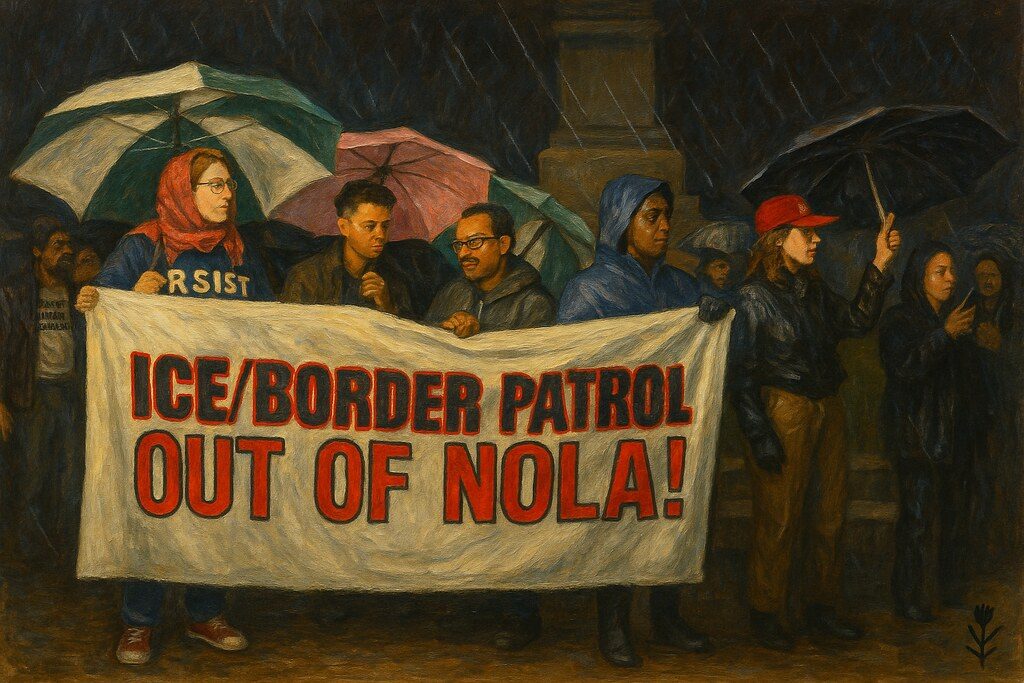
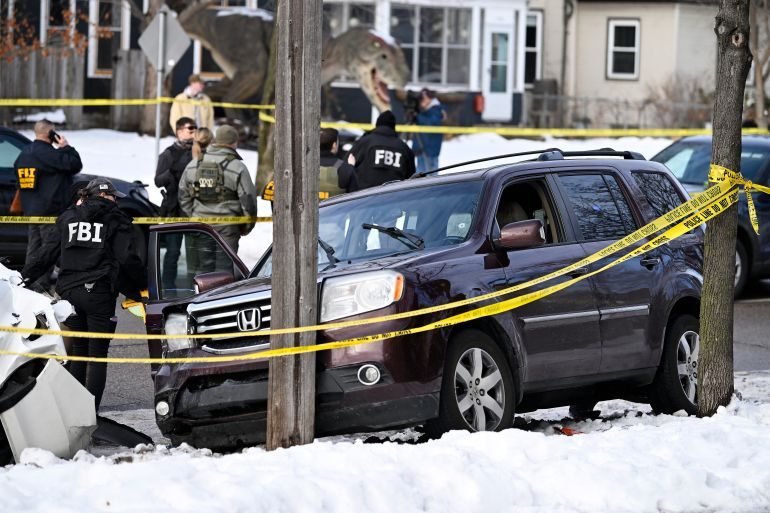
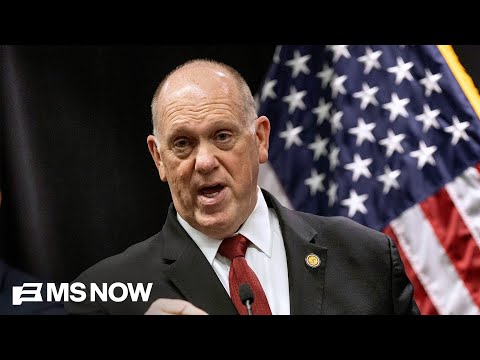
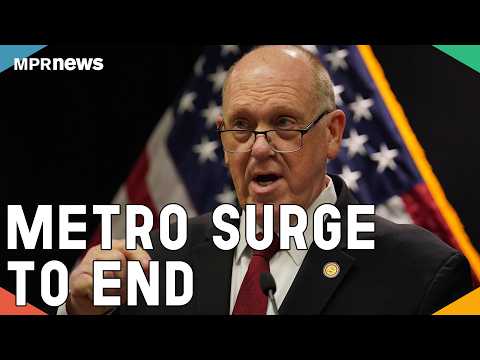
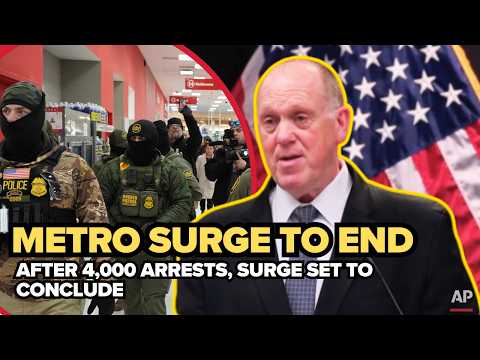
From December 4, 2025, to February 12, 2026, Minneapolis hosted Operation Metro Surge, the largest federal immigration enforcement operation in American history: 2,000 agents, 4,000+ arrests, two U.S. citizens fatally shot. On February 12, White House border czar Tom Homan announced the operation's conclusion, declaring Minnesota 'now less of a sanctuary state.'
The operation exposed fundamental tensions between federal immigration authority and local governance: an estimated $200 million in economic losses and at least 96 court order violations, per Minnesota's chief federal judge. The Pentagon placed 1,500 soldiers on standby; United Nations experts warned the shootings may be extrajudicial killings. The administration framed the surge as a successful blueprint for future enforcement; critics called it an occupation that traumatized an entire state.
Questions about this story
Free account needed to ask — your question is kept and asked for you right after sign-up. Answers are public.
No questions yet — be the first to ask.
Key Indicators
4,000+
Arrests
Individuals detained during the ten-week operation
2
U.S. Citizens Killed
Renée Good and Alex Pretti, both shot by federal agents
96+
Court Orders Violated
Federal judge found ICE violated more orders in January than some agencies violate in their entire existence
2,000
Peak Agent Deployment
Federal officers sent to Minneapolis-Saint Paul area at operation's height
$203M+
Economic Losses
Minneapolis city estimate of fiscal impact from the operation
18 events
Latest: February 12th, 2026 · 7 months ago
Showing 8 of 18
JK to step
Tap a bar to jump to that date
Jump to
February 2026
Homan Declares Operation Concluded
LatestConclusion
At a Minneapolis news conference, Homan announces the operation will end with Trump's concurrence, stating 'I don't want to see any more bloodshed' and calling Minnesota 'now less of a sanctuary state.'
UN Experts Warn of Possible Extrajudicial Killings
International
United Nations human rights experts warn that the fatal shootings may constitute extrajudicial killings and call for prompt investigation under international human rights law.
Homan Announces Partial Drawdown
De-escalation
Homan announces 700 officers will leave Minnesota immediately, bringing the total deployment down to 2,000.
Military Standby Order Rescinded
Military
U.S. Northern Command issues a stand-down order to the 1,500 soldiers who had been mobilized for possible Minneapolis deployment.
January 2026
Federal Judge Denies Injunction
Legal
U.S. District Judge Katherine Menendez denies Minnesota's request for a preliminary injunction to halt the operation, finding 'the relative merits of each side's competing positions are unclear.'
Federal Judge Finds 96+ Court Order Violations
Legal
Chief U.S. District Judge Patrick Schiltz finds ICE violated at least 96 court orders, stating the agency has 'violated more court orders in January 2026 than some federal agencies have violated in their entire existence.'
Springsteen Releases 'Streets of Minneapolis'
Cultural
Bruce Springsteen releases protest song condemning the operation. It reaches number one on the Digital Song Sales chart, with the White House dismissing it as 'random songs with irrelevant opinions.'
Homan Takes Command, Bovino Removed
Leadership Change
Gregory Bovino is stripped of command and reassigned to the California border. Tom Homan assumes direct control of Operation Metro Surge.
60+ CEOs Call for De-escalation
Business Response
Over 60 CEOs of major Minnesota companies including Target, 3M, Best Buy, and UnitedHealth Group sign an open letter calling for 'immediate deescalation of tensions.'
Alex Pretti Killed by CBP Agents
Fatal Shooting
CBP agents shoot and kill Alex Pretti, 37, a VA intensive care nurse and U.S. citizen, while he films agents and assists protesters. Video shows he held a phone, not a weapon.
Pentagon Places Soldiers on Standby
Military
The Defense Department issues a second standby order to a Military Police brigade at Fort Bragg, preparing 1,500 soldiers for possible Minneapolis deployment amid Insurrection Act threats.
3,000 Arrests Reported
Enforcement
DHS announces 3,000 arrests. Secretary Noem claims over 10,000 total arrests since the operation began.
State and Cities Sue Federal Government
Legal
Minnesota, Illinois, Minneapolis, and Saint Paul file federal lawsuits against DHS, arguing the operation is unconstitutional and has violated civil liberties.
Renée Good Killed by ICE Agent
Fatal Shooting
ICE agent Jonathan Ross fatally shoots Renée Good, 37, a U.S. citizen, in Minneapolis. Federal officials claim self-defense; video footage contradicts this account.
Walz Activates National Guard
State Response
Governor Tim Walz issues a warning order to the Minnesota National Guard following Good's killing, ordering troops to be 'staged and ready.'
Operation Expanded to 2,000 Agents
Escalation
DHS announces massive expansion, calling it the largest immigration enforcement operation ever conducted. Agent count increases to 2,000 in the Minneapolis-Saint Paul area.
December 2025
Initial Arrest Numbers Released
Enforcement
DHS reports 400 arrests in the operation's first two weeks, claiming those detained include individuals with convictions for serious crimes.
DHS Announces Operation Metro Surge
Launch
The Department of Homeland Security announces a new immigration enforcement operation targeting Minneapolis-Saint Paul, citing the Twin Cities' sanctuary city policies.
Scenarios
1
Criminal Investigations into Fatal Shootings Proceed
Possible
Discussed by: The Minnesota Bureau of Criminal Apprehension, civil rights organizations, and legal analysts at Just Security
State and federal authorities conduct parallel investigations into the deaths of Good and Pretti. While the Minnesota BCA has committed to investigating, the agents involved remain federal employees with potential immunity claims. Criminal charges would require demonstrating the shootings were unjustified under applicable use-of-force standards—a high bar given federal law enforcement protections.
2
Civil Rights Lawsuits Result in Major Settlements
Likely
Discussed by: The families' legal representatives, FindLaw legal analysts, and the ACLU
The Good and Pretti families pursue civil rights litigation against the federal government under wrongful death and excessive force claims. Given contradictory video evidence in both cases and the UN's preliminary findings, substantial settlements or judgments are plausible. The Ruby Ridge settlements ($3.1 million) provide historical precedent for federal liability in fatal enforcement actions.
3
Similar Operations Launch in Other Sanctuary Cities
Likely
Discussed by: Border czar Tom Homan, immigration policy analysts, and Common Dreams
Homan characterized Operation Metro Surge as 'a blueprint, not an anomaly' and reiterated Trump's promise of mass deportation. Future operations targeting Denver, Chicago, or other sanctuary jurisdictions would follow the Minneapolis model—though the political costs demonstrated in Minnesota may shape deployment decisions.
4
Congressional Investigation into DHS Conduct
Unlikely
Discussed by: Democratic members of Congress, NBC News, and government accountability advocates
Democrats have called for Secretary Noem's resignation or impeachment. A congressional investigation could examine the 96+ court order violations, the circumstances of both shootings, and the decision-making that led to the operation's scale. Republican control of Congress makes substantive oversight unlikely in the near term.
Historical Context
3 moments from history that rhyme with this story — and how they unfolded.
1 of 3
May 1970
Kent State Shootings (1970)
Ohio National Guard soldiers fired 67 rounds over 13 seconds at Kent State University students protesting the Vietnam War's expansion into Cambodia. Four students were killed and nine wounded, including some who were simply walking to class. The closest victim was 20 yards away; the farthest was 245 yards.
Then
The shootings triggered a nationwide student strike that closed hundreds of colleges and universities. In 1979, Ohio agreed to pay the injured a total of $675,000.
Now
The President's Commission on Campus Unrest found the shootings 'unjustified.' Kent State became a defining symbol of government violence against protesters and fundamentally shaped public attitudes toward the Vietnam War.
Why this matters now
Both incidents involved federal or state forces killing unarmed American citizens during protests, with disputed justifications and video evidence contradicting official accounts. The cultural response—including protest music—echoed across both eras.
2 of 3
August 1992
Ruby Ridge (1992)
An 11-day standoff in rural Idaho began when U.S. Marshals attempted to arrest Randy Weaver on firearms charges. Weaver's 14-year-old son Samuel was shot in the back and killed by marshals. The next day, FBI sniper Lon Horiuchi killed Weaver's wife Vicki while she held their infant daughter. The operation's aggressive rules of engagement allowed shooting any armed adult male.
Then
Randy Weaver and his daughters received $3.1 million in settlements. Both the 1994 DOJ report and 1995 Senate hearings found the rules of engagement unconstitutional.
Now
The Justice Department formulated its first uniform deadly force policy applicable to all law enforcement agencies. Ruby Ridge became a rallying point for anti-government movements and was cited by Timothy McVeigh as motivation for the Oklahoma City bombing.
Why this matters now
Like Minneapolis, Ruby Ridge involved fatal shootings of Americans by federal agents during enforcement operations, disputed accounts of what happened, and fundamental questions about use-of-force standards. NPR directly invoked Ruby Ridge when analyzing the Minneapolis shootings.
3 of 3
April 2000
Elián González Custody Dispute (2000)
Federal agents conducted a pre-dawn raid on a Miami home to seize six-year-old Elián González, whose Cuban mother had died during their escape to Florida. Armed agents in tactical gear entered the home as relatives and protesters surrounded the property. The operation lasted minutes but the iconic photograph of an agent pointing a weapon near the terrified child dominated news coverage.
Then
Elián was returned to his father and ultimately to Cuba. Attorney General Janet Reno faced fierce criticism but defended the operation as necessary after negotiations failed.
Now
The raid became a defining image of federal overreach for Cuban-American communities and shaped Florida politics for decades. It demonstrated how even successful enforcement operations can produce political backlash that outlasts the immediate event.
Why this matters now
Both operations achieved their stated enforcement objectives while generating lasting controversy over tactics, with visual documentation shaping public perception more than official narratives.