


Pull to refresh
Logo
OpenAI makes Codex auto-review free, ships Decisions API in 28-day sprint

OpenAI makes Codex auto-review free, ships Decisions API in 28-day sprint

New Capabilities

The Decisions API is generally available with 400-question requests and prompt caching, two weeks after it headlined day two of OpenAI's 28-day Codex sprint.

Overview

Updated Oct 24

OpenAI's Decisions API is generally available as of October 22, two weeks after it entered public beta on day two of the company's 28-day sprint of Codex and ChatGPT Work updates. The release raises the cap to 400 questions per request, adds prompt caching for repeated context, and accepts images and structured JSON alongside each question.

The GPT-6 Luna-powered endpoint returns a probability, a pick from a preset list, or a numeric score, and OpenAI says it answers up to 10 times faster than the same model called through its standard API. Input costs $0.10 per million tokens; cached input costs $0.01. The free auto-review, three API tiers and macOS Meetings plugin from that same sprint remain in place.

Why it matters

Fast, cheap judgment calls are the plumbing of autonomous agents; a $0.10-per-million-token decisions API lowers what it costs to run them.

Questions about this story

Free account needed to ask — your question is kept and asked for you right after sign-up. Answers are public.

No questions yet — be the first to ask.

Key Indicators

400
Questions per Decisions API request
Doubled from 200 at general availability on October 22.
$0.10
Decisions API input price per million tokens
Cached input costs $0.01 per million; there are no output-token charges.
99%
Share of actions auto-review approves
The second-agent review stops for human approval about 200x less often than manual mode.
10x
Decisions API speedup vs Responses API
OpenAI's DevDay demo measured 150 milliseconds against 1.6 seconds.
3
API usage tiers after simplification
Paid tiers cut from five to three: Build, Launch, Grow.

Voices

Curated perspectives — historical figures and your fellow readers.

Sign up to generate historical perspectives on this story.

People Involved

Organizations Involved

Timeline

April 2026 October 2026

7 events Latest: October 22nd, 2026 · 3 weeks ago
Tap a bar to jump to that date
  1. Decisions API reaches general availability

    Latest Product

    OpenAI opens the GPT-6 Luna endpoint to all developers, doubling the per-request limit to 400 questions and adding prompt caching, native JSON input and US/EU processing. Input stays at $0.10 per million tokens.

  2. Day 2 ships four workflow updates

    Product

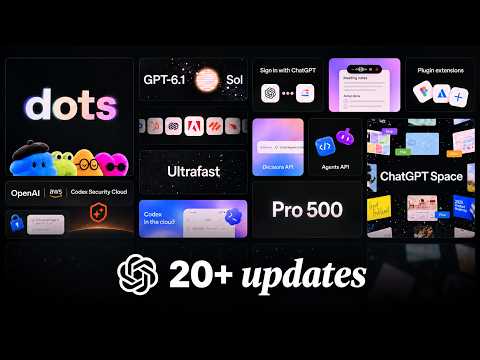
    Auto-review goes free; API tiers simplify; Meetings beta; Decisions API enters public beta.

  3. Community votes for full usage reset

    Community

    Roughly 74% vote for a reset; OpenAI processes it while keeping the Day 2 features.

  4. Sprint Day 1 promises faster speeds

    Product

    OpenAI promises roughly 50% faster default speed through subscriptions, opening the 28-day campaign.

  5. Decisions API previewed at DevDay

    Announcement

    OpenAI previews the GPT-6 Luna-powered Decisions API, demonstrating judgments 10x faster than the Responses API.

  6. First Decisions API prototype built

    Development

    Engineer Steven Heidel builds the first Decisions API prototype; public launch follows two weeks later.

  7. Ships auto-review for Codex

    Product

    OpenAI introduces second-agent approval for risky Codex actions, stopping for human checks far less often.

Scenarios

1

Auto-review becomes the default approval mode

Possible Resolves by Nov 30, 2026

Discussed by: OpenAI Developer Community commenters and AI Industry Today's sprint coverage

Auto-review currently requires opting in via settings. If it stays free and the sprint keeps shipping reliability improvements, OpenAI could enable it by default for all ChatGPT-signed-in users, making manual human approval the exception for routine Codex actions.

2

Usage resets stop after the 28-day sprint

Likely Resolves by Nov 15, 2026

Discussed by: AI Industry Today, which observed that compute access is becoming part of the product experience

The remaining weeks of the sprint pair daily releases with occasional full resets of Codex and ChatGPT Work usage windows. Once the 28 days end in early November, resets likely stop; the question is whether OpenAI converts the goodwill into a standing policy or ends the program quietly.

3

Decisions API reaches general availability

Likely Resolves by End of 2026

Discussed by: The Decoder and OpenAI's own DevDay statement that general availability is coming soon

OpenAI previewed the Decisions API on September 29 and entered public beta on October 7, with general availability promised. If GA arrives without retracting the 10x speed claim or raising the $0.10-per-million-input-token price, the API becomes a fast, cheap primitive for routing and agent tool selection.

Historical Context

2 moments from history that rhyme with this story — and how they unfolded.

December 2024

GitHub makes Copilot free for VS Code users (December 2024)

GitHub let anyone using VS Code run Copilot code suggestions without a paid plan, capping free messages per month. The change removed the cost barrier to trying the assistant.

Then

Copilot's install base expanded as developers tested it without a subscription.

Now

It set the pattern of free developer-AI tiers used to drive adoption ahead of revenue.

Why this matters now

OpenAI's free auto-review follows the same playbook: removing a usage cost to grow agent-tool adoption.

November 2022

OpenAI launches ChatGPT to the public (November 2022)

OpenAI released ChatGPT as a free research preview on November 30, 2022, adding a website where anyone could chat with GPT-3.5. It reached one million users in five days, faster than any prior OpenAI product.

Then

ChatGPT became OpenAI's flagship consumer product; usage caps and premium tiers followed within months.

Now

It turned OpenAI from an API-first lab into a consumer platform and triggered the broader generative-AI boom.

Why this matters now

The Meetings plugin and ChatGPT Space extend agent context into that consumer workspace, the next step in the same expansion.

Sources

(12)