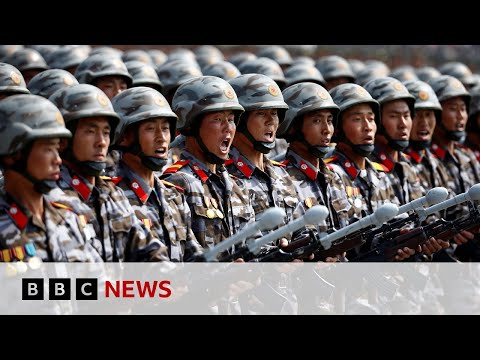
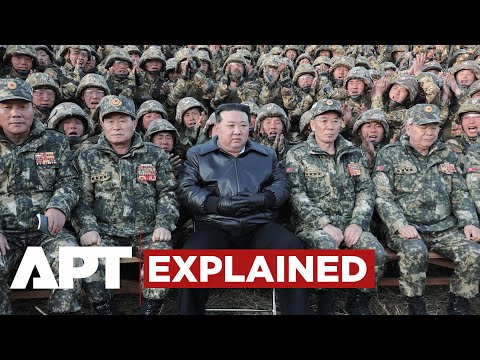
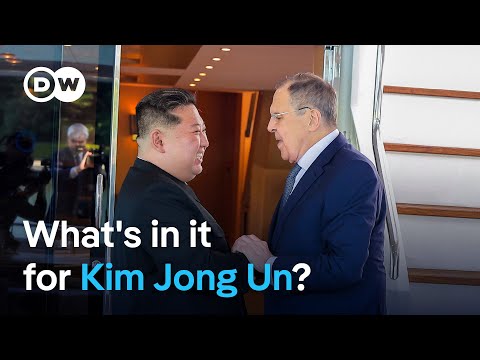
North Korea has not sent combat troops abroad since the Korean War ended in 1953. In October 2024, about 12,000 to 15,000 soldiers deployed to Russia's Kursk region. In August 2026, Ukraine reported a new wave of 8,500 troops, including drone operators, and a North Korean missile unit moved to western Russia.
The partnership has deepened steadily: a mutual defense treaty in June 2024, ammunition shipments since 2023, and now the first road bridge across the Tumen River, opened September 8, 2026. North Korea has earned billions from arms sales and battlefield experience, but the cost is heavy: an estimated 6,000 soldiers killed or wounded by February 2026.
Why it matters
North Korea's expanding role in Russia's war raises the risk of wider conflict and gives Pyongyang new leverage against the West.
Questions about this story
Free account needed to ask — your question is kept and asked for you right after sign-up. Answers are public.
No questions yet — be the first to ask.
Key Indicators
6,000+
Troops killed or wounded
South Korean intelligence estimate as of February 2026
~15,000
Initial troops deployed
Deployed to Kursk since October 2024
8,500
New wave in 2026
Includes drone operators and engineers, reported August 2026
120
Ballistic missiles deployed
North Korean missile unit in Voronezh region, August 2026
$22B
Foreign revenue 2022-2025
Estimated total foreign earnings, almost 4x previous period
$5.5B
Arms exports to Russia
Estimated value of North Korean weapons shipped since August 2023
20,000
Shipping containers sent
Containers of ammunition and weapons delivered by October 2024
16 events
Latest: 4 days ago
Showing 8 of 16
JK to step
Tap a bar to jump to that date
Jump to
September 2026
First Road Bridge Between Russia and North Korea Opens
LatestInfrastructure
The bridge across the Tumen River opened with a ceremony. Up to 300 vehicles daily will cross, boosting trade and logistics between the two countries.
August 2026
New Wave of 8,500 North Korean Troops Includes Drone Operators
Military Deployment
Ukrainian intelligence reported a new wave of 8,500 troops in Russia, including 400 drone operators and 1,000 engineers and deminers. Russia may ask for up to 50,000 more at the upcoming Putin-Kim meeting.
Zelenskyy Warns of Up to 50,000 Additional North Korean Troops
Intelligence
Ukrainian President Volodymyr Zelenskyy said North Korea could deploy up to 50,000 more soldiers to support Russia's war effort, citing intelligence assessments.
North Korean Missile Unit Deploys to Western Russia
Military Deployment
A 90-person North Korean missile unit with up to 120 ballistic missiles and six launchers moved to Russia's Voronezh region. At least two missiles were fired at Ukraine the prior week.
February 2026
Housing District Inaugurated for Bereaved Families
Commemoration
Kim Jong Un, accompanied by his daughter Kim Ju Ae, opens Saeppyol Street in Pyongyang—a housing district built for families of soldiers killed fighting alongside Russia.
October 2025
Memorial Museum Groundbreaking in Pyongyang
Commemoration
Kim attends groundbreaking for a Memorial Museum of Combat Feats—the first such facility in North Korean history dedicated to soldiers killed overseas.
September 2025
Death Toll Reaches 2,000
Intelligence Report
South Korean intelligence reports approximately 2,000 North Korean soldiers killed—more than double previous estimates—making Ukraine North Korea's third deadliest conflict.
August 2025
North Korea Publicly Honors 101 Fallen Soldiers
Propaganda
Kim Jong Un leads a decoration ceremony publicly disclosing the names and portraits of 101 soldiers killed in Ukraine—North Korea's first official acknowledgment of combat deaths.
April 2025
Casualty Estimates Reach 4,700
Intelligence Report
South Korean lawmakers report that intelligence officials estimate 4,700 North Koreans killed or injured, with approximately 600 confirmed deaths.
January 2025
South Korea Reports 3,000 North Korean Casualties
Intelligence Report
South Korean intelligence estimates at least 300 North Korean soldiers killed and 2,700 wounded in less than three months of combat.
November 2024
Putin Signs Defense Treaty into Law
Legal
Russia's State Duma and Federation Council ratify the mutual defense treaty, and Putin signs it into law. Kim signs North Korea's ratification two days later.
October 2024
NATO Confirms North Korean Deployment
Confirmation
NATO Secretary General Mark Rutte publicly confirms that North Korea has sent troops to Russia and deployed military units to the Kursk region.
First North Korean Combat Troops Deploy to Kursk
Military Deployment
Ukrainian military intelligence reports the first North Korean soldiers arriving in Russia's Kursk region, where Ukraine had launched a cross-border offensive in August.
June 2024
Comprehensive Strategic Partnership Treaty Signed
Treaty
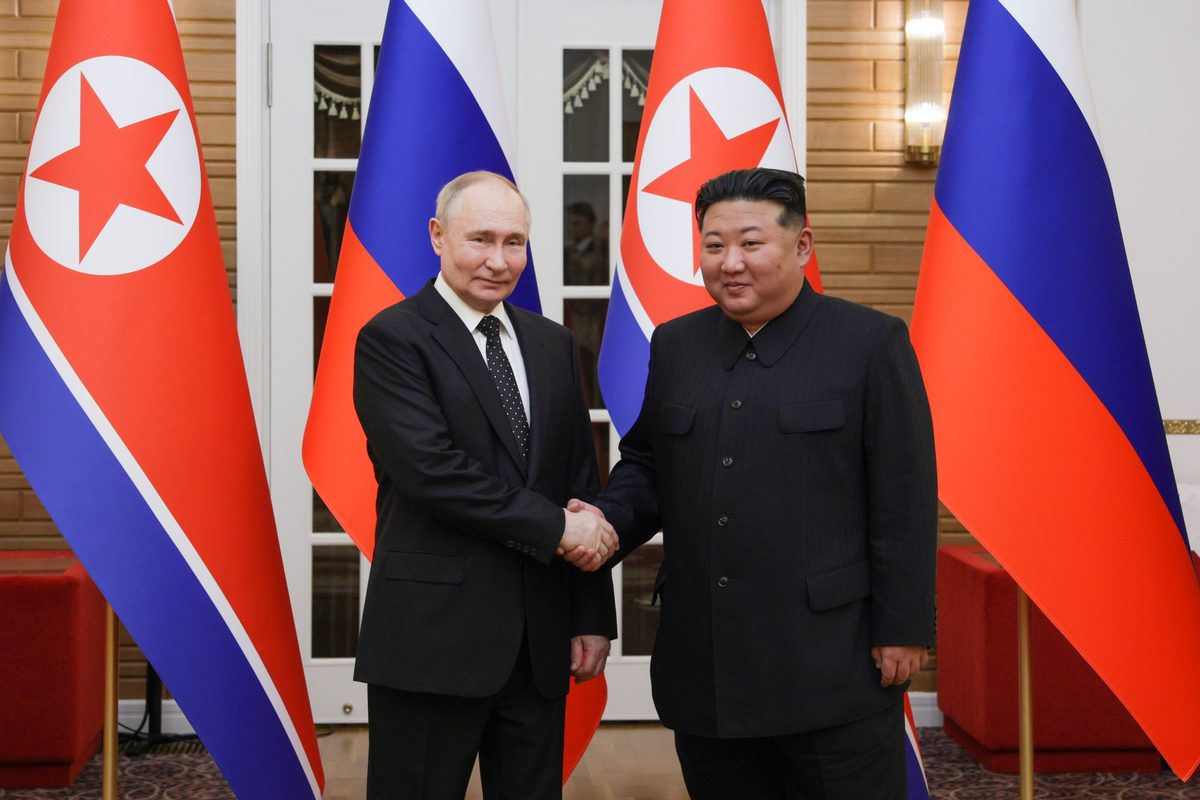
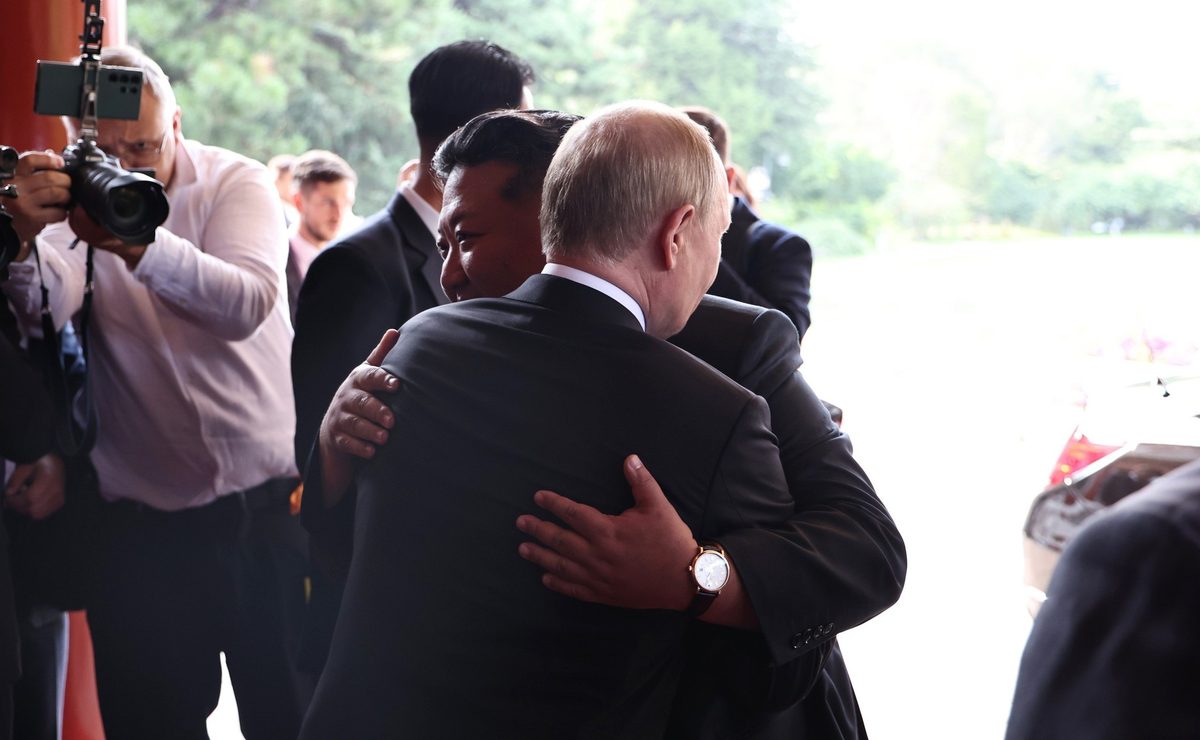
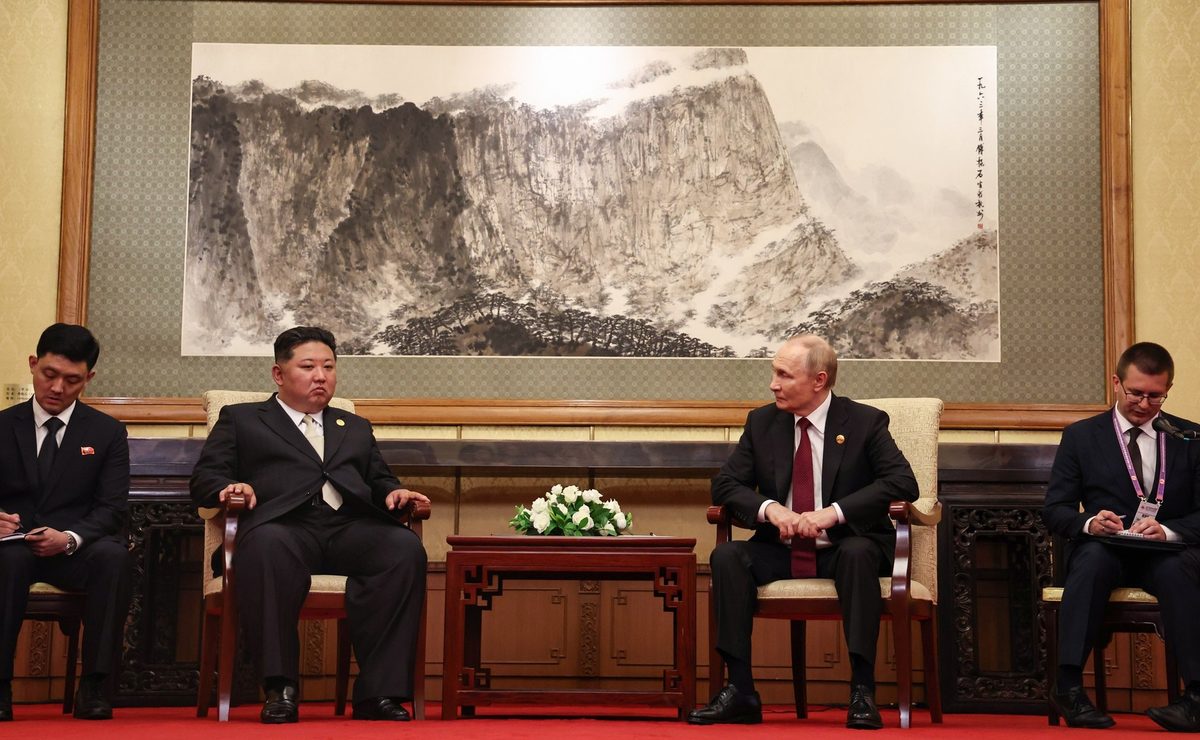
Kim and Putin sign a mutual defense treaty in Pyongyang, committing each country to provide "military and other assistance with all means" if the other is attacked.
September 2023
Kim-Putin Summit at Vostochny Cosmodrome
Diplomacy
Kim Jong Un meets Vladimir Putin at Russia's space launch facility in the Far East. Kim endorses Russia's "sacred fight" against the West; Putin hints at satellite technology cooperation.
August 2023
First North Korean Arms Shipment to Russia
Arms Transfer
North Korea delivers its first military equipment to Russia, initiating an arms pipeline that would grow to over 20,000 shipping containers within 14 months.
Scenarios
1
Alliance Deepens as Ukraine War Continues
Likely
Discussed by: Chatham House, CSIS Korea analysts, 38 North
North Korea maintains or increases troop deployments through 2026 and beyond. Russia provides advanced weapons technology—potentially including satellite systems, submarine components, or missile guidance—that enhances Pyongyang's nuclear delivery capabilities. The alliance becomes a permanent feature of Northeast Asian security architecture, complicating any future denuclearization diplomacy.
2
Casualties Force Withdrawal or Reduction
Possible
Discussed by: Lowy Institute, South Korean defense analysts
Mounting casualties—potentially exceeding 10,000 by late 2026—create domestic pressure that North Korea cannot manage through propaganda alone. Kim scales back deployments to preserve military capacity and avoid a political crisis. The alliance continues but shifts back toward arms transfers rather than troop commitments.
3
Ceasefire Ends Combat Deployments
Uncertain
Discussed by: Russia Matters (Harvard), European security analysts
A negotiated settlement or frozen conflict in Ukraine eliminates the immediate need for North Korean troops. The Pyongyang-Moscow partnership persists, but without active combat operations, North Korea loses the battlefield experience and some of the economic benefits that justified the human cost.
4
Expanded Deployment Beyond Kursk
Possible
Discussed by: Ukrainian military intelligence, Kyiv Independent
Russia deploys North Korean troops to additional front-line sectors beyond Kursk, potentially including Zaporizhzhia or eastern Donbas. Casualty rates increase, but North Korea gains broader combat experience and Russia gains additional manpower for offensive operations.
5
Troop Expansion to 50,000
Likely
Resolves by End of 2026
Discussed by: Ukrainian military intelligence, Zelenskyy, Western analysts
Russia requests and receives up to 50,000 additional North Korean troops, expanding deployments beyond Kursk to other front-line sectors. This would dramatically increase North Korean battlefield exposure and casualty rates, but also provide Pyongyang with far greater combat experience and leverage over Moscow.
Historical Context
3 moments from history that rhyme with this story — and how they unfolded.
1 of 3
October 1950 – July 1953
Chinese People's Volunteer Army in Korea (1950-1953)
China deployed 2.97 million troops to support North Korea against United Nations forces, officially as "volunteers" to avoid formal war with the United States. Chinese forces suffered an estimated 180,000 to 400,000 deaths, with total casualties potentially exceeding 900,000. The intervention prevented North Korea's collapse and preserved the Kim regime.
Then
Chinese forces pushed UN troops back from the Yalu River to roughly the 38th parallel, where the front stabilized.
Now
The intervention cemented the Sino-North Korean alliance and established the precedent of major powers deploying "volunteers" to avoid direct great-power conflict.
Why this matters now
North Korea is now in the position China occupied 75 years ago—deploying troops labeled as something other than official military forces to support an ally in a war against Western-backed opponents. The parallel is not lost on Pyongyang, which frequently invokes Korean War sacrifice in domestic propaganda about the Ukraine deployment.
2 of 3
November 1975 – May 1991
Cuban Military Intervention in Angola (1975-1991)
Cuba deployed up to 55,000 troops to Angola to support the Soviet-backed MPLA government against South African and Western-supported rebel forces. Cuban soldiers fought pitched battles against South African Defense Forces, including the decisive 1988 Battle of Cuito Cuanavale. Approximately 10,000 Cuban troops were killed, wounded, or went missing over 16 years.
Then
Cuban forces helped the MPLA consolidate power and prevented South African military victory.
Now
Angola became Cuba's longest and costliest foreign military commitment. The intervention strengthened Cuba-Soviet ties but drained resources. Veterans returned with combat experience that shaped Cuban military doctrine.
Why this matters now
Like North Korea today, Cuba sent combat troops to fight in a distant war supporting a superpower ally. Both deployments involved sustained casualties over multiple years, required domestic propaganda to maintain public support, and provided troops with real combat experience unavailable through training alone.
3 of 3
December 1979 – February 1989
Soviet-Afghan War Foreign Support (1979-1989)
While the Soviet Union bore the military burden directly, Warsaw Pact allies like East Germany provided advisers and intelligence support rather than combat troops—fearing damage to Western relations. Over 500,000 Soviet troops served in Afghanistan; approximately 15,000 were killed. Soviet allies limited their involvement to non-combat roles.
Then
The Soviet Union fought largely alone, contributing to the war's domestic unpopularity and ultimate failure.
Now
The Afghan war weakened Soviet power and contributed to the USSR's collapse. No Warsaw Pact ally was willing to send combat troops for a Soviet war of choice.
Why this matters now
North Korea's willingness to deploy combat troops contrasts sharply with Cold War precedents where even close Soviet allies avoided sending soldiers to fight Moscow's wars. This underscores how isolated Russia has become and how thoroughly North Korea has committed to the partnership.