
Pull to refresh
Logo
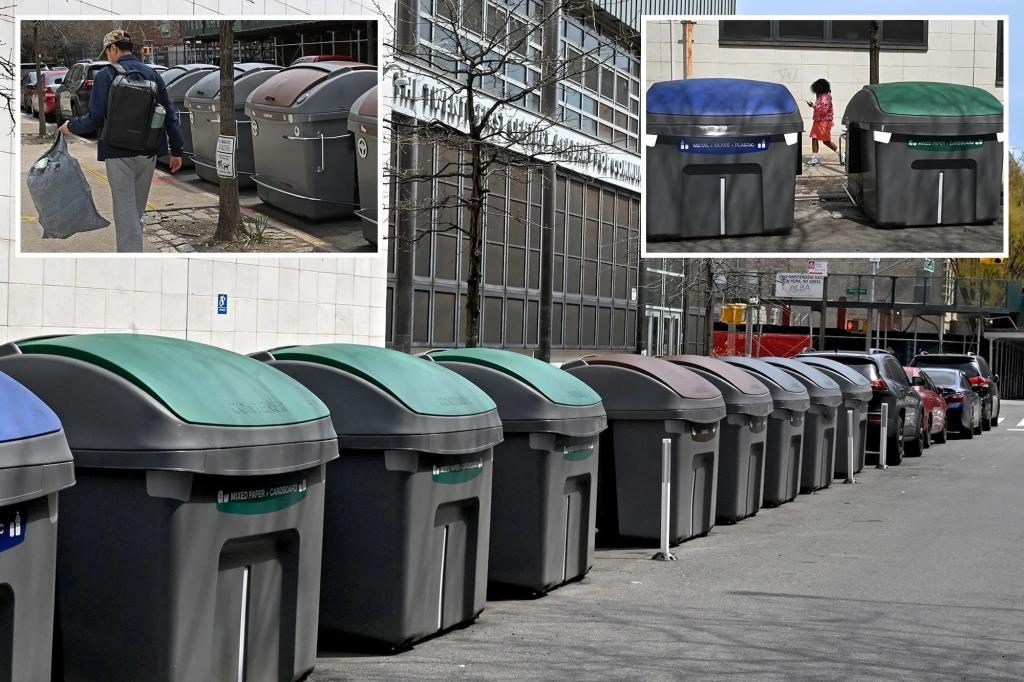
Trash containers replace Brooklyn parking spaces in New York's bin rollout

Trash containers replace Brooklyn parking spaces in New York's bin rollout

Built World New York, NY local

Brooklyn Heights, Fort Greene and Boerum Hill lose curbside spots as 700-plus Empire Bins arrive; citywide plan targets 29,842 parking spaces by 2032

Overview

Updated Nov 2

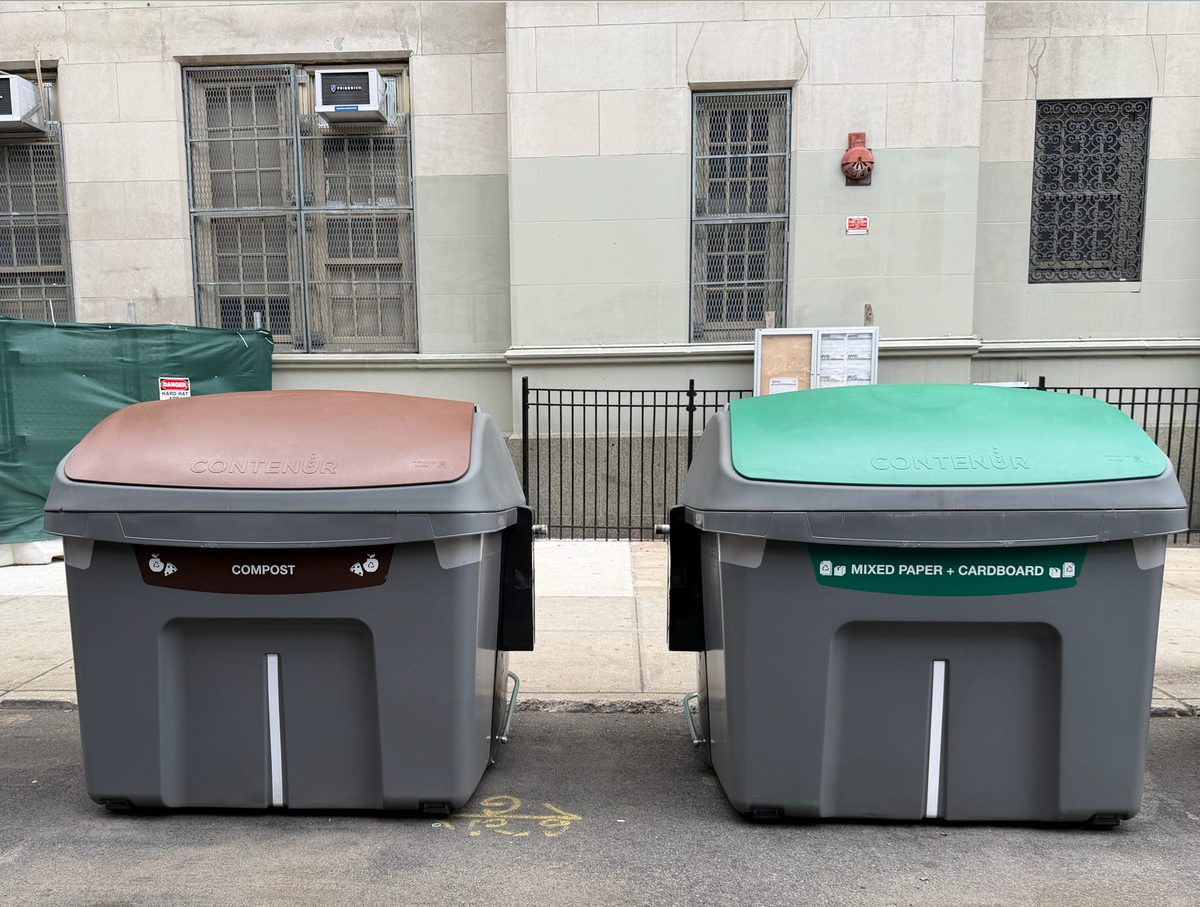
Mayor Zohran Mamdani and the Sanitation Department installed Brooklyn's first residential Empire Bins on Oct. 29, starting a rollout of more than 700 containers in Community District 2. The district includes Brooklyn Heights, Downtown Brooklyn, DUMBO, Fort Greene, Clinton Hill and Boerum Hill; installation is expected to finish by the end of fall.

The bins take curb space. Sanitation officials say they will use about 1.5 percent of parking spots in the district, or roughly 768 of 23,795 spaces, and some blocks could lose up to 10 percent. Citywide, the department projects 29,842 parking spaces will disappear by 2032, with six more districts scheduled for 2027 and full containerization targeted for 2031.

Why it matters

Nearly 30,000 curb parking spots are set to disappear citywide by 2032, changing street space in dense neighborhoods.

Last Monday's email for New York, NY

Sent Nov 9. It carried:

Get next Monday's: one short email a week. Free. Unsubscribe in one click.

Questions about this story

Free account needed to ask — your question is kept and asked for you right after sign-up. Answers are public.

No questions yet — be the first to ask.

Key Indicators

29,842
Parking spaces projected lost by 2032
Citywide figure from DSNY draft environmental impact statement
66,000
Empire Bins planned citywide
Total containers in the containerization plan
1.52%
Share of city's 1.96 million parking spaces lost
Citywide average across all five boroughs
6.42%
Manhattan's parking loss rate
Highest of the five boroughs; Upper East and Upper West Sides each lose about 10%
700+
Empire Bins planned for Brooklyn Community District 2
Installation began Oct. 29 and is expected to finish by the end of fall
768
Parking spaces replaced in Brooklyn district
DSNY estimate for Community District 2, about 1.5% of local spots

Voices

Curated perspectives — historical figures and your fellow readers.

Sign up to generate historical perspectives on this story.

People Involved

Organizations Involved

Timeline

June 2025 October 2026

5 events Latest: October 29th, 2026 · 1 week ago
Tap a bar to jump to that date
  1. Empire Bins replace Brooklyn parking spaces

    Latest Implementation

    Gothamist reports containers occupying curbside spots in Brooklyn Heights, Fort Greene and Boerum Hill.

  2. Mamdani installs Brooklyn's first residential Empire Bins

    Implementation

    The mayor and DSNY installed the first of more than 700 bins planned for Brooklyn Community District 2. The city expects to finish the district by the end of fall and expand to six more districts in 2027.

  3. City study projects 29,842 parking spaces lost

    Report

    DSNY draft environmental impact statement shows 1.52% of city parking gone by 2032; Manhattan hardest hit at 6.42%.

  4. Mayor Mamdani announces plan to expand Empire Bins to six more districts

    Policy

    The April plan adds six community districts in 2027 and keeps a citywide containerization goal for 2031.

  5. West Harlem becomes first fully containerized neighborhood

    Implementation

    1,100 Empire Bins installed, making West Harlem the city's first fully containerized area.

Scenarios

1

Empire Bins installed citywide; 30,000 parking spaces gone

Likely Resolves by End of 2032

Discussed by: DSNY and Mayor Mamdani's office

The program proceeds on schedule. Brooklyn Community District 2 began receiving more than 700 bins on Oct. 29, six more districts are set for 2027, and installations finish across all five boroughs by 2031. Parking losses reach the projected ~30,000 spaces. Opposition remains localized and does not change policy.

2

City Council votes to trim Empire Bins after parking backlash

Possible Resolves by End of 2027

Discussed by: Resident groups in affected districts, some council members

Sustained complaints from car owners in Brooklyn Heights and the Upper East Side push the City Council to amend the mandate. The city reduces required bin counts, exempts certain districts, or slows the timeline. Residents quoted by the New York Post said losing parking for trash is 'not feasible' and 'not realistic.'

3

Empire Bins mandated for smaller buildings after early success

Unlikely Resolves by End of 2028

Discussed by: DSNY officials, Mayor's office

Positive results in West Harlem and Brooklyn prompt the city to extend the mandate beyond buildings over 30 units. Smaller residential buildings are brought into the program, increasing total bins and parking losses beyond current projections. DSNY has noted the program proved 'extremely popular' in West Harlem.

Historical Context

3 moments from history that rhyme with this story — and how they unfolded.

2020-2023

NYC outdoor dining sheds (2020-2023)

During the pandemic, New York City allowed restaurants to claim curbside parking for outdoor dining structures. Wooden and plastic sheds spread across all five boroughs, removing thousands of parking spaces and reshaping street life.

Then

Restaurants survived COVID restrictions, and street dining became a defining feature of pandemic-era New York.

Now

The city made the program permanent in 2023 with seasonal limits and stricter design rules. Some neighborhoods still oppose the sheds, but the trade-off became institutionalized.

Why this matters now

A recent precedent of New York deciding parking spaces should yield to street-level amenities. Shows the backlash cycle and how the city eventually made a curbside reallocation permanent.

2007-2013

NYC protected bike lane expansion (2007-2013)

Under Mayor Michael Bloomberg, the city installed hundreds of miles of bike lanes, removing car parking and traffic lanes. The first protected lane opened on Ninth Avenue in Manhattan in 2007, drawing immediate complaints from merchants.

Then

Some business owners protested that parking loss would kill local commerce.

Now

Bike lanes became standard infrastructure. Ridership grew sharply, and the lanes are now rarely contested as a policy matter.

Why this matters now

Demonstrates how parking removals in New York typically play out: initial anger, then acceptance once the infrastructure exists. Empire Bins may follow a similar arc.

1990s-present

Barcelona's containerized waste collection

Barcelona moved much of its waste collection to street-level and underground containers, eliminating sidewalk bags. The city has since refined container designs for aesthetics and usability, and some cities have sunk receptacles below grade to reduce visual clutter.

Then

Sidewalk bags were eliminated and collection became more efficient.

Now

Containers became a permanent part of the streetscape, though visual impact remains a point of debate.

Why this matters now

NYC is importing this European model. The difference: Barcelona has far lower residential density than New York's heaviest neighborhoods, so bins may feel more prominent block by block.

Sources

(11)