
Pull to refresh
Logo
J&J oral psoriasis drug holds skin clearance through two years in phase 3 trial

J&J oral psoriasis drug holds skin clearance through two years in phase 3 trial

New Capabilities

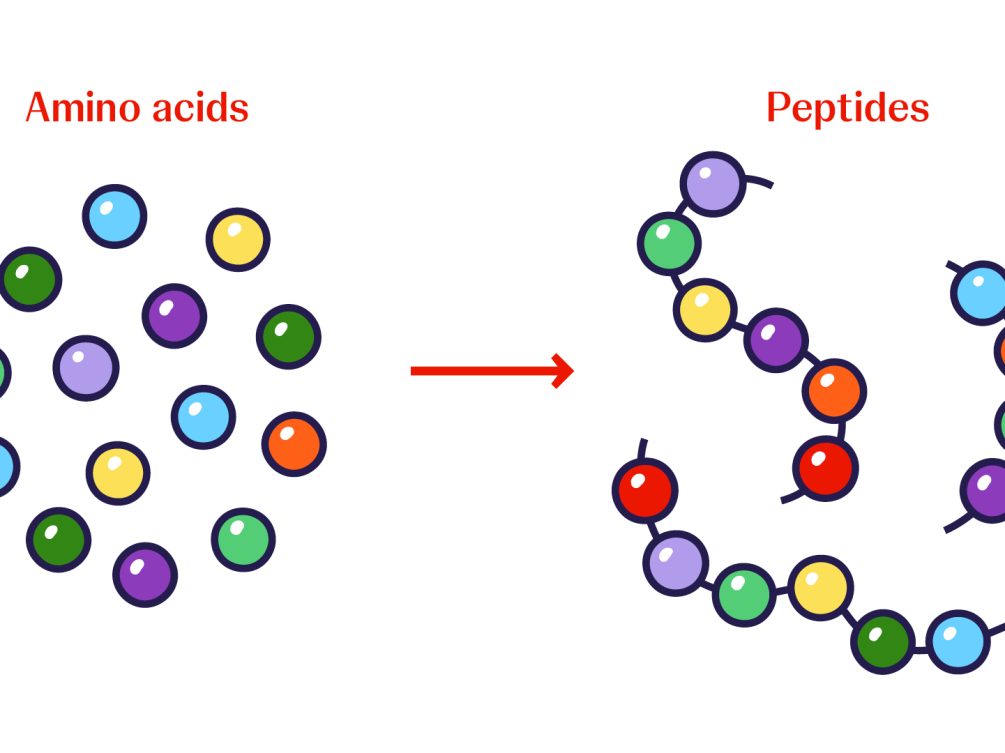
The first oral peptide to block the IL-23 receptor has UK approval and two-year skin-clearance data, and new phase 3 results show it eased psoriatic arthritis and matched J&J's injectable Stelara.

Overview

Updated 4 days ago

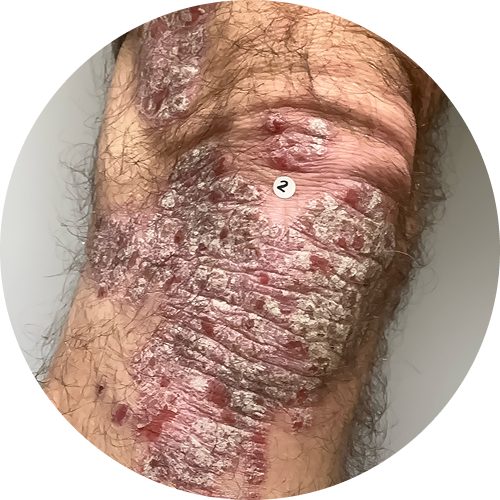
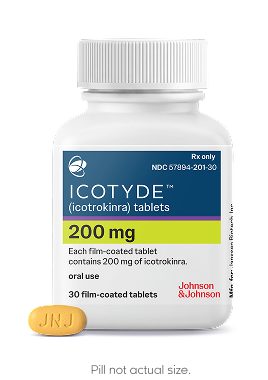
The UK approved ICOTYDE (icotrokinra) on October 23 for adults and adolescents 12 and older weighing at least 40 kilograms. The drug is the first oral peptide that blocks the IL-23 receptor, taken as one 200 mg tablet a day, and is also cleared in the US and European Union. Two-year ICONIC-LEAD data presented October 9 showed at least 72% of patients held at least 90% skin clearance at week 112.

In psoriatic arthritis, 58% of biologic-naive patients on ICOTYDE reached ACR20, a standard joint measure, versus 41% on placebo at week 16. In a November head-to-head psoriasis trial, the pill was no worse than J&J's injectable Stelara at week 28. ICOTYDE is not approved for psoriatic arthritis.

Why it matters

A daily pill that holds severe psoriasis for two years, and now shows joint benefit, gives people who refuse injections a high-efficacy alternative.

Questions about this story

Free account needed to ask — your question is kept and asked for you right after sign-up. Answers are public.

No questions yet — be the first to ask.

Key Indicators

≥72%
PASI 90 response at week 112
Share of ICOTYDE-treated patients with at least 90% skin clearance at two years.
≥70%
Clear or almost clear skin
Patients achieving Investigator's Global Assessment score of 0 or 1 from week 64 through week 112.
≥44%
Complete skin clearance
Patients achieving a PASI 100 score, sustained from week 64 through week 112.
85%
Regained response after retreatment
PASI 90 responders withdrawn from the drug at week 24 who regained response within 24 weeks of restarting.
78%
Sustained itch improvement
Patients reporting clinically meaningful itch relief from week 64 to week 112.
20,000+
US patient starts since launch
Patients who started ICOTYDE in the US, as reported by J&J's innovative medicine chief on the third-quarter earnings call.
58%
ACR20 in psoriatic arthritis
Biologic-naive patients on ICOTYDE reaching ACR20 at week 16, versus 41% on placebo.
55.2%
PASI 90 versus placebo at week 16
ICOTYDE patients reaching at least 90% skin clearance in the ICONIC-ASCEND head-to-head trial, versus 3.6% on placebo.
48.1%
PASI 100 versus Stelara at week 28
Complete skin clearance in a prespecified ICONIC-ASCEND subgroup, versus 31.2% on ustekinumab.

Voices

Curated perspectives — historical figures and your fellow readers.

Sign up to generate historical perspectives on this story.

Organizations Involved

Timeline

2026 November 2026

9 events Latest: 4 days ago
Tap a bar to jump to that date
  1. ICOTYDE shows benefit in psoriatic arthritis

    Latest Clinical trial results

    In the phase 3 ICONIC-PsA 1 trial, 58% of biologic-naive adults with active psoriatic arthritis on ICOTYDE reached ACR20 versus 41% on placebo at week 16. J&J said ICOTYDE is not approved for psoriatic arthritis.

  2. ICOTYDE matches Stelara in head-to-head trial

    Clinical trial results

    ICONIC-ASCEND met its co-primary endpoints: 55.2% of ICOTYDE patients hit PASI 90 versus 3.6% on placebo, and 70.4% reached clear or almost clear skin versus 9.5%. At week 28 the pill was non-inferior to ustekinumab, with a 48.1% versus 31.2% PASI 100 rate in a prespecified subgroup.

  3. UK MHRA approves ICOTYDE

    Regulatory approval

    The UK regulator cleared icotrokinra for moderate-to-severe plaque psoriasis in adults and adolescents 12 and older weighing at least 40 kg, based on four phase 3 trials in 2,500 people.

  4. ICONIC-LEAD two-year results presented

    Conference presentation

    At Fall Clinical Dermatology, J&J showed at least 72% of patients hit PASI 90 and at least 70% reached clear or almost clear skin at week 112.

  5. ICONIC-TOTAL two-year data released

    Data release

    J&J reported durable clearance in scalp, genital, hand/foot and nail psoriasis through week 112, with no new safety signals.

  6. J&J reports first launch numbers for ICOTYDE

    Earnings report

    On its third-quarter call, J&J said more than 20,000 US patients had started ICOTYDE through about 9,000 prescribers, and immunology revenue rose 1.3% to more than $4.2 billion.

  7. European Commission approves ICOTYDE

    Regulatory approval

    The European Commission granted marketing authorization for ICOTYDE in adults and adolescents with moderate-to-severe plaque psoriasis.

  8. FDA approves ICOTYDE for plaque psoriasis

    Regulatory approval

    The U.S. FDA approved icotrokinra (ICOTYDE) for moderate-to-severe plaque psoriasis in adults and adolescents 12 years and older weighing at least 40 kg.

  9. Randomized-withdrawal analysis published in JAAD

    Publication

    The Journal of the American Academy of Dermatology published findings that continued ICOTYDE maintained response better than withdrawal from weeks 24 to 52.

Scenarios

1

ICOTYDE reaches blockbuster sales status

Possible Resolves by End of 2027

Discussed by: Pharmaceutical market analysts tracking J&J's Innovative Medicine portfolio

If the two-year durability data convert physicians who currently prescribe injectable biologics, ICOTYDE could become a major revenue driver. The oral dosing and strong efficacy create a plausible path to annual sales above $1 billion, the standard blockbuster threshold. J&J's quarterly earnings will be the scoreboard.

2

FDA approves ICOTYDE for psoriatic arthritis

Possible Resolves by End of 2028

Discussed by: Dermatology and rheumatology observers following the ICONIC program

Psoriasis and psoriatic arthritis often travel together, and a drug that blocks IL-23 in the skin is a natural candidate for the joint disease. If J&J files and wins an expanded indication, ICOTYDE would compete directly with injectable IL-23 biologics already approved for psoriatic arthritis.

3

Rival oral therapy posts head-to-head superiority

Uncertain Resolves by End of 2028

Discussed by: Competitors including Bristol Myers Squibb, whose oral TYK2 inhibitor Sotyktu already treats plaque psoriasis

ICOTYDE's oral advantage could narrow if a competitor's drug outperforms it in a head-to-head trial. Sotyktu (deucravacitinib) is the leading established oral rival, and other companies have oral programs targeting the same pathway. A decisive superiority result would reshape prescribing.

4

ICOTYDE matches Stelara in J&J's own head-to-head trial

Uncertain Resolves by End of 2027

Discussed by: Johnson & Johnson executives and dermatology researchers following the ICONIC program

In the phase 3 ICONIC-ASCEND trial, ICOTYDE met non-inferiority to Stelara (ustekinumab) at week 28, with numerically higher skin-clearance rates and a 48.1% versus 31.2% PASI 100 result in a prespecified subgroup. J&J now argues a once-daily pill can stand in for an established biologic.

Historical Context

3 moments from history that rhyme with this story — and how they unfolded.

September 2009

Stelara validates the IL-23 pathway (2009)

The FDA approved ustekinumab (Stelara), Johnson & Johnson's injectable antibody that blocks the shared IL-12/23 pathway, for moderate-to-severe plaque psoriasis. It was the first widely used drug targeting this inflammatory pathway.

Then

Stelara became a standard biologic for psoriasis and later for psoriatic arthritis and Crohn's disease.

Now

The IL-23 axis was confirmed as a central driver of psoriatic inflammation, setting up the next generation of more selective IL-23 inhibitors.

Why this matters now

ICOTYDE attacks the same pathway Stelara helped validate, but with an oral peptide instead of an injected antibody, a structural shift in how the pathway can be blocked.

March 2014

Otezla opens oral psoriasis treatment (2014)

The FDA approved apremilast (Otezla), an oral PDE4 inhibitor, first for psoriatic arthritis and then for plaque psoriasis, as the first oral non-biologic for the disease.

Then

Otezla gave patients an injection-free option but with modest efficacy, falling well short of biologic response rates.

Now

It proved oral drugs could win psoriasis prescriptions yet left the high-efficacy end of the market to injectables.

Why this matters now

ICOTYDE's data suggest the oral segment can now reach the efficacy that previously required injections, the gap Otezla never closed.

September 2022

Sotyktu brings the first oral targeted therapy (2022)

The FDA approved Bristol Myers Squibb's deucravacitinib (Sotyktu), an oral TYK2 inhibitor, for moderate-to-severe plaque psoriasis. It was the first oral drug to block TYK2, a kinase that carries signals from IL-23 and IL-12.

Then

Sotyktu became the leading oral alternative to injectable biologics, with response rates above placebo but below the top IL-17 and IL-23 antibodies.

Now

It established that oral targeted therapy could compete for first-line systemic use, creating the market ICOTYDE now enters.

Why this matters now

ICOTYDE is the direct challenger to Sotyktu in the oral targeted space, and J&J is using its two-year durability data to argue the pill holds its effect.

Sources

(18)