
Pull to refresh
Logo
NASCAR kills the knockout playoffs after 12 years of controversy

NASCAR kills the knockout playoffs after 12 years of controversy

Rule Changes

Back-to-back championship debacles force NASCAR's biggest postseason change since 2004

January 13th, 2026: Drivers and Legends Rally Behind Chase Return

Overview

Updated May 20

NASCAR just blew up its most controversial championship system. After Joey Logano won the 2024 title with the worst average finish in Cup Series history, and Kyle Larson 'stole' the 2025 crown without leading a single lap, the sanctioning body abandoned its elimination-style playoffs. They're returning to 'The Chase'—the 10-race postseason format last used in 2013.

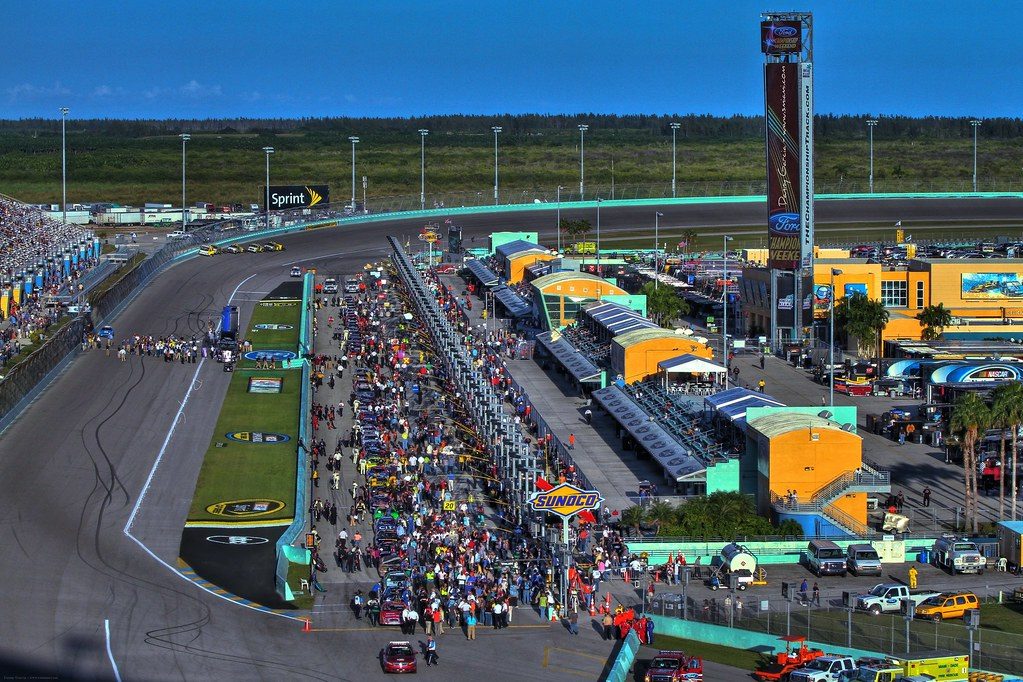
The new system rewards consistency over chaos. Gone are nerve-wracking eliminations every three races and the winner-take-all finale that crowned champions who couldn't crack the top 10 on most Sundays—the most significant championship overhaul since Brian France invented the 2004 playoffs. Starting in 2026, the top 16 drivers accumulate points across 10 races, with whoever has the most at Homestead-Miami winning the title.

Questions about this story

Free account needed to ask — your question is kept and asked for you right after sign-up. Answers are public.

No questions yet — be the first to ask.

Key Indicators

12
Years of elimination playoffs
The knockout format lasted from 2014 through 2025 before being scrapped
17.1
Logano's 2024 average finish
The worst average finish for any Cup Series champion in the modern era
55
New points for a win
Up from 40, the biggest win-bonus increase in NASCAR history
52.8%
Fans wanting full-season points
A 2025 poll showed only 8.5% wanted to keep the elimination format

Voices

Curated perspectives — historical figures and your fellow readers.

Ever wondered what historical figures would say about today's headlines?

Sign up to generate historical perspectives on this story.

People Involved

Organizations Involved

Timeline

January 2004 January 2026

10 events Latest: January 13th, 2026 · 8 months ago
Tap a bar to jump to that date
  1. Drivers and Legends Rally Behind Chase Return

    Latest Public Reaction

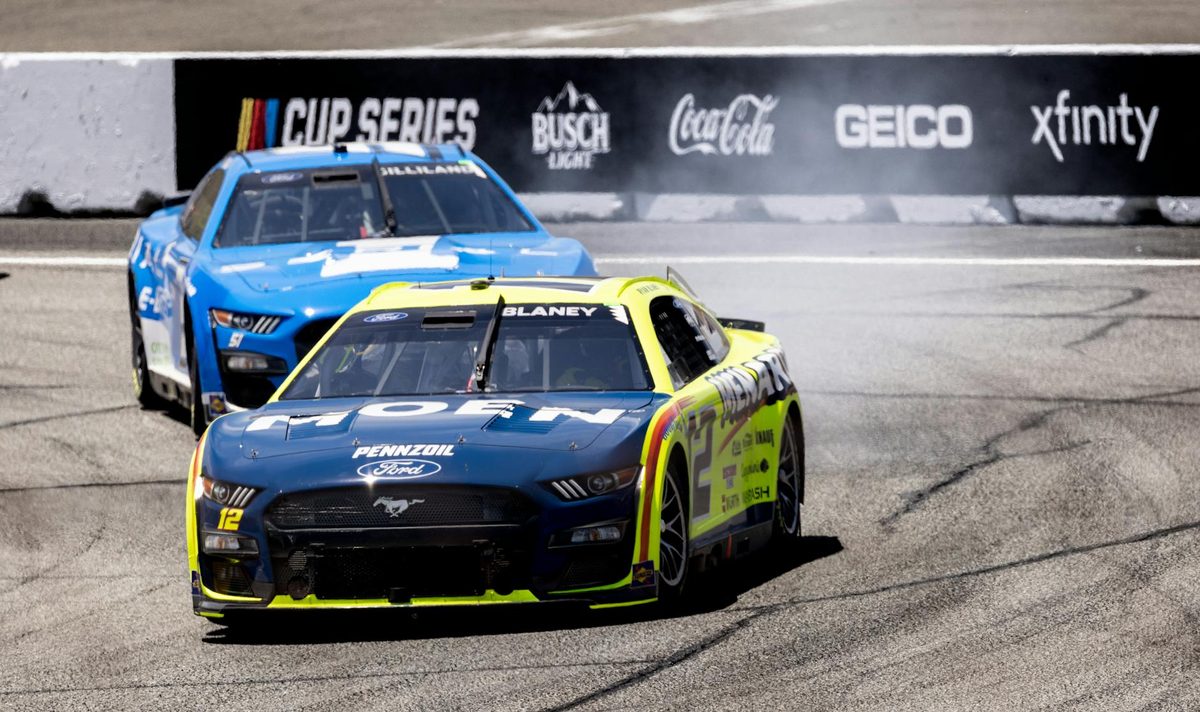
    Chase Elliott, Ryan Blaney, Chase Briscoe, and Dale Earnhardt Jr. publicly endorse the format at NASCAR event. Elliott calls it 'great piece of middle ground.' Dale Jr.: 'This is as close to a full 36-race format as you can get without going all the way.'

  2. NASCAR Returns to 'The Chase'

    Format Change

    NASCAR announces elimination playoffs are dead. New system: 16 drivers, 10 races, no eliminations, cumulative points. Race wins jump from 40 to 55 points. 'Win and you're in' abolished.

  3. Commissioner Phelps Resigns

    Leadership

    Steve Phelps exits NASCAR after 20 years, one month after settlement in 23XI/Front Row Motorsports lawsuit. No successor named.

  4. Larson 'Steals' Championship From Hamlin

    Controversy

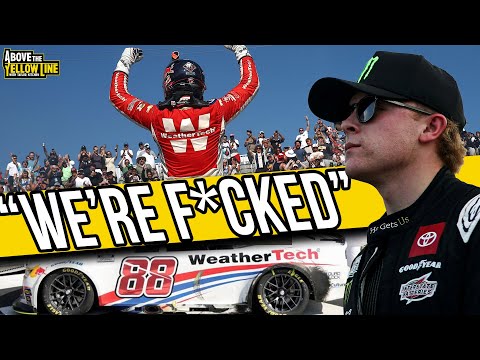
    Kyle Larson wins title without leading a lap. Denny Hamlin leads 208 laps but late caution from teammate Byron's flat tire forces restart. Hamlin: 'I never want to race a car again.'

  5. Fan Poll Shows 53% Want Full-Season Points

    Public Opinion

    The Athletic's Jeff Gluck poll of 30,300 fans finds 52.8% want 36-race season-long points, 27.7% want Chase return. Only 8.5% want to keep elimination playoffs.

  6. Championship Finale Returns to Homestead

    Announcement

    NASCAR announces rotating championship model. Homestead-Miami replaces Phoenix for 2026 finale after hosting from 2002-2019.

  7. NASCAR Announces Format Review

    Governance

    NASCAR confirms elimination playoffs will continue for 2025 but forms industry-wide Playoff Committee to study changes for 2026.

  8. Logano Wins Worst-Average-Finish Championship

    Controversy

    Joey Logano claims third title despite 17.1 average finish—the worst in modern era. Kyle Larson's six wins aren't enough. Criticism of format reaches fever pitch.

  9. Elimination Playoffs Introduced

    Format Change

    NASCAR announces four-round elimination system with 16 drivers. Four eliminated every three races until Championship 4 shootout at finale. 'Win and you're in' guarantees playoff spots.

  10. Brian France Creates 'The Chase'

    Format Change

    NASCAR introduces its first playoff system: top 10 drivers (plus anyone within 400 points) compete over final 10 races with points reset. Matt Kenseth's one-win 2003 championship forced the issue.

Scenarios

1

Chase Delivers Dream Champion, Format Vindicated

Likely

Discussed by: NBC Sports, Racing News, format change supporters

A driver who wins the most races and maintains consistency across the 10-race Chase claims the 2026 title. The result validates NASCAR's reversal and silences remaining critics of the format change. Fan engagement and TV ratings stabilize or improve during the postseason.

2

Championship Locked Up Early, Drama Fizzles

Possible

Discussed by: Critics of original Chase format, Jeff Gluck (The Athletic)

A dominant driver builds an insurmountable points lead with several races remaining, recreating the 'clinch before finale' problem that killed full-season racing in 2003. NASCAR faces renewed calls to add eliminations or increase win bonuses even further.

3

Close Title Fight Produces Controversial Finish Anyway

Possible

Discussed by: Denny Hamlin (podcast commentary), motorsport analysts

The 2026 finale features a close points battle, but a late-race crash, penalty, or mechanical failure hands the title to someone other than the perceived best driver. Critics argue the format still rewards luck over performance, just spread across more races.

4

Full-Season Points Movement Gains Momentum

Uncertain

Discussed by: Mark Martin, traditional racing advocates, 53% of polled fans

The Chase format proves a stepping stone. If 2026 results still feel arbitrary to the 53% who wanted full-season points, pressure mounts for NASCAR to eliminate playoffs entirely and return to crowning the driver with the most points across all 36 races.

5

Logano Phenomenon Repeats Under New Format

Possible

Discussed by: Statistical analysts, skeptical fans on social media

NASCAR statistician applies 2026 format to past seasons and finds Joey Logano would have won four championships instead of three. Critics argue the Chase still allows boom-bust drivers to claim titles over consistent performers, just across 10 races instead of one.

Historical Context

3 moments from history that rhyme with this story — and how they unfolded.

February-November 2003

Matt Kenseth's One-Win Championship (2003)

Matt Kenseth won a single race all season—at Las Vegas in March—then coasted to the Cup championship on consistency. Ryan Newman won eight races but finished sixth in points. The 'boring' title chase alienated fans and alarmed NASCAR leadership.

Then

Kenseth was crowned champion, but ratings slumped and fans complained.

Now

NASCAR created The Chase in 2004 specifically to prevent one-win champions. Brian France called it necessary to 'spice up' the format.

Why this matters now

The 2003 championship created NASCAR's playoff era. The 2026 format attempts to split the difference—keeping postseason drama while eliminating the one-race finale that produced champions like 2024's Logano with the worst average finish ever.

November 2014

Formula 1 Double Points Finale (2014)

F1 introduced double points for its Abu Dhabi season finale during the heated Lewis Hamilton-Nico Rosberg title fight. The rule was widely condemned as artificial and gimmicky, designed to manufacture drama rather than reward season-long performance.

Then

Hamilton won the title anyway, but the format faced immediate backlash from teams, drivers, and fans.

Now

F1 abandoned double points after one season. It became a cautionary tale for manufactured championship drama.

Why this matters now

Like NASCAR's elimination playoffs, F1's double-points experiment prioritized finale drama over consistency. Both sports ultimately retreated when the artificial stakes produced outcomes fans viewed as illegitimate.

February 2023

IndyCar Drops Double Points for Indy 500 (2023)

IndyCar eliminated double points for the Indianapolis 500 after nine seasons. The rule had been criticized by A.J. Foyt ('a gimmick') and frustrated championship contenders who saw title hopes destroyed by single-race misfortune at the Brickyard.

Then

Josef Newgarden won the 2023 Indy 500 but didn't win the championship—exactly what the change was designed to allow.

Now

IndyCar returned to equal points for all races, prioritizing full-season performance over individual event weight.

Why this matters now

IndyCar's reversal mirrors NASCAR's 2026 decision. Both series experimented with formats that elevated specific races, then retreated when the artificial importance distorted championships.

Sources

(22)