
Development of DART Tsunami Buoys (1995-2003)
After devastating 1990s tsunamis, NOAA's Pacific Marine Environmental Laboratory spent eight years developing Deep-ocean Assessment and Reporting of Tsunami (DART) buoys. The system uses seafloor pressure sensors connected via acoustic modem to surface buoys that relay data through satellites. Multiple designs failed before an operational prototype emerged in October 2003. The first experimental forecast came in November 2003, correctly predicting a 0.3-meter Hawaiian tsunami and avoiding unnecessary evacuation.
Proved real-time deep-ocean tsunami detection was possible, solving a problem that had stymied scientists for decades.
DART became the backbone of global tsunami warning systems, but with inherent limitations: high false-alarm thresholds, ~5% data loss, coverage gaps, and vulnerability to rough seas.
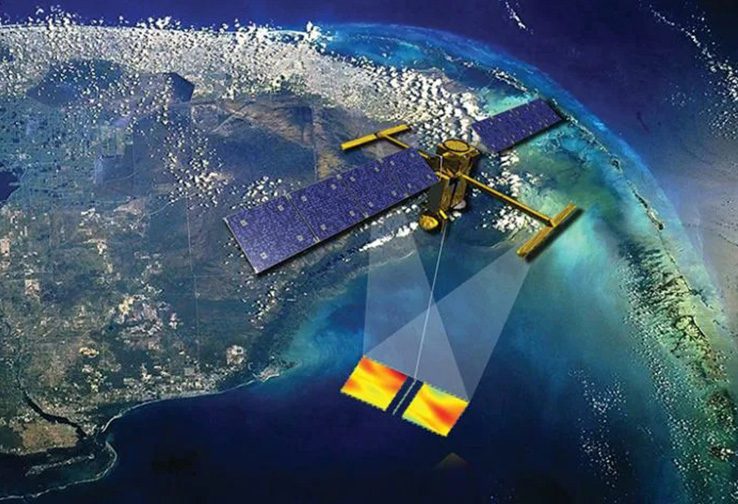
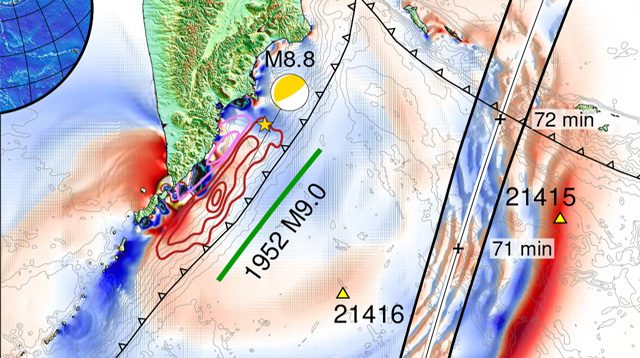
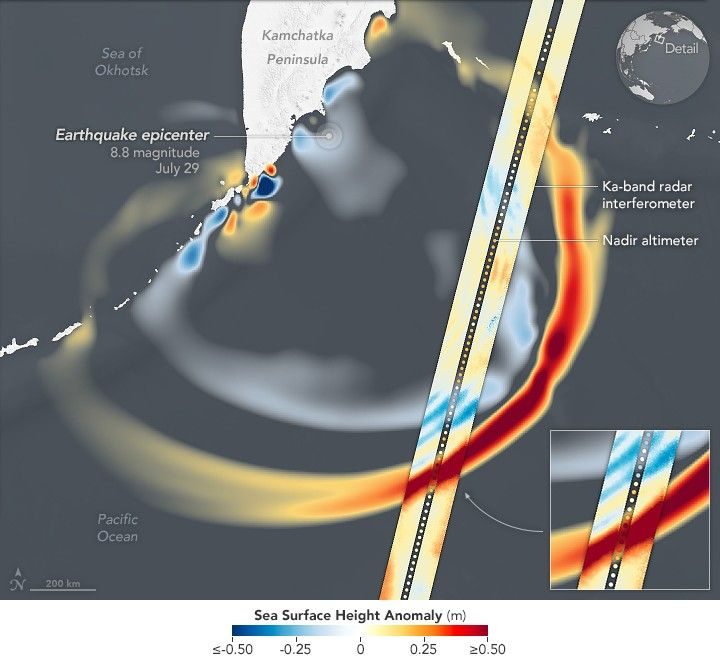
SWOT doesn't replace DART—it complements it by filling spatial gaps and revealing wave behavior buoys can't see. The question is whether satellites can overcome their own limitations (revisit time, data latency) to become operational tools rather than just research instruments.