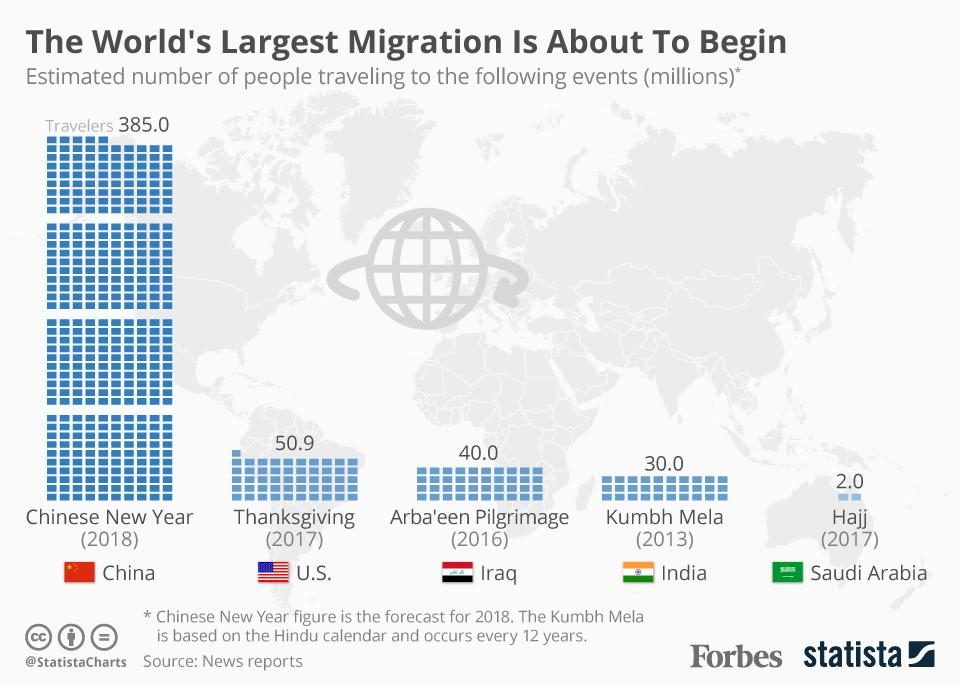
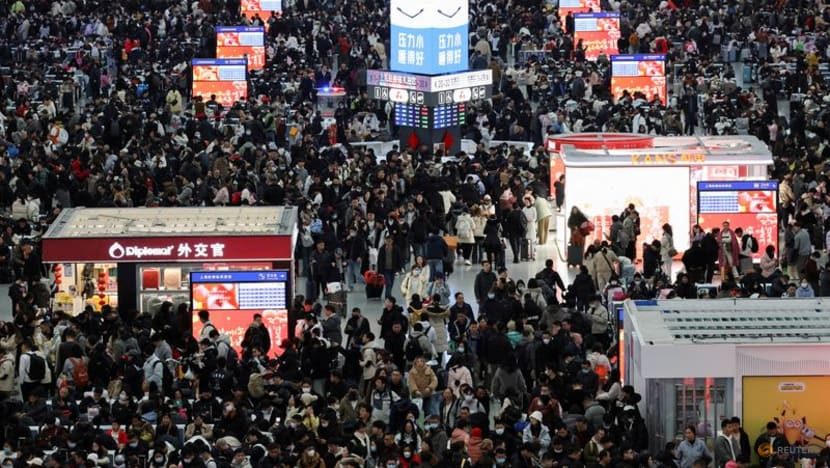
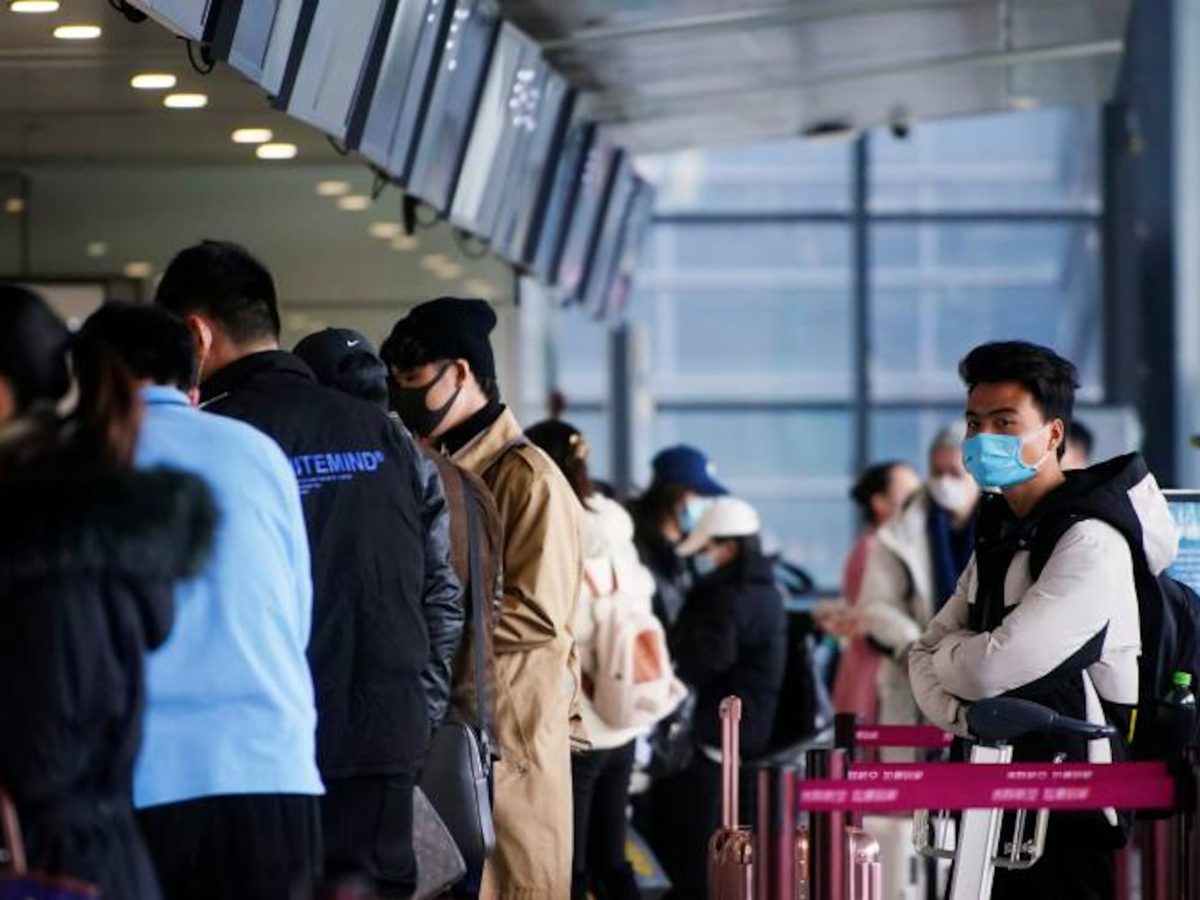
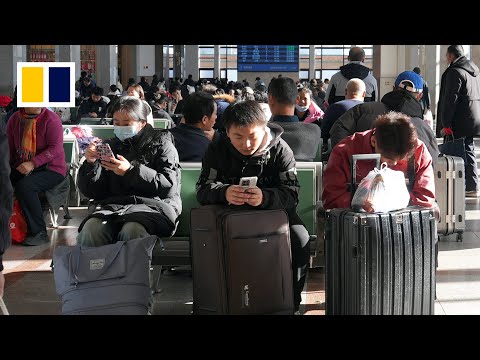
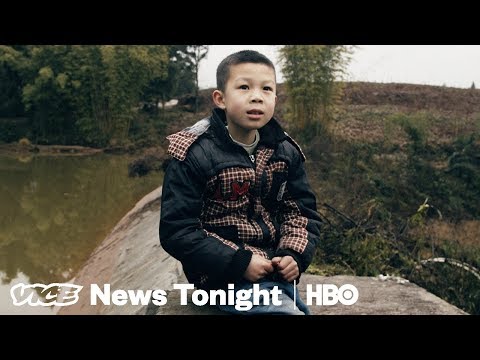
Every winter, China empties its cities. Some 9 billion passenger journeys—more than the total global population—occur over 40 days as hundreds of millions of migrant workers return to their home villages for Spring Festival. This is Chunyun, the largest annual human migration on Earth.
The Spring Festival has evolved from ancient agrarian rituals into a cultural and economic force. Inscribed on UNESCO's Intangible Cultural Heritage list in December 2024, it shutters factories, spikes consumer spending by hundreds of billions of yuan, and draws over a billion viewers to the world's most-watched annual television broadcast. It transforms Chinese society and global supply chains that depend on Chinese manufacturing.
For businesses worldwide that source from Asia, it creates a predictable six-to-eight-week disruption that requires months of advance planning. Authorities expect the 2026 holiday—February 15-23, nine consecutive days—to bring record-breaking travel and consumption amid stimulus policies taking effect.
Questions about this story
Free account needed to ask — your question is kept and asked for you right after sign-up. Answers are public.
No questions yet — be the first to ask.
Key Indicators
9.5 billion
Passenger journeys (2026)
Record-high projected trips during the 40-day Chunyun period, announced January 29, 2026
540 million
Rail trips (2026)
Expected railway passenger trips during Spring Festival 2026, up 5% from 2025
¥360 million
Consumption subsidies
Vouchers and subsidies distributed through cultural/tourism campaign launched January 29
1.29 billion
Gala viewers
Peak viewership for CCTV Spring Festival Gala, the world's most-watched annual broadcast
Images from Openverse under Creative Commons licenses.
Videos from YouTube.
Voices
Curated perspectives — historical figures and your fellow readers.
James Baldwin
(1924-1987) ·Civil Rights · politics
Fictional AI pastiche — not real quote.
"I find it rather extraordinary that we call this a migration when these workers are merely returning home—as though the factory floor were their natural habitat and the village an exotic destination. Perhaps we might ask ourselves what kind of prosperity requires hundreds of millions to live perpetually elsewhere, and what it costs a society to measure its strength by how efficiently it can suspend its own humanity once a year."
0% found this insightful
Dorothy Parker
(1893-1967) ·Jazz Age · wit
Fictional AI pastiche — not real quote.
"Nine billion journeys to prove that even in the age of efficiency, we still can't automate the need to tell our mothers we're eating enough—though I notice the factories close more reliably than the heart."
0% found this insightful
Ever wondered what historical figures would say about today's headlines?
Sign up to generate historical perspectives on this story.
27 events
Latest: March 13th, 2026 · 6 months ago
Showing 8 of 27
JK to step
Tap a bar to jump to that date
Jump to
March 2026
2026 Chunyun Period Ends
LatestTravel
The 40-day travel rush officially concludes. Factories return to full capacity over the following weeks as workers complete their return journeys.
Lantern Festival Concludes Celebrations
Cultural
The first full moon of the lunar year marks the Lantern Festival, ending the 15-day Spring Festival celebration period.
February 2026
Year of the Fire Horse Begins
Cultural
Chinese New Year 2026 marks the start of the Year of the Fire Horse, the seventh zodiac sign symbolizing ambition, speed, and transformative energy.
New Year's Eve: Gala Broadcast and Reunion Dinners
Cultural
Families across China gather for reunion dinners while watching the Spring Festival Gala. Over a billion viewers expected as the Year of the Snake concludes.
Nine-Day Public Holiday Starts
Government
China's official Spring Festival public holiday begins, running through February 23. Government offices, banks, and non-essential services close nationwide.
Factory Shutdowns Begin
Economic
Complete manufacturing shutdown period begins across China, with most factories closing through February 25. Global supply chains enter disruption phase.
Travel Rush Enters Peak Phase
Travel
Chunyun migration intensifies as Chinese New Year approaches in two weeks. High-speed rail network operating over 14,000 trains daily on peak days with 5.3% capacity increase year-over-year. Highway network expanded to 71,500 EV charging points.
2026 Chunyun Period Officially Begins
Travel
The 40-day Spring Festival travel rush officially starts, running through March 13. Cross-regional travel expected to reach record highs.
Chunyun 2026 Officially Begins
Travel
The 40-day Spring Festival travel rush officially starts with 9.5 billion inter-regional trips expected through March 13. Railway sector projecting 540 million trips, civil aviation 95 million, with self-driving accounting for 80% of total. First trains depart Beijing amid festive atmosphere.
CMG Completes Third Spring Festival Gala Rehearsal
Cultural
China Media Group successfully completes third and final rehearsal for 2026 Spring Festival Gala, two weeks before broadcast. Rehearsal debuts four sub-venues in Harbin, Yiwu, Hefei, and Yibin alongside main Beijing venue. Program themed 'The Steed Gallops, Momentum Unstoppable' features AI-generated visuals, extended-reality stage design, and returning robots showcasing technological advances.
January 2026
Shanghai Launches Spring Festival Gift Packs
Economic
Shanghai unveils discounted tickets, themed activities, and cultural offerings across 60 popular city attractions as part of consumption stimulus efforts. Combined with earlier voucher programs, over 100 million yuan in consumer benefits now available in Shanghai.
China Launches Month-Long Consumption Campaign
Economic
Government unveils cultural and tourism campaign running through early March with 30,000 activities nationwide and ¥360 million ($51.6 million) in consumption vouchers and subsidies. Campaign targets traditional customs, performances, exhibitions, and cross-regional tourism to boost spending.
Record 9.5 Billion Passenger Trips Projected
Statistics
Officials announce Chunyun 2026 expected to reach record-high 9.5 billion inter-regional passenger trips during the 40-day period, surpassing 2025's 9.02 billion. Railway expected to handle 540 million trips, civil aviation 95 million, with self-driving accounting for 80% of total travel.
Shanghai Disney Resort Begins Year of Horse Celebrations
Cultural
Shanghai Disney Resort kicks off Chinese New Year festivities running through March 3, featuring Bullseye from Toy Story making his China debut and Mickey and Friends in new outfits with horse motifs and prosperity symbols. Hong Kong Disneyland begins celebrations January 30.
National Railway Schedule Optimization Takes Effect
Logistics
China implements nationwide railway timetable adjustment, operating 12,130 scheduled passenger trains—243 more than previous schedule—to enhance connectivity ahead of Chunyun rush.
Government Launches Consumption Stimulus Campaign
Economic
Ministry of Commerce and local governments launch 'happy shopping for the Spring Festival' campaign targeting food, accommodation, transport, travel, shopping and entertainment sectors. Early indicators show domestic flight bookings up 21% year-over-year.
CMG Completes Second Spring Festival Gala Rehearsal
Cultural
China Media Group successfully completes second rehearsal for the 2026 Spring Festival Gala. Program features original songs about family bonds, farmers' choir celebrating harvest, Taiwan region songs, and returning dancing robots showcasing China's technological advances.
Pre-Holiday Migration Accelerates
Travel
Three weeks before Spring Festival, factory workers begin returning to home provinces as the Chunyun migration intensifies. Manufacturing output declines as facilities prepare for closure.
2026 Chunyun Ticket Sales Begin
Logistics
China Railway begins selling tickets for the 2026 Spring Festival travel rush, with 539 million rail trips expected—a 5% increase over 2025.
CMG Holds First Spring Festival Gala Rehearsal
Cultural
China Media Group completes first rehearsal for 2026 Spring Festival Gala with 30 days until Chinese New Year, marking key production milestone.
2026 Spring Festival Gala Promo Released
Cultural
China Media Group releases promotional video for the 2026 Spring Festival Gala, which will mark the Year of the Horse.
February 2025
2025 Chunyun Records 9.02 Billion Trips
Statistics
China's 2025 Spring Festival travel rush sets a record with 9.02 billion passenger trips over 40 days, including 510 million by rail and 90.2 million by air.
January 2025
Year of the Snake Begins
Cultural
Chinese New Year 2025 marks the start of the Year of the Wood Snake, the sixth animal in the zodiac cycle, associated with wisdom and intuition.
December 2024
UNESCO Inscribes Spring Festival
International
UNESCO adds Spring Festival to the Representative List of Intangible Cultural Heritage of Humanity during its 19th session in Paraguay. China reaches 44 inscribed items, more than any country.
December 2023
United Nations Recognizes Lunar New Year Holiday
International
The UN General Assembly designates Lunar New Year as an official UN holiday, acknowledging the festival's global significance.
February 1983
First CCTV Spring Festival Gala
Cultural
China Central Television broadcasts the first Spring Festival Gala, creating a new tradition that would become the world's most-watched annual program.
January 1600
Origins in Shang Dynasty
Historical
Spring Festival traditions traced to sacrificial ceremonies honoring gods and ancestors during the Shang Dynasty (1600-1046 BCE), establishing the lunar new year celebration.
Scenarios
1
Spring Festival Tourism Spending Sets New Records
Likely
Discussed by: China Tourism Academy, Ministry of Commerce
Domestic tourism expenditure during the 2026 holiday exceeds 700 billion yuan as government consumption stimulus measures take effect. Outbound tourism surges as visa restrictions ease with more countries, while 'ice and snow tourism' to northern provinces continues its post-Olympic growth. Strong holiday spending signals improved consumer confidence.
2
Supply Chain Disruptions Extend into Late March
Possible
Discussed by: Maersk, SEKO Logistics, CH Robinson
Labor shortages persist longer than expected as workers seek new opportunities rather than returning to previous factories. Combined with ongoing shipping route disruptions and tariff uncertainties, importers face extended delays. Some businesses accelerate 'China+1' sourcing strategies, diversifying to Vietnam and India.
Following the UNESCO heritage inscription, Western brands increase investment in Lunar New Year campaigns targeting both Chinese consumers and the global diaspora. Apple, Nike, and luxury houses release Year of the Horse limited editions, while streaming platforms add Lunar New Year content categories.
4
Consumption Disappoints Amid Economic Concerns
Possible
Discussed by: South China Morning Post, Bloomberg, NBC News
Despite government stimulus, consumer confidence remains subdued amid property sector difficulties and U.S.-China trade tensions. Holiday spending grows only marginally, falling short of targets. Economists debate whether structural changes in consumer behavior represent a permanent shift in China's growth model.
Historical Context
3 moments from history that rhyme with this story — and how they unfolded.
1 of 3
February 1983
First CCTV Spring Festival Gala (1983)
In 1983, China Central Television broadcast its first Spring Festival Gala, a variety show intended to fill the hours while families made dumplings on New Year's Eve. The debut featured simple sets and relatively modest production values, but it created an instant tradition in a country where televisions were just becoming household items.
Then
The broadcast became an immediate cultural phenomenon, with families across China making the gala part of their New Year's Eve ritual.
Now
The gala grew into the world's most-watched annual broadcast, reaching 1.29 billion viewers by 2022. It became a barometer of Chinese popular culture and government messaging, launching countless performers' careers.
Why this matters now
The gala transformed Spring Festival from a purely familial occasion into a shared national media experience, setting the template for how the holiday is celebrated today across China and the diaspora.
2 of 3
August 2008 - ongoing
China's High-Speed Rail Expansion (2008-Present)
China opened its first high-speed rail line between Beijing and Tianjin in 2008. Over the following 15 years, the network expanded to over 42,000 kilometers—more than the rest of the world combined—connecting all major cities and dramatically increasing Chunyun capacity.
Then
Rail trips during Spring Festival increased from under 200 million to over 500 million annually, transforming the migration logistics.
Now
The infrastructure enabled a more mobile workforce and larger-scale family reunions, while reducing reliance on overcrowded conventional trains and buses.
Why this matters now
The rail expansion explains how China can move 9 billion passenger trips in 40 days without complete gridlock—massive infrastructure investment made the modern Chunyun possible.
3 of 3
January 2020 - January 2023
COVID-19 Disrupts Spring Festival (2020-2022)
The outbreak of COVID-19 in Wuhan coincided with the 2020 Spring Festival travel rush. Authorities locked down Wuhan on January 23, 2020, just two days before New Year's Day, trapping millions who had already traveled. Subsequent years saw travel restrictions and mandatory quarantines that suppressed Chunyun to a fraction of normal levels.
Then
Chunyun 2020-2022 saw travel drop by 60-70% as millions stayed put rather than risk quarantine or spreading the virus to elderly relatives.
Now
The 2023 and 2024 festivals saw explosive rebound, with pent-up demand driving record tourism spending. Remote work adoption during COVID permanently changed some holiday patterns.
Why this matters now
The COVID disruption demonstrated both the scale of normal Spring Festival travel and its cultural non-negotiability—even a pandemic could only delay, not eliminate, the migration urge.