
Pull to refresh
Logo
Metro breaks ground on Vermont bus rapid transit line

Metro breaks ground on Vermont bus rapid transit line

Built World Los Angeles, CA local

Dedicated lanes to cut travel times by up to 24% on LA's busiest bus corridor

Overview

Updated Oct 25

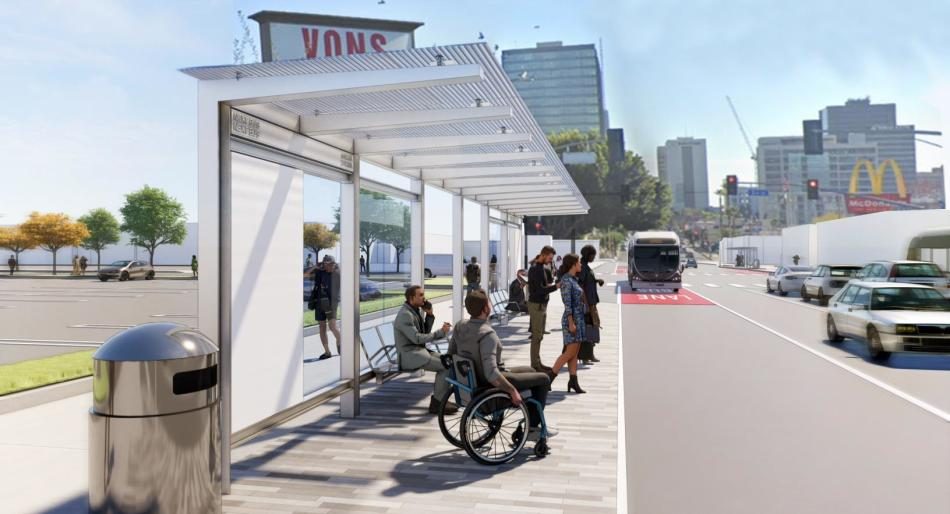
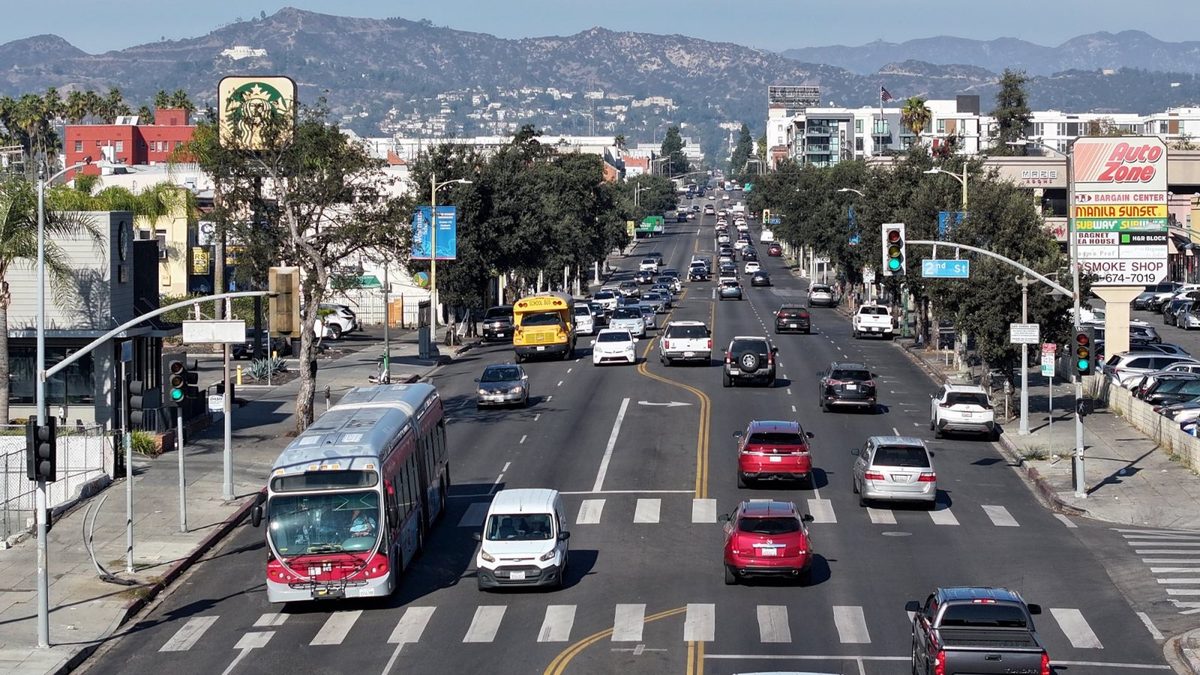
Metro says nighttime paving and temporary striping on Vermont Avenue begin in October, the first visible work on a 12.4-mile bus rapid transit line. Dedicated bus lanes will run from 120th Street in Athens to Hollywood Boulevard in Los Feliz.

The agency aims to open the line before the 2028 Olympics. Metro projects 66,200 daily riders, up from about 36,000 now, and end-to-end trips falling from 70 minutes to roughly 53. The route links four rail lines and 26 rebuilt stations.

Why it matters

The bus line promises to cut a 70-minute ride to 53 minutes for 36,000 daily riders.

Last Monday's email for Los Angeles, CA

Sent Nov 9. It carried:

Get next Monday's: one short email a week. Free. Unsubscribe in one click.

Questions about this story

Free account needed to ask — your question is kept and asked for you right after sign-up. Answers are public.

No questions yet — be the first to ask.

Key Indicators

$149.9M
Federal grant amount
Maximum Capital Investment Grant from the Federal Transit Administration, awarded September 1, 2026.
12.4 miles
Corridor length
From Hollywood Boulevard in Los Feliz to 120th Street in Athens.
66,200
Projected daily riders
Up from roughly 36,000 current trips; would make it the busiest BRT in the U.S.
24%
Expected travel time cut
End-to-end trip drops from 70 to 53 minutes with dedicated lanes and signal priority.
$414M
Project cost
The mayor's office described it as a nearly $414 million project, paid for with federal, state and Measure M sales tax money.

Voices

Curated perspectives — historical figures and your fellow readers.

Sign up to generate historical perspectives on this story.

People Involved

Organizations Involved

Timeline

November 2016 October 2026

7 events Latest: October 21st, 2026 · 3 weeks ago
Tap a bar to jump to that date
  1. Groundbreaking ceremony

    Latest Construction

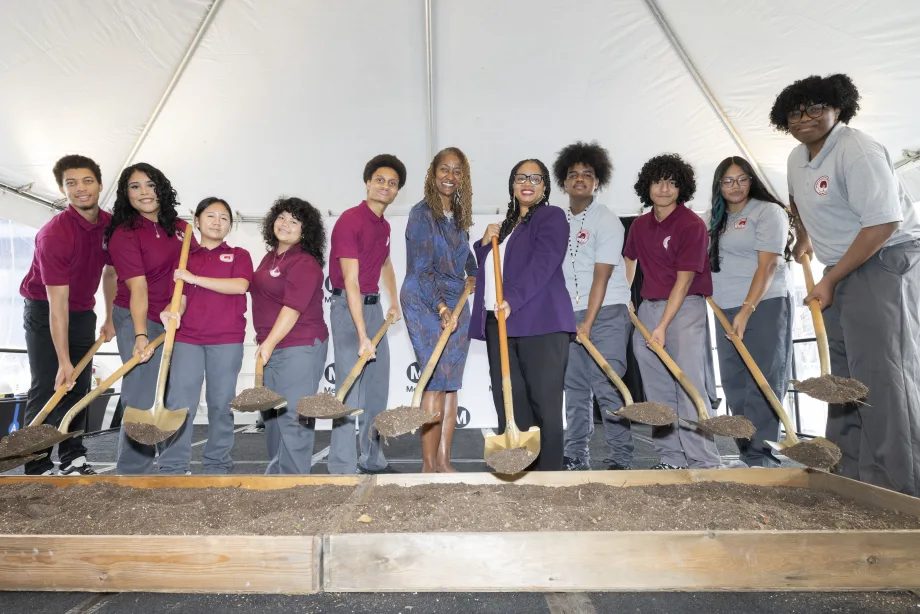
    Metro formally begins construction on the 12.4-mile Vermont BRT, with completion expected before the 2028 Olympics.

  2. Nighttime construction starts

    Construction

    Metro says crews begin night paving and temporary striping on Vermont between 120th Street and Sunset Boulevard, with lanes cut to one direction at a time between 9 p.m. and 5 a.m. in stretches of up to two nights through spring 2027.

  3. FTA awards $149.9M grant

    Funding

    Federal Transit Administration grants the maximum Small Starts award, fully funding the project alongside state and local money.

  4. Construction manager hired

    Procurement

    Metro awarded the Construction Manager/General Contractor contract, moving the project toward final design and construction.

  5. Board picks side-running design

    Planning

    Metro's board found the project exempt from California environmental review under SB 922 and selected the 12.4-mile side-running design as the locally preferred alternative.

  6. Community engagement begins

    Planning

    Metro starts working with 38 community and faith-based organizations; by the groundbreaking it had engaged about 26,000 residents through canvassing, workshops and rider surveys.

  7. Voters approve Measure M

    Election

    LA County voters pass a half-cent sales tax funding transit projects, including the Vermont BRT.

Scenarios

1

Vermont BRT opens to riders before the 2028 Olympics

Likely Resolves by Q2 2028

Discussed by: Metro officials and local media

Construction proceeds on schedule, with bus lanes opening incrementally as they're completed. The full line opens in time for the 2028 Summer Games, delivering the promised travel time savings and ridership growth.

2

Cost overruns force funding renegotiation

Possible Resolves by End of 2027

Discussed by: Transit analysts, construction watchdogs

Construction costs escalate beyond the budgeted amount, requiring additional state or federal appropriations. The overrun could be announced through board reports or funding requests, signaling potential delays.

3

Ridership falls short of 66,200 daily target

Unlikely Resolves by Q2 2029

Discussed by: Transit researchers, ridership analysts

After opening, actual bus counts don't reach the projected 66,200 daily riders, possibly due to remote work trends or competing services. The shortfall would be measured in Metro's quarterly ridership reports.

Historical Context

3 moments from history that rhyme with this story — and how they unfolded.

October 2008

Cleveland HealthLine BRT (2008)

Cleveland opened a 9.4-mile BRT line with dedicated lanes connecting downtown to University Circle. Within a year, ridership jumped 60% and $5.8 billion in development followed the route.

Then

The BRT proved that dedicated bus lanes could attract riders and spur investment in a Midwest city.

Now

It became a national model for cost-effective transit, often cited by other cities for its relatively low construction cost of $200 million.

Why this matters now

LA's Vermont BRT is modeled on similar principles: dedicated lanes, off-board fare payment, and signal priority. The HealthLine's success suggests the ridership projections are achievable if the service is reliable.

December 2000

Bogotá's TransMilenio (2000)

Bogotá launched TransMilenio, a bus rapid transit system with exclusive lanes and high-capacity stations. It eventually carried over 2 million passengers daily at a fraction of subway cost, transforming the city's transit landscape.

Then

Travel times fell dramatically, and the system became a global benchmark for BRT.

Now

It inspired BRT adoption worldwide, though some later implementations faced overcrowding and maintenance challenges.

Why this matters now

TransMilenio demonstrates the ceiling of BRT capacity. LA's goal of 66,200 daily riders is modest by comparison, but the model shows BRT can work—if lanes are strictly enforced and stations are well-designed.

1950s-1963

Los Angeles Red Car System Removal (1960s)

LA dismantled its Pacific Electric Red Car streetcar network in the 1950s and 1960s, replacing it with buses and freeways. The result was decades of car dependency and congestion.

Then

The city lost a sprawling rail network that once served 1,100 miles across the region.

Now

It left South LA and other areas with slow, infrequent bus service, a legacy the Vermont BRT aims to reverse.

Why this matters now

The Vermont BRT directly addresses the decline of transit on this corridor. It's part of LA's broader effort to rebuild a transit system after the Red Car era, using modern BRT as a cost-effective alternative to rail.

Sources

(7)