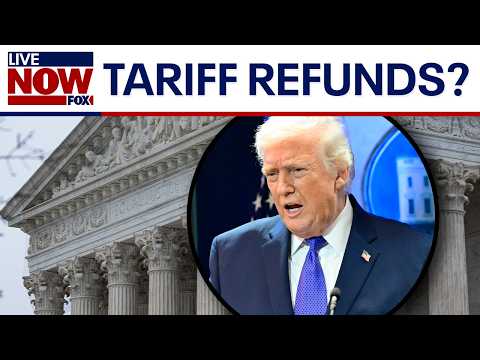
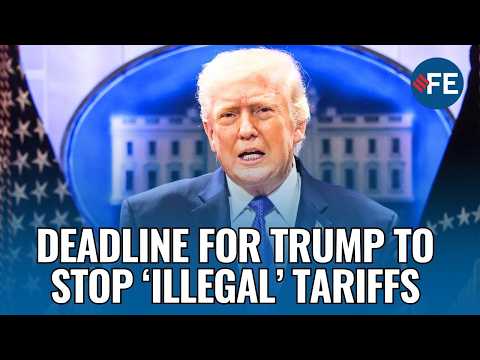
The U.S. government has never had to give back $166 billion it collected illegally — until now. On April 20, CBP launched the CAPE (Consolidated Administration and Processing of Entries) portal for importers to reclaim tariff payments the Supreme Court ruled unlawful. The first phase covers $127 billion across more than 56,000 registered importers.
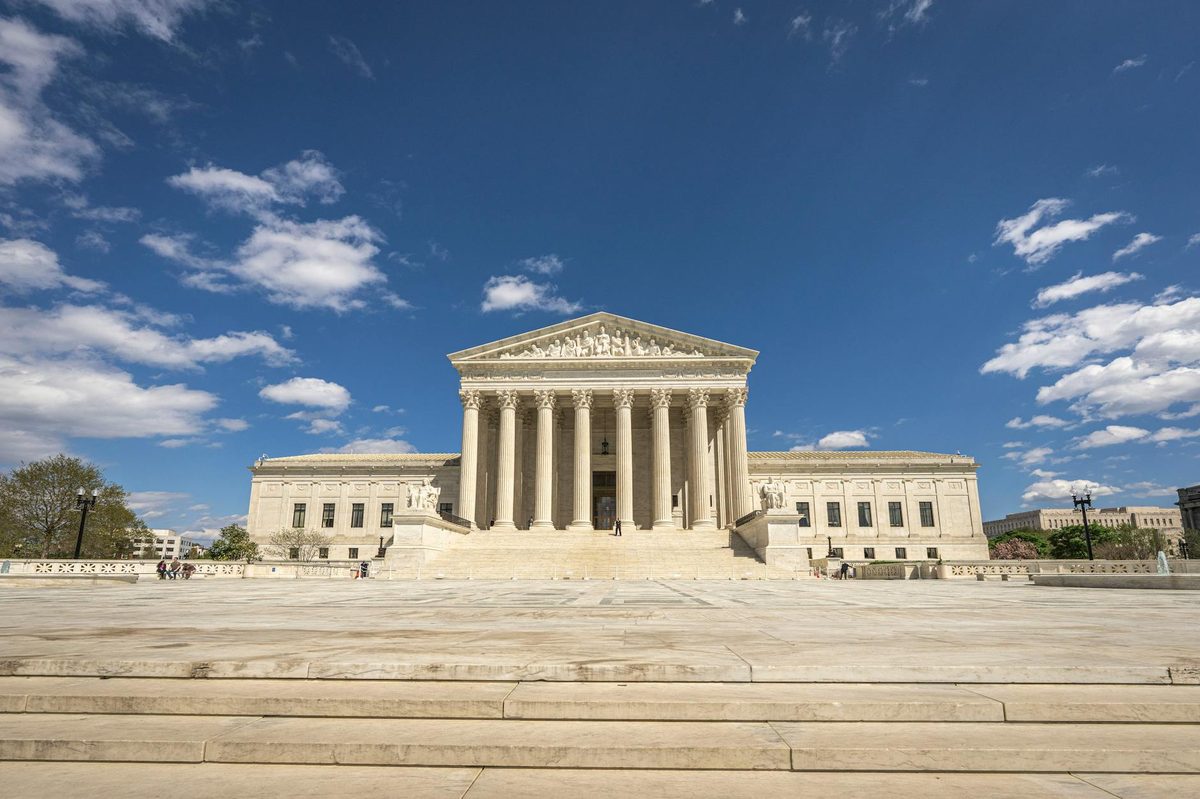
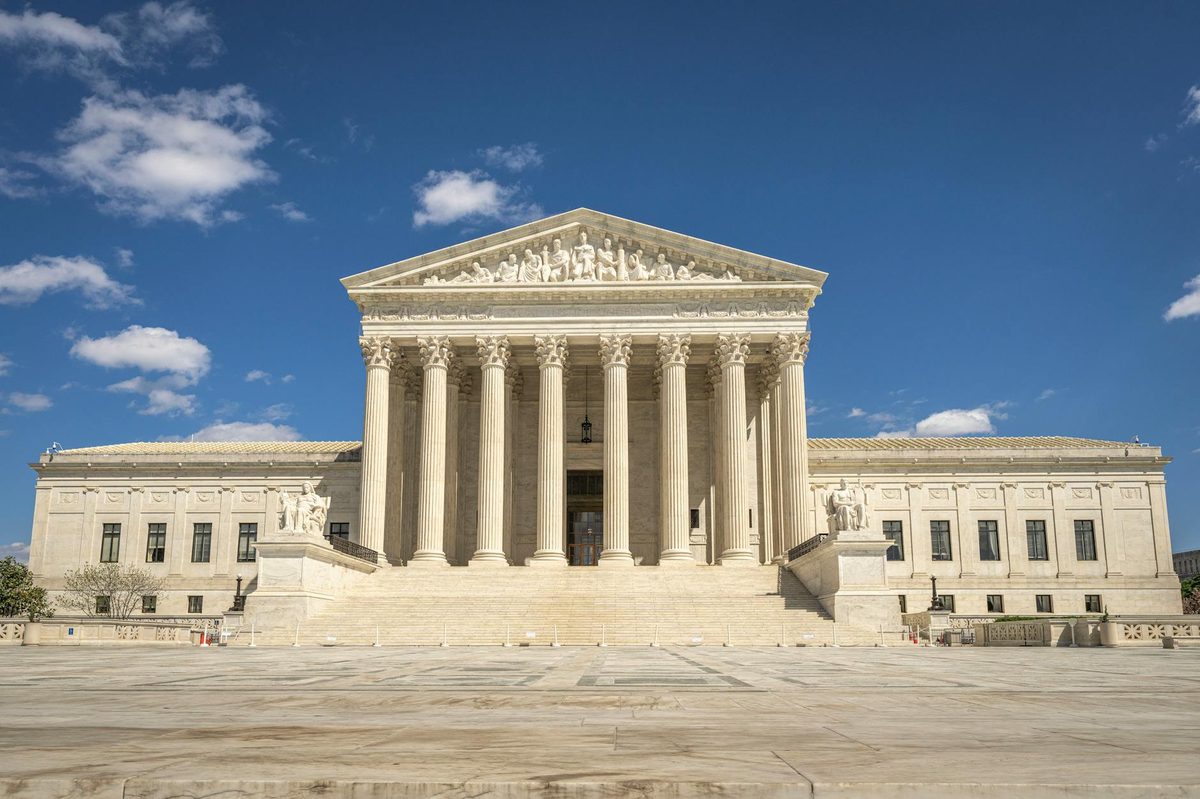
The refunds trace back to April 2, 2025, when President Trump invoked the International Emergency Economic Powers Act (IEEPA), a 1977 sanctions law, to impose sweeping import duties on nearly every trading partner. Five small businesses facing bankruptcy sued, and courts agreed at every level: IEEPA does not give the president the power to tax imports. The Supreme Court's 6-3 ruling in February 2026 set off the largest customs refund operation in American history.
But the launch was rocky. The system showed 'high volume' errors within hours; some users hit duplicate Tax ID errors, others spent hours on hold before they could file a claim. Trade attorneys warned that delays can cost importers their refund rights permanently.
The replacement tariffs Trump imposed under Section 122 of the Trade Act of 1974 now face their own legal challenges. The Court of International Trade heard oral arguments on April 10, 2026. Congress is also weighing legislation to end them.
Why it matters
Businesses that absorbed or passed on billions in unlawful tariff costs can now reclaim that money.
Questions about this story
Free account needed to ask — your question is kept and asked for you right after sign-up. Answers are public.
No questions yet — be the first to ask.
Key Indicators
$127B
Phase 1 refunds eligible
Principal amount of IEEPA duty payments eligible for electronic refund in Phase 1, covering 82% of affected entries.
$166B
Total IEEPA tariffs collected
Estimated total duties collected under IEEPA authority across more than 53 million import entries.
56,497
Importers registered for refunds
Number of importers enrolled in CBP's automatic refund system as of April 9, 2026.
6-3
Supreme Court vote
The majority held that IEEPA does not authorize tariffs, with Chief Justice Roberts writing the opinion.
60–90 days
Expected refund timeline
CBP's estimated processing time after a valid refund claim is accepted through the CAPE portal.
Images from Openverse under Creative Commons licenses.
Videos from YouTube.
Voices
Curated perspectives — historical figures and your fellow readers.
Cecil Rhodes
(1853-1902) ·Victorian Era · industry
Fictional AI pastiche — not real quote.
"How extraordinary that the mightiest republic on earth, having conquered a continent, cannot manage to build a working portal — the Americans seized half a world from Mexico and Spain, yet their customs clerks are undone by a duplicate Tax ID error."
0% found this insightful
Andrew Carnegie
(1835-1919) ·Gilded Age · industry
Fictional AI pastiche — not real quote.
"When a government builds a portal to return $166 billion it had no lawful right to collect, and that portal promptly collapses under the weight of its own ambition — well, I have built a great many things, and I can tell you that the surest sign of poor engineering is a structure that fails precisely when it is most needed."
0% found this insightful
Ever wondered what historical figures would say about today's headlines?
Sign up to generate historical perspectives on this story.
16 events
Latest: April 20th, 2026 · 5 months ago
Showing 8 of 16
JK to step
Tap a bar to jump to that date
Jump to
April 2026
CAPE refund portal goes live
LatestAdministrative
CBP launches Phase 1 of the Consolidated Administration and Processing of Entries (CAPE) system, enabling importers to file refund claims covering $127 billion in IEEPA duties through the ACE Secure Data Portal.
CAPE portal hit by technical glitches at launch
Administrative
Within hours of the 8:00 AM launch, the CAPE portal displayed 'high volume' error messages, produced duplicate Tax ID errors, and left some importers unable to access their accounts. Trade attorneys warned that delays from technical failures can cause importers to permanently lose refund eligibility. The Main Street Alliance called for the administration to streamline the process for small businesses without legal resources.
CIT hears oral arguments on Section 122 tariff legality
Legal
The Court of International Trade heard oral arguments in Oregon v. Trump and Burlap & Barrel, Inc. v. Trump, two cases challenging the constitutional and statutory validity of the 15% Section 122 tariffs Trump imposed as a replacement for the struck-down IEEPA duties. No ruling timeline was set, but the court ruled on the IEEPA tariffs just 15 days after oral argument.
Over 56,000 importers register for refunds
Administrative
CBP reports that 56,497 importers have enrolled in the automatic refund system, representing 82% of entries with IEEPA duty payments.
March 2026
CIT expands refund eligibility to all entries
Legal
Judge Eaton broadens the refund order to include finally liquidated entries — those that had already completed the full liquidation cycle and protest period — ensuring no importer is left out.
CBP announces plan to build refund system without requiring lawsuits
Administrative
CBP announces it will create a centralized electronic refund process, sparing importers from having to file individual lawsuits to reclaim duties.
CIT orders CBP to refund all IEEPA tariffs
Legal
Judge Eaton orders CBP to liquidate and reliquidate all entries subject to IEEPA duties without regard to those duties, directing the agency to build a refund mechanism.
February 2026
Supreme Court rules 6-3: IEEPA tariffs unlawful
Legal
In Learning Resources, Inc. v. Trump, Chief Justice Roberts writes for a six-justice majority that IEEPA does not authorize tariffs. The decision invalidates all tariff revenue collected under IEEPA — an estimated $166 billion.
Trump announces Section 122 replacement tariffs
Executive Action
Hours after the ruling, Trump announces new tariffs under Section 122 of the Trade Act of 1974, set at 15% globally — the maximum allowed. Section 122 imposes a 150-day time limit.
December 2025
CIT confirms it can order refunds
Legal
The Court of International Trade rules that it has the power to order reliquidation and refunds if the Supreme Court holds the IEEPA tariffs unlawful, and that it will retain jurisdiction over claims for the two-year statute of limitations.
November 2025
Supreme Court hears oral arguments
Legal
The Supreme Court hears oral arguments in Learning Resources, Inc. v. Trump and the companion case V.O.S. Selections, Inc. v. Trump.
August 2025
Federal Circuit affirms: IEEPA does not authorize tariffs
Legal
The en banc Federal Circuit Court of Appeals upholds the CIT ruling, agreeing that IEEPA does not give the president power to levy import duties.
May 2025
Court of International Trade strikes down IEEPA tariffs
Legal
The CIT rules that Trump overstepped his authority by using IEEPA to impose tariffs and orders the Liberation Day tariffs vacated.
April 2025
Five small businesses sue to block tariffs
Legal
The Liberty Justice Center and law professor Ilya Somin file V.O.S. Selections, Inc. v. Trump in the Court of International Trade on behalf of five importers facing potential bankruptcy.
"Liberation Day" tariffs announced
Executive Action
Trump signs Executive Order 14257, declaring a national emergency over the trade deficit and imposing IEEPA tariffs on nearly all countries — 10% baseline starting April 5, with higher rates for major trading partners starting April 9.
February 2025
Trump imposes first IEEPA tariffs
Executive Action
The administration publishes IEEPA-based tariffs on imports from China, Mexico, and Canada, citing the opioid crisis. It marks the first time IEEPA has ever been used to impose tariffs.
Scenarios
1
Refunds flow smoothly, importers recoup billions by summer
Likely
Discussed by: Trade law firms (Covington, Holland & Knight), CBP's own projections
If the CAPE system performs as designed and CBP meets its 60-to-90-day processing target, the bulk of Phase 1's $127 billion could be returned by July or August 2026. Phase 2 would follow for remaining entries. This outcome would provide a significant cash infusion to importers who have carried the cost for over a year, though questions remain about whether consumers who paid higher prices will see any benefit.
2
Processing bottlenecks delay refunds, importers return to court
Possible
Discussed by: Cato Institute, Morgan Lewis, trade litigation attorneys
The sheer scale — 53 million entries, $166 billion — could overwhelm CBP's systems. Compliance reviews could flag large numbers of claims. If delays stretch beyond 90 days, importers may seek court orders compelling faster action, and the CIT could impose deadlines or penalties. The 18% of entries not covered in Phase 1 remain in limbo until later phases are built.
3
Congress intervenes to restructure tariff authority permanently
Possible
Discussed by: Peterson Institute for International Economics (PIIE), Brookings Institution, Congressional Research Service
The Supreme Court ruling exposed a gap: Congress never explicitly authorized presidents to impose tariffs through emergency powers, yet presidents have broad trade authority under other statutes. Lawmakers could use this moment to either expand presidential tariff power with clearer statutory language or restrict it further. The 150-day clock on Section 122 tariffs creates a natural forcing function for congressional action by mid-July 2026.
4
Section 301 investigations replace IEEPA as the long-term tariff vehicle
Likely
Discussed by: Global Trade Alert, Duane Morris, Perkins Coie
Trump signaled that the 150-day Section 122 tariffs are a bridge to Section 301 investigations under the Trade Act of 1974, which allows tariffs in response to unfair trade practices without the time limits or rate caps. If the administration launches and concludes 301 investigations before Section 122 expires, it could reimpose tariffs at or above previous IEEPA levels on a country-by-country basis — this time on firmer legal ground.
5
Portal glitches snowball, small importers permanently lose refund rights
Possible
Discussed by: Trade attorneys cited by CBS News and Fortune; Main Street Alliance
The CAPE portal's bumpy launch — featuring high-volume errors, duplicate Tax ID failures, and multi-hour CBP hold times — could have consequences beyond inconvenience. Trade attorneys have warned that processing delays tied to technical errors can cause importers to miss filing windows and permanently forfeit refund eligibility. Small businesses without customs brokers or legal counsel face the greatest exposure, as the CSV-based filing process assumes substantial trade compliance expertise.
Historical Context
3 moments from history that rhyme with this story — and how they unfolded.
1 of 3
June 1930 – June 1934
Smoot-Hawley Tariff Act and the Reciprocal Trade Agreements Act (1930–1934)
Congress passed the Smoot-Hawley Tariff Act in 1930, raising duties on over 20,000 imported goods despite a petition from 1,028 economists urging a veto. Trading partners retaliated, and U.S. exports fell 61% in three years. In 1934, Congress passed the Reciprocal Trade Agreements Act, delegating tariff-setting authority to the president to negotiate reductions — the origin of modern presidential trade authority.
Then
Global trade collapsed. Senator Smoot and Representative Hawley both lost their seats.
Now
Congress effectively surrendered direct control over tariff rates, creating the broad presidential trade authority that persists today — and that the IEEPA case now constrains.
Why this matters now
The IEEPA ruling is the most significant judicial check on presidential tariff authority since Congress delegated that power 90 years ago. The 1934 delegation created the system; the 2026 ruling defined its outer boundary.
2 of 3
June 1952
Youngstown Sheet & Tube Co. v. Sawyer — The Steel Seizure Case (1952)
During the Korean War, President Truman ordered the federal seizure of U.S. steel mills to prevent a strike that he said threatened national security. The Supreme Court ruled 6-3 that the president lacked authority to seize private property without congressional authorization, even during a national emergency.
Then
The steel mills were returned to their owners. The steelworkers went on strike for 53 days.
Now
Justice Jackson's concurrence established the foundational framework for analyzing presidential power — a three-tier test that courts still use today, including in the IEEPA tariff cases.
Why this matters now
Both cases involve a president invoking emergency authority to take extraordinary economic action that the Supreme Court ultimately found exceeded executive power. The IEEPA ruling echoes Youngstown's core holding: emergency declarations do not give the president powers that Congress has not granted.
3 of 3
March 1998
United States v. United States Shoe Corp. — Harbor Maintenance Tax (1998)
The Supreme Court unanimously ruled that the Harbor Maintenance Tax — a 0.125% ad valorem charge on cargo shipped through U.S. ports — violated the Export Clause of the Constitution when applied to exports. The government had collected the tax from exporters for over a decade before the Court struck it down.
Then
The government was required to refund all unlawfully collected payments to exporters, including interest. A claims process was established through Customs.
Now
The case established the principle that the government must return unlawfully collected trade-related payments in full. It became the key precedent cited by importers seeking IEEPA tariff refunds.
Why this matters now
This is the closest legal precedent to the current situation — a Supreme Court ruling invalidating a trade-related government charge and triggering a refund process through Customs. However, the IEEPA refund dwarfs it in scale: $166 billion versus roughly $730 million.