




Pull to refresh
Logo
Houston limits police cooperation with ICE after Texas Democrats win statewide

Houston limits police cooperation with ICE after Texas Democrats win statewide

Rule Changes

Mayor John Whitmire's order stops officers from calling federal agents about administrative warrants unless the person is already headed to jail.

Overview

Updated 3 days ago

Houston police will no longer call federal immigration agents when they stop someone for a minor traffic violation. Mayor John Whitmire's Nov. 6 executive order, numbered 1-74, lets officers contact U.S. Immigration and Customs Enforcement only if the person is already going to jail on new charges or other warrants and a records check shows an administrative ICE warrant.

The order came days after Democrats won Texas's statewide offices, including the governorship. Its statement of intent says it does not prohibit or materially limit any officer's authority, wording that tracks Senate Bill 4, the 2017 law barring cities from restricting immigration cooperation. Attorney General Ken Paxton sued Houston in April over its earlier limits, and Gov. Greg Abbott threatened about $110 million in state grants. Whether Paxton's office or the outgoing administration challenges the new order is unresolved.

Why it matters

Houston is Texas's largest city, and its police contacted ICE 107 times in eight months of 2025. Other cities are watching.

Questions about this story

Free account needed to ask — your question is kept and asked for you right after sign-up. Answers are public.

No questions yet — be the first to ask.

Key Indicators

107
Houston police contacts with ICE, Jan–Aug 2025
Up from nine contacts in all of 2024, according to the Houston Chronicle.
9
Houston police contacts with ICE in 2024
The full-year total before cooperation rose sharply.
$110M
State public safety grants Abbott threatened to withhold
The funding lever that shaped Houston's April 2026 policy.

Voices

Curated perspectives — historical figures and your fellow readers.

Sign up to generate historical perspectives on this story.

People Involved

Organizations Involved

Timeline

May 2017 November 2026

10 events Latest: 5 days ago
Tap a bar to jump to that date
  1. Whitmire signs order limiting ICE cooperation

    Latest Policy

    Executive Order 1-74 says Houston officers contact ICE only if a person is already going to jail on new charges or other warrants and a records check shows an administrative ICE warrant. It also bars holding anyone in the field solely for ICE pickup.

  2. Austin mayor seeks review of ICE warrant policy

    Policy

    Kirk Watson asks Austin officials to revise the city's policy on ICE warrants. The BBC later reported that Austin had begun implementing a similar policy change.

  3. Homeland Security criticizes Houston's order

    Statement

    A Department of Homeland Security spokesperson told Houston's KPRC 2 the agency remains "disappointed that sanctuary politicians seek to limit cooperation with ICE."

  4. Democrats sweep Texas statewide offices

    Election

    Gina Hinojosa defeats Gov. Greg Abbott; Democrats win other statewide posts.

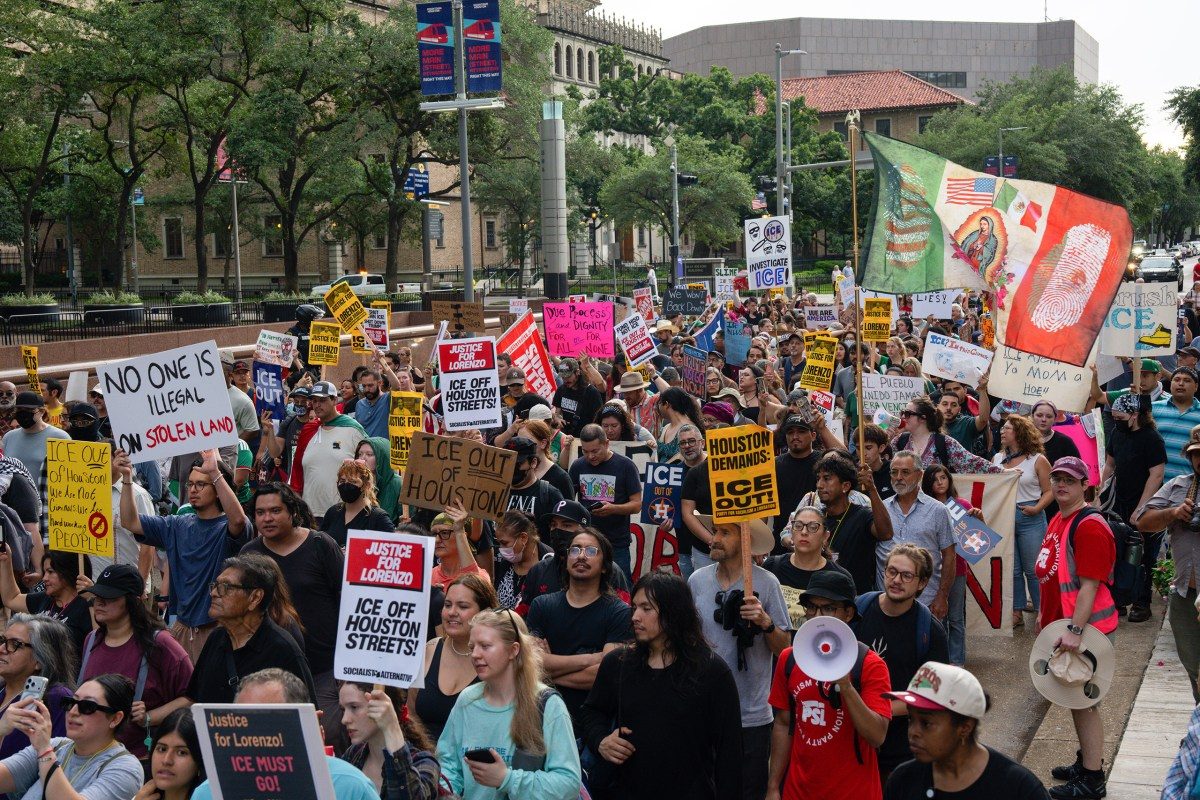
  5. ICE agent kills Houston resident Lorenzo Salgado Araujo

    Incident

    An ICE agent shoots dead a longtime Houston resident, intensifying scrutiny of local cooperation.

  6. Houston revises ICE ordinance after Paxton's suit

    Policy

    The City Council had barred officers from detaining people solely on civil ICE warrants. Ken Paxton sued that day, calling the ordinance an egregious affront to Senate Bill 4, and Greg Abbott threatened roughly $110 million in state grants. The council then revised the ordinance.

  7. Houston ICE contacts climb to 107 in eight months

    Data

    The Houston Chronicle counted at least 107 contacts in the first eight months of 2025.

  8. Houston police contact ICE nine times in 2024

    Data

    The full-year total before cooperation rose sharply.

Scenarios

1

Texas sues Houston over the ICE order

Possible Resolves by Q2 2027

Discussed by: Ken Paxton's April suit against Houston; a text comparison of the order and Senate Bill 4 in The Digital Free Press

Paxton or another state official argues the order violates Senate Bill 4, which bars local policies that prohibit or materially limit immigration enforcement. A court that finds an intentional violation can impose $1,000 to $1,500 for a first offense and $25,000 to $25,500 for later ones, counted per day, and the attorney general must seek removal of an official who violates it.

2

Austin adopts its own limits on ICE cooperation

Possible Resolves by Q2 2027

Discussed by: Austin Mayor Kirk Watson's request to city officials

Watson asked Austin officials to revise the city's policy on ICE warrants the same day Whitmire signed Houston's order. A council vote would make Austin the second major Texas city to narrow cooperation.

3

Texas Legislature overrides city limits on ICE cooperation

Uncertain Resolves by Sep 1, 2027

Discussed by: Police union president Douglas Griffith, who said the city should have waited for the Legislature

The Texas Legislature meets in January 2027. Lawmakers could pass a bill tightening Senate Bill 4 to bar cities from limiting ICE contacts, which the governor would need to sign.

Historical Context

2 moments from history that rhyme with this story — and how they unfolded.

May 2017

Senate Bill 4 (2017)

Texas enacted Senate Bill 4, which bars local governments from restricting cooperation with federal immigration authorities. The law gave state officials a tool to sue cities and withhold funding.

Then

Cities had to weigh local policing choices against state funding and legal risk.

Now

SB 4 remains the legal backdrop for Whitmire's order; its limits on city policy are the central question.

Why this matters now

Whitmire's order tests how much a city can limit ICE contacts without breaching SB 4.

April 2026

Houston's April 2026 reversal

Facing Abbott's threat to withhold about $110 million in public safety grants, Whitmire required Houston police to hold people for ICE and wait a reasonable amount of time for federal agents.

Then

The policy drew criticism from immigrant rights groups and city officials who wanted limits on ICE cooperation.

Now

Seven months later, after the election, Whitmire reversed it, saying the political conditions had changed.

Why this matters now

The reversal shows how quickly an election can change local enforcement policy.

Sources

(19)