
Pull to refresh
Logo
Lansing-area transit agencies offered free rides to polls through Election Day

Lansing-area transit agencies offered free rides to polls through Election Day

Rule Changes Holt, MI local

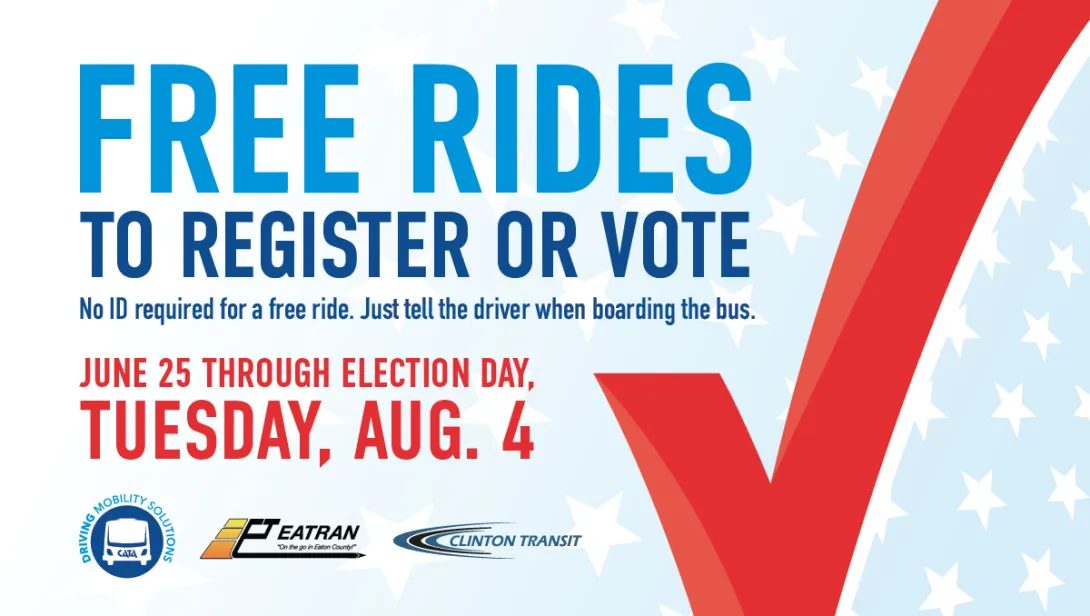
CATA, EATRAN and Clinton Transit waived fares across Ingham, Eaton and Clinton counties through Nov. 3.

Overview

Updated Sep 24

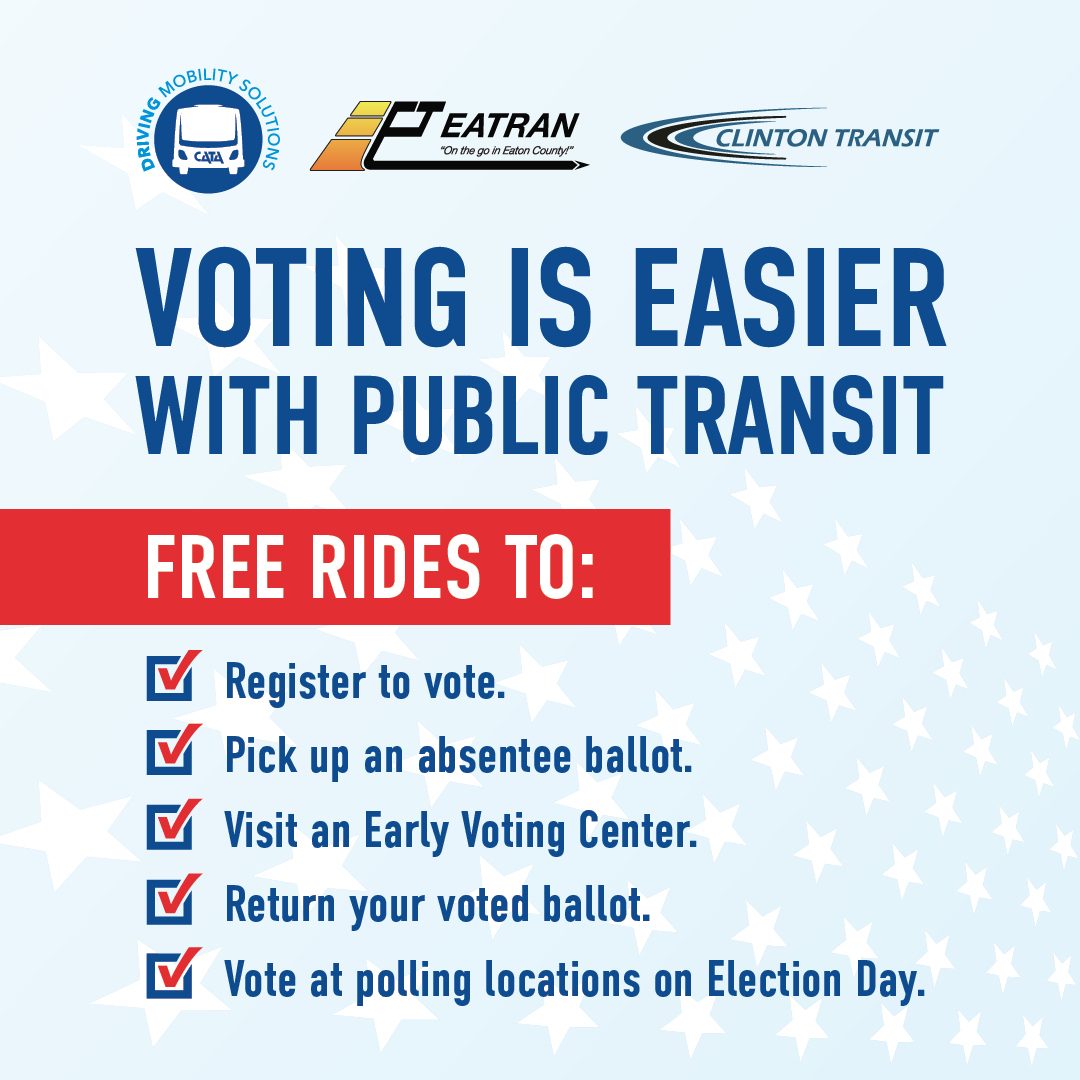
From Sept. 24 through Nov. 3, riders on three Lansing-area transit systems could ride for free to polling places, ballot drop boxes and voter registration sites. The fare waiver ended on Election Day.

It was the third election this year for which the agencies waived fares, after a May 5 special election and the August primary. The goal was to remove the transportation barrier that keeps some residents from voting.

Why it matters

Transportation can keep people from voting; free rides removed that barrier in three Michigan counties for three 2026 elections.

Questions about this story

Free account needed to ask — your question is kept and asked for you right after sign-up. Answers are public.

No questions yet — be the first to ask.

Key Indicators

3
Transit agencies in free-ride program
CATA, EATRAN and Clinton Transit
41
Days of free voting rides
Sept. 24 through Nov. 3
3
2026 elections with free rides
May special, August primary, November general

Voices

Curated perspectives — historical figures and your fellow readers.

Sign up to generate historical perspectives on this story.

Organizations Involved

Timeline

November 2018 November 2026

8 events Latest: November 3rd, 2026 · 1 week ago
Tap a bar to jump to that date
  1. General election day

    Latest Election

    Free rides were available through the end of the day; the program concluded.

  2. Free rides begin for November general election

    Policy

    Tri-county fare waiver took effect for registration, absentee ballots, early voting and Election Day.

  3. Agencies announce free rides for November

    Announcement

    CATA, EATRAN and Clinton Transit announced free voting rides for the general election.

  4. Primary election day

    Election

    Tri-county residents ride free to polling sites for the August primary.

  5. Free rides begin for August primary

    Policy

    CATA, EATRAN and Clinton Transit waive fares for voting trips ahead of primary.

  6. May 5 special election day

    Election

    Tri-county residents could ride free to polling sites for the special election.

  7. Free rides begin for May 5 special election

    Policy

    CATA, EATRAN and Clinton Transit began waiving fares for registration and voting through the May 5 special election.

  8. Michigan voters pass Proposal 3

    Election

    Voters approve constitutional amendment expanding absentee voting and creating same-day registration.

Scenarios

1

Free rides help lift turnout in three Michigan counties

Possible Resolves by Dec 15, 2026

Discussed by: Election analysts and local civic groups

If the fare waiver removes a meaningful barrier, turnout in Ingham, Eaton and Clinton counties could exceed the 2022 midterm baseline. Officials would compare certified turnout figures and may credit the transit program as a contributing factor.

2

Free voting rides become a standing practice in the tri-county area

Likely Resolves by Nov 1, 2027

Discussed by: Transit ridership advocates and local officials

Having offered free voting rides for three 2026 elections, the agencies may formalize the practice for future elections. This would mirror Detroit-area SMART, which has provided free Election Day rides for four consecutive years.

3

Free rides to polls spread to more Michigan transit systems

Uncertain Resolves by Nov 1, 2027

Discussed by: Transit policy observers

Success in the tri-county area and Metro Detroit could encourage other Michigan transit agencies to adopt similar programs. A statewide pattern would signal that transit is becoming a standard election-access service.

Historical Context

3 moments from history that rhyme with this story — and how they unfolded.

November 2018

Michigan Proposal 3 (2018)

Michigan voters approved a constitutional amendment creating same-day voter registration, no-reason absentee voting, and straight-ticket voting by a margin of about 2-to-1.

Then

Voter registration and absentee voting surged in the 2018 and 2020 elections.

Now

The amendment established voting access as a constitutional right in Michigan, creating a baseline that later programs build on.

Why this matters now

The 2018 amendment reflects Michigan's policy direction toward reducing voting barriers. Free transit rides extend that same principle from the registration office to the ballot box.

2023-2026

Detroit-area SMART free Election Day rides (2023-2026)

The Suburban Mobility Authority for Regional Transportation (SMART) has offered free rides on Election Day for four consecutive years, covering Wayne, Oakland and Macomb counties.

Then

Riders in Metro Detroit reached polls without paying a fare on each Election Day.

Now

The practice became routine, establishing a regional precedent that tri-county agencies now follow.

Why this matters now

SMART's multi-year commitment shows fare waivers can become standard practice. The tri-county program goes further, covering registration and early voting for over a month.

June-August 1964

Freedom Summer voter registration drives (1964)

Civil rights workers in Mississippi organized transportation and logistics to help Black residents register to vote, facing violent resistance.

Then

Few registrations succeeded in 1964, but the effort galvanized the Voting Rights Act of 1965.

Now

The connection between transportation and voting access became a recognized civil rights concern.

Why this matters now

Transportation has been a voting-access issue for generations. Modern fare waivers are a low-friction way to address the same barrier civil rights workers tackled in 1964.

Sources

(10)