

Pull to refresh
Logo
Michigan to test pay-per-mile road funding as gas tax revenue falls

Michigan to test pay-per-mile road funding as gas tax revenue falls

Rule Changes Holt, MI local

State pilot with 1,000 volunteer drivers could replace the 52-cent-per-gallon gas tax

4 days ago: State announces pay-per-mile pilot for road funding

Overview

Updated 4 days ago

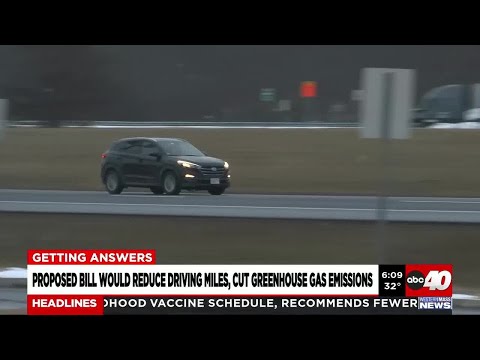
Michigan has taxed gasoline at the pump for nearly a century to pay for roads. Now the state is testing a replacement: charging drivers for every mile they travel, with 1,000 volunteers taking part in a pilot starting in early 2027.

Electric vehicles, which pay little or none of the 52-cent-per-gallon gas tax, are the reason. A 2026 report from Anderson Economic Group found EVs cut expected state gas tax revenue by $50 million from 2019 to 2021, and projected nearly $500 million in losses by 2030 if the funding model doesn't change.

Why it matters

Michigan's per-mile test could reshape how every state funds roads as electric vehicles drain gas tax revenue.

Questions about this story

Free account needed to ask — your question is kept and asked for you right after sign-up. Answers are public.

No questions yet — be the first to ask.

Key Indicators

52¢
Current Michigan gas tax per gallon
The per-gallon rate the pay-per-mile system would replace.
1,000
Volunteer drivers in pilot
Participants will test per-mile charging over six months starting February 2027.
$7.65 million
State funding for the study
Allocated by lawmakers in fall 2025 to plan and run the pilot.
$50 million
Gas tax revenue lost to EVs, 2019-2021
Estimated by Anderson Economic Group's 2026 report on EV road funding impact.
15–25%
Expected EV share of new vehicle sales by 2030
Projected range that drives the $500 million cumulative shortfall estimate.

Voices

Curated perspectives — historical figures and your fellow readers.

Ever wondered what historical figures would say about today's headlines?

Sign up to generate historical perspectives on this story.

People Involved

Organizations Involved

Timeline

September 2025 December 2027

6 events Latest: 4 days ago
Tap a bar to jump to that date
  1. Final pilot report expected

    Upcoming Report

    MDOT plans to deliver the final report on whether per-mile charging is viable.

  2. Six-month trial run begins

    Upcoming Trial

    One thousand volunteers start testing the pay-per-mile system.

  3. Public education campaign scheduled

    Upcoming Outreach

    The state plans a public education campaign to raise awareness and recruit volunteers for the trial.

  4. State announces pay-per-mile pilot for road funding

    Latest Announcement

    Michigan confirms plans to test charging drivers per mile instead of at the pump, seeking 1,000 volunteers.

  5. Pilot planning phase begins

    Planning

    A consultant leading the pilot reveals initial planning started in June; a committee forms to recruit volunteers.

  6. Michigan lawmakers fund pay-per-mile study

    Funding

    The state allocates $7.65 million to study replacing the gas tax with a mileage-based road usage charge.

Scenarios

1

Michigan replaces gas tax with per-mile charge for all vehicles

Possible Resolves by End of 2028

Discussed by: County Roads Association of Michigan, Anderson Economic Group, MDOT consultants

The 2027 pilot report shows the system works, volunteer targets are met, and privacy safeguards like odometer readings satisfy enough lawmakers. The legislature passes a phased transition, with per-mile rates replacing the gas tax for all vehicles by 2030 or shortly after.

2

Privacy concerns cap the pilot, Michigan raises EV fees instead

Possible Resolves by Q2 2028

Discussed by: FOX 17 driver interviews, privacy advocates

Volunteer recruitment falls short and public opposition to mileage tracking hardens — drivers in Grand Rapids already call the idea government surveillance. The pilot's final report says the technology works but public trust does not. Lawmakers keep the gas tax and raise EV registration fees to close the gap.

3

Pay-per-mile applies to electric vehicles only

Possible Resolves by Q2 2028

Discussed by: Michigan Townships Association policy options, state transportation analysts

Lawmakers split the difference: keep the gas tax for conventional vehicles and apply a per-mile charge to EVs, which now skip most fuel taxes. EV owners report odometer readings at annual registration, avoiding GPS tracking. Gas car drivers keep paying at the pump.

Historical Context

3 moments from history that rhyme with this story — and how they unfolded.

1993 – present

Federal gas tax freeze (1993)

The federal gas tax has been 18.4 cents per gallon since 1993. Congress has declined to raise it for over three decades, and the Highway Trust Fund has repeatedly faced shortfalls requiring transfers from general revenue.

Then

Federal road spending has been propped up by general fund transfers since 2008.

Now

The federal impasse pushed funding decisions to the states, which must find their own solutions.

Why this matters now

Michigan's pilot is a state-level response to a revenue problem Washington has refused to solve for 30 years.

July 2015 – present

Oregon's OReGO pilot (2015)

Oregon launched the nation's first voluntary pay-per-mile program, letting drivers pay 1.5 cents per mile instead of the state gas tax. Enrollment was capped, and drivers could choose GPS, odometer reporting, or a flat-fee option.

Then

The program proved the concept worked technically, with a modest volunteer base.

Now

Oregon's pilot became the template for mileage-based user fee experiments in Utah, Virginia, and Hawaii.

Why this matters now

Michigan is following Oregon's playbook — but with a larger state and a bigger revenue hole, the stakes are higher.

2020 – present

Virginia's EV highway use fee (2020)

Virginia became one of the first states to charge electric vehicle owners an annual highway use fee instead of a gas tax. The fee applies regardless of miles driven and has faced pushback from some counties over how revenue is distributed.

Then

The fee closed part of the EV revenue gap but drew criticism for being a flat charge unrelated to road use.

Now

Virginia's approach shows the political alternative if per-mile charging stalls: a simple fee added to annual registration.

Why this matters now

This is the path Michigan takes if per-mile charging proves politically impossible — a flat annual fee on EV owners.

Sources

(3)