




Pull to refresh
Logo
HHS drops $10 billion funding freeze against five Democratic-led states

HHS drops $10 billion funding freeze against five Democratic-led states

Rule Changes

A six-month standoff over child care and family-aid money ends after repeated court losses

July 14th, 2026: HHS drops the freeze

Overview

Updated Jul 15

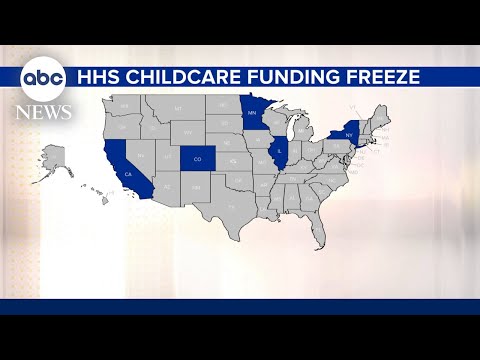
The Department of Health and Human Services ended its six-month freeze on $10 billion in child care and family-aid money for five states on July 14. The funds, meant for low-income families in California, Colorado, Illinois, Minnesota, and New York, are flowing again.

But the lawsuit isn't over. Government lawyers immediately told the judge the case was moot and asked for dismissal before the states could see internal records about who ordered the freeze. The states are fighting that, and they plan to add the White House budget office as a defendant and file an amended complaint.

Why it matters

About $10 billion for child care and cash aid in five states is flowing again, ending a fight that tested whether Washington can withhold money Congress already approved.

Questions about this story

Free account needed to ask — your question is kept and asked for you right after sign-up. Answers are public.

No questions yet — be the first to ask.

Key Indicators

$10B
Total funds frozen
Money withheld from five states across three programs.
$7.4B
TANF cash aid
The largest slice: Temporary Assistance for Needy Families.
$2.4B
Child Care and Development Fund
Subsidies that help low-income parents pay for day care.
5
States affected
California, Colorado, Illinois, Minnesota, and New York.
6 months
Length of standoff
From the January freeze to the July reversal.

Voices

Curated perspectives — historical figures and your fellow readers.

Ever wondered what historical figures would say about today's headlines?

Sign up to generate historical perspectives on this story.

People Involved

Organizations Involved

Timeline

January 2026 July 2026

7 events Latest: July 14th, 2026 · 2 months ago
Tap a bar to jump to that date
  1. HHS drops the freeze

    Latest Resolution

    Court filings show HHS withdrew its January letters, data demands, and the enforcement mechanism, restoring full access to the funds.

  2. Freeze goes public

    Policy Action

    HHS confirms it is withholding about $10 billion across TANF, child care, and social services grants, citing fraud concerns.

  3. HHS sends the first freeze letters

    Policy Action

    The department tells five Democratic-led states it will restrict their access to federal aic funds, demanding data first.

Scenarios

1

Case closed: court dismisses the suit as moot

Likely Resolves by End of 2026

Discussed by: CNN; government lawyers in filings

With the freeze gone, HHS argues the lawsuit has nothing left to decide. The court agrees and dismisses the case, and the states never get to see who inside the administration ordered the freeze. This is the outcome government lawyers pushed for in July.

2

States pry open the records anyway

Possible Resolves by End of 2026

Discussed by: New York's attorney Rabia Muqaddam; The Epoch Times

The states convince the judge that the dispute could recur, so the case survives dismissal. The court orders the White House budget office and HHS to hand over internal communications about the freeze. That would reveal how the decision was made and who drove it.

3

Round two: HHS tries a narrower freeze

Unlikely Resolves by Jul 14, 2027

Discussed by: CBS News; state attorneys general

HHS returns with a redrawn action, this time tied to specific documented fraud rather than a blanket demand on five states. A tighter legal footing could survive the challenge the first attempt failed. States would likely sue again.

Historical Context

3 moments from history that rhyme with this story — and how they unfolded.

1973–1974

Nixon's impoundment fights (1973–1974)

President Nixon refused to spend money Congress had appropriated for programs he opposed. States and agencies sued, and courts repeatedly ordered the funds released. Congress then passed a law limiting the practice.

Then

Courts forced the money out, ruling the president could not simply refuse to spend it.

Now

The 1974 Impoundment Control Act set rules for when a president can withhold appropriated funds.

Why this matters now

The core question is the same: how far the executive branch can go in withholding money Congress already approved.

September 2022

Feeding Our Future fraud case (2022)

Federal prosecutors charged dozens of people in Minnesota with stealing more than $250 million from federally funded child-nutrition programs during the pandemic. It became one of the largest pandemic-aid fraud cases in the country.

Then

Roughly 70 defendants were charged; many were later convicted.

Now

The case became a go-to example for officials arguing that state-run aid programs invite fraud.

Why this matters now

HHS pointed to this Minnesota case as its main concrete justification, then applied the freeze to four other states.

January 2025

Trump administration's OMB funding-freeze memo (2025)

The White House budget office ordered a government-wide pause on federal grants and loans. The memo triggered immediate confusion at agencies and states over what money was still flowing. Courts stepped in within days.

Then

A federal judge blocked the pause, and OMB rescinded the memo amid the backlash.

Now

It set the template for later, narrower freezes and the legal fights that followed them.

Why this matters now

The HHS freeze used the same tool, withholding approved money, and met the same fast judicial block.

Sources

(7)