For nearly a decade, the U.S. intelligence community maintained that Havana Syndrome—the cluster of neurological symptoms reported by over 1,500 American officials across dozens of countries—was 'very unlikely' caused by a foreign adversary. The most persistent objection: where's the weapon?
Now there are two devices under investigation, one purchased by the Pentagon for over $10 million, another built by a Norwegian scientist who developed the symptoms he'd spent years arguing were impossible. In February 2026, the CIA and Pentagon confirmed they had examined the Norwegian device. The scientist developed neurological symptoms—headaches, vertigo, memory loss, hearing loss—marking the first documented evidence that pulsed-energy weapons can produce Havana Syndrome-like effects in a controlled setting.
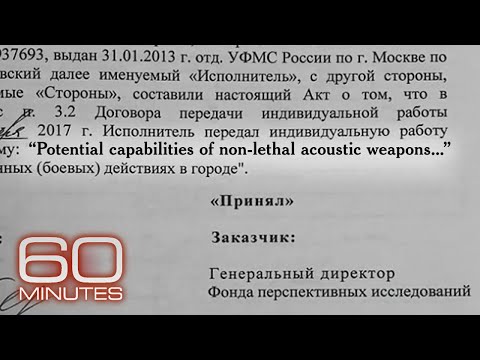
The evidence has shifted dramatically. A joint investigation by The Insider, 60 Minutes, and Der Spiegel geolocated operatives from GRU Unit 29155—the Russian unit responsible for the Novichok poisoning of Sergei Skripal—near attack sites in multiple countries. House Intelligence Committee leaders sent criminal referrals to the Department of Justice in September 2025, accusing the intelligence community of 'stonewalling' and 'cherry-picking' evidence.
The question is no longer whether such weapons could exist. The House Intelligence Committee and the joint investigation team say the government has known about such weapons for years. The Norwegian experiment may force the intelligence community to reconsider its 'very unlikely' conclusion.
Questions about this story
Free account needed to ask — your question is kept and asked for you right after sign-up. Answers are public.
No questions yet — be the first to ask.
Key Indicators
1,500+
Reported Cases
American officials who have reported anomalous health incidents since 2016
2
Devices Under Investigation
Pentagon-acquired device with Russian components and Norwegian researcher's prototype—both capable of producing Havana-like symptoms
17 events
Latest: February 14th, 2026 · 7 months ago
Showing 8 of 17
JK to step
Tap a bar to jump to that date
Jump to
February 2026
Norwegian Scientist's Self-Experiment Confirmed by CIA and Pentagon
LatestInvestigation
CIA and Pentagon officials confirm they examined a device built by a Norwegian government scientist who developed neurological symptoms—including headaches, vertigo, memory loss, and hearing loss—after self-testing pulsed microwave energy in 2024. The experiment provides first documented evidence that directed-energy devices can produce Havana Syndrome-like symptoms.
CIA and Pentagon Investigate Norway Device
Investigation
CIA and White House officials visit Norway to examine device built by researcher who developed symptoms after self-experimentation, following earlier Pentagon visits in 2024.
September 2025
House Intelligence Committee Sends Criminal Referrals to DOJ
Congressional
Republican-led House Intelligence Committee sends criminal referrals to Trump Justice Department, accusing the intelligence community of 'stonewalling, slow-walking, and cherry-picking' evidence.
January 2025
Updated IC Assessment Released
Assessment
Updated intelligence community assessment maintains 'very unlikely' conclusion from five of seven agencies, but two agencies now assess with 'low confidence' that foreign involvement is possible in limited cases.
December 2024
Two Pulsed-RF Devices Under Investigation Revealed
Revelation
Reporting reveals Pentagon has spent over a year testing a backpack-sized device with Russian components purchased for $10M+, while CIA and Pentagon officials have visited Norway to examine a second device built by a researcher who gave himself Havana-like symptoms.
House Intelligence Committee Releases Interim Report
Congressional
House Intelligence CIA Subcommittee report concludes IC assessment 'lacked analytic integrity' and that foreign adversary involvement appears 'increasingly likely.'
April 2024
Joint Investigation Links GRU Unit 29155 to Attacks
Investigation
The Insider, 60 Minutes, and Der Spiegel publish joint investigation geolocating Unit 29155 operatives near attack sites in multiple countries and documenting awards for acoustic weapons research.
March 2024
NIH Studies Find No MRI Evidence of Brain Injury
Scientific
NIH publishes JAMA studies finding no significant differences in brain scans between Havana Syndrome patients and healthy controls. Stanford's David Relman publishes editorial identifying 'multiple problems' with the methodology.
2024
Norwegian Researcher Self-Experiments with Device
Scientific
A Norwegian scientist who had opposed the directed-energy hypothesis builds a pulsed microwave device and tests it on himself, developing neurological symptoms similar to Havana Syndrome victims.
March 2023
IC Assessment: Foreign Adversary 'Very Unlikely'
Assessment
U.S. intelligence community releases assessment concluding foreign adversary involvement is 'very unlikely,' describing Havana Syndrome as a 'socially constructed' category for various unrelated conditions.
October 2021
Albert Averyanov Identified in Tbilisi
Intelligence
Albert Averyanov, son of Unit 29155's founder, identified outside a U.S. embassy family's home in Tbilisi, Georgia, hours before a reported attack.
2021
Edgreen Leads DIA Investigation
Investigation
Lieutenant Colonel Greg Edgreen takes charge of the Defense Intelligence Agency's investigation into anomalous health incidents.
December 2020
National Academy of Sciences Panel Report
Scientific
NAS committee chaired by David Relman concludes that 'directed, pulsed radio frequency energy' is the 'most plausible mechanism' for the reported symptoms.
March 2018
Skripal Novichok Poisoning in Salisbury
Related Incident
Unit 29155 operatives poison former Russian spy Sergei Skripal and his daughter with Novichok nerve agent in Salisbury, England, establishing the unit's willingness to attack individuals on foreign soil.
August 2017
Public Disclosure of Cuba Cases
Revelation
Reports surface that 21 American and Canadian diplomatic personnel in Cuba have experienced unexplained neurological symptoms dating to late 2016.
2017
Terentiev Commended for Acoustic Weapons Research
Intelligence
GRU Colonel Ivan Terentiev receives award for article on 'potential capabilities of non-lethal acoustic weapons in combat activities in urban settings.'
December 2016
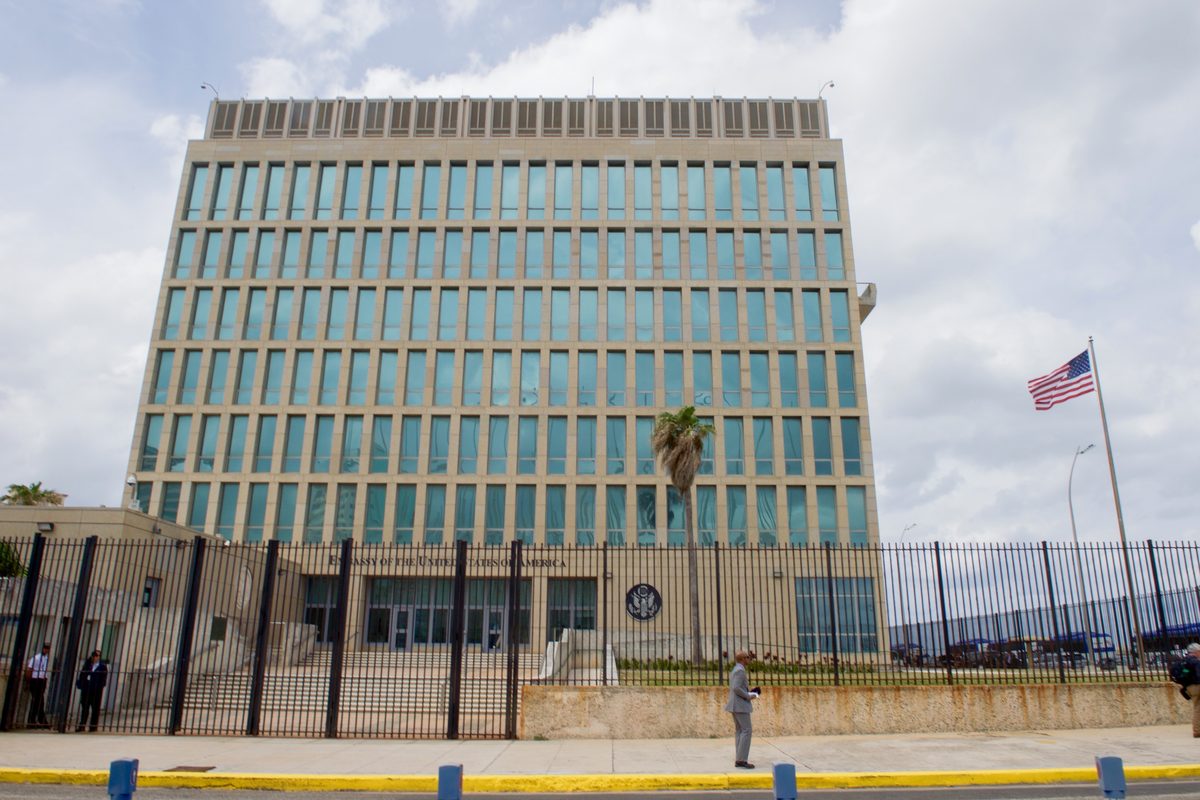
First Reported Case in Havana
Incident
A CIA officer working undercover at the newly reopened U.S. Embassy in Cuba reports dizziness, pressure headaches, and hearing loss linked to a high-pitched buzzing sound in his apartment. He becomes known as 'Patient Zero.'
Scenarios
1
Russia Formally Implicated After Device Testing Concludes
Possible
Discussed by: House Intelligence Committee members, The Insider investigative team, former DIA officials
Pentagon testing of the acquired device and analysis of the Norwegian prototype produce conclusive evidence that pulsed RF weapons can cause the reported symptoms. Combined with the geolocation evidence linking Unit 29155 to attack sites, the Biden or successor administration formally attributes attacks to Russia, triggering diplomatic consequences and potential sanctions.
2
IC Assessment Stands; Congressional Investigation Fizzles
Possible
Discussed by: Intelligence community officials, NIH researchers, skeptical scientists
Device testing proves inconclusive—the pulsed RF energy doesn't reliably reproduce the full symptom cluster. The intelligence community's position hardens. Criminal referrals yield no prosecutions. Victims are compensated under existing legislation but no foreign actor is held accountable. The syndrome remains a disputed phenomenon attributed to stress, mass psychogenic illness, or unrelated medical conditions.
3
Partial Acknowledgment: Some Cases Attributed, Most Dismissed
Likely
Discussed by: Intelligence community dissenting agencies, medical researchers, victim advocacy groups
The intelligence community revises its assessment to acknowledge that a small subset of cases—perhaps the original Havana incidents and attacks on high-value targets—were likely caused by a foreign weapon. The majority of the 1,500+ reported cases remain attributed to other causes. This middle-ground finding satisfies neither victims demanding full accountability nor skeptics questioning the entire phenomenon.
4
Classified Acknowledgment, Public Denial Continues
Possible
Discussed by: National security analysts, former intelligence officials
The government privately concludes Russia deployed directed-energy weapons but determines that public attribution would reveal intelligence sources and methods or escalate tensions during ongoing conflicts. The official 'very unlikely' assessment remains in place. Victims learn the truth only through classified briefings. The public debate continues indefinitely.
Historical Context
3 moments from history that rhyme with this story — and how they unfolded.
1 of 3
1953-1979
The Moscow Signal (1953-1979)
For over two decades during the Cold War, the Soviet Union beamed microwave radiation at the U.S. Embassy in Moscow. First detected in 1953, the transmissions were aimed at the embassy building from Soviet installations nearby. American personnel reported elevated white blood cell counts, and an unusual number of cancer cases emerged among former embassy staff.
Then
The State Department installed aluminum window screens and offered hardship pay to Moscow personnel. Two ambassadors reportedly died of cancer, though causation was never proven.
Now
The incident established precedent for Soviet/Russian use of directed energy against U.S. diplomatic facilities. It remained classified for decades and is now cited by Havana Syndrome investigators as a direct predecessor.
Why this matters now
The Moscow Signal demonstrates that Russia has a multi-decade history of targeting U.S. diplomatic facilities with directed energy, and that the U.S. government has previously kept such incidents from the public.
2 of 3
1990-2008
Gulf War Syndrome Recognition (1990s-2000s)
Following the 1991 Gulf War, thousands of veterans reported unexplained symptoms including fatigue, pain, and cognitive difficulties. Initial government studies dismissed the condition as stress-related or psychosomatic. Veterans advocated for recognition while facing skepticism from military officials.
Then
Veterans struggled to obtain disability benefits and medical care for conditions the government didn't recognize as service-connected.
Now
After years of research and advocacy, Congress passed legislation in 2008 formally recognizing Gulf War Syndrome. Studies eventually identified potential causes including chemical exposures and environmental factors.
Why this matters now
Gulf War Syndrome demonstrates how government agencies may initially dismiss unexplained illness clusters affecting personnel, only to reverse course after sustained advocacy and independent research—a pattern Havana Syndrome victims hope to repeat.
3 of 3
March 2018
Skripal Novichok Poisoning (2018)
GRU Unit 29155 operatives Anatoliy Chepiga and Alexander Mishkin traveled to Salisbury, England, and applied Novichok nerve agent to the door handle of former Russian spy Sergei Skripal's home. Skripal and his daughter Yulia survived; a British citizen, Dawn Sturgess, later died after exposure to the discarded nerve agent container.
Then
153 Russian diplomats were expelled from Western countries—the largest such expulsion since the Cold War. The UK identified the perpetrators using CCTV footage and open-source intelligence.
Now
The incident established Unit 29155's willingness to conduct attacks on foreign soil using unconventional weapons, accepting significant collateral damage and diplomatic costs.
Why this matters now
The same unit now implicated in Havana Syndrome incidents previously demonstrated its capacity and willingness to attack individuals abroad with exotic weapons. The Skripal case also showed how open-source investigators could identify GRU operatives—a methodology now applied to Havana Syndrome.