
Pull to refresh
Logo
Grand Rapids brownfield authority backs 72 apartments across from Huff Park

Grand Rapids brownfield authority backs 72 apartments across from Huff Park

Built World Grand Rapids, MI local

MOXIE Real Estate + Development takes over the $15.6M plan for 72 apartments on the former Huff Park Elementary site

Overview

Updated Nov 1

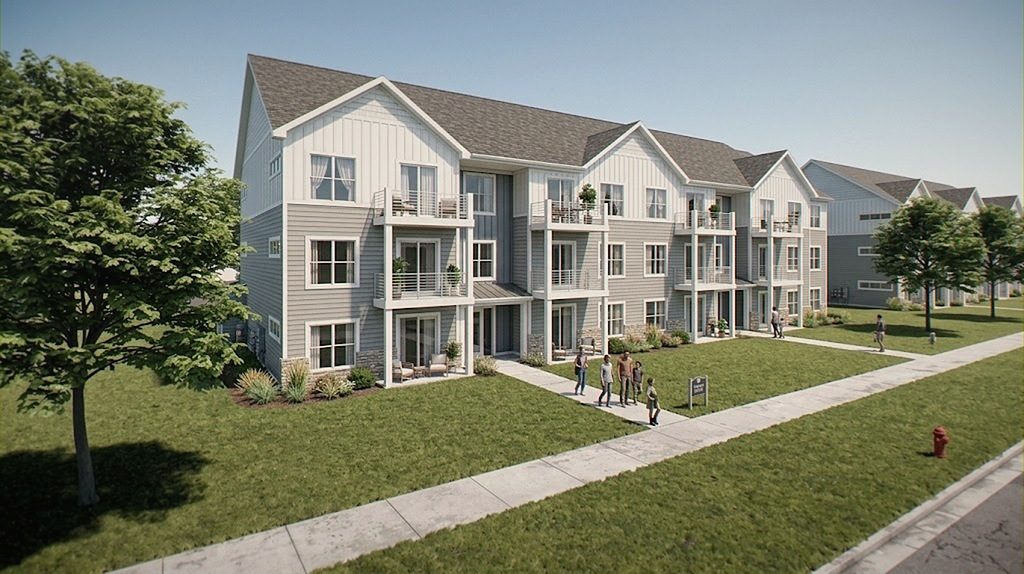
MOXIE Real Estate + Development has taken over Flats at Huff Park, a $15.6 million plan for 72 apartments on the former Huff Park Elementary School site at 2286 Ball Ave. NE. The Grand Rapids Brownfield Redevelopment Authority recommended approval of a brownfield plan amendment for the project on Oct. 28; city commissioners must still schedule a public hearing.

MOXIE plans 54 one-bedroom and 18 two-bedroom units in three buildings, with 15 units reserved for renters earning up to 80% of area median income. It is seeking nearly $5.7 million in tax increment financing to cover demolition, asbestos removal, and site work on a parcel with steep grades, a floodplain, and unsuitable soil. Wheeler Development Group, which proposed the project in 2025, let its purchase agreement lapse.

Why it matters

A shuttered school with asbestos and floodplain problems could become 72 homes, 15 of them below market rate, if city approvals hold.

Last Monday's email for Grand Rapids, MI

Sent Nov 9. It carried:

Get next Monday's: one short email a week. Free. Unsubscribe in one click.

Questions about this story

Free account needed to ask — your question is kept and asked for you right after sign-up. Answers are public.

No questions yet — be the first to ask.

Key Indicators

$15.6M
Project cost
Total development cost for the 72-unit Flats at Huff Park project.
72
Apartment units
54 one-bedroom and 18 two-bedroom units in three buildings.
15
Income-restricted units
Units reserved for renters earning 80% of area median income or less.
$5.7M
Brownfield TIF sought
Tax increment financing requested for demolition, asbestos removal, and site work.

Voices

Curated perspectives — historical figures and your fellow readers.

Sign up to generate historical perspectives on this story.

People Involved

Organizations Involved

Timeline

July 2025 October 2026

5 events Latest: October 28th, 2026 · 2 weeks ago
Tap a bar to jump to that date
  1. Brownfield authority recommends Flats at Huff Park plan

    Latest Funding

    The Grand Rapids Brownfield Redevelopment Authority recommended approving a brownfield plan amendment for the $15.6M, 72-unit project. The City Commission will next consider scheduling a public hearing.

  2. MOXIE takes over Flats at Huff Park

    Development

    MOXIE Real Estate + Development takes over the 72-unit project from Wheeler Development Group, which let its purchase agreement lapse.

  3. Former Huff Park Elementary parcel sells for $850,000

    Property sale

    Property records show the 5.28-acre former school site sold for $850,000.

  4. Development with Us session for nearby Knapp Street project

    Community Engagement

    Creston Neighborhood Association hosts city-backed engagement session on separate 21-condo proposal adjacent to Huff Park.

  5. Parkview Flats announced for Huff Park Elementary site

    Announcement

    Wheeler Development Group reveals plans for 72 apartments in three 24-unit buildings on the closed school site, requests special land-use approval.

Scenarios

1

Flats at Huff Park breaks ground and opens

Likely Resolves by Jan 1, 2028

Discussed by: Wheeler Development Group statements; brownfield authority approval signals financial viability

With brownfield backing secured, the project clears remaining Planning Commission approvals. Construction begins within a year, and the 72 apartments open. The financial structure supports a mix of affordable and market-rate units, adding housing supply near Huff Park.

2

Project stalls despite brownfield backing

Possible Resolves by Jun 1, 2027

Discussed by: Pattern of Midwest market-rate apartment projects facing financing headwinds in 2025-2026

Although the brownfield authority backing removes a major financial hurdle, rising construction costs or interest rates could still halt the project. The developer may seek to renegotiate terms, or the special land-use approval could be delayed by community opposition.

3

Project scaled down after community pushback

Unlikely Resolves by Jan 1, 2027

Discussed by: Creston Neighborhood Association engagement; precedent of DwUs program mediating development changes

Neighbors concerned about density and park impact pressure the developer to modify the plan. The project could shrink in unit count, reduce building heights, or add more green buffer space along the park boundary before final approval.

4

Construction starts in spring 2027 and finishes in 2028

Likely Resolves by End of 2028

Discussed by: MOXIE founder Trevor Petroelje, as reported by WOODTV

Petroelje said he hopes to break ground in spring 2027 and finish construction in summer 2028, pending city approval of the brownfield plan amendment and site plan.

Historical Context

2 moments from history that rhyme with this story — and how they unfolded.

2004-2010

Grand Rapids Press Site redevelopment (2000s)

The Grand Rapids Press building at 99 Monroe Avenue NW sat vacant after the newspaper moved operations. Developers proposed multiple redevelopment schemes before the building was finally repurposed as a mix of offices and retail in the late 2000s.

Then

The building sat empty for years, with several proposals failing to secure financing.

Now

The eventual redevelopment showed that Grand Rapids' brownfield incentive programs could make large, complex reuse projects financially viable.

Why this matters now

Like the Press building, the Huff Park Elementary site requires demolition and site preparation that makes private financing difficult without public subsidy. Brownfield backing is what bridges that gap.

2015-2020

Detroit's former school site redevelopments (2010s)

As Detroit closed dozens of school buildings amid population decline, developers converted several into apartments and community centers. The projects relied heavily on city and state brownfield tax incentives to offset demolition and rehabilitation costs.

Then

Many former school buildings sat boarded up for years before any developer stepped forward.

Now

The successful conversions demonstrated that adaptive reuse and new construction on school sites could revitalize neighborhoods and add housing where demolition costs would otherwise kill the math.

Why this matters now

The Huff Park Elementary site follows this pattern: a closed school property requiring heavy site work, with brownfield incentives being the deciding factor in whether a residential project pencils out.

Sources

(4)