

Pull to refresh
Logo
Fed freezes bank capital rules during stress-test overhaul

Fed freezes bank capital rules during stress-test overhaul

Rule Changes

The 2026 results passed 32 large lenders, but for the first time the scores won't change how much capital banks must hold.

June 24th, 2026: Results released, banks pass

Overview

Updated Jun 24

Every year since the 2008 crisis, the Federal Reserve has graded big banks on a simulated disaster, and the score sets how much spare capital each must hold. On June 24, 2026, the Fed released the latest grades for 32 large lenders. All cleared the bar with room to spare.

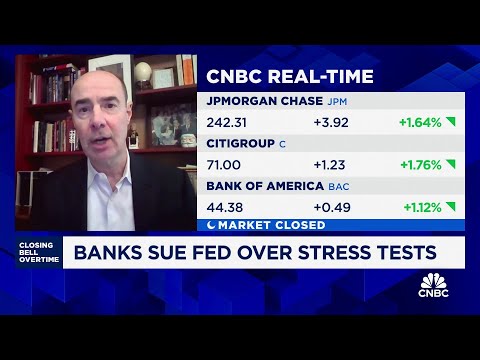
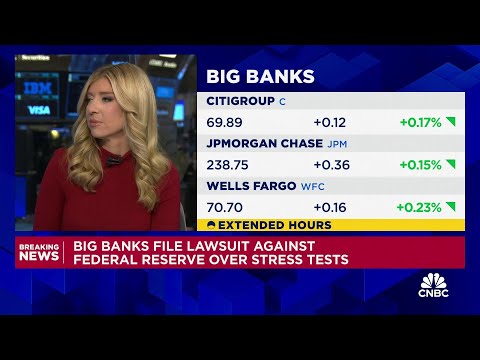
This year the grade comes with an asterisk. The Fed is rewriting the secret models behind the test after banks sued, so the 2026 results won't change anyone's capital requirement. The current cushions stay frozen until 2027. That gives banks a clearer runway to pay dividends and buy back stock.

Why it matters

Pass the test and a bank can return billions to shareholders; the frozen rules let lenders plan buybacks and dividends with less guesswork than usual.

Questions about this story

Free account needed to ask — your question is kept and asked for you right after sign-up. Answers are public.

No questions yet — be the first to ask.

Key Indicators

32
Banks tested
Large U.S. lenders graded in the 2026 stress test.
10%
Peak unemployment in scenario
The hypothetical jobless rate banks were tested against.
-39%
Commercial real estate drop
Assumed fall in commercial property values in the test.
-30%
Home price drop
Assumed decline in house prices under the scenario.
2027
Year rules change next
Capital cushions stay frozen until revised models take effect.

Voices

Curated perspectives — historical figures and your fellow readers.

Ever wondered what historical figures would say about today's headlines?

Sign up to generate historical perspectives on this story.

People Involved

Organizations Involved

Timeline

December 2024 June 2026

5 events Latest: June 24th, 2026 · 3 months ago
Tap a bar to jump to that date
  1. Results released, banks pass

    Latest Results

    All 32 banks clear the test against a 10% unemployment scenario. JPMorgan raises its dividend and approves a roughly $30 billion buyback. The scores do not change capital requirements.

  2. Release date set

    Announcement

    The Fed says it will publish the 2026 stress-test results on June 24 at 4 p.m. Eastern for 32 large lenders.

  3. Capital buffers frozen until 2027

    Decision

    The Fed finalizes the 2026 scenario and votes to keep current capital requirements unchanged until 2027 while it revises its models.

  4. Fed proposes opening the black box

    Regulation

    The Fed issues formal proposals to disclose its stress-test models for public comment and to average results over two years to cut volatility.

Scenarios

1

Fed finalizes new stress-test models, sets fresh capital rules for 2027

Likely Resolves by Aug 31, 2027

Discussed by: Sullivan & Cromwell, Bank Policy Institute, ABA Banking Journal

The Fed works through public comments on its October 2025 proposals, finalizes revised models with disclosed equations and two-year averaging, and uses them to calculate stress capital buffers that take effect in 2027. This is the path the Fed laid out when it froze 2026 requirements.

2

Court ruling forces the Fed to change the stress test

Possible Resolves by Q2 2027

Discussed by: Banking Dive, American Bankers Association

The lawsuit in the Southern District of Ohio produces a ruling or settlement that compels the Fed to alter how it runs or discloses the stress test, beyond what it has voluntarily proposed. A win for the banks would lock in transparency requirements through the courts rather than Fed discretion.

3

Lower capital demands free up record shareholder payouts

Possible Resolves by End of 2026

Discussed by: International Banker, bank earnings analysts

With requirements frozen and the proposed changes expected to lower buffers, the largest banks announce a combined wave of dividend increases and buybacks larger than the prior year. JPMorgan's roughly $30 billion buyback set the early tone after the 2026 results.

Historical Context

2 moments from history that rhyme with this story — and how they unfolded.

May 2009

First post-crisis stress tests, the SCAP (2009)

In the depths of the financial crisis, the Fed ran its first big stress test on 19 banks. Regulators found 10 needed to raise about $75 billion in new capital. The exercise, called SCAP, helped calm markets by showing which banks were sound.

Then

Banks raised the capital, and confidence in the system began to return.

Now

The test became an annual fixture and the model for how regulators police bank capital.

Why this matters now

It explains why the test exists and why its results move markets. The 2026 fight is over how that now-permanent test is run.

July 2010

Dodd-Frank Act mandates annual tests (2010)

Congress passed the Dodd-Frank Act after the crisis. It required the Fed to stress-test large banks every year and tied the results to how much capital each must hold. That link turned a one-off exercise into a yearly capital-setting machine.

Then

The Fed built a formal annual program with published scenarios.

Now

Stress-test scores became central to bank planning for dividends and buybacks.

Why this matters now

The law is why a test result dictates capital bills, the exact mechanism the banks' lawsuit and the Fed's overhaul now target.

Sources

(6)