
Pull to refresh
Logo
The K2-18b biosignature hunt

The K2-18b biosignature hunt

New Capabilities

Cambridge Team Claims Life Signals on Distant Water World—NASA Says Not So Fast

December 1st, 2025: Community Debates Next JWST Observations

Overview

Updated May 19

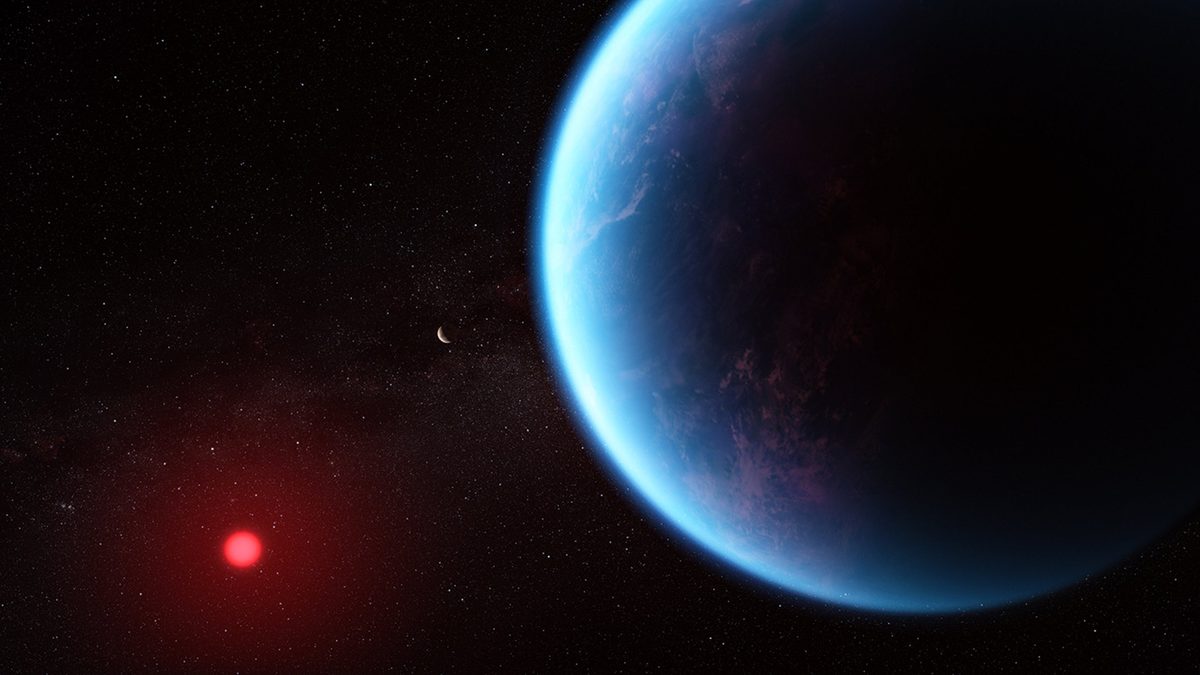
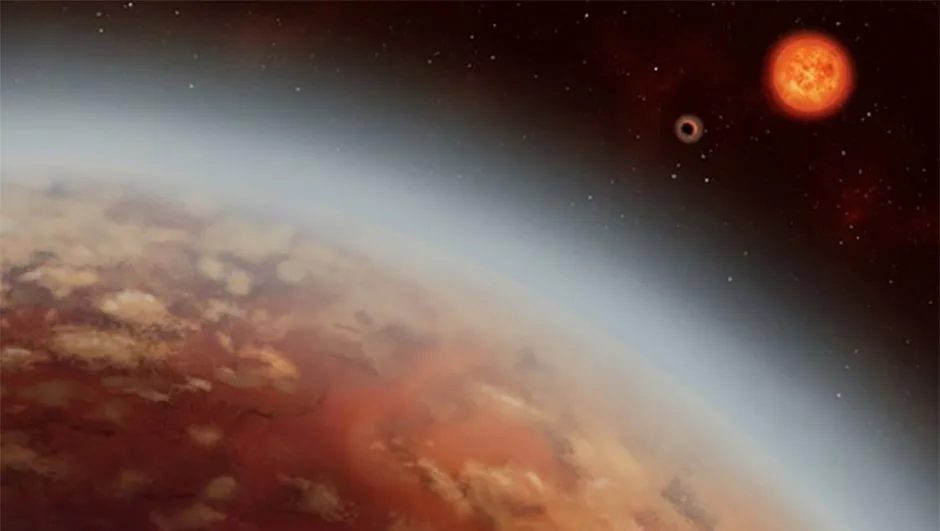
Cambridge astronomers announced they'd found dimethyl sulfide and dimethyl disulfide in the atmosphere of K2-18b—molecules that, on Earth, only life produces. The detection using JWST's mid-infrared instrument hit 3-sigma confidence, meaning a 0.3% chance it's statistical noise. If real, it's the strongest evidence yet of biology beyond our solar system.

But NASA researchers aren't buying it. Their independent analysis of the same data found the signal inconclusive, likely contaminated by red noise from the telescope itself. The debate mirrors the 2020 Venus phosphine controversy—premature claims, failed replications, and the brutal difficulty of detecting life from 124 light-years away.

Meanwhile, the clock ticks: reaching the 5-sigma threshold for definitive discovery requires another 16-24 hours of JWST observation time. That may never be allocated.

Questions about this story

Free account needed to ask — your question is kept and asked for you right after sign-up. Answers are public.

No questions yet — be the first to ask.

Key Indicators

Statistical significance of DMS detection
Falls short of 5-sigma threshold required for scientific discovery claim
124
Light-years from Earth
Distance to K2-18b in constellation Leo
2.6x
Size of Earth
K2-18b's radius, classifying it as a sub-Neptune
16-24
Additional JWST hours needed
Observation time required to reach 5-sigma confidence

Voices

Curated perspectives — historical figures and your fellow readers.

Ever wondered what historical figures would say about today's headlines?

Sign up to generate historical perspectives on this story.

People Involved

Organizations Involved

Timeline

March 2015 December 2025

12 events Latest: December 1st, 2025 · 9 months ago Showing 8 of 12
Tap a bar to jump to that date
  1. Community Debates Next JWST Observations

    Latest Status

    Field divided on allocating 16-24 additional JWST hours needed for 5-sigma confirmation.

  2. Red Noise Paper Published

    Criticism

    Stevenson et al. demonstrate MIRI data plagued by instrumental systematics; 87.5% of retrievals find no DMS.

  3. NASA Team Finds 'Insufficient Evidence'

    Reanalysis

    Independent reanalysis of same JWST data finds no conclusive DMS, citing alternative molecular explanations.

  4. Cambridge Announces 3-Sigma DMS Detection

    Claim

    Madhusudhan publishes MIRI analysis claiming DMS and DMDS at 3-sigma confidence in Astrophysical Journal Letters.

  5. MIRI Follow-Up Observations

    Observation

    Madhusudhan team uses different JWST instrument (mid-infrared) to target DMS/DMDS absorption bands.

  6. First JWST K2-18b Spectrum

    Observation

    NIRISS/NIRSpec observations detect methane and carbon dioxide with high confidence; weak DMS hint reported.

  7. JWST Begins Science Operations

    Capability

    James Webb Space Telescope achieves order-of-magnitude improvement in atmospheric spectroscopy precision.

  8. Hycean Planet Concept Published

    Theory

    Madhusudhan introduces 'hycean world' classification: hydrogen atmosphere over global ocean.

  9. Venus Phosphine Controversy Erupts

    Historical Parallel

    Greaves et al. claim phosphine biosignature on Venus; rapid retractions follow, setting cautionary precedent.

  10. Water Vapor Detection Breakthrough

    Discovery

    Madhusudhan team uses Hubble to detect first water vapor on habitable-zone exoplanet.

  11. Mass Confirmed via Radial Velocity

    Observation

    Follow-up observations establish K2-18b at 8.6 Earth masses, within star's habitable zone.

  12. Kepler Discovers K2-18b

    Discovery

    NASA's Kepler telescope detects sub-Neptune exoplanet transiting red dwarf star K2-18 in Leo constellation.

Scenarios

1

Additional JWST Time Confirms Biosignature at 5-Sigma

Possible

Discussed by: Cambridge team, supportive astrobiology researchers

If JWST allocates another 16-24 observation hours, stacked data could push DMS detection past the 5-sigma threshold required for definitive discovery. This would represent humanity's first confirmed detection of extraterrestrial life chemistry. However, even 5-sigma wouldn't eliminate all doubt—critics would still question whether DMS can form abiotically on hycean worlds through UV photochemistry. The finding would trigger massive follow-up programs and likely fast-track the Habitable Worlds Observatory launch.

2

Reanalysis Consensus: False Positive from Instrumental Noise

Likely

Discussed by: NASA Goddard researchers, Stevenson et al., Johns Hopkins APL team

As more teams reanalyze the MIRI data with different wavelength binning schemes and noise models, consensus builds that the DMS signal is red noise, not astrophysics. Madhusudhan's team quietly moves to other targets. The episode becomes a cautionary tale in exoplanet textbooks alongside Venus phosphine—a reminder that 3-sigma detections at JWST's noise floor demand extraordinary skepticism. Funding agencies tighten standards for biosignature claims.

3

K2-18b Declared Unobservable; Wait for HWO

Possible

Discussed by: JWST advisory committee, mission planners

JWST's Time Allocation Committee decides K2-18b is at the ragged edge of instrumental capability—too noisy, too contaminated by stellar activity, too dependent on data processing choices. The telescope moves to other targets with clearer signals. The K2-18b biosignature question remains unresolved until the Habitable Worlds Observatory launches in the 2040s with coronagraphs designed specifically for this science. Two decades of uncertainty stretch ahead.

4

Alternative Molecule Explains Signal Without Life

Possible

Discussed by: Atmospheric chemistry modelers, laboratory spectroscopists

Lab experiments or theoretical models demonstrate that ethane, methyl mercaptan, or other non-biological molecules can mimic the DMS absorption bands under hycean planet conditions. The signal might be real astrophysics but not a biosignature. This scenario mirrors how oxygen biosignatures can form abiotically through photolysis—a sobering lesson that even strong detections require environmental context to rule out false positives.

Historical Context

3 moments from history that rhyme with this story — and how they unfolded.

1976-1977

Viking Landers 'Life Detection' (1976)

NASA's Viking landers conducted experiments on Mars that showed positive results in the Labeled Release test, where radioactive carbon was released when nutrients were added to soil—consistent with microbial metabolism. Mission scientists debated whether this indicated life or exotic soil chemistry. Follow-up tests found no organic molecules, contradicting the biology hypothesis.

Then

NASA officially declared results inconclusive; lead scientist Gilbert Levin maintained life was detected until his death in 2021.

Now

Taught NASA to avoid premature life-detection announcements; now requires multiple independent lines of evidence.

Why this matters now

Established NASA's institutional conservatism on biosignature claims. Goddard researchers' skepticism toward Madhusudhan's 3-sigma DMS detection reflects lessons from Viking—single-molecule detections without environmental context are insufficient to claim life.

2020-2021

Venus Phosphine Controversy (2020-2021)

Greaves et al. announced phosphine detection in Venus's clouds using ALMA and JCMT telescopes, claiming a potential biosignature since phosphine on Earth comes from anaerobic bacteria. Within months, multiple teams failed to replicate the finding. Reanalysis showed the signal was likely sulfur dioxide misidentification or telescope calibration artifacts. Even supporters conceded the evidence was weak.

Then

Papers retracted or heavily qualified; field divided over data analysis standards.

Now

NASA established stricter biosignature detection protocols; 5-sigma threshold became de facto requirement.

Why this matters now

The K2-18b DMS claim follows an eerily similar pattern: initial excitement, marginal statistical significance, failed replications, and methodological disputes. Both cases involve molecules 'only produced by life on Earth' detected at the edge of instrumental sensitivity.

2023-2024

TRAPPIST-1 Atmosphere Hunt (2023-2024)

JWST's first attempts to characterize atmospheres on TRAPPIST-1's habitable-zone planets yielded ambiguous results. TRAPPIST-1b and c showed no thick atmospheres. TRAPPIST-1e observations hinted at methane traces but suffered from extreme stellar contamination. Multiple observation campaigns couldn't definitively confirm whether atmospheres exist at all.

Then

Community recognized JWST struggles with M-dwarf stellar activity; techniques improved but fundamental limits remain.

Now

Shifted focus from 'do atmospheres exist?' to developing methods to disentangle stellar contamination from planetary signals.

Why this matters now

Demonstrates that even detecting atmospheres—much less biosignatures—pushes JWST to its limits. K2-18b's host star is also an M-dwarf, raising questions about whether stellar flares and spots could contaminate the claimed DMS signal.

Sources

(12)