
Pull to refresh
Logo
Daily Brief
Following
Why Ranks Sign Up
The exoplanet revolution: 30 years, 6,000 worlds

The exoplanet revolution: 30 years, 6,000 worlds

New Capabilities

How humanity discovered we're surrounded by planets—and started hunting for life

September 17th, 2025: NASA Confirms 6,000th Exoplanet

Overview

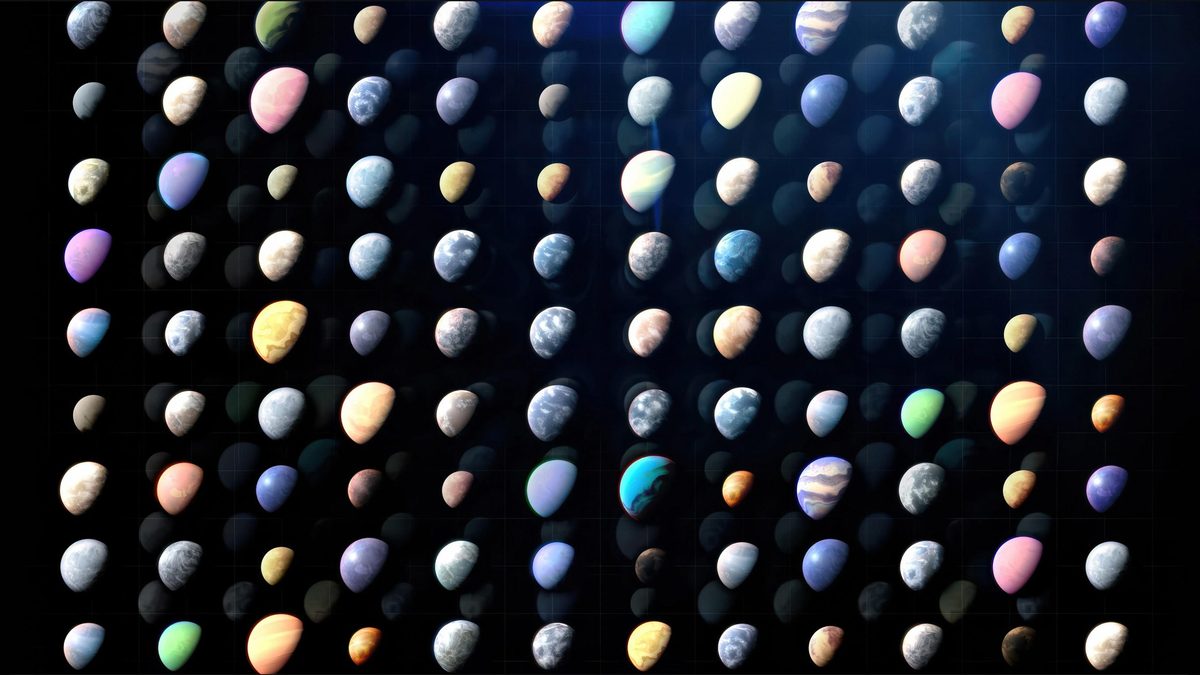
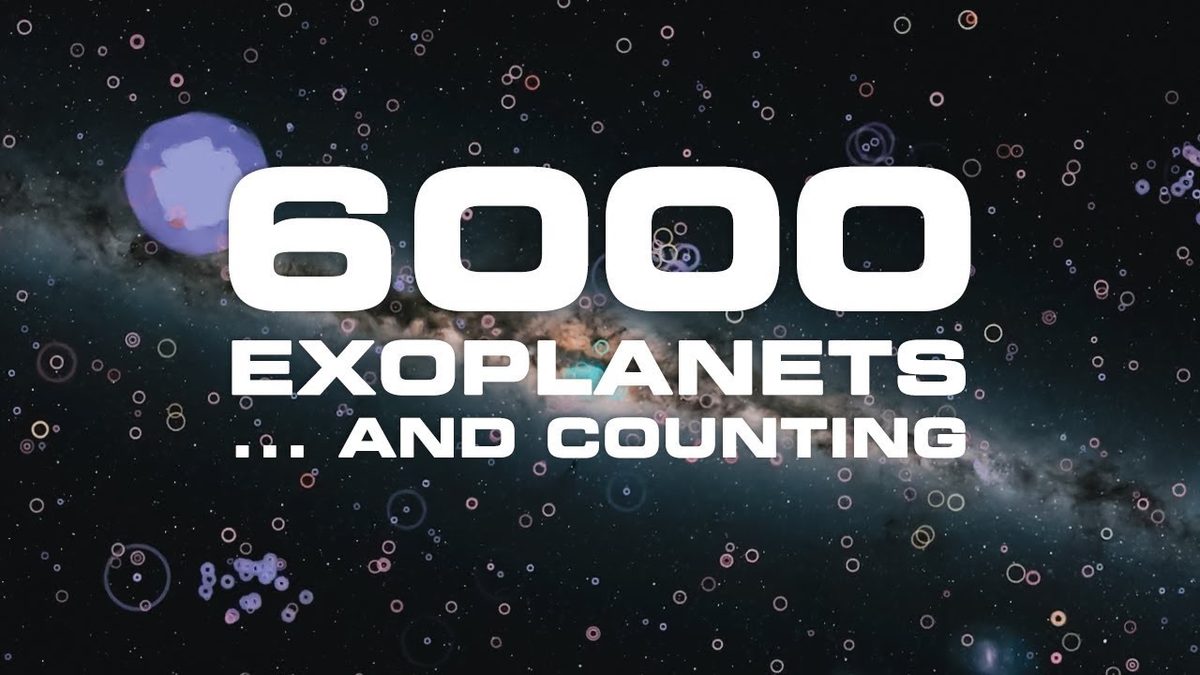
NASA confirmed its 6,000th exoplanet in September 2025, marking a milestone exactly 30 years after astronomers discovered the first planet orbiting a Sun-like star. The tally jumped from 5,000 to 6,000 in just three years—an acceleration driven by space telescopes and AI analysis. Over 8,000 additional candidates await confirmation.

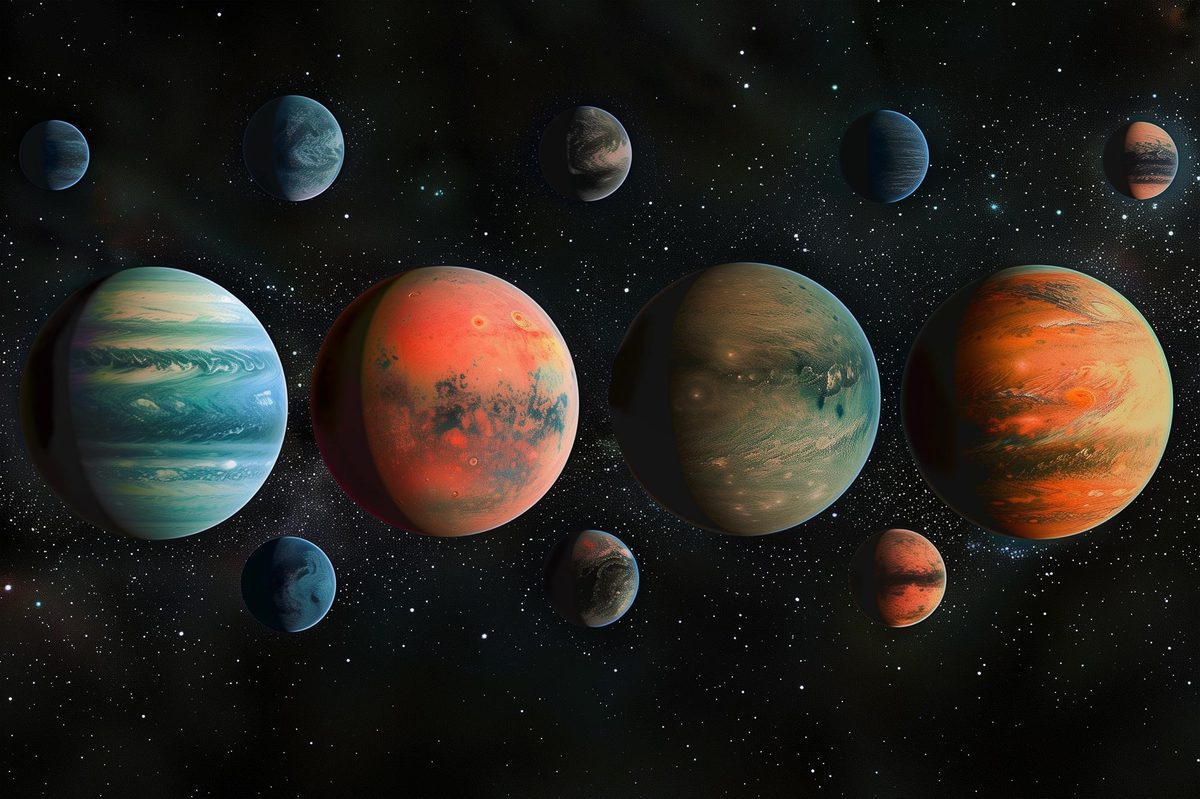
This isn't just bean-counting. JWST has analyzed atmospheres on 100+ exoplanets, hunting for biosignatures. Rocky planets outnumber gas giants. Hundreds of worlds sit in habitable zones where liquid water could exist. The next generation of telescopes—Roman launching 2027, Habitable Worlds Observatory after that—will directly image Earth-like planets and test their air for signs of life. Three decades ago we knew of eight planets. Now we're on the verge of answering whether we're alone.

Key Indicators

6,000
Confirmed Exoplanets
Worlds verified to orbit stars beyond our solar system
8,000+
Candidates Awaiting Confirmation
TESS alone has flagged 7,655 candidate planets
100+
Atmospheres Analyzed by JWST
Chemical fingerprints revealing composition, searching for biosignatures
30
Years Since First Discovery
51 Pegasi b found October 1995, earning a Nobel Prize

Interactive

Exploring all sides of a story is often best achieved with Play.

Ever wondered what historical figures would say about today's headlines?

Sign up to generate historical perspectives on this story.

People Involved

Organizations Involved

Timeline

  1. NASA Confirms 6,000th Exoplanet

    Milestone

    Tally reaches 6,000 confirmed worlds with 8,000+ candidates awaiting verification. JWST has analyzed 100+ atmospheres.

  2. JWST Confirms First Exoplanet

    Discovery

    LHS 475 b, an Earth-sized rocky world 41 light-years away, validated by infrared observations.

  3. 5,000th Exoplanet Confirmed

    Milestone

    NASA Exoplanet Archive adds 65 planets, crossing five-thousand mark after 30 years of searching.

  4. James Webb Space Telescope Launches

    Mission

    Infrared observatory capable of detailed atmospheric analysis begins journey to L2 orbit.

  5. Nobel Prize Awarded for Exoplanet Discovery

    Recognition

    Mayor and Queloz win Physics Nobel for finding 51 Pegasi b and launching the field.

  6. Kepler Retires After 9.6 Years

    Mission

    Space telescope runs out of fuel, having discovered 2,662 confirmed exoplanets.

  7. TESS Launches to Survey Nearby Stars

    Mission

    Transiting Exoplanet Survey Satellite begins all-sky survey of 200,000 bright, nearby stars.

  8. Kepler Space Telescope Launches

    Mission

    NASA's first dedicated planet hunter begins staring at 150,000 stars in Cygnus constellation.

  9. First Exoplanet Around Sun-Like Star Discovered

    Discovery

    Michel Mayor and Didier Queloz announce 51 Pegasi b, a hot Jupiter orbiting every 4.2 days.

Scenarios

Predict which scenario wins. Contrarian picks score more — points lock in when the scenario resolves.

Log in to predict. Track your picks, climb the leaderboard. Log in Sign Up
1

Biosignature Detected on Habitable-Zone Planet Within 5 Years

JWST or ground telescopes detect oxygen and methane together in a temperate planet's atmosphere—a combination suggesting biological activity. The discovery triggers intense scrutiny: follow-up observations rule out abiotic sources, multiple teams replicate results, and NASA fast-tracks the Habitable Worlds Observatory for direct imaging. Public reaction is seismic. The find doesn't prove intelligent life—just microbes, likely—but confirms we're not alone. Funding for astrobiology explodes. Philosophers and theologians weigh in. The discovery reshapes humanity's self-conception as fundamentally as heliocentrism did.

Discussed by: Astrobiologists and NASA Habitable Worlds Observatory planning documents
Consensus
2

Roman Telescope Catalogs 100,000+ Exoplanets via Microlensing

Launching 2027, the Nancy Grace Roman Space Telescope uses gravitational microlensing to detect planets at all orbital distances, including rogue worlds drifting through interstellar space. Its five-year survey discovers 100,000+ exoplanets, dwarfing current tallies. The catalog reveals planetary demographics: how common are Earth-mass worlds? What fraction orbit in habitable zones? Roman's coronagraph directly images dozens of gas giants, testing technology for the Habitable Worlds Observatory. The mission establishes that planets outnumber stars ten-to-one, making the galaxy a crowded place.

Discussed by: NASA JPL, Roman mission scientists in technical papers
Consensus
3

Search Stalls: No Definitive Biosignatures Found by 2035

JWST, Roman, and early Habitable Worlds Observatory observations find plenty of atmospheres—but none showing clear biosignatures. Oxygen appears on lifeless worlds with photochemical explanations. Methane sources remain ambiguous. The K2-18 b dimethyl sulfide claim from 2025 proved a cautionary tale: follow-up showed abiotic processes could produce it. By 2035, we've characterized hundreds of temperate planets, yet all remain inconclusive. Either life is rarer than hoped, biosignatures are subtler than predicted, or our nearest living world sits beyond current telescope reach. The search continues, but optimism fades.

Discussed by: Cautious scientists noting detection challenges, recent K2-18 b false alarm
Consensus
4

Interstellar Probe Mission Launched to Directly Study Nearby Exoplanet

After confirmed biosignatures on Proxima Centauri b (4.2 light-years away) or another ultra-close target, humanity funds an interstellar probe. Using laser propulsion or fusion drives, a lightweight spacecraft accelerates to 10-20% light speed, reaching the system in 20-40 years. The mission carries cameras, spectrometers, and comms equipment, transmitting close-up data back to Earth. Launch requires international cooperation and Manhattan Project-scale funding—but discovering life justifies the cost. The probe departs in the 2040s, with arrival and first images expected in the 2060s-2080s. Humanity becomes interstellar.

Discussed by: Breakthrough Starshot concept, long-range NASA planning studies
Consensus

Historical Context

Discovery of Neptune (1846)

1846

What Happened

Astronomers predicted Neptune's existence by analyzing Uranus's orbital wobbles, then found it exactly where math said it would be. The discovery proved Newton's laws worked beyond the known solar system and showed invisible objects could be detected through gravitational effects. It was astronomy's first major planet found by calculation rather than accident.

Outcome

Short Term

Confirmed mathematical astronomy's predictive power and expanded the known solar system.

Long Term

Established the technique of inferring unseen bodies from gravitational perturbations—the same method used 150 years later to find the first exoplanets.

Why It's Relevant Today

Mayor and Queloz used radial velocity measurements (detecting stellar wobbles) to infer 51 Pegasi b's existence, reprising the Neptune strategy on an interstellar scale.

Galileo's Discovery of Jupiter's Moons (1610)

1610

What Happened

Turning his telescope to Jupiter, Galileo saw four points of light orbiting the planet—proof that not everything circles Earth. The Catholic Church resisted, but the moons (Io, Europa, Ganymede, Callisto) offered undeniable evidence against geocentrism. Galileo published his findings in Sidereus Nuncius, triggering a paradigm shift.

Outcome

Short Term

Provided concrete evidence for the Copernican heliocentric model and challenged religious dogma.

Long Term

Demonstrated that moons and planets exist beyond Earth's neighborhood, expanding humanity's cosmic perspective.

Why It's Relevant Today

Just as Galileo's moons shattered Earth's centrality, the exoplanet revolution shows our solar system isn't unique—planetary systems are the rule, not the exception.

Discovery of Pluto and the Kuiper Belt (1930-1992)

1930-1992

What Happened

Clyde Tombaugh found Pluto in 1930 after a systematic photographic survey. For decades, it was considered the ninth planet. Then in 1992, astronomers discovered the Kuiper Belt—a swarm of icy bodies beyond Neptune. Pluto turned out to be just one large member of this population, leading to its 2006 reclassification as a dwarf planet.

Outcome

Short Term

Expanded the known solar system and later forced astronomers to redefine what constitutes a planet.

Long Term

Revealed our solar system has populations of objects we'd entirely missed—a lesson in humility about the limits of our knowledge.

Why It's Relevant Today

The exoplanet explosion mirrors the Kuiper Belt's discovery: what seemed like a handful of examples turned into thousands, forcing us to rethink planetary demographics and classifications.

Sources

(10)