




Pull to refresh
Logo
Eurozone growth beats forecasts, clearing the ECB's path to another rate hike

Eurozone growth beats forecasts, clearing the ECB's path to another rate hike

Money Moves

A surprise second-quarter rebound removes the last big reason not to raise rates in September

July 30th, 2026: Q2 growth beats forecasts

Overview

Updated Jul 31

The European Central Bank spent early 2026 cutting interest rates. An oil shock, and now a surprise growth spurt, have flipped its direction toward another hike.

On July 30, Eurostat reported the euro-area economy grew 0.4% in the second quarter, double what economists expected. The number removes the strongest argument against raising rates on September 10.

Why it matters

The euro area's rate direction sets borrowing costs, savings returns, and the euro's value for about 350 million people.

Questions about this story

Free account needed to ask — your question is kept and asked for you right after sign-up. Answers are public.

No questions yet — be the first to ask.

Key Indicators

1.0%
Q2 GDP growth (year-on-year)
Well above the roughly 0.4% analysts had forecast.
0.4%
Q2 GDP growth (quarter-on-quarter)
Double the 0.2% economists expected, after a flat first quarter.
2.25%
ECB deposit rate
Held on July 23 after a June hike, the first increase since 2023.
6.3%
Euro-area unemployment
Near record lows, giving the ECB room to keep tightening.
~88%
Market odds of a September hike
Swaps pricing implied a rise to 2.50% at the September 10 meeting.

Voices

Curated perspectives — historical figures and your fellow readers.

Ever wondered what historical figures would say about today's headlines?

Sign up to generate historical perspectives on this story.

People Involved

Organizations Involved

Timeline

June 2026 July 2026

5 events Latest: July 30th, 2026 · 1 month ago
Tap a bar to jump to that date
  1. Q2 growth beats forecasts

    Latest Data

    Eurostat's flash estimate showed 0.4% quarterly and 1.0% annual growth, well above forecasts. Spain rose 0.7% and France returned to 0.2%.

  2. Federal Reserve holds, widening the gap with the ECB

    Context

    The Federal Open Market Committee voted 9-3 to hold the federal funds rate at 3.50%-3.75%. Three members — Hammack, Kashkari, and Logan — dissented in favor of a hike. The decision left the Fed-ECB rate gap at roughly 125-150 basis points and put the two central banks on opposite trajectories: the Fed pausing, the ECB expected to tighten.

  3. ECB holds, Lagarde keeps a hike in play

    Policy

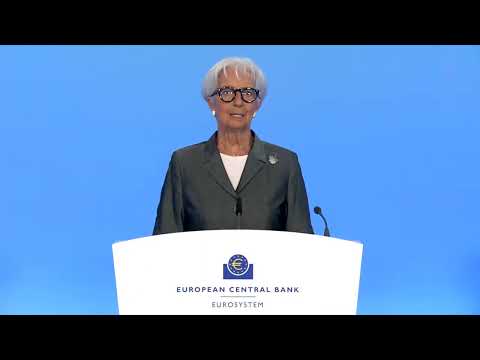
    The bank left the deposit rate at 2.25%. Lagarde pointed to persistent inflation and left a September increase open.

  4. ECB reverses course and raises rates

    Policy

    The ECB lifted all three rates by 25 basis points, its first hike since 2023, citing oil-driven inflation from the US-Iran war.

  5. Eurozone economy shrinks in the first quarter

    Data

    Eurostat confirmed the euro area contracted 0.2% in Q1, the backdrop for a weak growth outlook.

Scenarios

1

ECB raises rates again on September 10

Likely Resolves by Sep 11, 2026

Discussed by: Brown Brothers Harriman, CNBC, and swaps market pricing

Stronger growth plus above-target inflation gives the Governing Council cover to hike. The deposit rate would move to 2.50%. Markets already price the odds near 88%. A further oil spike or a clean inflation print would seal it.

2

ECB holds rates steady through year-end

Possible Resolves by End of 2026

Discussed by: Goldman Sachs, IndexBox economic commentary

If oil prices ease and inflation cools faster than the ECB expects, the bank could pause at 2.25% and wait. Growth strength would then look like a reason to stand pat rather than tighten. This keeps policy on hold into 2027.

3

ECB cuts rates again before year-end

Unlikely Resolves by End of 2026

Discussed by: Analysts weighing a rapid oil-price reversal

A sudden drop in energy prices or a sharp growth relapse could push the ECB back toward easing. The June hike would then look like a short detour forced by the oil shock. This is the least likely path given current inflation.

Historical Context

2 moments from history that rhyme with this story — and how they unfolded.

July 2008

ECB July 2008 rate hike

With oil near $140 a barrel and inflation above target, the ECB raised its main rate to 4.25%. It moved even as the global financial system was cracking.

Then

Within weeks Lehman Brothers collapsed and the euro area fell into recession.

Now

The ECB slashed rates sharply through 2009, and the 2008 hike became a case study in mistiming a move against a commodity shock.

Why this matters now

It is a caution about reading strong data and high inflation as a green light to hike when the outlook can turn fast.

April-July 2011

ECB rate hikes under Trichet (2011)

The ECB, led by Jean-Claude Trichet, raised rates twice in 2011 as oil and commodity prices climbed during the Arab Spring. Inflation had pushed above target. Growth still looked fragile across the euro area.

Then

The hikes squeezed weaker economies just as the sovereign debt crisis deepened in Greece, Ireland, and Portugal.

Now

Mario Draghi reversed both hikes within months of taking over as ECB president in late 2011.

Why this matters now

It shows the risk of tightening into an oil-driven inflation spike while the economy is still shaky, the exact bind the ECB faces now.

Sources

(14)