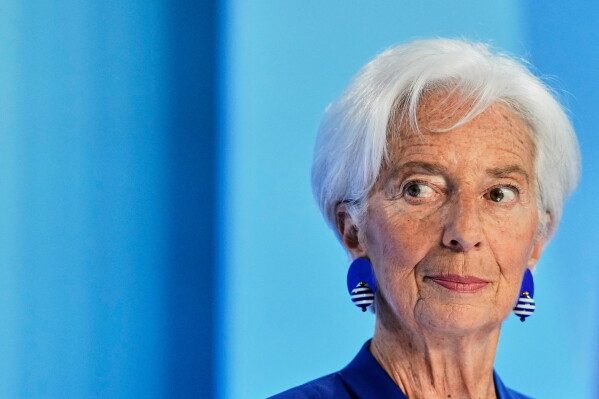
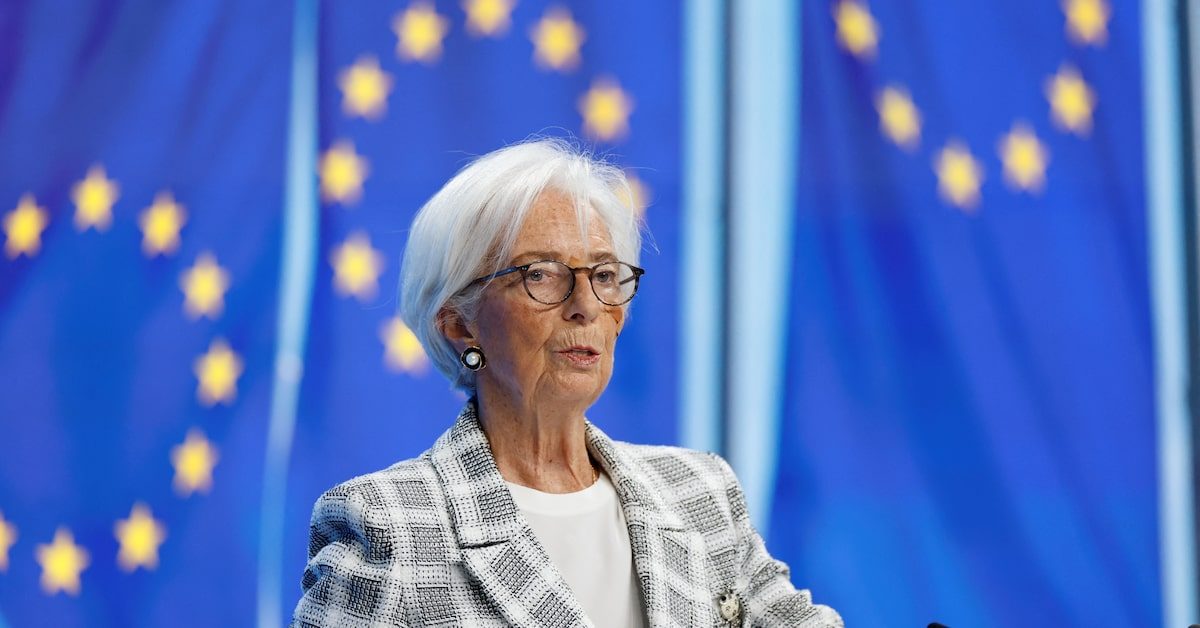
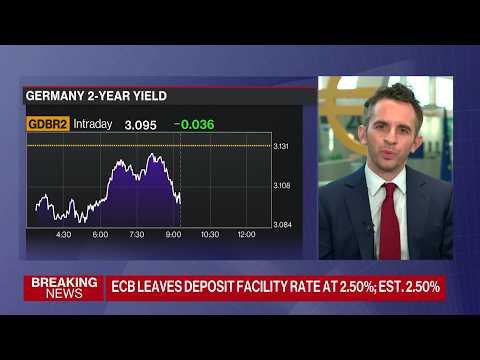
Christine Lagarde leaves the European Central Bank on Feb. 7, 2027, about nine months before her term ends, after announcing on Oct. 29 that she wants freedom to speak on matters beyond monetary policy. Euro-area inflation reached 4% in October, up from 3.8% in September, led by energy costs.
Euro-area finance ministers weighed the two candidates on Nov. 9, Spain's Pablo Hernández de Cos and the Netherlands' Klaas Knot, and made no formal recommendation. Eurogroup President Kyriakos Pierrakakis wants leaders to decide before the end of the year and to treat the presidency and two other open board seats as one package. Bank of France Governor Emmanuel Moulin said Paris should get the chief economist job, and Le Monde reported France may back de Cos.
Why it matters
Whoever steers the ECB through French debt stress gets picked before France's April election.
Questions about this story
Free account needed to ask — your question is kept and asked for you right after sign-up. Answers are public.
No questions yet — be the first to ask.
Key Indicators
7 Feb 2027
Scheduled departure date
Lagarde leaves nine months before her term ends in October 2027.
3 of 6
Executive Board seats changing by May 2027
Schnabel leaves Jan. 3 for the IMF, Lagarde in February, Lane's term ends May 31.
2
Candidates for the presidency
Spain nominated Pablo Hernández de Cos; the Netherlands nominated Klaas Knot. Ministers took stock on Nov. 9.
17-18 Dec
Target date for appointment
EU leaders aim to agree at the Dec. 17-18 summit; Pierrakakis wants a decision before the end of the year.
4%
Euro-area inflation, October
Up from 3.8% in September, driven mainly by energy prices, per Eurostat's flash estimate.
266 days
Early exit vs. scheduled term end
Term was due to end October 31, 2027, after the statutory eight years.
16 events
Latest: Yesterday
Showing 8 of 16
JK to step
Tap a bar to jump to that date
Jump to
November 2026
Bank of France says Paris should get ECB chief economist post
LatestStatement
Governor Emmanuel Moulin said France has never held the chief economist job and has strong candidates for it. He called de Cos and Knot 'extremely competent—pragmatic' picks who represent continuity with Lagarde.
Le Monde reports France may back de Cos over Knot
Process
The newspaper reported that Paris could swing behind the Spanish candidate for the ECB presidency.
Eurogroup weighs de Cos and Knot, makes no recommendation
Process
Euro-area finance ministers heard from the Spanish and Dutch finance ministers and took stock of the two candidacies. Kyriakos Pierrakakis said the choice rests with EU leaders, who should decide before the end of the year, and suggested treating all three open board seats together.
Spain and Netherlands nominate candidates for ECB president
Nomination
By the Nov. 6 deadline, Spain nominated Pablo Hernández de Cos and the Netherlands nominated Klaas Knot. The Eurogroup will take stock on Nov. 9.
Italy says it has no favourite in ECB race
Process
Officials from Prime Minister Giorgia Meloni's office said Italy had not chosen between de Cos and Knot and was assessing both.
Lagarde says December rate decision depends on data
Statement
Lagarde said the ECB will watch incoming indicators before deciding whether a December rate hike is needed, after inflation reached 4%.
EU leaders aim for December appointment, January fallback
Process
A senior euro zone official said leaders aim to agree on Lagarde's successor at the Dec. 17-18 summit. If formal steps slip, the appointment could come in January.
Leaders set two-summit timetable for the succession
Process
El País reports EU leaders will discuss the ECB presidency at an extraordinary summit on Nov. 26-27, aiming to produce a candidate, and could make the appointment at the Dec. 17-18 summit.
October 2026
Euro-area growth beats forecasts as German inflation cools
Economic data
Euro-area output rose 0.4% in the third quarter from the second, while German annual inflation slowed to 2.8% from 3.3%.
Lagarde announces February 7 departure
Announcement
She tells the Governing Council she will step down early, citing a wish to speak freely beyond monetary policy; succession begins.
Schnabel's seat deadline extended to November 27
Process
Eurozone governments get until November 27 to propose candidates for Isabel Schnabel's board seat; the original deadline passed Wednesday.
ECB holds deposit rate at 2.5%
Policy decision
The Governing Council voted unanimously to hold after debating a hike, with inflation at 3.8% and French bond yields near 5%.
Euro-area inflation hits 4% in October
Economic data
Inflation reached a three-year high on food and energy costs, firming the case for a December rate hike.
February 2026
Bank of France governor announces early exit
Resignation
François Villeroy de Galhau says he will leave the Bank of France early, feeding speculation about French political timing.
2022
Inflation tops 11% across the EU
Economic
Prices surge past 11%, ending the era of negative interest rates and prompting rapid rate hikes.
July 2019
Lagarde begins ECB term
Appointment
Lagarde succeeds Mario Draghi as ECB president after eight years running the IMF.
Scenarios
1
Spain's Hernández de Cos named ECB president
Likely
Resolves by Feb 7, 2027
Discussed by: CNBC and market analysts at Validus Risk Management
Spain nominated de Cos on Nov. 6 and main opposition leader Feijóo backs him. Analysts read him as a continuity pick with a financial-stability focus. With French debt under pressure and inflation above target, rate markets would likely take more comfort in a de Cos appointment.
La Repubblica reported on Oct. 30 that Germany backed Knot, though Berlin said on Nov. 6 that consultations were ongoing, a pragmatic hawk. His time chairing the Financial Stability Board gives him crisis credentials as France faces possible financial turbulence. A Knot pick would likely read as hawkish and could support the euro, though a tougher stance could add pressure to French and peripheral bond spreads.
3
Dark horse wins in a negotiated package
Unlikely
Resolves by Feb 7, 2027
Discussed by: Euronews reporting on intergovernmental talks
The presidency, Schnabel's seat, and chief economist Philip Lane's successor may be negotiated together between capitals. Germany is expected to push to keep the market operations portfolio; Spain wants a board return; France, Germany, and Italy hold seats. Bundesbank President Joachim Nagel is mentioned, though Germany has never held the presidency.
4
Nadia Calviño picked as the compromise president
Possible
Resolves by Feb 7, 2027
Discussed by: Xinhua, citing European officials and press reports
Calviño, a former Spanish economy minister who now runs the European Investment Bank, was floated before the Nov. 6 deadline, but the Eurogroup received only de Cos and Knot as candidates. Her profile fits a pattern the ECB has used before: a political figure with EU institutional standing rather than a career central banker. Spain has already nominated Hernández de Cos, so a Calviño pick would mean Madrid winning the post with a different candidate.
5
France backs de Cos and takes the chief economist seat
Possible
Resolves by End of 2026
Discussed by: Le Monde; Bank of France Governor Emmanuel Moulin
Paris has never held the ECB chief economist post, and Moulin has said publicly that it should get it. If France trades its support in the presidential race for that job, de Cos would enter the December summit with the largest euro-area governments behind him. Germany's preference and the market-operations seat would still have to be settled in the same package.
Historical Context
3 moments from history that rhyme with this story — and how they unfolded.
1 of 3
November 2011
Trichet-to-Draghi handover (2011)
Jean-Claude Trichet handed the ECB presidency to Mario Draghi as the eurozone sovereign debt crisis peaked. Draghi's 2012 pledge to do "whatever it takes" to preserve the euro steadied bond markets.
Then
Draghi's intervention tools calmed markets and lowered borrowing costs for stressed member states.
Now
The episode set the precedent that the ECB can act as a backstop for euro area sovereign debt.
Why this matters now
A new ECB president again takes over during debt stress, with France's bond spread over Germany at its highest since the early-2010s crisis. Markets are watching how the bank's crisis tools will be used.
2 of 3
2003
Duisenberg's early exit (2003)
Wim Duisenberg, the ECB's first president, stepped down before completing his term under a "gentlemen's agreement" to hand the post to a Frenchman, Jean-Claude Trichet.
Then
Trichet took office in November 2003 after legal clearance of bribery allegations.
Now
The episode showed that early presidential exits for political reasons are part of the ECB's institutional history.
Why this matters now
Lagarde is not the first ECB president to leave early, and national interests continue to shape who gets the job.
3 of 3
July 2019
Lagarde's 2019 appointment
EU leaders chose Lagarde, France's former finance minister and IMF chief, as a compromise candidate, making her the first woman to lead the ECB.
Then
She took office on a wave of political support across member states.
Now
Her tenure proved the presidency is a political pick among capitals, not purely a meritocratic choice.
Why this matters now
The political character of the appointment, and the timing ahead of France's election, frames the current contest between Spain, the Netherlands, and Germany.