
Pull to refresh
Logo
EU rejects Trump's proposal for a US-Russia security deal covering Europe

EU rejects Trump's proposal for a US-Russia security deal covering Europe

Rule Changes

European capitals warn the plan could sideline NATO as US, Russian and Ukrainian negotiators prepare to meet in Abu Dhabi without them

Overview

Updated 3 days ago

European leaders rejected a US-Russia framework for the continent's security and warned it could weaken NATO. EU foreign policy chief Kaja Kallas said Moscow has no veto over European security, and Poland's foreign minister called a deal reached above Europe's head impossible.

Washington has outlined a plan with permanent consultations, crisis communications and military transparency, but European governments say Russia must end the war in Ukraine first. US, Russian and Ukrainian negotiators meet in Abu Dhabi on November 10-11, with Europe largely absent; EU leaders will discuss a joint position in Dublin this month.

Why it matters

If Washington and Moscow rewrite Europe's security rules without European input, the postwar order could be renegotiated without the countries it protects.

Questions about this story

Free account needed to ask — your question is kept and asked for you right after sign-up. Answers are public.

No questions yet — be the first to ask.

Key Indicators

5
Goals in the US framework
Kushner listed permanent consultations, crisis communications, military transparency, escalation limits and a long-term security framework.
1 week
Brussels talks
US representatives met NATO, EU and major European powers in a week of talks before the Abu Dhabi round.
1997
NATO expansion baseline Russia cites
Moscow has sought a rollback of NATO forces to levels before the alliance's 1997 enlargement.
Nov 10-11
Abu Dhabi talks
US, Russian and Ukrainian negotiators meet; Europe is largely absent from the core talks.

Voices

Curated perspectives — historical figures and your fellow readers.

Sign up to generate historical perspectives on this story.

People Involved

Organizations Involved

Timeline

7 events Latest: 3 days ago
Tap a bar to jump to that date
  1. Report: European capitals fear NATO could be sidelined

    Latest Report

    The Financial Times reports that European officials worry a US-Russia framework could weaken NATO and restore Moscow's sphere of influence. They reject parallel talks before the Ukraine war is resolved.

  2. Europe sets condition for security talks

    Statement

    European governments say Russia must end its war in Ukraine before any discussion of Moscow's security demands, Bloomberg reports. Poland warns that Eastern European states cannot be excluded from the talks.

  3. EU rejects deal negotiated over its head

    Reaction

    Kallas says Europe already has a security architecture and that Putin has no veto over it.

  4. Poland and Ukraine echo rejection

    Reaction

    Sikorski calls a deal above Europe's head impossible; Sybiha says Moscow cannot guarantee European security.

  5. Kushner outlines five-point framework

    Statement

    The US envoy lists consultations, crisis communications, transparency, escalation limits and a long-term framework, saying no country holds a veto over another's alliances.

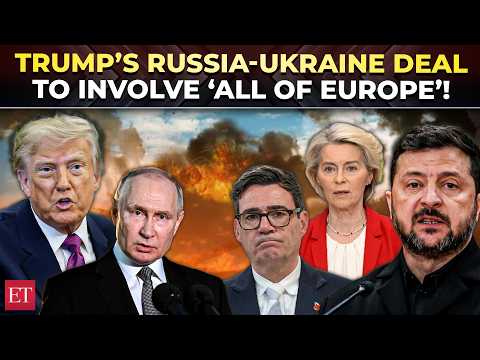
  6. Trump teases deal covering 'all of Europe'

    Statement

    Trump says the agreement will be 'very big' and may involve more than Ukraine, without giving details.

  7. Kremlin sets out its terms

    Statement

    Peskov says 'indivisible security' is a cornerstone of Russia's position and that guarantees can only be mutual.

Scenarios

1

US and Russia announce a framework Europe refuses to sign

Possible Resolves by Jan 31, 2027

Discussed by: European officials and analysts quoted by Euronews, CNN and bne IntelliNews

Washington and Moscow converge on a broad security outline at or after the Abu Dhabi round. European capitals reject it as an attempt to renegotiate NATO's open-door policy and the continent's existing treaties. The deal exists on paper but has no European signatories, leaving implementation in doubt.

2

Europe and Ukraine win a seat, and the deal goes multilateral

Possible Resolves by Q1 2027

Discussed by: Kushner's public statements and EU officials

Kushner has said Washington would consult European allies on the sidelines in Abu Dhabi and move to a broader multilateral format if progress is made. If that happens, the framework would require European and Ukrainian sign-off, changing its terms and slowing it down.

3

Abu Dhabi talks stall and the war grinds on

Likely Resolves by Jan 31, 2027

Discussed by: CNN analysis and European diplomats

The gap between Ukraine's demand for credible guarantees and Moscow's demand for limits on NATO proves too wide. The Abu Dhabi round ends without a joint statement, sanctions and fighting continue, and the security-architecture question is deferred.

4

EU leaders agree on a single voice for Russia talks

Possible Resolves by End of 2026

Discussed by: Italian Prime Minister Giorgia Meloni and European Council President António Costa

Meloni has asked EU leaders to decide how the bloc speaks with one voice on Ukraine, warning that competing national channels damage credibility. Costa said the issue would be discussed at a Dublin leaders' meeting. If agreed, the EU would appoint one representative to deal with Moscow instead of leaving the role to member states.

Historical Context

3 moments from history that rhyme with this story — and how they unfolded.

December 1994

Budapest Memorandum (1994)

Ukraine gave up the world's third-largest nuclear arsenal in exchange for assurances from Russia, the United States and Britain that its borders and sovereignty would be respected.

Then

The memorandum was not a binding defense treaty and was never submitted for ratification as one.

Now

Russia's 2014 annexation of Crimea and 2022 invasion exposed the limits of the assurances, shaping Kyiv's demand for enforceable guarantees today.

Why this matters now

Ukraine's insistence on credible guarantees, rather than another round of political assurances, comes directly from this experience.

May 1997

NATO-Russia Founding Act (1997)

NATO and Russia agreed to cooperate and stated that the alliance would not permanently station substantial combat forces in new member states.

Then

The act eased tensions as NATO prepared to admit Poland, Hungary and the Czech Republic.

Now

Russia later cited the act as a baseline and demanded a return to 1997 force levels, a demand NATO rejected.

Why this matters now

Moscow's push to roll NATO back to 1997 levels is the core territorial demand in the current talks.

September 1938

Munich Agreement (1938)

Britain, France, Germany and Italy agreed to let Germany annex Czechoslovakia's Sudetenland. Czechoslovak representatives were not in the room.

Then

The agreement was presented as a path to peace; Germany violated it within months.

Now

It became the standard example of a great-power settlement made without the state whose territory was at stake.

Why this matters now

Sikorski's warning that a deal 'above our heads' is impossible echoes the objection to settlements reached without the affected country.

Sources

(13)