



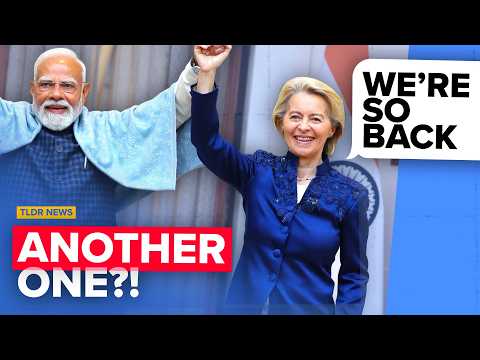
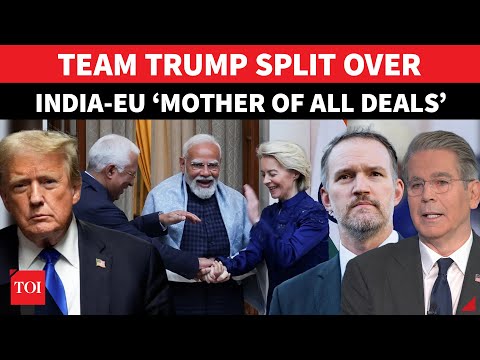

After 19 years, 14 formal rounds, and a January sprint that defied skeptics, India and the European Union concluded their free trade agreement on January 26, 2026. EU leaders Ursula von der Leyen and António Costa, attending India's Republic Day as chief guests, jointly announced the deal with Prime Minister Narendra Modi on January 27. Von der Leyen called it 'the mother of all deals'—a pact creating a free trade zone of 2 billion people and a combined market of $27 trillion, representing 25% of global GDP. President Droupadi Murmu hailed the agreement in her January 28 address to Parliament, marking formal political ratification on both sides.
The deal eliminates tariffs on 96.6% of EU exports to India and 99% of Indian exports to the EU, saving up to €4 billion annually in duties. India will slash car tariffs from 110% to 10% over five years with quotas of 250,000 vehicles, and wine tariffs from 150% to 20%. Europe gains near-zero tariffs on machinery, chemicals, and aerospace over five to ten years. Indian textiles, leather, gems, and IT services win duty-free access to 450 million European consumers. Implementation begins in late 2026 after legal vetting and translation into 24 languages, with full effect expected by early 2027. Both sides framed the agreement as strategic autonomy—India hedging against 50% U.S. tariffs, Europe diversifying from China dependence.
Indian President addresses joint sitting of Parliament, stating the FTA will boost manufacturing, services, and create youth employment. Marks formal political endorsement.
Merz Concludes India Visit with 19 Bilateral Agreements
Political
German Chancellor wraps first Asia visit with defense cooperation roadmap, healthcare worker mobility pact, and joint push for EU-India FTA completion. Modi announces bilateral trade crossed $50 billion.
Merz Announces January 27 Target Date
Announcement
German Chancellor declares in Ahmedabad that EU-India FTA could be signed by month's end during von der Leyen-Costa summit.
Brussels Marathon Negotiations
Ministerial
Goyal and Šefčovič conduct 'intense two-day marathon' in Brussels. Both direct teams to resolve pending issues and expedite.
EU Carbon Border Tax Begins Charging Fees
External Pressure
CBAM implementation starts, requiring importers to purchase carbon certificates for steel, aluminum, cement. India estimates 25% added tax burden on affected exports, increasing urgency for FTA negotiations.
Von der Leyen and Costa Invited as Republic Day Guests
Political
India invites both EU presidents as chief guests for January 26 parade, signaling intent to sign deal.
Šefčovič-Goyal Delhi Meetings
Ministerial
EU Trade Commissioner and Indian Commerce Minister hold two days of talks. Agrawal warns of 'toughest phase.'
Intensive Delhi Negotiating Week
Negotiation
Senior EU negotiators spend November 3-7 in New Delhi for marathon sessions on remaining issues.
U.S. Imposes 50% Tariffs on India
External Pressure
Trump administration hits select Indian exports with punitive duties over Russian oil purchases, accelerating India's EU pivot.
Round 11 Closes Several Chapters
Negotiation
New Delhi session successfully concludes transparency, regulatory practices, customs, IP rights, and mutual assistance provisions.
Entire European Commission Visits India
Political
Von der Leyen leads unprecedented trip of all commissioners to New Delhi, first outside Europe. Leaders commit to conclude by year-end.
Ninth Round in New Delhi
Negotiation
Talks continue but miss informal 2024 completion target. Multiple chapters still open.
EU-India Trade and Technology Council Established
Institutional
New high-level forum created to coordinate on tech standards, supply chains, and strategic trade issues.
First Round in New Delhi
Negotiation
Negotiations restart with Round 1 covering initial positions across 23 policy chapters.
Formal Relaunch of FTA Talks
Negotiation
EU officially relaunches negotiations on three parallel tracks: trade, investment protection, and geographical indications.
Leaders Agree to Resume Negotiations
Political
EU and Indian leaders commit to restart FTA talks plus separate investment and geographical indications agreements.
Talks Stall and Freeze
Breakdown
After 16 rounds, negotiations collapse over IP rights, tariffs, and regulatory issues. Nine-year hiatus begins.
EU-India FTA Negotiations Launch
Negotiation
First attempt at comprehensive trade agreement begins in Brussels.
Scenarios
1
Deal Signed January 27, Ratification Follows
Discussed by: Chancellor Merz, Commissioner Šefčovič, and Indian trade officials in public statements; endorsed by German business lobby and analyzed by Bruegel, Carnegie Endowment
Von der Leyen and Costa arrive in New Delhi with a finalized text. They sign at the January 27 summit, creating headlines about Europe and India defying U.S. protectionism. The Commission then spends six months navigating European Parliament approval and member state ratification. French farmers protest but lack veto power under qualified majority voting. The deal provisionally applies by mid-2026, like CETA did, while formal ratification drags into 2027. German automakers gain phased tariff cuts on exports to India; Indian IT firms get easier temporary work visas to Europe; both sides agree on carbon tax implementation timelines that don't cripple Indian steel. Trade flows begin shifting immediately.
2
Signing Delayed, Negotiations Continue Past Summit
Discussed by: European Council on Foreign Relations, trade analysts citing CBAM disputes and French agricultural concerns
One or two sticking points remain unresolved when von der Leyen and Costa land in Delhi. They attend Republic Day ceremonies but leave without signatures, promising 'substantial progress' and a 'breakthrough soon.' Carbon border taxes, Indian tariffs on dairy or spirits, or IT visa quotas remain contested. Negotiations stretch into March or April 2026. Domestic opposition builds on both sides—Indian steel producers mobilize against CBAM compliance costs, French farmers block highways over import fears. The window closes as both sides turn to other priorities. The deal joins TTIP and EU-Australia in the graveyard of 'nearly done' agreements that never materialized.
3
Limited Deal on Goods, Services and Investment Deferred
Discussed by: Trade analysts at PIIE and Centre for European Reform suggesting a CETA-style phased approach
Facing a hard deadline with political capital invested in the summit, negotiators agree to split the package. They sign a tariff-reduction agreement covering goods trade, leaving contentious services market access, investment protection, and geographical indications for later rounds. This mirrors how the EU separated CETA from a parallel investment court system. Both sides declare victory—'largest goods FTA ever' trumpets Brussels; 'major market access for exports' says Delhi. But the incomplete deal leaves IT worker mobility unresolved, frustrating India's services exporters, and defers carbon tax compromises that remain explosive. It's progress, not transformation.
4
Talks Collapse Over Carbon Taxes or Tariffs
Discussed by: Skeptics citing TTIP precedent and current India-EU disagreements analyzed by Indian think tanks and European agricultural lobbies
The January 27 summit becomes a diplomatic embarrassment. Despite 19 years and 14 rounds, core incompatibilities prove insurmountable. India refuses to accept carbon border taxes without exemptions for its domestic climate efforts; Europe won't budge on CBAM integrity. Or India won't cut tariffs below 50% on European cars and dairy; Germany and France walk away. Von der Leyen and Costa attend Republic Day but announce talks are 'on pause pending further alignment.' The failure mirrors TTIP's 2016 collapse when public opposition and regulatory gaps killed U.S.-EU ambitions. Both sides pivot to other partners—India focuses on deals with UK and ASEAN; EU pursues Latin America and Africa.
Historical Context
EU-Japan Economic Partnership Agreement (EPA)
2013-2019
What Happened
After Japan dropped long-standing objections to agricultural market opening, the EU and Japan concluded negotiations in 2017 and implemented their FTA in February 2019. It became the EU's largest bilateral trade deal by market size, covering close to 30% of global GDP. Negotiations took six years from mandate to signature.
Outcome
Short Term
The agreement eliminated tariffs on 99% of goods and opened services markets, with preference utilization reaching 70.3% for Japanese exporters.
Long Term
Established template for EU 'new generation' FTAs with deep regulatory cooperation beyond tariff cuts, influencing subsequent EU negotiations including with India.
Why It's Relevant Today
The EU-India deal would be comparable in market size and complexity. If concluded by January 27, it would follow a similar but faster trajectory than Japan—six years from 2007 launch to 2013 stall, then four years from 2022 relaunch to 2026 completion.
EU-Canada CETA Agreement
2009-2017
What Happened
Canada and the EU negotiated for five years (2009-2014), signed in 2016, and provisionally applied CETA in September 2017 while member state ratification continued. The deal faced fierce opposition from civil society groups fearing regulatory 'race to the bottom' and agricultural imports. Belgium's Wallonia region nearly vetoed it before last-minute compromises.
Outcome
Short Term
Provisional application allowed immediate tariff cuts and trade flow increases, though preference utilization lagged Japan and Korea.
Long Term
Set precedent for 'provisional application' before full ratification, a model the EU-India deal may follow given likely French and agricultural opposition.
Why It's Relevant Today
CETA shows how the EU can implement major trade deals provisionally despite domestic opposition, using qualified majority voting to override single-country vetoes. If France objects to EU-India, Brussels has a roadmap to proceed anyway.
TTIP (Transatlantic Trade and Investment Partnership) Collapse
2013-2016
What Happened
The U.S. and EU conducted 14 negotiating rounds but failed to agree on a single chapter. Public support collapsed—only 17% of Germans backed it by 2016, down from 55% earlier. Regulatory divergence on food safety, chemical standards, and dispute resolution proved unbridgeable. Brexit and Trump's election killed remaining momentum in 2016.
Outcome
Short Term
Complete failure to conclude agreement, marking the end of U.S.-EU mega-regional trade ambitions.
Long Term
Demonstrated that public opposition, regulatory incompatibility, and political timing can doom even the most ambitious trade talks despite strong elite support.
Why It's Relevant Today
TTIP's collapse over regulatory standards and public backlash serves as a warning. The EU-India deal faces similar pressures—carbon taxes mimic TTIP's regulatory disputes, and French farmer protests echo TTIP's public opposition. The difference: geopolitical urgency in 2026 (U.S. tariffs, China tensions) that didn't exist in 2016.