
Pull to refresh
Logo
Dallas council approves Oak Lawn zoning request for Gillespie Street corner

Dallas council approves Oak Lawn zoning request for Gillespie Street corner

Rule Changes Dallas, TX local

Council closed the Oct. 14 hearing, followed the Plan Commission and approved a 23-story condo tower plan at 3618 Gillespie Street.

Overview

Updated Oct 21

Dallas City Council closed the public hearing Oct. 14 and, following the City Plan Commission's recommendation, approved the Planned Development Subdistrict at Gillespie Street and Welborn Street. The change keeps the site's multiple-family zoning but writes lot-specific standards for a 23-story luxury condo tower called Welborn Residences.

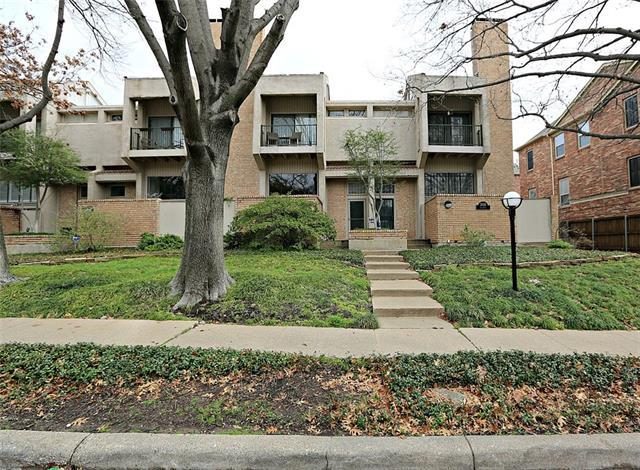
The project from Preston Cheng and 3618 Gillespie LLC would replace 12 townhomes built in 1975 with as many as 50 for-sale homes, including a six-bedroom penthouse with a pool. Nearby residents raised concerns about height, tree loss and parking before the commission and council. The approved plan includes revised conditions and sustainability measures, but zoning approval does not mean construction has started or financing is complete.

Why it matters

The approval lets a 23-story condo tower replace 12 townhomes at Gillespie and Welborn, testing Oak Lawn's density rules.

Last Monday's email for Dallas, TX

Sent Nov 9. It carried:

Get next Monday's: one short email a week. Free. Unsubscribe in one click.

Questions about this story

Free account needed to ask — your question is kept and asked for you right after sign-up. Answers are public.

No questions yet — be the first to ask.

Key Indicators

23
Stories approved
Height of the Welborn Residences tower
50
Homes allowed
Maximum residences in the approved plan
12
Townhomes replaced
1975-era rentals on the 31,000-square-foot site

Voices

Curated perspectives — historical figures and your fellow readers.

Sign up to generate historical perspectives on this story.

People Involved

Organizations Involved

Timeline

September 2026 October 2026

4 events Latest: October 14th, 2026 · 4 weeks ago
Tap a bar to jump to that date
  1. City Council holds public hearing

    Latest Hearing

    Council hears public comments on the Planned Development Subdistrict application for MF-3 uses at 3618 Gillespie Street.

  2. Council approves Gillespie Street PD subdistrict

    Decision

    Council closed the public hearing and followed the City Plan Commission's recommendation, granting the Planned Development Subdistrict for MF-3 multiple-family uses at 3618 Gillespie Street.

  3. Agenda published listing Oct. 14 hearing

    Notice

    City Council agenda posted, scheduling the public hearing on the 3618 Gillespie PD subdistrict application.

  4. Planning and Zoning Commission recommends approval

    Recommendation

    The Dallas Planning and Zoning Commission recommended approval of the PD subdistrict application, subject to a development plan and conditions.

Historical Context

2 moments from history that rhyme with this story — and how they unfolded.

November 1926

Euclid v. Ambler (1926)

The U.S. Supreme Court upheld zoning as a constitutional exercise of police power, ruling that a village could separate residential and commercial uses. The case involved a 68-acre tract in Euclid, Ohio, and became the legal foundation for all American zoning.

Then

Cities across the country adopted zoning ordinances with new confidence.

Now

The ruling enabled the district-based land-use system that Planned Development Subdistricts now use.

Why this matters now

The Oak Lawn PD subdistrict application rests on the zoning power this case established.

1960s

The rise of Planned Unit Development zoning (1960s)

American cities began adopting Planned Unit Development (PUD) ordinances to allow more flexible, mixed-use projects than traditional zoning permitted. PUDs let developers negotiate tailored standards for density, layout, and open space in exchange for design review.

Then

PUDs became a popular tool for large-scale residential and mixed-use projects.

Now

Planned Development districts like Dallas's PD No. 193 evolved from this model, allowing site-specific rules within a broader zoning framework.

Why this matters now

The 3618 Gillespie application uses this mechanism to seek MF-3 uses under a PD subdistrict's tailored standards.

Sources

(9)