
Pull to refresh
Logo
China raises estimates for gold, nickel and strategic mineral resources

China raises estimates for gold, nickel and strategic mineral resources

Built World

Ministry of Natural Resources reports rhenium up more than 200% and a first-of-its-kind zircon placer in Xinjiang with super-large hafnium

Overview

Updated Oct 31

China's Ministry of Natural Resources raised its estimate of the country's retained rhenium resources by more than 200% and added gold and nickel equivalent to dozens of large deposits. The ministry said the gains came from a year-long reassessment of 1,800 operating mines and large mining areas for 17 strategic minerals, not from a new round of drilling.

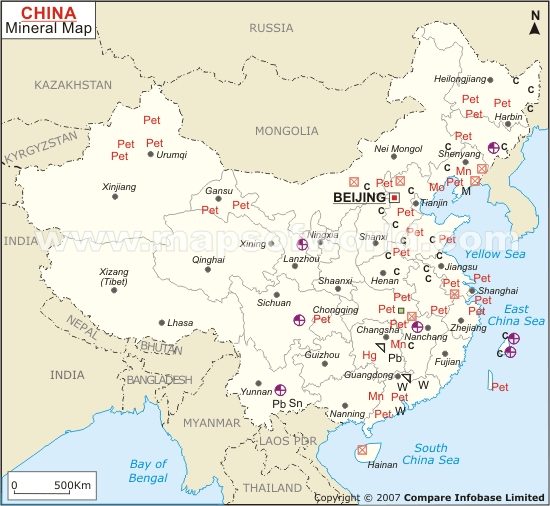
The same briefing produced China's first paleofluvial-lacustrine zircon placer, an ancient river-and-lake sand deposit in Baicheng county, Xinjiang. The ministry said confirmed resources there equal more than 40 large zircon deposits, with associated hafnium at super-large scale, and that it will speed up public bidding for mining rights at the site.

Why it matters

Beijing now counts more of the minerals used in jet engines, nuclear fuel rods and electronics as usable, narrowing some import gaps.

Questions about this story

Free account needed to ask — your question is kept and asked for you right after sign-up. Answers are public.

No questions yet — be the first to ask.

Key Indicators

200%
Rhenium resource increase
China's retained rhenium resources rose by more than 200% after reassessment.
50
Gold equivalent deposits
The gold increase is equivalent to 50 large deposits.
30
Nickel equivalent deposits
The nickel increase is equivalent to 30 large deposits.
13
Minerals with higher estimates
Thirteen of the 17 minerals reviewed showed significant increases in retained resources.
17
Strategic minerals assessed
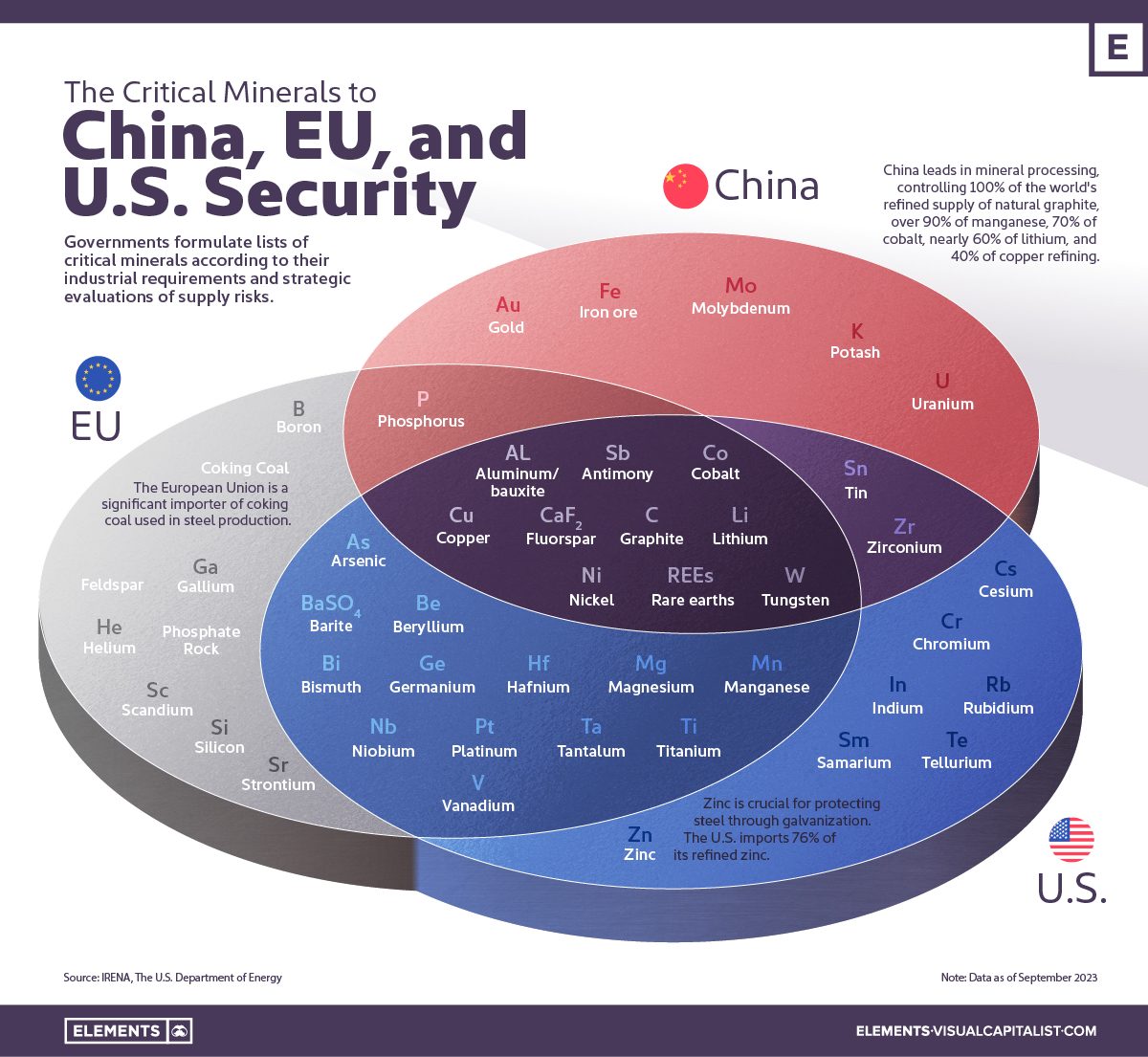
The review covered gallium, germanium, indium, nickel, cobalt, zircon, rare earths, rhenium, gold and others.
1,800+
Mines and mining areas reviewed
The survey covered operating mines and large and medium-sized mining areas across 27 provinces.
40+
Zircon equivalent deposits
Confirmed resources at the Baicheng placer in Xinjiang equal more than 40 large zircon deposits; its associated hafnium is classed super-large.

Voices

Curated perspectives — historical figures and your fellow readers.

Sign up to generate historical perspectives on this story.

People Involved

Organizations Involved

Timeline

2024 October 2026

3 events Latest: October 31st, 2026 · 1 week ago
  1. Ministry reports higher mineral resource estimates

    Latest Announcement

    Rhenium resources rise over 200%; gold and nickel gains equal 50 and 30 large deposits.

  2. China finds first zircon placer in Xinjiang

    Discovery

    First paleofluvial-lacustrine zircon placer found in Baicheng, Xinjiang.

  3. China launches strategic mineral reassessment

    Survey

    Ministry organizes a nationwide review of associated and low-grade resources for 17 strategic minerals.

Scenarios

1

Xinjiang zircon find is certified as a large resource base

Possible Resolves by End of 2027

Discussed by: Ministry of Natural Resources; 21st Century Business Herald

The Baicheng deposit is the first of its kind in China. If follow-up drilling confirms enough usable zircon, the ministry could designate it a large resource base and prioritize permits and infrastructure. That would give China a domestic source for a metal it has largely imported.

2

Revised estimates lift China's zircon or rhenium supply

Possible Resolves by End of 2028

Discussed by: Investing.com; Xinhua

A resource estimate is not a mine. Turning the reassessment into supply requires permits, processing capacity and prices that justify extraction. If those fall into place, China's imports of zircon or rhenium-bearing materials would decline.

3

Beijing expands the reassessment to more minerals

Likely Resolves by Q2 2027

Discussed by: Ministry of Natural Resources

Qiao said the work created a technical method for the next round. The 15th Five-Year Plan could extend the same low-grade and associated-resource review to minerals outside the original 17. That would broaden the official resource base again without new discoveries.

4

Xinjiang auctions mining rights at the Baicheng zircon placer

Likely Resolves by End of 2027

Discussed by: Zhu Yilin, Xinjiang Department of Natural Resources

Zhu said the region would speed up transfers of mining rights through public bidding and push rights holders to expand reserves and production. An auction would move the deposit from a ministry resource estimate toward an operating mine, though processing capacity and prices still decide whether zircon actually reaches buyers.

Historical Context

2 moments from history that rhyme with this story — and how they unfolded.

2010

China's rare-earth export quotas (2010)

China cut rare-earth export quotas, and prices for metals used in magnets and electronics jumped. The United States, Japan and the European Union challenged the limits at the World Trade Organization.

Then

Buyers scrambled for supply outside China and stockpiled material.

Now

The WTO ruled against China in 2014, but China kept most processing capacity and later consolidated the industry.

Why this matters now

The episode shows how export concentration can become leverage, and why Beijing tracks which minerals it can supply at home.

2023

China's gallium and germanium export controls (2023)

China required export licenses for gallium and germanium, two metals used in chips and optics, citing national security. The move followed U.S. restrictions on advanced chip exports.

Then

Export approvals slowed and prices rose.

Now

Buyers accelerated efforts to find substitutes and non-Chinese supply, while China retained most refining capacity.

Why this matters now

The controls show that mineral estimates matter most when they change who can credibly promise supply.

Sources

(7)