Anchor

California bans addictive social media features for users under 16
Rule ChangesNewsom signs 13-bill package with first-in-nation AI companion chatbot safety rules
Yesterday: National coverage spreads after signingNew here? Follow stories to track developments over time. Create a free account to get updates when stories you care about change.
Overview
Updated 16 hours agoCalifornia Gov. Gavin Newsom signed 13 child-safety bills on Sept 10 that bar social media platforms from offering addictive features to users under 16. The laws target autoplay and algorithmic feeds built around a user's history and profile. They take effect January 1 unless courts block them.
The package also creates the nation's first comprehensive rules for AI companion chatbots. Adam's Law, named for Adam Raine, a teenager who died by suicide, requires crisis protocols, parental controls, and annual child-safety audits. Chatbots must tell young users when they are not talking to a human.
Why it matters
If the law holds, millions of American teens lose autoplay and algorithmic feeds by default, forcing platforms to redesign for young users.
Questions about this story
Free account needed to ask — your question is kept and asked for you right after sign-up. Answers are public.
No questions yet — be the first to ask.
Key Indicators
13
Bills in the child safety package
Signed into law as one package on Sept 10.
Under 16
Age cutoff for the addictive features ban
Platforms can't show autoplay or algorithmic feeds to users under 16.
$18B
Meta's child safety settlement (prior context)
Meta agreed in August 2026 to pay states up to $18 billion to settle child safety lawsuits.
4 years
Ban on AI companion chatbot toys
The package bars manufacturing and selling toys with companion chatbots for four years.
Related Media
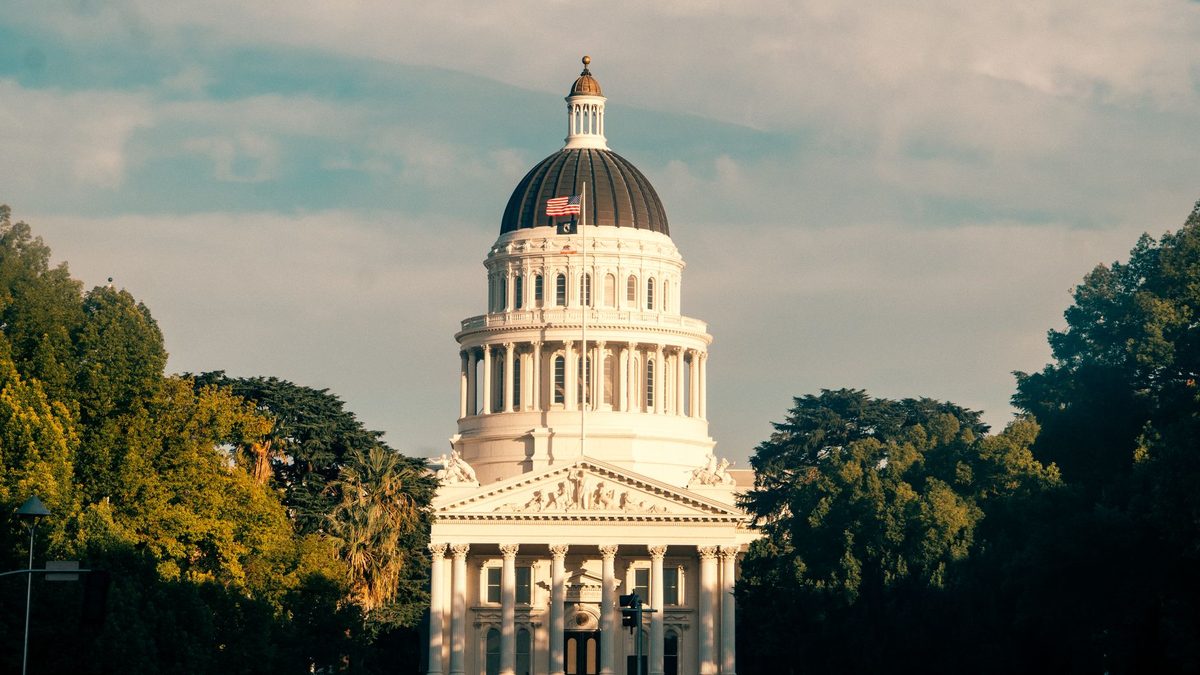
Captivating view of the California State Capitol amidst lush greenery under a clear sky.
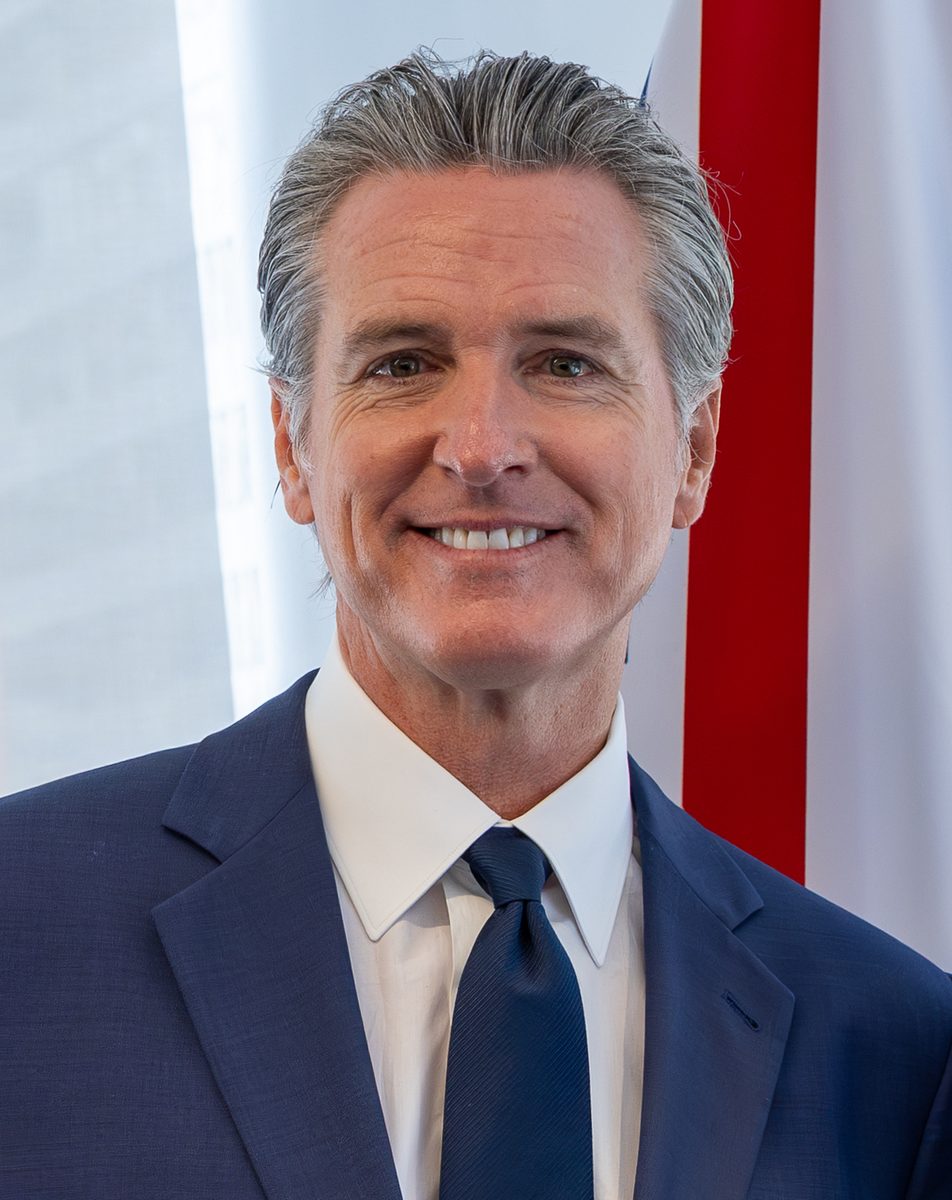
Governor Gavin Newsom in 2025

8.5K views
3:03
Gov. Newsom signs new laws to protect children from social ...
CBS LA
Images from Openverse under Creative Commons licenses. Videos from YouTube.
Voices
Curated perspectives — historical figures and your fellow readers.
Play
Exploring all sides of a story is often best achieved with Play.
Most of these play right now — no account needed. Sign up to save scores, keep a streak, and unlock Debate and Predict.
Log in
Sign Up
Higher or Lower
A number from this story, against one from elsewhere in the news — guess which is bigger, then keep the chain going. 5 rounds, 3 strikes; a miss costs a strike and resets your streak.
Example
Anchor
EU tariff revenue
$52B
Big for this kind of number
Mystery
Pentagon AI contract
?
Round 1
Streak: 0
Mystery
?
Keyboard: ↓/L lower · ↑/H higher
0 pts
Best streak: 0 · Rounds: 0
0 points — sign up to put that on the leaderboard.
Now try on this story
Connections
Sixteen names from the news. Find the four hidden groups of four. Four mistakes max.
Loading today's puzzle…
0/4 groups
Mistakes
Sign up to keep a daily streak — a new puzzle lands every day.
Now try on this story
Exit debate?
Your progress in this debate will be lost.
How it works
- 1 Two AI personas square off on this story.
- 2 You predict who'll win each round — correct picks earn XP.
- 3 One crossfire question is yours to fire. Pick it carefully.
Couldn't generate a topic
Select Your Champions
Choose one persona for each side of the debate
DEBATE TOPIC
Choose personas with different perspectives for a more dynamic debate.
SIDE A (PRO)
Select debater for this side:
No debate personas available right now.
SIDE B (CON)
Select debater for this side:
No debate personas available right now.
VS
Get ready to make your prediction...
Round of
Claim
Evidence
Stakes
Crossfire Answer
Closing Statement
Claim
Evidence
Stakes
Crossfire Answer
Closing Statement
Your Crossfire Question
Generating arguments...
Who's Got This Round?
Make your prediction before the referee scores
The referee scores both sides on
Correct predictions earn +20 XP
· Press 1 or 2 to pick
Evidence
40%
Logic
30%
Detail
20%
Style
10%
Round Results
Your Pick
Not this time
(%)
Overall Score
/10
Your Pick
Not this time
(%)
Overall Score
/10
Set the Crossfire
Pick the question both personas must answer in the final round
Crafting crossfire questions...
Choosing a question earns +10 XP crossfire bonus
🏆
Total XP Earned
Cred Change
Predictions
Debate Oracle! You called every round!
Sharp Instincts! You know your debaters!
The Coin Flip Strategist! Perfectly balanced!
The Contrarian! Bold predictions!
Inverse Genius! Try betting the opposite next time!
XP Breakdown
Base completion
+20 XP
Rounds played ( rounds x 5 XP)
+ XP
Correct predictions ( correct x 20 XP)
+ XP
Crossfire bonus
+10 XP
Accuracy
%
Prediction History
Round
You picked:
✓
✗
Now try on this story
Keep debating to level up your credibility and unlock achievements
People Involved
Gavin Newsom
Governor of California
Signed the child safety package on Sept 10, 2026
Adam Raine
Namesake of Adam's Law
Deceased; his suicide inspired the chatbot safety bill
Rebecca Bauer-Kahan
California State Assemblymember
Helped craft the child safety package
JL
Josh Lowenthal
California State Assemblymember
Introduced AB 1709
Ed Howard
Senior counsel, Children's Advocacy Institute
Watching enforcement closely
Organizations Involved
California Governor's Office
State Executive Office
Signed and now implementing the child safety package
Oversees enforcement and implementation of the new child safety laws.
Children's Advocacy Institute
Public Interest Research Institute
Tracking enforcement effectiveness
University of San Diego research institute focused on child welfare law.
Timeline
August 2026 September 2026
4 events
Latest: Yesterday
Tap a bar to jump to that date
-
National coverage spreads after signing
Latest MediaReddit and national outlets highlight California's bans on addictive features and chatbot rules.
-
Newsom signs 13-bill child safety package
LawGovernor signs laws banning addictive features for under-16s and requiring chatbot safety audits.
-
AI researchers warn of risk
StatementCurrent and former Anthropic and OpenAI researchers warned of existential AI risks.
-
Meta settles child safety lawsuits
LegalMeta agreed to pay states $18 billion to settle child safety lawsuits.
Scenarios
1
California child-safety laws face court challenge
Uncertain
Resolves by Jan 1, 2027
Discussed by: Ed Howard of the Children's Advocacy Institute; legal observers cited by CalMatters
Tech platforms argue algorithmic feeds are protected speech and file suit before the laws take effect. If a federal court grants a preliminary injunction, platforms can keep serving algorithmic content to teens in California while the case proceeds.
2
Other states copy California's child safety rules
Possible
Resolves by Jan 1, 2028
Discussed by: CalMatters; state legislators with active child-safety agendas
Statehouses adopt versions of AB 1709 and Adam's Law, especially where platforms face ongoing lawsuits. A multi-state coalition would pressure platforms to change national defaults rather than customizing per state.
3
Federal government passes nationwide child safety rules
Unlikely
Resolves by Jan 20, 2028
Discussed by: Politico; Gov. Gavin Newsom
Newsom has called on Washington to go beyond California's rules. A national law would preempt the state patchwork and give federal regulators enforcement power, but congressional action on tech regulation has stalled for years.
4
Age verification failures stall California's under-16 feed ban
Possible
Resolves by Q2 2027
Discussed by: The Next Web
The feed ban works only if platforms can reliably tell how old users are. Age assurance has failed in every previous attempt, and California's announcement did not specify how it would work or who enforces it.
Historical Context
3 moments from history that rhyme with this story — and how they unfolded.
October 1998 – April 2000
COPPA (1998)
The US Children's Online Privacy Protection Act restricted sites from collecting personal data from kids under 13, requiring parental consent. It took effect in 2000.
Then
Sites added age gates and parental consent flows; enforcement was uneven for years.
Now
COPPA set the baseline for child privacy online but never addressed addictive design or algorithmic recommendation.
Why this matters now
California's package extends the US approach from data privacy into product design, a shift COPPA never made.
October 2023 – 2025
UK Online Safety Act (2023)
Britain's law imposed a duty of care on platforms to protect children, with fines up to 10% of global revenue for failures. Ofcom began enforcing it in 2025, requiring platforms to run child-safety risk assessments.
Then
Platforms changed default settings and added age checks; some sued over content definitions.
Now
Set a global template for platform 'duty of care' duties, which California's audit requirements echo.
Why this matters now
Highlights how design-focused regulation works in practice, and the litigation platforms use to delay it.
November 2024 – December 2025
Australia's social media under-16 ban (2024-2025)
Australia passed a law in late 2024 banning social media platforms from serving users under 16, among the strictest age-based restrictions anywhere. Platforms faced fines in the tens of millions of dollars for non-compliance.
Then
Platforms said they would comply; age-verification systems drew privacy complaints.
Now
Australia became the reference point for state-led age gating, and several countries followed with similar proposals.
Why this matters now
Shows both the political appeal of age-based platform bans and the messy enforcement that follows.
Sources
(11)Related Stories
California enacts package of online child safety laws
Rule Changes
Updated Yesterday
Anthropic bars minors from Claude
Rule Changes
Updated Yesterday
AI chatbot makers build age gates for minors under legal pressure
Rule Changes
Updated Aug 18
Australia boots under–16s off social media in world–first crackdown
Rule Changes
Updated May 10
America's two largest school districts impose student AI moratoriums
Rule Changes
Updated 5 days ago
Europe moves to ban social media for minors
Rule Changes
Updated May 27