
Pull to refresh
Logo
Bank of Korea holds rates at 3% after back-to-back hikes

Bank of Korea holds rates at 3% after back-to-back hikes

Money Moves

Unanimous pause; growth upgraded, won at 2024 high, KOSPI down 3.5%

Overview

Updated Oct 22

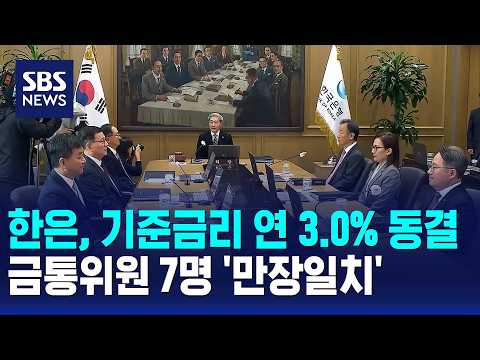
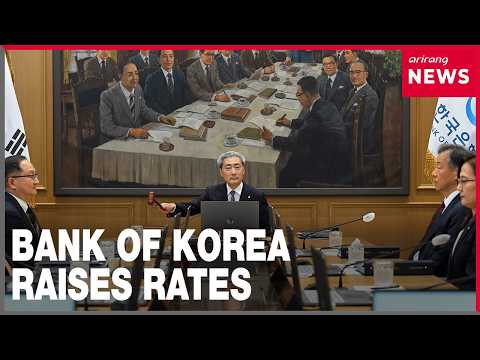
The Bank of Korea left its benchmark rate at 3% on October 22, pausing after consecutive hikes in July and August. All seven board members voted to hold.

Inflation was 2.9% in September, above the 2% target, and growth is running faster than the bank forecast in August. The won climbed to 1,324.2 per dollar, its strongest since October 2024, while the KOSPI fell 3.5% on worries about chip profits. Governor Shin Hyun Song warned that spending increases are hard to reverse, and markets expect a hike on November 26.

Why it matters

If the BOK raises rates again in November, Korean households with variable-rate mortgages and small businesses face another jump in borrowing costs.

Questions about this story

Free account needed to ask — your question is kept and asked for you right after sign-up. Answers are public.

No questions yet — be the first to ask.

Key Indicators

3.00%
BOK benchmark rate
Held steady after July-August hikes lifted it from 2.5%.
2.9%
September headline CPI
Above the 2% target.
2.8%
September core inflation
Excludes food and energy prices.
7-0
Unanimous vote to hold
All Monetary Policy Committee members backed the pause.
3.3%
August 2026 growth forecast
The BOK now expects actual growth to run considerably above this.
1,324.2
Won per dollar, Oct 22 close
Strongest since October 2, 2024, helped by a large current account surplus.

Voices

Curated perspectives — historical figures and your fellow readers.

Sign up to generate historical perspectives on this story.

People Involved

Organizations Involved

Timeline

July 2026 October 2026

5 events Latest: October 22nd, 2026 · 3 weeks ago
Tap a bar to jump to that date
  1. BOK holds at 3.00% in unanimous vote

    Latest Policy

    Seven-member committee votes to pause, upgrades growth outlook, signals future hikes remain possible.

  2. KOSPI drops 3.5%, won hits strongest since 2024

    Markets

    The chip-heavy KOSPI fell 3.5% on the day of the rate decision. The won closed at 1,324.2 per dollar, its strongest level since October 2, 2024.

  3. September inflation at 2.9%, core at 2.8%

    Economy

    Both headline and core inflation stay above the 2% target.

  4. BOK hikes again to 3.00%

    Policy

    Second consecutive increase; the BOK's first back-to-back hikes in more than three years.

  5. BOK raises rate to 2.75%, starting tightening cycle

    Policy

    First of two consecutive hikes, moving the benchmark rate up from 2.5%.

Scenarios

1

BOK hikes again at November 26 meeting

Likely Resolves by Nov 26, 2026

Discussed by: Kyobo Securities (Paik Yoon-min), Capital Economics (Gareth Leather), market pricing

The BOK raises its rate to 3.25% at the next meeting, following through on its hawkish tone. Both Paik and Leather expect this, citing strong exports and persistent inflation. Paik sees a further hike in Q1 2027, carrying the terminal rate to the 3.50% that markets have priced in.

2

BOK holds through Q4 2026, hikes in early 2027

Possible Resolves by Q1 2027

Discussed by: Reuters poll of 34 analysts (all expected the October hold); market consensus terminal rate of 3.50%

The BOK uses the rest of 2026 to monitor the Middle East conflict, AI investment trends, and how prior hikes pass through to the economy. It then resumes tightening with a hike in the first quarter of 2027, reaching the market-expected terminal rate of 3.50% on a slower timetable.

3

Extended pause as external shocks delay tightening

Unlikely Resolves by Jan 31, 2027

Discussed by: Governor Shin's emphasis on Middle East conflict and major-economy policy uncertainty

A worsening Middle East conflict or a sharp global market selloff — the BOK itself flagged rising long-term bond yields and dollar strength — pushes the committee to keep rates unchanged into 2027. Growth stays solid but policymakers prefer to wait for clarity before moving again.

Historical Context

2 moments from history that rhyme with this story — and how they unfolded.

August 2021 – January 2023

Bank of Korea's 2021-2023 tightening cycle

The BOK lifted its policy rate from a record low of 0.50% to 3.50% to fight post-pandemic inflation that peaked above 6%. It was the bank's most aggressive tightening in two decades, delivered through a series of hikes including consecutive increases.

Then

Household debt burdens rose and Korea's once-hot housing market cooled sharply.

Now

The cycle showed the BOK would act on consecutive hikes even as global markets wobbled, and it set a policy rate that stayed in place long after the inflation surge faded.

Why this matters now

Today's pause mirrors that cycle's rhythm — the bank hiked twice in quick succession, then waited to measure effects before deciding whether to move again.

March 2022 – July 2023

US Federal Reserve's 2022-2023 hiking cycle

The Federal Reserve raised the federal funds rate from near zero to 5.25-5.50%, its fastest tightening since the 1980s, to pull inflation down from four-decade highs. The Fed delivered consecutive hikes, then paused to assess lagged effects.

Then

Global markets repriced sharply; the dollar strengthened and emerging-market currencies came under pressure.

Now

Central banks worldwide adopted a data-dependent, meeting-by-meeting approach, making pauses a routine part of tightening cycles.

Why this matters now

The BOK is following the same playbook: tighten first, then assess lags before the next move. Unlike 2022, the won has strengthened this cycle — it trades near 1,326 per dollar rather than above 1,400.

Sources

(15)