
Pull to refresh
Logo
Daily Brief
Following
Why Ranks Sign Up
Bangladesh begins fueling Rooppur nuclear plant

Bangladesh begins fueling Rooppur nuclear plant

Built World

65 years after East Pakistan first considered atomic power, Russian-built reactors near commercial startup

April 28th, 2026: Fuel loading begins at Unit 1

Overview

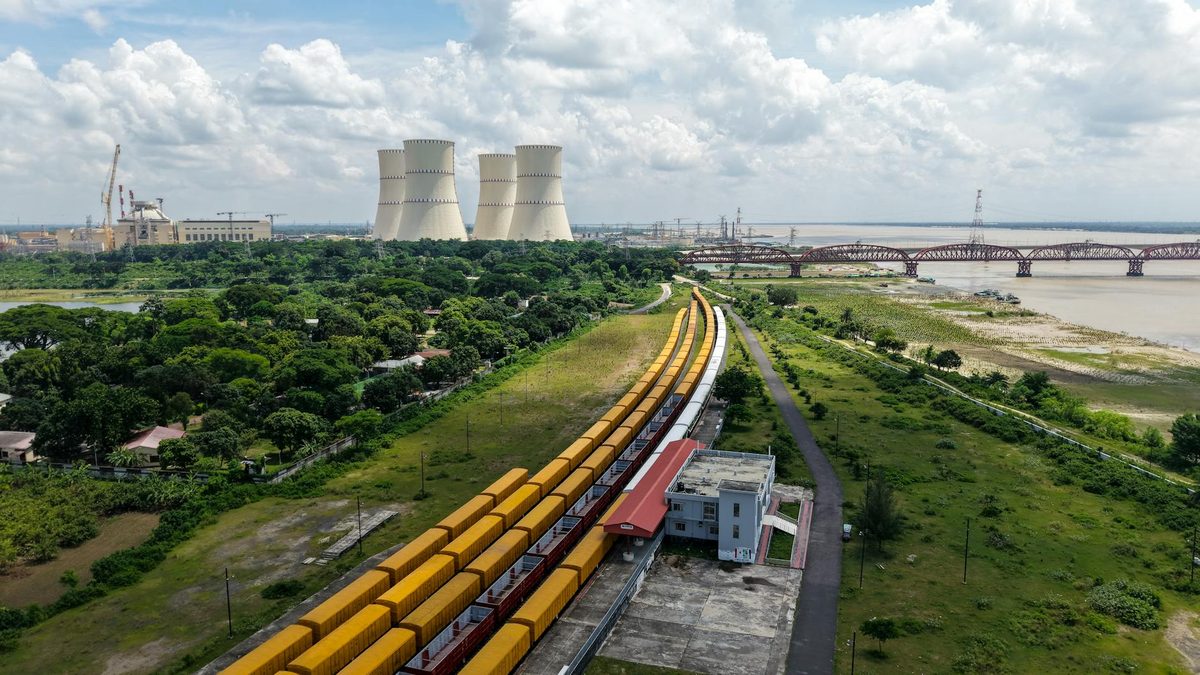
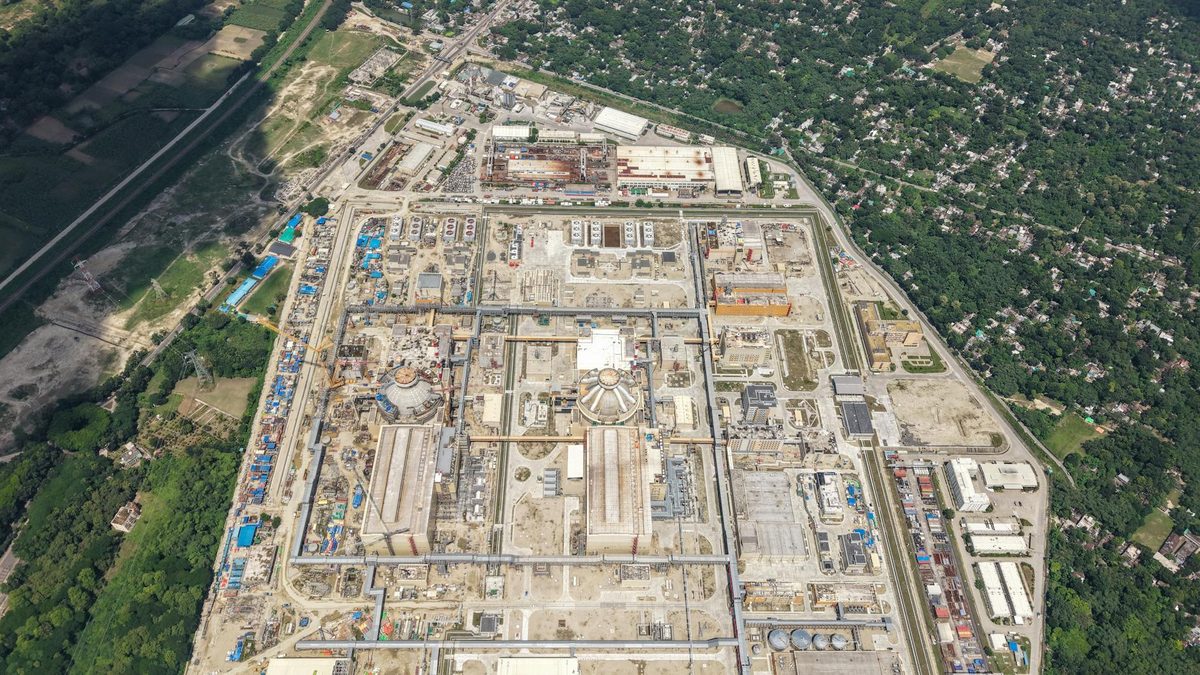
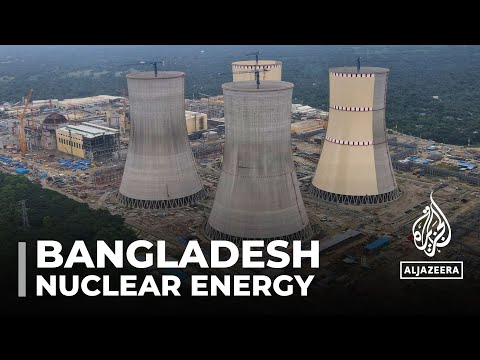
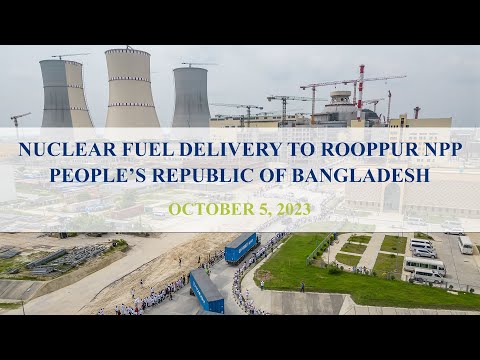
Bangladesh first considered building a nuclear plant in 1961, when the site at Rooppur was still part of East Pakistan. Sixty-five years later, on April 28, 2026, technicians began lowering 163 uranium fuel assemblies into the core of Unit 1—the step that turns a construction project into a nuclear power station. The Bangladesh Atomic Energy Regulatory Authority (BAERA) issued the operating license for Unit 1 on April 16, 2026, the final regulatory clearance before uranium could enter the core. The loading process is expected to take 21 to 30 days, after which the reactor will be brought to first criticality.

The two-reactor, roughly $12.65 billion plant on the Padma River is Russia's largest single export project and Bangladesh's largest piece of infrastructure. Once both VVER-1200 units run, they will supply roughly 12% of national electricity and make Bangladesh the 33rd country in the world—and the third in South Asia, after India and Pakistan—to produce atomic power. The fuel loading took place under a newly elected government: Tarique Rahman's Bangladesh Nationalist Party (BNP) won 209 of 297 parliamentary seats on February 12, 2026, and Rahman was sworn in as Prime Minister on February 17, inheriting Rooppur from the Yunus interim administration.

Why it matters

Bangladesh's 170 million people endure chronic blackouts on a grid mostly fed by imported gas. Rooppur adds 2,400 MW of baseload independent of global fuel markets.

Play on this story Voices Debate Predict

Key Indicators

$12.65B
Total project cost
Largest single infrastructure project in Bangladesh's history, financed mainly by an $11.38 billion Russian export credit.
2,400 MW
Combined capacity
Two VVER-1200 reactors will supply roughly 12% of Bangladesh's electricity once both units are commercial.
163
Fuel assemblies loaded
Uranium assemblies being placed in Unit 1's core under IAEA and Rosatom supervision.
3rd
South Asian nuclear producer
Bangladesh joins India (1969) and Pakistan (1972) as the only South Asian states generating atomic power.
300 MW
First grid contribution
Initial power expected to reach Bangladesh's national grid by August 2026, ramping toward 1,200 MW by year-end.
65 years
From concept to fuel load
Site selection in 1961 to first fuel loading in 2026, spanning East Pakistan, independence, and multiple governments.

Interactive

Exploring all sides of a story is often best achieved with Play.

Ever wondered what historical figures would say about today's headlines?

Sign up to generate historical perspectives on this story.

People Involved

Organizations Involved

Timeline

  1. Fuel loading begins at Unit 1

    Construction

    Technicians start placing 163 uranium fuel assemblies into Unit 1's core under IAEA and Rosatom supervision. Bangladesh becomes a pre-operational nuclear state.

  2. Rosatom chief meets Prime Minister Rahman hours before fuel ceremony

    Diplomatic

    Rosatom Director General Alexey Likhachev calls on Prime Minister Tarique Rahman at the Bangladesh Secretariat to discuss energy security and Rooppur's progress. Rahman praises Russia's assistance; Likhachev assures continued support and expresses confidence the remaining work will finish on schedule.

  3. BAERA issues Unit 1 operating license for fuel loading

    Regulatory

    The Bangladesh Atomic Energy Regulatory Authority grants the commissioning license allowing nuclear fuel to be placed in Unit 1's reactor core, the final domestic regulatory gate before uranium enters the plant.

  4. Tarique Rahman sworn in as Prime Minister, ending 18-month interim government

    Political

    BNP leader Tarique Rahman is sworn in by President Mohammed Shahabuddin, concluding Muhammad Yunus's interim tenure. Rahman's government inherits Rooppur at the commissioning stage; his BNP campaign had pledged a transparency review of the project.

  5. BNP wins Bangladesh general election with landslide majority

    Political

    Bangladesh Nationalist Party wins 209 of 297 declared parliamentary seats with 59.88% voter turnout, the country's first general election since the August 2024 uprising that ousted Sheikh Hasina.

  6. IAEA completes pre-startup safety review

    Regulatory

    The International Atomic Energy Agency signs off on Unit 1's readiness for fuel loading, the regulatory gate before any uranium enters the core.

  7. Anti-Corruption Commission opens Rooppur inquiry

    Investigation

    Bangladesh's ACC investigates allegations of large-scale embezzlement around the Hasina-era Rooppur deal. Russia's embassy disputes the structural feasibility of such diversion.

  8. Dummy fuel loading completes commissioning rehearsal

    Construction

    Non-radioactive fuel mockups are loaded into Unit 1 to verify handling procedures and reactor systems before live fuel arrives.

  9. Sheikh Hasina ousted; interim government inherits Rooppur

    Political

    Hasina resigns and leaves the country amid a student-led uprising. Muhammad Yunus's interim government takes ownership of the project mid-stream.

  10. Bangladesh begins paying Russia in Chinese yuan

    Financial

    After ruling out dollars and rejecting rubles, Dhaka and Moscow agree to settle Rooppur invoices in yuan via Chinese banking rails.

  11. Russia invades Ukraine; sanctions complicate Rooppur payments

    External shock

    Western sanctions on Russian banks make dollar settlement of Rooppur invoices impractical. Construction continues; payment mechanics enter limbo.

  12. Rooppur "pillow scandal" surfaces

    Controversy

    Reporting reveals inflated procurement prices for worker housing, including pillows priced at roughly 5,957 taka each. The episode becomes shorthand for project graft.

  13. First concrete poured for Unit 1

    Construction

    Construction formally begins on the first reactor building. Unit 2 follows on July 14, 2018. Initial commissioning targets slip from 2023 to 2026.

  14. General contract signed for $12.65 billion two-unit plant

    Contract

    Bangladesh and Atomstroyexport sign the master contract for two VVER-1200 reactors. Russia provides $11.38 billion in export credit at SOFR plus 1.75%, capped at 4%.

  15. Bangladesh and Russia sign nuclear cooperation MoU

    Agreement

    The Bangladesh Atomic Energy Commission and Rosatom sign a memorandum on peaceful nuclear cooperation, opening the path to a Russian-built plant.

  16. East Pakistan selects Rooppur as future nuclear site

    Planning

    Authorities identify a stretch of the Padma River near Ishwardi for a possible reactor. The plan stalls through Bangladesh's 1971 independence war and decades of subsequent feasibility studies.

Scenarios

Predict which scenario wins. Contrarian picks score more — points lock in when the scenario resolves.

Log in to predict. Track your picks, climb the leaderboard. Log in Sign Up
1

Unit 1 reaches commercial operation by end of 2026, easing load-shedding

Fuel loading proceeds on schedule, Unit 1 reaches first criticality within weeks, and 300 MW reaches the grid by August. Commercial operation by December 2026 brings Bangladesh's first nuclear baseload online and reduces reliance on imported gas during peak summer demand.

Discussed by: Bangladeshi government officials, World Nuclear News, The Business Standard
Consensus
2

Loan repayment friction with Russia escalates

Outstanding interest charges and dollar-clearing constraints harden into a payment standoff. Russia's VEB.RF demands missed interest catch-up; Bangladesh's interim government, already stretched on foreign reserves, requests further loan restructuring. Construction continues, but Unit 2 commissioning slips.

Discussed by: bne IntelliNews, The Business Standard, Eco-Business
Consensus
3

Corruption probe produces charges, plant operations unaffected

The ACC inquiry yields formal charges against Hasina-era officials and possibly family members, but the underlying construction and contract structure are validated by Russian and IAEA records. The plant operates while the legal process plays out separately, similar to how Brazil's Petrobras kept refining oil through the Lava Jato investigations.

Discussed by: Rahman Ravelli, India.com, Bangladesh Anti-Corruption Commission
Consensus
4

Technical or licensing delay pushes commercial start into 2027

First-of-a-kind operational issues at Unit 1—coolant chemistry, turbine commissioning, or grid synchronization quirks at 1,200 MW—push commercial operation past December 2026. New-country nuclear startups regularly slip 6–12 months from final fuel loading; Belarus's Astravets and UAE's Barakah both did.

Discussed by: World Nuclear Association, industry analysts
Consensus

Historical Context

Pakistan's KANUPP Karachi opens (1972)

November 1972

What Happened

Pakistan commissioned the Karachi Nuclear Power Plant (KANUPP-1), a 137 MW Canadian-built CANDU reactor, becoming the first South Asian country to generate commercial nuclear electricity. The plant ran for 49 years before retiring in 2021.

Outcome

Short Term

Pakistan added a small but symbolic share of nuclear power to a coal-and-hydro grid, validating CANDU reactors for emerging-market exports.

Long Term

KANUPP became the template for Pakistan's continued nuclear expansion at Chashma and a new Karachi facility built by China. It also marked the moment South Asia split nuclear cooperation between Western (India, then Pakistan) and Eastern (Pakistan, Bangladesh) supplier blocs.

Why It's Relevant Today

Bangladesh is following the same trajectory KANUPP launched—small grid share, foreign-built reactor, geopolitical supplier choice as much as a technical one. KANUPP's 49-year run also previews the timescale of the commitment Bangladesh just made.

Iran's Bushehr connects to grid (2011)

September 2011

What Happened

After more than three decades of stop-start construction—begun by Germany's Siemens in the 1970s, abandoned during the Iran-Iraq War, and resumed by Russia's Rosatom in 1995—Bushehr Unit 1 connected to Iran's grid. The reactor used a Russian VVER-1000 design retrofitted into the original German containment.

Outcome

Short Term

Iran became the first Middle Eastern country with a working nuclear plant. International monitors confirmed the plant was civilian, though the broader Iranian nuclear program remained under sanctions scrutiny.

Long Term

Bushehr cemented Rosatom's role as the supplier-of-last-resort for nuclear customers facing Western export controls—a position now playing out in Bangladesh's yuan-denominated payments.

Why It's Relevant Today

Bushehr is the closest direct parallel: a Russian-built reactor for a country navigating sanctions complications, with the IAEA acting as the credibility broker. It also shows how schedules slip and how Russia keeps building anyway.

UAE Barakah Unit 1 starts commercial operation (2021)

April 2021

What Happened

The United Arab Emirates connected its first reactor at Barakah, becoming the first new country to enter civilian nuclear power in three decades. Korea Electric Power Corporation built four APR-1400 units for roughly $20 billion. Fuel loading occurred in March 2020; commercial operation began 13 months later.

Outcome

Short Term

Barakah's first unit added 1,400 MW to the UAE grid and demonstrated that a Gulf state could operate a reactor under IAEA safeguards without raising weapons-program concerns.

Long Term

All four units came online by 2024, supplying about 25% of UAE electricity. The project re-set expectations for what a new-entrant nuclear program could achieve on time and budget, and made South Korea a credible reactor exporter.

Why It's Relevant Today

Barakah is the most recent precedent for what Bangladesh is starting now: fuel loading to commercial operation in roughly a year, IAEA-supervised throughout, in a country with no prior nuclear operating experience. The 13-month timeline from Barakah's fuel load to power-on is a useful benchmark for Rooppur's August grid-connection target.

Sources

(22)