Dorothy Parker
Fictional AI pastiche — not real quote.
"How extraordinary that we've mastered the art of dismantling the machinery that keeps children alive, while remaining utterly baffled by the simpler business of keeping it running."
A collapse in routine immunization, political upheaval, and international funding cuts converge in one of South Asia's worst measles emergencies in a decade
April 12th, 2026: Campaign expands to Dhaka and three other citiesNew here? Follow stories to track developments over time. Create a free account to get updates when stories you care about change.
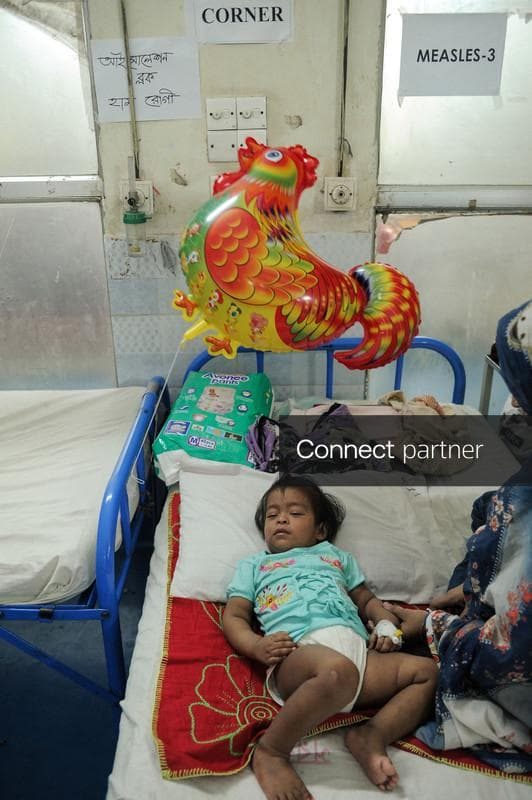
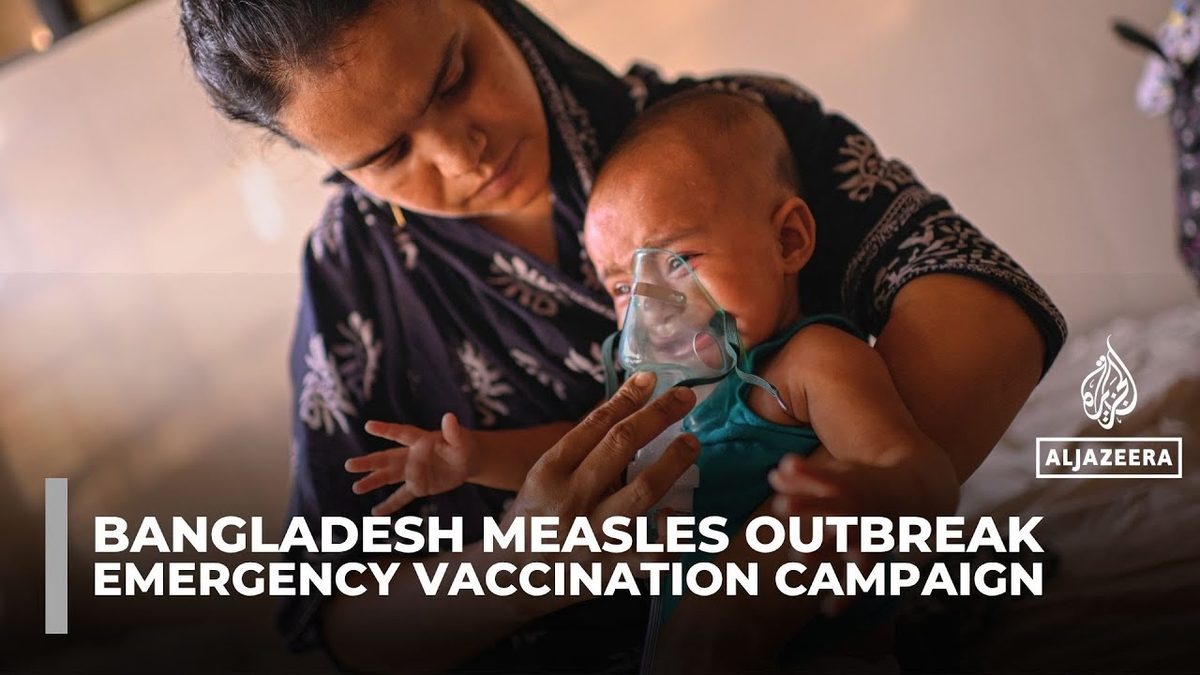
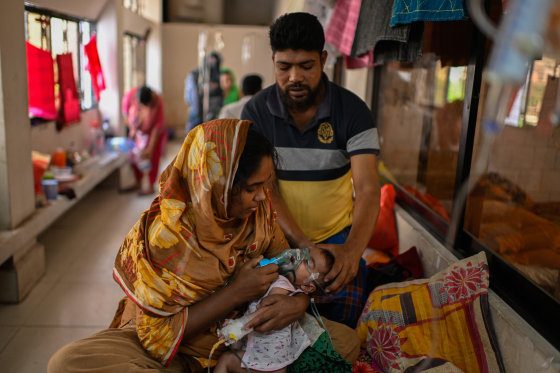
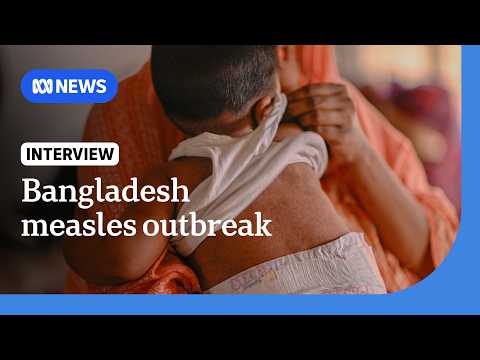
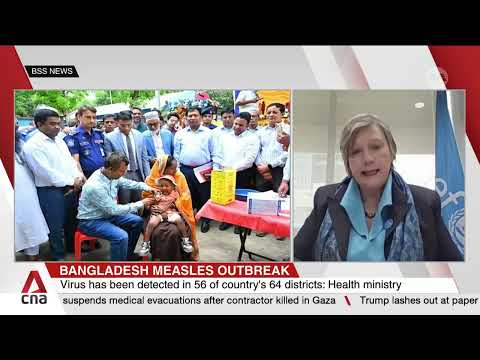
Bangladesh was on track to eliminate measles by 2026. Instead, the country is fighting its worst outbreak in a decade—over 9,000 suspected cases across 56 of 64 districts, with more than 140 children dead in six weeks. On April 12, an emergency vaccination campaign expanded into Dhaka and three other major cities, targeting 1.2 million children with support from the United Nations Children's Fund (UNICEF), the World Health Organization (WHO), and Gavi, the global vaccine alliance.
The outbreak traces to a cascade of failures: routine vaccination coverage collapsed to roughly 57% after Bangladesh's 2024 political uprising disrupted a planned national campaign, an interim government scrapped the donor-backed health sector program without a replacement, health workers went on strike three times in 2025, and United States foreign aid to Bangladesh dropped from $371 million in 2024 to a projected $24 million in 2026. With roughly three million children born each year, even small coverage gaps quickly produce hundreds of thousands of unprotected children—and measles, one of the most contagious diseases known, exploits every gap.

Why it matters
When routine immunization systems fail in countries with millions of annual births, preventable diseases return fast and kill children first.
Exploring all sides of a story is often best achieved with Play.
Fictional AI pastiche — not real quote.
"How extraordinary that we've mastered the art of dismantling the machinery that keeps children alive, while remaining utterly baffled by the simpler business of keeping it running."
Your progress in this debate will be lost.
Choose one persona for each side of the debate
Select debater for this side:
No debate personas available right now.
Select debater for this side:
No debate personas available right now.
Make your prediction before the referee scores
Pick the question both personas must answer in the final round
Debate Oracle! You called every round!
Sharp Instincts! You know your debaters!
The Coin Flip Strategist! Perfectly balanced!
The Contrarian! Bold predictions!
Inverse Genius! Try betting the opposite next time!
The lead UN agency for child welfare, co-coordinating the emergency vaccination campaign alongside Bangladesh's health ministry.
The WHO is supporting Bangladesh's outbreak response with disease surveillance, case investigation, and guidance on reaching the 95% vaccination threshold needed to halt transmission.
Gavi helps lower-income countries purchase and deliver vaccines; it is co-funding Bangladesh's emergency measles-rubella campaign.
Bangladesh's primary public health authority, responsible for disease surveillance, outbreak response, and the national immunization program.
Phase 2 of the emergency campaign began in Dhaka North, Dhaka South, Mymensingh, and Barishal city corporations, deploying three vaccination centers per ward across 54 wards in Dhaka North alone. Target: nearly 1.2 million children.
The single-day toll reached seven suspected deaths and 1,187 new suspected cases. Cumulative: 143 suspected deaths, 23 confirmed, over 9,000 suspected cases.
The suspected death toll passed 100 children, drawing significant international media coverage from outlets including the Washington Post, NBC News, and Al Jazeera.
Bangladesh, UNICEF, WHO, and Gavi launched a phased emergency measles-rubella vaccination campaign targeting 1.2 million children in 30 subdistricts across 18 high-risk districts.
Official count: 98 suspected deaths (16 confirmed), 4,628 hospitalized, 826 confirmed cases. The virus had spread to 56 of Bangladesh's 64 districts.
The death toll reached at least 38, with the northwestern Rajshahi division hardest hit. The outbreak had spread well beyond initial hotspots in refugee camps.
The DGHS activated formal measles case surveillance, more than two months after the first reported case. By late March, confirmed cases had reached 676—a 75-fold increase over the same period in 2025.
The first confirmed measles case of the year emerged in a Rohingya refugee camp in Cox's Bazar, where 1.1 million refugees live with low baseline immunity.
Stocks of six key vaccines including measles-rubella ran out at Bangladesh's central warehouse after procurement stalled. In Q1 2026, only 27% of required measles-rubella vaccine supply was met.
The Yunus-led interim government abolished the Health, Population, Nutrition Sector Programme—the operational framework through which international donors funded roughly 60% of vaccine procurement—without establishing a replacement.
Weeks of protests culminated in Prime Minister Sheikh Hasina fleeing to India. The uprising killed at least 1,400 people and disrupted public services including health care delivery.
A nationwide measles-rubella vaccination campaign scheduled for June 2024 was postponed as political unrest escalated across Bangladesh. No campaign had been conducted since 2020.
Predict which scenario wins. Contrarian picks score more — points lock in when the scenario resolves.
If the phased campaign—expanding nationwide from May 3—achieves the 95% two-dose coverage threshold that epidemiologists say is needed for measles herd immunity, transmission chains could be broken within weeks. This requires sustained political commitment, adequate vaccine supply from Gavi, effective outreach in dense urban slums and Rohingya camps, and no further health worker strikes. The death toll would stabilize, and Bangladesh could begin rebuilding its routine immunization system.
If vaccination coverage stalls below the 95% threshold—due to supply shortages, funding gaps from US aid cuts, logistical challenges in reaching remote areas, or public hesitancy—the outbreak could continue through the June-September monsoon season, when flooding and displacement typically worsen disease transmission. This scenario is plausible given that only 27% of required vaccine supply was being met as of Q1 2026 and the structural problems that caused the outbreak remain unresolved.
The political embarrassment and child death toll forces Bangladesh's government to establish a new, fully funded immunization procurement framework to replace the abolished health sector program. International donors, alarmed by the speed of the outbreak, increase emergency and long-term funding. This would address root causes but requires reversing the bureaucratic decisions that created the supply collapse—and finding new funding to replace lost US support.
With 1.1 million Rohingya refugees in Cox's Bazar camps bordering Myanmar, and dense cross-border population movement with India, the outbreak could seed cases in neighboring countries where coverage is also below the herd immunity threshold. India's eastern states of West Bengal and Meghalaya, which share borders with Bangladesh, would be most vulnerable. Regional coordination through WHO's South-East Asia office would become essential.
Measles swept through Samoa after vaccination coverage fell below 40%, partly due to the deaths of two infants from improperly mixed MMR vaccines in 2018 that shattered public trust. In a population of 200,000, more than 5,700 people were infected. The government declared a state of emergency, closed schools, and mandated vaccination.
Eighty-three people died, the vast majority children under five. A mass vaccination campaign reached over 95% of the population within weeks.
Samoa's epidemic became the defining cautionary tale about how quickly measles exploits coverage gaps. Two nurses were convicted for the 2018 vaccine deaths that triggered the coverage collapse.
Like Bangladesh, Samoa's outbreak followed a period of institutional failure that eroded vaccination coverage. Both demonstrate that measles—one of the most contagious pathogens known—punishes even brief lapses in immunization infrastructure with explosive speed.
The Philippines recorded over 42,000 measles cases and more than 560 deaths after MMR coverage plummeted from 88% to below 70%. The drop followed the Dengvaxia vaccine controversy—when a dengue vaccine was found to pose risks to some children—which destroyed public trust in all childhood vaccines. The government declared outbreaks in five regions.
Emergency mass vaccination campaigns were launched across Metro Manila and other hotspots, gradually raising coverage. Most deaths were among unvaccinated children under five in urban slums.
The Philippines spent years rebuilding vaccine confidence. The episode showed how political and institutional failures in health governance can cascade into preventable child deaths far beyond the original crisis.
Both outbreaks trace to governance disruptions—political upheaval in Bangladesh, a vaccine scandal in the Philippines—that caused coverage to collapse. In both cases, the gap between the disruption and the outbreak was roughly two to three years, illustrating how susceptible children accumulate silently before an explosive outbreak reveals the damage.
Madagascar experienced over 150,000 measles cases and approximately 1,000 deaths in a country where only 58% of children received their first measles vaccine dose. The outbreak hit hardest in remote areas with limited health infrastructure, overwhelming hospitals and requiring multiple rounds of emergency campaigns supported by WHO, UNICEF, and Médecins Sans Frontières.
Emergency vaccination reached over 7 million children under ten across the island. The outbreak was contained by mid-2019 after three rounds of supplementary campaigns.
Madagascar's experience demonstrated that in countries with high birth rates and low baseline coverage, even modest disruptions create enormous susceptible populations very quickly.
Bangladesh's current coverage rate of roughly 57% mirrors Madagascar's pre-outbreak level. Both countries faced the same arithmetic: with millions of children born annually, each year of sub-threshold coverage adds hundreds of thousands of unprotected children to the population.