J. P. Morgan
Fictional AI pastiche — not real quote.
"A man who cannot find five hundred thousand laborers to do the work does not lament — he buys the machine that needs no supper, no pension, and no argument."
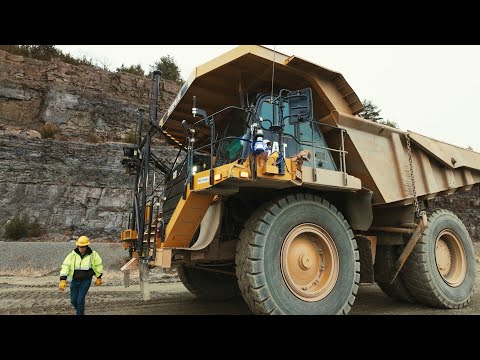
Caterpillar brings three decades of mining autonomy to the equipment that builds roads, buildings, and bridges
March 2nd, 2026: First fully autonomous construction machine demonstrated live at CONEXPONew here? Follow stories to track developments over time. Create a free account to get updates when stories you care about change.
In This Story
Exploring all sides of a story is often best achieved with Play.
Fictional AI pastiche — not real quote.
"A man who cannot find five hundred thousand laborers to do the work does not lament — he buys the machine that needs no supper, no pension, and no argument."
Fictional AI pastiche — not real quote.
"The mind refuses to be shortchanged: when unions and regulators spent decades strangling the supply of skilled labor, the rational producers simply built machines that do not require permission slips to work. Eleven billion tonnes of proof that reason, not sentiment, moves the earth."
Sign up to generate historical perspectives on this story.
Two rounds, two personas, one winner. You set the crossfire.
Watch two AI personas debate this story using real evidence
Choose one persona for each side of the debate
Select debater for this side:
Make your prediction before the referee scores
Pick the question both personas must answer in the final round
Debate Oracle! You called every round!
Sharp Instincts! You know your debaters!
The Coin Flip Strategist! Perfectly balanced!
The Contrarian! Bold predictions!
Inverse Genius! Try betting the opposite next time!
Can you match the quotes to the right people?
-- ?
The world's largest construction and mining equipment manufacturer, with approximately 1.5 million connected assets and over 30 years of autonomous vehicle development.
A leading designer of graphics processing units and AI computing platforms, now supplying the Jetson Thor hardware that enables real-time AI processing directly on Caterpillar's machines.
The Japanese equipment maker that pioneered the first commercial autonomous haulage system in mining in 2008 and operates over 400 autonomous trucks across three continents.
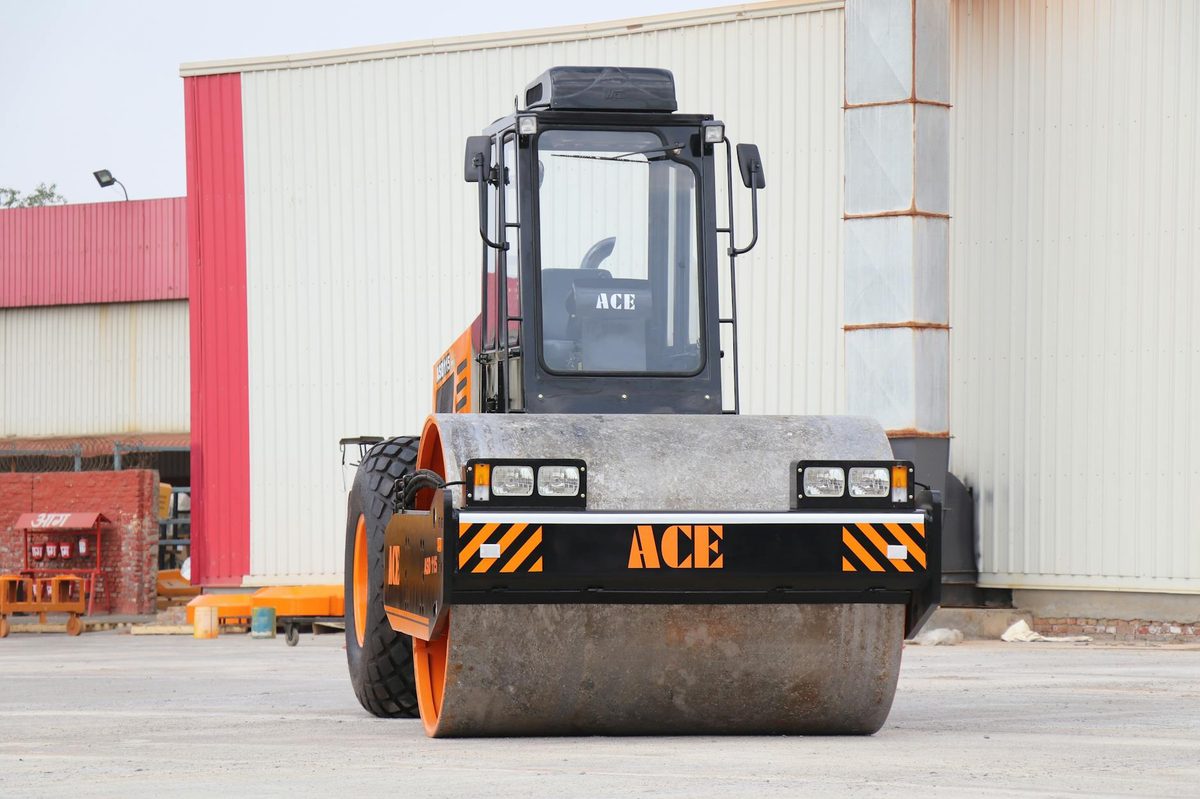
Caterpillar ran an autonomous CS12 soil compactor with an empty cab through live compaction passes at its 70,000-square-foot Operator Stadium at CONEXPO-CON/AGG 2026 in Las Vegas. The Cat AI Assistant simultaneously went live across six digital platforms.
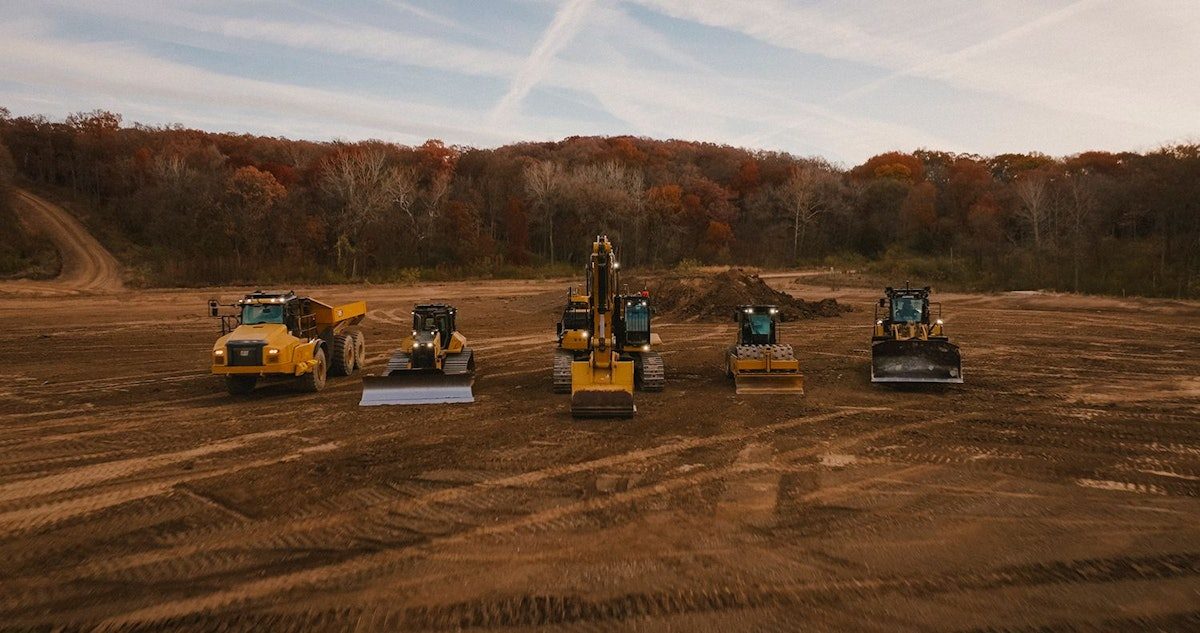
CEO Joe Creed took the CES keynote stage to unveil autonomous excavator, loader, haul truck, dozer, and compactor models, plus a partnership with NVIDIA for edge AI processing and the new Cat AI Assistant. Caterpillar also committed $25 million to workforce training.
At Caterpillar's Investor Day, Resource Industries President Denise Johnson announced plans to triple the autonomous fleet from roughly 690 trucks to over 2,000 by 2030.
John Deere unveiled its 460 P-Tier autonomous articulated dump truck at CES 2025, using camera-based perception to handle repetitive quarry hauling, intensifying competition in autonomous construction equipment.
Luck Stone's Bull Run Plant in Chantilly, Virginia, became the first aggregates site to operate fully autonomous Cat 777 dump trucks, bridging mining autonomy and construction-adjacent applications.
South Korean manufacturer Develon unveiled its Concept-X 2.0 system at Intermat Paris, featuring cabless autonomous dozer and excavator designs controlled by AI, drones, and LiDAR.
Caterpillar's Command for Hauling system reached 500 autonomous trucks operating across mining sites globally.
Komatsu deployed its FrontRunner Autonomous Haulage System at CODELCO's Gabriela Mistral copper mine in Chile, becoming the first company to commercialize autonomous hauling in mining.
Two prototype Cat 777C autonomous trucks completed more than 5,000 production loads over a 2.6-mile course at a Texas limestone quarry, marking Caterpillar's first real-world autonomous hauling test.
Caterpillar partnered with Carnegie Mellon University to develop the software, GPS, and perception systems that would become the foundation for autonomous heavy equipment.
Discussed by: Equipment World, MarketsandMarkets autonomous construction equipment forecasts, Caterpillar investor presentations
Caterpillar's compactor moves from demonstration to commercial deployment within two years, following the same path its autonomous mining trucks took from prototype to fleet operations. Early adopters would likely be large infrastructure contractors working on highways and airports, where compaction is repetitive and job sites are controlled. If Caterpillar achieves this, the autonomous construction equipment market's projected 14.2% annual growth rate through 2030 may accelerate, and competitors like Komatsu and John Deere would face pressure to match.
Discussed by: Grand View Research, OSHA compliance analysts, Mordor Intelligence market reports
Unlike mining sites, which are private and controlled, construction sites sit in urban and suburban areas with pedestrians, other contractors, and unpredictable conditions. No clear federal safety standards or certification processes exist for autonomous off-road construction equipment. If regulators impose extensive testing or site-specific approval requirements—similar to how autonomous passenger vehicles have been delayed—commercial deployment could stall despite the technology being ready. Fragmented state and international regulations compound the challenge.
Discussed by: Caterpillar, Komatsu, John Deere investor materials, construction technology analysts
Rather than one company dominating, autonomous construction becomes an industry-wide capability. Komatsu extends its FrontRunner system from mining to construction, John Deere leverages its agricultural autonomy experience, and startups like Built Robotics and Bedrock Robotics supply retrofit kits for existing fleets. Industry bodies develop shared safety standards, and contractors begin specifying autonomous capability in equipment bids. The labor shortage accelerates adoption faster than any single manufacturer's roadmap predicted.
Discussed by: Associated General Contractors of America, construction trade publications, workforce development analysts
As autonomous equipment moves toward commercial deployment, equipment operators and their unions push back, arguing that the technology eliminates jobs rather than filling vacancies. Political pressure leads to requirements for human operators to remain on or near autonomous machines, effectively limiting the productivity gains. Caterpillar's $25 million workforce training commitment and its framing of autonomy as augmentation rather than replacement become central to whether this scenario materializes.
Komatsu deployed the first commercial autonomous haulage system at a Chilean copper mine in 2008. Rio Tinto and BHP followed in Australia's Pilbara region, eventually running fleets of over 100 autonomous haul trucks each at iron ore mines. Caterpillar's competing system grew to nearly 700 trucks moving over 11 billion tonnes.
Mining companies reported significant productivity gains and elimination of operator fatigue-related accidents in autonomous hauling zones.
Autonomous hauling became standard practice in large-scale mining, proving that 400-ton vehicles could operate safely without human drivers for years at a time—the proof of concept now being applied to construction.
Caterpillar's construction autonomy is explicitly built on this mining foundation. The company frames the CONEXPO demonstration as the same technology, adapted to smaller machines in more complex environments.
John Deere unveiled a fully autonomous tractor at CES 2022, the first time a major agricultural equipment maker demonstrated driverless farming capability at a consumer electronics show. By CES 2025, the company had expanded to autonomous quarry trucks and orchard tractors, using camera-based perception kits that retrofit onto existing machines.
The CES announcement generated significant media attention and signaled that traditional equipment manufacturers would compete in autonomy, not just tech startups.
Agricultural autonomy adoption has proceeded incrementally—Deere targets a fully autonomous corn and soy system by decade's end—showing that the gap between demonstration and widespread commercial use can span years even when the technology works.
Caterpillar's CES-to-CONEXPO strategy directly mirrors Deere's approach: announce at the tech industry's biggest stage, then prove it at the industry's own trade show. The agricultural timeline suggests construction adoption will be measured in years, not months.
The Defense Advanced Research Projects Agency (DARPA) ran three autonomous vehicle competitions. In the first, no vehicle completed the 142-mile desert course. By the 2007 Urban Challenge, six vehicles navigated a 60-mile urban course with traffic. Caterpillar participated, and the technologies developed—LiDAR perception, real-time path planning, obstacle avoidance—became building blocks for both self-driving cars and autonomous heavy equipment.
The competitions created the technical talent pool and foundational algorithms that Waymo, Uber, and autonomous equipment companies would later build on.
Nearly two decades later, the passenger car autonomy promised by those early demonstrations remains limited in commercial deployment, while heavy equipment—operating in more controlled environments—has scaled faster.
Caterpillar cites DARPA participation as a key milestone in its autonomy journey. The broader lesson: controlled, repetitive environments like mines and job sites proved more tractable for autonomy than open roads, and construction sites sit between the two in complexity.